
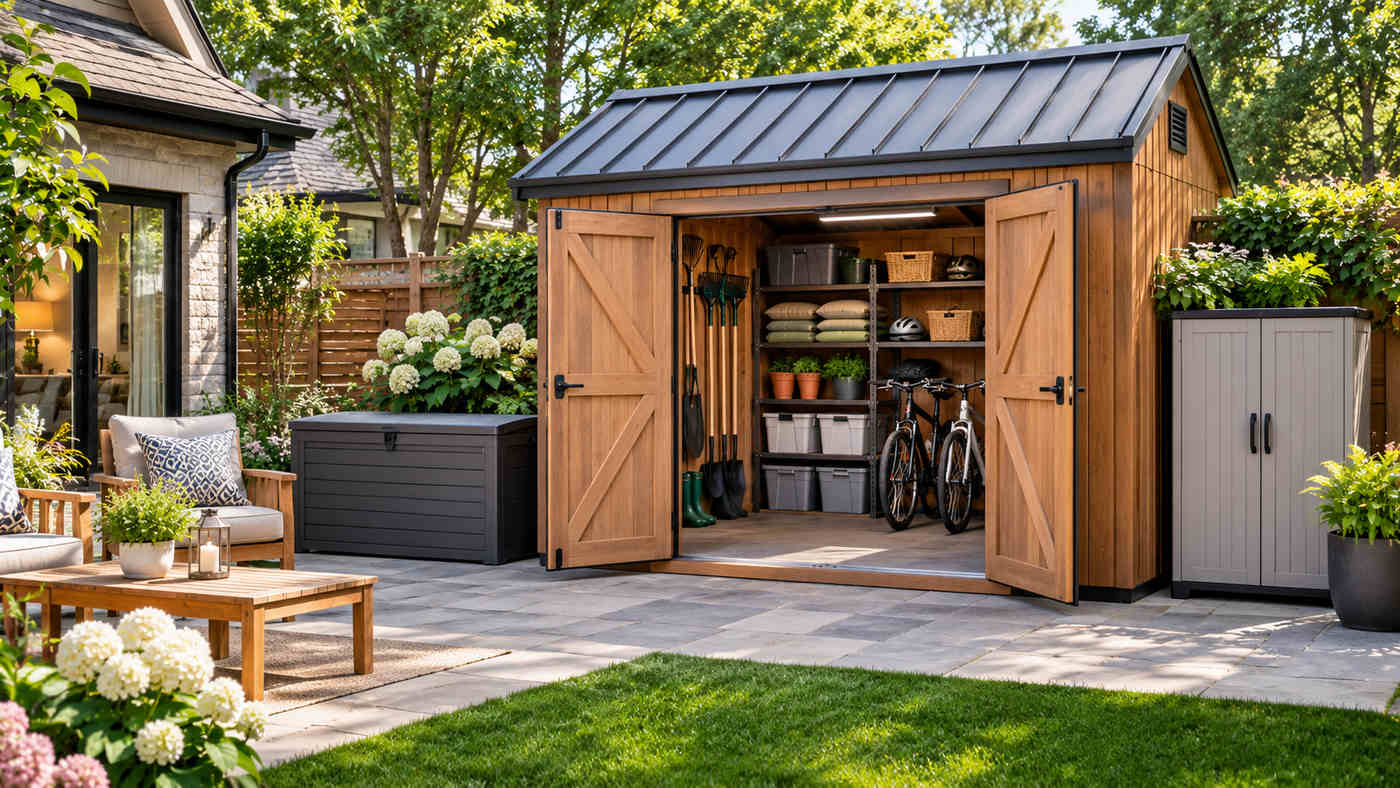
A tidy backyard is easier to enjoy when tools, cushions, bicycles, and seasonal equipment each have a practical place to go. outdoor storage can provide that space, but a large shed is not automatically better than a carefully chosen cabinet or deck box. The right arrangement depends on what needs protection, how frequently items are used, local weather, available ground space, and the safety requirements of particular materials. Poor drainage or unsuitable storage conditions can damage possessions even inside an expensive enclosure. This guide explains seven decisions that help homeowners compare options, plan a reliable installation, and create an organized garden without turning a useful storage area into another source of clutter.
What Counts as Outdoor Storage?
Outdoor storage includes garden sheds, weather-resistant cabinets, deck boxes, storage benches, bike enclosures, and purpose-built racks. Some systems stand on a foundation, while others are portable and fit on a patio or balcony. A weather-resistant box is not necessarily waterproof during prolonged flooding, and a lockable shed is not automatically secure against determined theft.
Match the Container to the Contents
Garden tools, empty plant pots, and hose accessories have different needs from upholstered cushions, power tools, or expensive bicycles. A single enclosure may suit several categories, provided humidity, load limits, access, and safety are addressed. For outdoor storage involving chemicals, fuels, or batteries, the product label and applicable safety requirements should take priority over convenience.
Think About Frequency of Use
Daily items belong within easy reach. Objects used only once a season can sit farther back or higher up, as long as they can be retrieved without unsafe climbing or lifting.
1. Select the Right Storage Type for Your Space
A successful outdoor storage plan begins with measurements and a realistic inventory. Before shopping, group everything by size, weight, sensitivity to moisture, and how often you need it. Measure long items such as ladders and rakes, plus bulky equipment such as a mower or stroller. Then consider the space needed to open doors and walk around the contents.
When a Garden Shed Makes Sense
A shed is suitable when the household needs floor space for machinery, bicycles, furniture, and large tools. It can support wall shelving, hooks, and separate zones. However, it requires a stable base, clear access, and often more planning than a small box. Door width matters: a mower that fits inside the floor area may still be difficult to move through a narrow opening.
Deck Boxes, Benches, and Cabinets
A deck box works well for lightweight patio accessories and smaller garden items. A storage bench adds seating where space is limited, but its lid and seating structure must be rated for their intended loads. Tall cabinets organize bottles, small tools, and other goods vertically; shelves should have specified weight limits and sturdy attachments. These compact outdoor storage options are particularly useful on terraces and narrow side yards.
Avoid Paying for Unused Capacity
Choose capacity for a sensible amount of future growth, not an imaginary collection of equipment you may never own.
2. Compare Wood, Metal, and Resin for Durability
Materials influence how outdoor storage looks, handles weather, and needs maintenance. Wood can complement landscaping and be repaired or painted, but it needs attention to moisture, insects, and protective finishes. Metal can provide a slim, strong enclosure, though damaged coatings, condensation, and corrosion may be concerns. Resin or similar molded plastic systems often resist rot and need relatively little surface upkeep, but their strength, temperature performance, and ability to hold shelving vary by design.
Choose for Climate Rather Than Appearance Alone
In a humid or coastal setting, examine corrosion-resistant fasteners, ventilation details, and finish durability. In areas with intense sun, confirm how plastics and coatings perform under ultraviolet exposure. Where snow or strong wind is common, structural ratings and anchoring can be more important than the cladding material.
Inspect Doors, Roofs, and Hardware
For outdoor storage sheds, check roof construction, door alignment, hinges, latches, and the availability of replacement parts. A light roof or weak hinge may become the first failure point long before wall panels deteriorate. Compare actual warranties and product specifications rather than relying on phrases such as maintenance free or all weather.
Remember the Contents Affect the Choice
A damp shovel may be fine in a ventilated tool shed, but upholstery, documents, and electronics are more vulnerable to temperature and moisture changes. An unconditioned backyard enclosure is generally a poor place for irreplaceable belongings.
3. Plan the Foundation, Drainage, and Wind Protection
The ground beneath outdoor storage is as important as its walls. Rainwater that collects under a shed or against a deck box can encourage deterioration and make access unpleasant. Select a level, stable site with suitable drainage away from buildings, property boundaries, and neighboring land.
Use a Base Suited to the Structure
Manufacturers may specify a concrete pad, compacted aggregate, pavers, timber platform, or another foundation arrangement. The correct choice depends on the structure, load, soil, local requirements, and warranty conditions. Do not assume that a few loose paving stones will adequately support a large shed full of heavy equipment. A substantial building may require professional design and frost considerations in cold regions.
Keep Surface Water Moving Safely
Gutters, downspouts, grade, and the position of nearby sprinklers can all influence dampness. University of Minnesota Extension guidance on building moisture emphasizes managing rainwater and drainage at the source. Keep stored items above any floor surface where water may enter, and check for signs of condensation or leaks after storms. For outdoor storage, a raised shelf can limit damage from minor incidental moisture but cannot make a flood-prone site suitable.
Anchor Where Conditions Demand It
Lightweight sheds and cabinets may be displaced by severe wind. FEMA guidance emphasizes securing vulnerable sheds and outdoor structures. Use anchoring designed for the actual unit and foundation, and follow local structural requirements. Do not improvise fasteners into an unsuitable surface or assume that the weight of stored objects is a substitute for proper anchorage.
Verify Boundaries and Approvals
Before installing permanent outdoor storage, check planning rules, setbacks, easements, homeowners association restrictions, and any required permits. Size thresholds and exemptions vary by locality; a small accessory building is not automatically exempt everywhere.
4. Prevent Water Damage Without Trapping Moisture
Weather protection is a central goal of outdoor storage, but closing every gap is not always the best solution. Rain can enter through failed seals or poorly detailed roofs, while condensation can develop when humid air meets cooler interior surfaces. Even a box that sheds direct rainfall may trap moisture brought in on wet cushions or garden equipment.
Distinguish Resistance From Waterproofing
A product described as weather resistant may tolerate routine rain yet offer limited protection against wind-driven water, pooling, or immersion. Examine lid overlaps, gaskets, hinges, drainage channels, and the manufacturer’s instructions. Do not place vulnerable electronics or valuable paper records in an unconditioned container on the assumption that the word waterproof guarantees protection in every condition.
Use Ventilation Appropriately
A ventilated shed can help move damp air out, provided openings are designed to resist rain and pests. Ventilation cannot correct an active roof leak or standing water beneath a building. Dry garden furniture and fabrics thoroughly before closing them in. Inspect hidden corners and the underside of lids for condensation, odor, or discoloration.
Keep Air Circulating Around Belongings
In outdoor storage cabinets, leave reasonable gaps around packed items rather than pressing fabrics tightly against walls. Raise absorbent materials away from damp floors, and avoid storing wet bags or cushions for extended periods.
5. Organize Shelves, Tools, and Bicycles for Easy Access
An organized outdoor storage system should make everyday tasks faster, not simply move clutter out of sight. Divide the available space into zones such as gardening, recreation, cleaning, and seasonal decorations. Place frequently used items near the entrance and use clearly marked containers for small accessories.
Store Heavy Items Low
Keep heavier equipment on or near the floor, and confirm the load capacity of each shelf and wall anchor. Unsupported shelving attached to thin shed panels may fail under weight. Fit racks and hooks only as the manufacturer permits, and ensure tall cabinets are secured against tipping where necessary. A clear walking path is more useful than squeezing every possible item into the structure.
Design Bike and Tool Zones
For outdoor storage holding bicycles, consider whether they can be rolled in without lifting, whether pedals and handlebars will collide, and how locks can attach to a suitable fixed point. Garden tool racks should keep sharp ends from projecting into walkways. Protect hoses from kinks and put small accessories into bins that can be removed easily.
Make Seasonal Changes Simple
Store pool accessories together during summer and move holiday decorations or winter tools forward when needed. Review the layout twice a year, donating or disposing of items that are no longer useful. Well-planned outdoor storage needs a simple routine to prevent gradual overfilling.
Leave Room to Work Safely
Do not block exits, electrical access, or necessary maintenance clearances with stacked items. Retrieve high objects with appropriate equipment rather than standing on unstable boxes or chairs.
6. Separate Valuable Equipment From Hazardous Materials
Security and safety should be treated as different questions. A lock helps discourage unauthorized access, but a secure door alone does not make hazardous items safe to store. Outdoor storage may contain sharp tools, chemicals, garden machinery, or fuel-related equipment, all of which require appropriate arrangements.
Secure Bikes, Tools, and Equipment
Use robust locking hardware suited to the enclosure, protect exposed hinges where practical, and consider motion lighting or other lawful security measures. Expensive bicycles benefit from an additional lock attached to a properly fixed anchor. Keep serial numbers and photographs for insurance records. The security value of a shed also depends on its doors, walls, anchoring, and surroundings.
Store Pesticides Under Their Label Instructions
The US Environmental Protection Agency recommends keeping pesticides in original labeled containers, away from children and pets, and in suitable locked storage when possible. Products should not be placed beside food, pet feed, or medicines, and they should be protected from flooding or leakage into drains and water sources. Check temperature and ventilation instructions for each product before choosing outdoor storage as the location.
Treat Propane Cylinders Differently
Propane cylinders do not belong inside an ordinary enclosed garden shed, even when the cylinder seems empty. Safety guidance from the Propane Education and Research Council calls for cylinders to be stored upright outdoors, away from heat and ignition sources, with appropriate protection from tipping or damage. The exact placement requirements depend on local fire rules and cylinder type. A general garden cabinet should never be assumed suitable for compressed gas storage.
Use Care With Powered Equipment and Batteries
Fuel containers, pool chemicals, and rechargeable batteries have different hazard profiles and manufacturer instructions. Avoid placing incompatible chemicals together or charging battery packs in a makeshift enclosure without approved equipment and suitable fire precautions. Electrical installations should be planned by qualified professionals where required.
7. Compare Total Cost, Maintenance, and Future Flexibility
A practical outdoor storage purchase should account for more than the product price. Delivery, site preparation, foundations, assembly, permitted electrical work, locks, shelving, weatherproofing, and disposal of an older structure can add substantially to the budget. A budget box may be sensible for a few low-value items, while a large, professionally installed shed may be justified for a substantial equipment collection.
Compare Equivalent Specifications
Ask whether prices include the floor, roof covering, anchoring kit, doors, ventilation, and installation. Check dimensions carefully because advertised outer measurements may differ from usable internal floor area. Confirm warranty coverage, exclusions, replacement hardware availability, and restrictions on installation surfaces.
Plan Routine Inspections
At least seasonally, inspect the roof, joints, hinges, drainage paths, floor edges, and lock operation. Tighten or replace hardware as directed, clear vegetation touching the enclosure, and investigate evidence of insects or water damage. Wood finishes may need periodic renewal, metal coatings should be repaired when damaged, and resin hinges or panels should be checked for wear. A durable outdoor storage system still benefits from ordinary upkeep.
Choose a Layout That Can Adapt
Modular shelves, adjustable hooks, and movable bins can accommodate changing household needs. Consider future items without creating an oversized structure. If the backyard will be redesigned, a portable cabinet may provide more flexibility than a permanent shed. Future access for garden work and utilities should remain available.
Calculate Value in Everyday Use
Good outdoor storage reduces wasted time and protects useful belongings rather than merely adding square footage.
Common Outdoor Storage Mistakes to Avoid
The most costly mistakes often start with buying before measuring. Homeowners may underestimate door clearance, choose a low site where rain gathers, place an enclosure too close to a fence for maintenance, or ignore the weight that shelves must carry. Others assume a weather-resistant lid creates a climate-controlled interior, or trust a lightweight structure to remain secure in high winds without suitable anchoring.
Another avoidable error is storing every household substance together. Pesticides, propane, and battery charging equipment need their own safety decisions. A tidy appearance does not justify unsafe storage. For outdoor storage that performs well over time, start with the actual contents and site conditions rather than a catalogue photograph.
Practical Planning Checklist
- Measure all bulky items, door openings, and access routes before purchasing.
- Choose a shed, deck box, bench, or cabinet based on contents and frequency of use.
- Review material durability, structural requirements, drainage, and ventilation.
- Confirm appropriate foundations, anchoring, property restrictions, and permits.
- Install shelves and locks within their stated load and security limitations.
- Follow separate safety rules for chemicals, propane, batteries, and fuel.
- Budget for installation, inspections, replacement parts, and ongoing maintenance.
Frequently Asked Questions
What is the best outdoor storage for a small backyard?
A compact deck box, storage bench, or tall cabinet often uses limited space efficiently. Choose according to the items, access needs, and product load ratings.
Which outdoor storage material lasts the longest?
There is no universal winner. Properly maintained wood, coated metal, and quality resin can all perform well when designed for the local climate and installed correctly.
Are outdoor storage boxes completely waterproof?
Not necessarily. Weather resistance varies by product, seal condition, rain exposure, and flooding risk. Check the manufacturer’s ratings and protect moisture-sensitive items.
Does a garden storage shed need a foundation?
Many sheds require a level, stable base specified by the manufacturer. The appropriate foundation and any permit requirements depend on size, soil, loading, and local rules.
Can propane tanks be kept in an outdoor storage shed?
Ordinary enclosed sheds are not appropriate for storing propane cylinders. Keep cylinders upright outdoors in a location meeting the applicable safety guidance and fire rules.
How can I prevent mold in outdoor storage?
Fix leaks and drainage problems, dry items before storing, and provide suitable ventilation. Regularly inspect fabrics and corners where moisture may collect.
Conclusion
Effective outdoor storage begins with understanding the belongings, space, and weather conditions rather than choosing the biggest available enclosure. The right material, stable foundation, sensible organization, and appropriate security can make a backyard more useful while protecting equipment. Safety rules for chemicals and propane deserve separate attention, and regular checks help prevent small defects from becoming expensive problems. A practical system is one that remains easy to use, maintain, and adapt as household needs change.
