
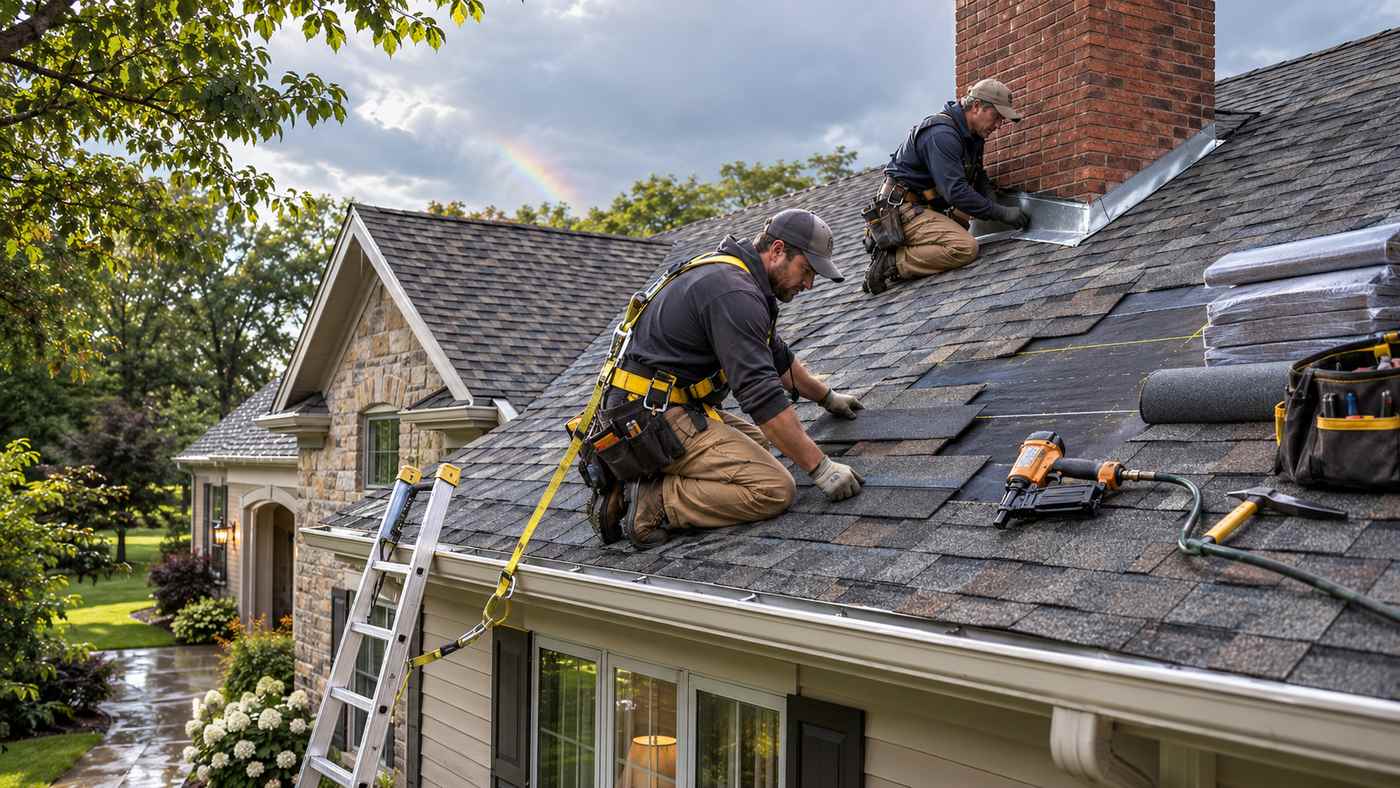
A small ceiling stain can be the first visible sign of a problem that has already reached insulation, roof decking, or interior finishes. Planning roof repairs promptly can help limit further moisture damage, but the right solution depends on finding where water actually enters and understanding the condition of the complete roofing system. A missing shingle, deteriorated flashing, blocked drainage route, or damaged membrane can produce similar symptoms while requiring different work. Replacing a visible piece without investigating the cause may leave the leak unresolved. This guide explains seven practical decisions for property owners, including safe inspections, repair materials, contractor selection, costs, and ways to maintain a roof after the work is finished.
What Do Roof Repairs Involve?
Roof repairs are targeted actions that restore the intended weather protection of a damaged roofing system. The scope may be as limited as replacing a few affected shingles or as involved as rebuilding flashing around a chimney, repairing a section of roof deck, or restoring a localised flat roof membrane defect. Repairs differ from full roof replacement, where a substantial portion or all of the existing covering is removed and renewed. The proper choice depends on the extent of damage, roof age, underlying condition, and whether a durable repair is technically feasible.
A roof is made of interacting components. The visible covering sheds water, while underlayment, flashing, junction details, drainage, and the supporting structure contribute to overall performance. A leak near a vent may originate in the flashing rather than the surrounding shingles. The position of an interior water stain does not always match the entry point because water can travel along framing and decking before becoming visible.
Visible Damage and Hidden Problems
Missing shingles, displaced tiles, cracked sealant, pooling water, and rusted metal details may be visible from a safe ground level. Damp insulation, staining on the underside of decking, deteriorated wood, and mould can indicate damage beyond the exterior surface. Inspection should investigate both what failed and what was affected.
Why Small Problems Deserve Attention
Water entering repeatedly can affect insulation performance, ceilings, wall finishes, and timber. Early attention may reduce the amount of material that needs replacement, but it does not guarantee a minor invoice if a hidden problem is discovered.
Focus on the Source Rather Than the Stain
Cleaning or repainting a ceiling does not repair the leak above it. Identify and address the actual path of entry before restoring interior decoration.
7 Essential Tips for Planning Roof Repairs
1. Identify the Warning Signs Without Taking Unsafe Risks
The first step in roof repairs is documenting what has changed. From the ground, look for missing or uneven roof coverings, loose guttering, damaged chimney details, and debris that may have struck the roof. Indoors, note water marks, peeling paint, damp odours, or moisture in the attic. Record the date of the first symptom and whether it appeared during heavy rain, wind, or snowmelt.
Do not climb onto a roof to investigate a suspected leak. Slopes, damaged decking, wet surfaces, and proximity to electrical lines create serious hazards, even on a single storey home. The National Roofing Contractors Association recommends that most roofing work be performed by trained contractors. In the United States, OSHA has specific fall protection requirements for covered residential construction activities; other jurisdictions have their own worker safety rules.
When arranging roof repairs, take photographs from safe locations and explain the symptoms to the contractor. An attic inspection should only be attempted if access is safe, the area is structurally sound, and electrical hazards are absent. Never stand below a sagging, waterlogged ceiling or touch wet electrical fixtures. Seek appropriate emergency assistance if the structure or wiring appears dangerous.
Record the Pattern of Leakage
A stain that grows after wind driven rain may point to a different entry route from one associated with an ice dam or a persistent drainage issue. These clues help the roofer investigate but cannot establish a diagnosis on their own.
2. Trace Water Entry Around Flashing and Roof Penetrations
Some of the most important roof repairs involve details where different building elements meet. Flashing directs water away from chimneys, skylights, roof valleys, walls, and pipe penetrations. If a joint opens, material corrodes, or a seal deteriorates, water may enter even while the main roof covering looks largely intact.
Ask the contractor how the suspected entry point was identified and what adjacent surfaces were examined. A professional should investigate the relevant flashing configuration, laps, fasteners, surrounding covering, and water drainage path. Applying a visible bead of sealant without determining the problem may create a temporary barrier rather than a lasting solution.
For roof repairs around a chimney or wall junction, request a written description of which flashing components will be repaired or replaced. A pipe boot may need replacement rather than repeated surface patching. Skylight leaks can also involve window installation details or condensation, so the roofer may need to coordinate with a suitable specialist.
Understand Temporary Versus Permanent Sealing
A patch or compatible sealant may be an appropriate part of a specified repair, but not every roofing detail can be corrected by spreading roofing cement over a crack. The correct method depends on the roof material and manufacturer guidance.
3. Match the Repair Method to the Roofing Material
A successful roof repairs plan respects the construction of the existing roof. Asphalt shingles, clay or concrete tiles, standing seam metal, and low slope membranes behave differently. Replacement products should be compatible with the existing system, including profiles, fixings, overlaps, and any required underlayment or waterproofing details.
On a shingle roof, a contractor might replace damaged shingles and check the surrounding course for brittle or loose material. A tile roof may need carefully matched tiles and inspection of underlying support and membrane details. Metal roof work can involve fasteners, seams, coatings, or flashing, while low slope roofs may require material specific membrane welding, adhesion, or patching procedures. These methods are not interchangeable.
When comparing roof repairs quotations, ask whether the chosen materials are compatible with the existing product and whether work can be completed without damaging nearby areas. An older discontinued tile or shingle colour may be difficult to match. Visual differences are not necessarily evidence that the repair is defective, but the contractor should explain them before installation.
Check the Roof Under the Visible Covering
If water has passed through, the problem may extend to the decking or other layers. The contractor should explain whether local removal is necessary to inspect the substrate and how any unexpected deterioration will be priced and approved.
4. Decide Whether Targeted Repair or Replacement Makes Sense
Not every leaking roof needs to be replaced. Guidance from the National Roofing Contractors Association notes that localised problems, including loose flashing or a damaged section, may be repairable. Widespread failure, recurring leakage, brittle covering, or extensive deck deterioration may make repeated patching impractical.
Before committing to roof repairs, request an assessment of the overall roof condition. Discuss roof age, the number and distribution of failed areas, previous work, moisture damage, ventilation concerns, and whether replacement materials remain available. A single storm damaged patch on an otherwise serviceable roof is different from multiple leaks across an extensively worn covering.
For roof repairs on an older property, ask the roofer to present the realistic options and their limitations. A targeted repair may restore useful life, but it does not reset the age of the remaining roof. Full replacement costs more initially yet may address widespread system deficiencies when supported by inspection findings. Neither choice should be based solely on a sales claim that a roof has reached a particular age.
Compare Likely Value, Not Just Immediate Price
Consider the repair scope, expected durability, ongoing maintenance, warranty terms, and probability of needing additional work. Ask for evidence behind recommendations rather than assuming the most expensive option is safest.
5. Get Clear Quotes and Verify the Roofing Contractor
The quality of roof repairs depends heavily on diagnosis and workmanship. Look for a contractor experienced with the specific roofing system, and check licences, registration, or certifications where your jurisdiction requires them. Ask about liability insurance and worker coverage relevant to the project. Manufacturer credentials may be useful, but they are not a substitute for verifying the business and its actual work history.
Request written estimates that identify the damage to be addressed, material type, removal and disposal, flashing details, deck repairs if known, access equipment, safety provisions, and any excluded work. For roof repairs with uncertain hidden damage, the quote should explain how additional findings will be photographed, authorised, and charged. A low headline price is difficult to compare if it omits materials or essential preparation.
Ask for the likely start date, weather related scheduling limitations, payment stages, warranty terms, and the person responsible for post repair concerns. Compare at least two suitable proposals for significant work where time permits. Be wary of aggressive pressure to sign immediately after a storm, unverified promises that an insurer will pay everything, or requests for full payment without a clear agreement.
Keep Your Contract and Evidence
Retain photographs, the written scope, product details, invoices, and any guarantees. Confirm who is responsible for permits and inspections if applicable locally. Good records help resolve questions after the crew leaves.
6. Respond to Storm Damage and Emergencies Safely
After strong wind, hail, or falling branches, roof repairs may become urgent. First check whether anyone is in danger from electrical wires, damaged structural elements, falling debris, or water near electrics. Keep people out of unsafe rooms and contact the appropriate emergency service or utility provider when necessary. Do not go onto a storm damaged roof to assess or cover it yourself.
Move valuable possessions away from active drips if doing so is safe and use containers to reduce interior water spread. A qualified roofer may recommend temporary protection until weather allows permanent work. Tarps are temporary measures rather than substitutes for correctly completed roof repairs. FEMA describes temporary roof coverings as short term relief pending permanent repair, and OSHA highlights the fall and electrical hazards involved in installing them.
Before authorising permanent roof repairs after a storm, take accessible photographs and review the home insurance policy. Coverage differs between policies and may depend on the cause of damage, maintenance history, deductibles, and claim conditions. Ask the insurer how emergency mitigation and documentation should be handled. Do not authorise unnecessary additional damage to demonstrate a claim, and be cautious of anyone offering to fabricate evidence.
Protect Safety Over Speed
A promise of immediate roof access during lightning, severe wind, or wet conditions is not reassuring. Contractors should choose safe working conditions and explain temporary options when permanent work must be delayed.
7. Plan Drainage, Maintenance, and a Final Inspection
Well completed roof repairs should address the fault and identify any connected conditions that could cause a recurrence. Blocked gutters, damaged downpipes, leaves in valleys, poor drainage on low slope roofs, and unsealed junctions can contribute to water entering vulnerable areas. Correcting a leak without examining its drainage path may leave a similar problem nearby.
Ask what maintenance is suitable for your roof type and location. The National Roofing Contractors Association advises inspecting for visible problems periodically, including in spring and autumn. A professional inspection may be appropriate after a major storm or when symptoms develop. Homeowners should limit themselves to safe ground based observations and tasks they can perform without roof access.
At the end of roof repairs, request a walkthrough or photographs showing what was changed. Check that debris has been removed, gutters are not obstructed by waste, and the specified components appear complete. Ask whether a follow up check is recommended and how a recurring leak will be handled under the workmanship warranty.
Keep an Ongoing Roof Record
Store inspection dates, repair photos, invoices, material specifications, and warranty paperwork. If a new stain appears months later, these details can help distinguish a recurring fault from a different issue.
How Much Do Roof Repairs Cost?
There is no reliable universal price because damage varies by roof type, height, pitch, access, material availability, location, and the amount of hidden work. Replacing a small cluster of accessible shingles is usually a different undertaking from rebuilding chimney flashing, repairing wet decking, or accessing a complex roof with scaffolding or lifts.
A quote for roof repairs should identify labour, materials, waste disposal, necessary access arrangements, and taxes where applicable. Emergency visits may add callout charges, and older systems can require specialist matching materials. Do not rely on a generic online average without knowing its currency, location, assumptions, and whether the scope matches the real issue.
What About Insurance Claims?
Insurers may cover certain sudden events under the policy, while exclusions can apply to wear, neglect, or ongoing deterioration. Claims and deductibles differ. Read the actual policy, document the loss, and discuss proposed roof repairs with the insurer when appropriate. A roofing contractor can explain the physical damage but should not promise a coverage decision on behalf of the insurer.
How to Prepare for a Professional Roofing Visit
Describe the symptoms and make accessible photos available. Move vehicles where requested, keep children and pets away from work areas, and clarify access to gates, electrical supplies, and attic spaces. Ask when noisy work will occur and how landscaping, windows, and neighbouring property will be protected.
For planned roof repairs, review the scope with the person supervising the crew before work starts. Discuss where materials and waste containers will be placed, how unexpected structural problems will be reported, and what happens if rain interrupts the job. A clear communication process can reduce confusion when several workers or subcontractors are involved.
What Should Be Checked After Completion?
Review the agreed work, photographs of concealed details where relevant, waste cleanup, and the final invoice. Collect product information and warranty documents. If the cause was a leak, ask how the contractor assessed the repaired area, recognising that a dry day alone cannot always demonstrate performance during future severe weather.
Frequently Asked Questions
1. What are the most common signs that roof repairs are needed?
Missing or cracked covering, damaged flashing, ceiling stains, gutter problems, and water entering the attic are common warning signs. A professional inspection can identify the cause.
2. Can a leaking roof be repaired without replacing it?
Yes, some leaks result from localised damage or failed flashing. Replacement may be more appropriate when deterioration is widespread or the existing roof cannot support a lasting repair.
3. How much do roof repairs usually cost?
Costs depend on the material, damage, roof access, labour, and hidden repairs. Obtain a written, site specific quote rather than relying on a universal price estimate.
4. Are emergency roof tarps a permanent solution?
No. Properly installed temporary covering can reduce exposure until qualified professionals complete a lasting repair, but it does not restore the whole roofing system.
5. Does homeowners insurance cover roof damage?
Coverage depends on the policy and cause of loss. Sudden insured events may be covered, while wear or lack of maintenance may be excluded. Verify with your insurer.
6. How often should a roof be inspected?
Periodic visual checks and an assessment after significant storms can identify problems early. Use professional help for roof access and follow guidance suitable for the roof type.
Conclusion
Thoughtful roof repairs begin with finding the real cause of damage rather than hiding the most visible symptom. Safe inspections, compatible materials, clear contractor quotes, and attention to flashing and drainage help support a durable result. Compare repair and replacement options based on the roof’s actual condition, not on pressure or assumptions. Keeping maintenance records and responding promptly to new warning signs can help protect the building over time.
