
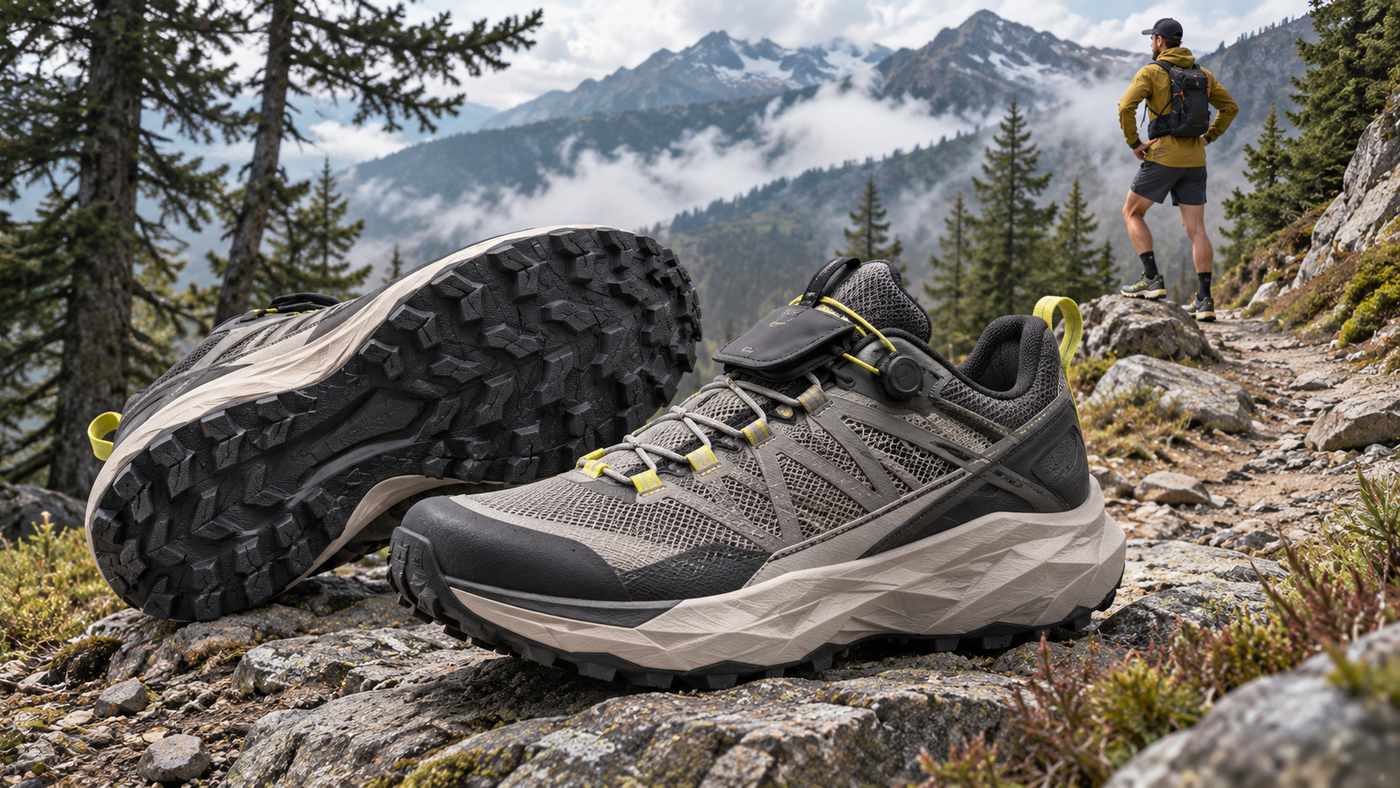
Trail running shoes have to do more than look fast. They must keep feet secure when the path turns steep, provide usable grip on changing surfaces, and remain comfortable after the first few kilometres. The Kailas FUGA EX3 is designed for mixed terrain with a Vibram Megagrip outsole, an ECCEVAI cushioning system, and a distinctive two-zone lacing arrangement. It is also a shoe that deserves careful evaluation rather than unquestioning enthusiasm. Independent testers have praised its construction and traction while reporting concerns about energy return and the fit around the toes. This guide separates manufacturer specifications from external testing, explains seven practical purchase decisions, and helps runners decide whether the shoe suits their terrain, training, and foot shape.
What Is the Kailas FUGA EX3?
The Kailas FUGA EX3, written as FUGA EX 3 in official product listings, is a trail running shoe marketed for mixed terrain. Its construction combines an engineered mesh upper, protective overlays, an ECCEVAI midsole, and Vibram Megagrip rubber beneath a multidirectional lug pattern. An AWS 3.0 lacing system allows runners to adjust tension in different areas of the foot. A lace pocket and attachment points for compatible gaiters round out its trail-oriented details.
The manufacturer’s published specifications describe a heel height of 36 mm, forefoot height of 28 mm, and an 8 mm heel-to-toe drop. Lug depth is listed as 4 mm. The published men’s reference weight is approximately 285 g in European size 42, while the women’s official comparison lists about 251 g without establishing an identical reference size. These figures should be treated as brand specifications, not independent measurements of every size.
What Makes It Different From a Road Running Shoe?
A road shoe primarily encounters comparatively consistent pavement. A trail shoe must handle loose stones, uneven footing, changing gradients, and debris. The outsole tread, secure upper, and protective details of the Kailas FUGA EX3 are intended to address those demands. That does not mean any trail shoe is suitable for every wet rock, deep mud section, or off-trail scramble.
What Type of Runner Is It Intended For?
The stated use is mixed terrain, so its most sensible starting point is runnable trails with a combination of compact dirt, gravel, moderate rocks, and occasional wet sections. Some experienced runners have taken it much farther, but the right long-distance choice depends on the individual runner’s cushioning preference, foot fit, and preparation.
Manufacturer Claims and Independent Findings Are Different
Product descriptions explain design intent, while laboratory testing and field reviews provide other forms of evidence. Measurements can differ because of test methods, size selection, or sample variation. Neither replaces trying a shoe on your own feet.
7 Essential Tips Before Buying Kailas FUGA EX3
1. Evaluate the Vibram Outsole Against Your Usual Trails
The grip system is a central reason to consider Kailas FUGA EX3. Kailas specifies Vibram Megagrip rubber with 4 mm multidirectional lugs designed to assist climbing, braking, and moving across varied ground. The tread includes separated zones and shaped lugs that aim to balance traction and the release of loose material. For runners who regularly encounter compact paths and intermittent rocky sections, this is a relevant design choice.
Independent evidence adds nuance. RunRepeat’s laboratory evaluation found a wet-surface traction result of 0.60 in its test and measured the lugs at approximately 3.4 mm rather than the manufacturer’s nominal 4 mm. Its reviewers considered the outsole a strength of the shoe while regarding the tread as more suitable for relatively easy to moderate ground than exceptionally demanding terrain. Another independent field review from Believe in the Run reported a positive experience on wet and rocky mountain trails. Those observations are encouraging but do not establish universal slip resistance.
Test Traction Under Your Own Conditions
Try the shoes on a familiar, low-risk trail before using them in a mountain race. Observe braking confidence on gentle descents, stability around bends, and whether debris collects between lugs. Avoid deliberately testing slip resistance on dangerous exposed surfaces.
2. Check Cushioning, Stack Height, and Actual Ride Feel
The Kailas FUGA EX3 uses the brand’s ECCEVAI midsole, which Kailas describes as providing cushioning and rebound for extended running. Official dimensions indicate 36 mm under the heel and 28 mm under the forefoot. In general, more material underfoot can contribute to impact protection, but comfort depends on foam properties, shoe geometry, runner mechanics, and how the material behaves over time.
Independent findings are not uniformly flattering. RunRepeat reported relatively low energy return and measured a larger actual heel-to-toe difference than the advertised 8 mm. Its lab reported approximately 13.7 mm. The finding does not necessarily mean every production pair has that drop, but it shows why buyers should not infer ride characteristics solely from catalogue numbers. The same review viewed the shoe as durable and stable but less appealing to those prioritising a lively, springy ride.
Field reviewers can reach a different conclusion because they evaluate the complete shoe over real routes. Believe in the Run’s testers described a comfortable and stable experience over demanding terrain. One runner’s sense of adequate cushioning can coexist with another’s preference for a softer, more energetic platform.
Choose Comfort Over a Specification Contest
When trying Kailas FUGA EX3, run at an easy pace and a slightly faster pace if conditions permit. Notice forefoot comfort, heel stability, and how the shoe feels after your normal session duration. Do not switch abruptly from a very different shoe geometry immediately before an important event.
3. Examine Fit, Toe Space, and Heel Security Carefully
Fit can matter more than the outsole compound. A trail shoe should hold the heel and midfoot securely without squeezing the toes together. During descents, feet may move forward inside the shoe, causing rubbing or toenail pressure. The Kailas FUGA EX3 includes a two-zone tightening system intended to limit unwanted sliding, but no lacing design can fully correct a shoe that is the wrong shape or size.
Reports about the fit deserve particular attention. RunRepeat’s laboratory review identified a narrow toe area and did not recommend the tested shape for wide feet. Retail listings may offer different size or width variants in selected colours, but the existence of a wide option should not be assumed for every market. The safest approach is to use the official size chart for the exact model and confirm the seller’s return policy before ordering.
Do Not Fix Tightness by Oversizing Blindly
Increasing length may add unwanted movement around the heel while leaving the forefoot shape fundamentally unsuitable. If the width remains uncomfortable, a different width or model may be wiser than relying on extra length.
4. Learn How the AWS 3.0 Lacing System Works
One distinctive feature of Kailas FUGA EX3 is AWS 3.0, the manufacturer’s two-section tightening system. It is designed to help adjust the fit over the forefoot and around the midfoot separately. This can be useful when a runner wants dependable lockdown for descents without overtightening every part of the upper. The shoe also provides a lace pocket that helps keep loose components contained.
Before a race, learn the adjustment process while seated and then repeat it with the shoes on your feet. Tightening one section more than necessary can create pressure, numbness, or discomfort even if the shoe initially feels secure. Loosening too much can allow movement on sloping terrain. Experiment gradually until the fit feels snug but does not interfere with circulation or natural toe movement.
Check the System Before Leaving Home
Inspect the lace channels, adjustment mechanism, and pocket for wear. Practice loosening the system with cold hands or gloves if those conditions are relevant. A useful trail feature is one you can operate confidently without stopping for several minutes.
5. Consider Upper Durability, Breathability, and Debris
The Kailas FUGA EX3 features an engineered nylon mesh upper with protective film reinforcements. This arrangement aims to allow airflow while supporting the foot against contact with trail surfaces. The brand also references breathable, debris-resistant lining. Reinforcement is useful when brush, gravel, or uneven stone might scrape exposed fabric, but the complete construction still needs to remain comfortable during repeated movement.
Independent long-run reviewers have reported good perceived durability and protection. Believe in the Run also noted that the upper could allow some debris to enter. That distinction is worth remembering: an upper can feel robust around the sides yet still admit sand or small stones through the collar. Gaiter attachment points may help when used with compatible accessories, but they do not turn an open-mesh trail shoe into a sealed boot.
The standard version should not be presumed waterproof. An engineered mesh upper is different from a separately specified waterproof membrane model. In very wet conditions, water may enter and the user should consider drainage, drying time, socks, and foot care. Breathability and waterproofing involve tradeoffs that change with climate and activity level.
Watch for Friction During Longer Sessions
Short runs may not reveal rubbing near the heel, toes, or tongue. Increase distance progressively and check for irritation before entering a demanding event. Repeated blisters or numbness are signals to revisit fit rather than ignore discomfort.
6. Decide Whether the Shoe Suits Your Training Distance
Many buyers consider Kailas FUGA EX3 because they want one pair for daily trails, longer outings, and occasional races. Its rubber outsole, secure fit features, and moderate lug depth make it plausible as a versatile option for varied routes. However, a shoe that feels excellent on a ten-kilometre run is not automatically suitable for a fifty-kilometre race, let alone an ultramarathon.
Fatigue changes running technique. Feet may swell, downhill braking demands can increase, and small pressure points become more noticeable. The shoe’s cushioning feel and fit should therefore be evaluated during sessions long enough to reveal those changes. Experienced runners have published positive accounts of demanding use, but that is not evidence that every runner will tolerate the same distance without discomfort.
Build a Reliable Race Test
Wear Kailas FUGA EX3 across several progressively longer runs before deciding whether to race in it. Test the same sock combination and lacing setup planned for the event. Introducing brand-new shoes on race morning adds avoidable uncertainty.
7. Compare Price, Availability, and Alternatives Honestly
The cost of Kailas FUGA EX3 should be considered against its actual fit and performance, not only the presence of Vibram rubber. Some official regional listings have advertised the men’s shoe around US $179, but prices, colours, stock and shipping terms change. Check the exact current listing in your market, including the size offered, customs charges if applicable, and the return conditions for worn or unworn footwear.
Compare nearby options according to what you need. The FUGA DU 2 has different midsole and outsole specifications, while the EX PRO is a distinct model with another foam and geometry package. Do not assume a higher numbered or more expensive model offers the same fit in an improved form. Also consider competitors from other brands with similar trail capability, especially if the tested EX 3 toe area feels narrow or its midsole lacks the rebound you prefer.
Verify the Exact Product Before Checkout
Match the name, size system, width, colour, outsole, and waterproof status to the seller’s listing. Keep order records and inspect the shoes indoors before a first run so return eligibility is not lost unnecessarily.
Where Does Kailas FUGA EX3 Perform Best?
The shoe’s overall concept is mixed-terrain versatility. Compact forest trails, runnable mountain paths, moderate gravel and occasional rocky sections are reasonable uses to evaluate. The grippy outsole and lockdown features may be particularly relevant where trails climb and descend repeatedly, although the correct degree of confidence still depends on surface conditions and the runner’s skills.
Hardpacked Dirt and Gravel
On compact ground, a moderate lug pattern can offer traction without the extreme tread depth designed for deep mud. The model is worth considering for runners who spend much of their week on approachable trails but want sufficient grip for a more technical section now and then. The cushioning should still feel appropriate on the hard surfaces you encounter.
Wet Rock and Technical Descents
The Vibram compound and multidirectional lugs are designed for traction, and field reviews report favourable experiences. Nonetheless, wet polished stone, algae, loose scree, and steep slopes can defeat even good footwear. The Kailas FUGA EX3 does not remove the need to reduce speed, read the terrain, and use appropriate technique.
Deep Mud, Snow, and Specialized Routes
Four millimetre nominal lugs may be a compromise when ground becomes deeply saturated. If mud, snow, or off-trail scrambling dominates your routes, investigate purpose-built shoes with suitable traction, protection and weather features. A versatile trail shoe should not be described as an all-conditions safety guarantee.
Kailas FUGA EX3 Versus Other FUGA Models
The EX 3 sits within a broader trail footwear range, and the names can become confusing. Official comparison pages position EX 3 alongside models such as DU 2 and EX PRO. They differ in drop, foam construction, outsole details and intended feel. The EX 3 features ECCEVAI cushioning and a nominal 8 mm drop, whereas the DU 2 is listed with a 6 mm drop and another midsole structure. The EX PRO also uses a different midsole formulation.
Should You Choose EX 3 or EX PRO?
Consider the surface, race purpose, desired cushioning response, and cost. The models are not simply two colour options of the same shoe. Ask whether you want the characteristics of the familiar EX 3 or a different design emphasis. If you cannot try both, review independent testing and the manufacturer’s specifications for your exact size and model year.
Is the EX 3 a Better First Trail Shoe?
A reasonably versatile outsole and supportive lacing may appeal to beginners, but fit should decide the matter. A narrow forefoot or an unfamiliar heel-to-toe geometry may be uncomfortable for some runners. No brand can guarantee compatibility with every foot shape or gait.
How to Choose the Correct Size and Break In the Shoes
Start with the manufacturer’s size chart rather than automatically buying the same numerical size as a road shoe from another brand. Measure both feet and confirm whether the chart uses foot length, internal length, or another reference. Use running socks and test a realistic downhill movement. There should be sufficient room for the toes while the heel remains controlled.
When Should You Stop Using a Pair?
Replace footwear when the outsole is severely worn, cushioning no longer performs as needed, upper structures fail, or the shoe causes repeated discomfort. There is no universally reliable mileage limit because terrain, body mass, gait, rotation, and care affect wear differently. Check both shoes periodically, especially after abrasive rocky sessions.
Cleaning and Maintaining Trail Running Shoes
After a muddy run, allow soil to dry enough for easy removal or gently rinse it according to the maker’s instructions. Use a soft brush and mild cleaning products suitable for the materials. Avoid strong solvents, high heat, and forced drying that could affect adhesives or components. Remove insoles when appropriate and allow shoes to dry in a ventilated location away from excessive heat.
Common Mistakes Trail Runners Should Avoid
One mistake is treating published specifications as an exact prediction of fit or performance. Another is buying solely because a prominent rubber brand appears on the outsole. A strong grip compound is useful, but upper fit, cushioning, stability, and terrain suitability matter too. Some buyers also assume that a standard mesh trail runner is waterproof or that a specialized lacing system prevents every downhill injury.
When assessing Kailas FUGA EX3, be wary of reviews that promise protection on every surface or describe performance as identical for all runners. Independent lab results and field experiences offer different perspectives. Use both, then confirm comfort through a careful personal test whenever possible.
Frequently Asked Questions
1. Is Kailas FUGA EX3 good for trail running?
It is designed for mixed terrain and features Vibram Megagrip traction, ECCEVAI cushioning, and adjustable lockdown. Suitability depends on terrain, fit, and personal preference.
2. What is the heel-to-toe drop of Kailas FUGA EX3?
Kailas lists an 8 mm drop with a 36 mm heel and 28 mm forefoot. One independent laboratory measured a larger difference, so reported figures should be distinguished by source.
3. Are Kailas FUGA EX3 shoes waterproof?
The standard engineered-mesh version is not advertised as waterproof. Check the exact product name if you need a separate waterproof variant.
4. Does the Kailas FUGA EX3 fit wide feet?
An independent laboratory found a narrow toe area in its tested pair. Try the shoe on or check for a genuinely available wider version before buying.
5. Can Kailas FUGA EX3 be used for ultramarathons?
Experienced testers have used it on demanding long runs, but comfort over ultra distances varies. Test it progressively on terrain similar to your event.
6. Is Kailas FUGA EX3 worth buying in 2026?
It may suit runners who prioritise grip, structured fit and versatile trail use. Compare price, toe space, cushioning feel and alternatives before deciding.
Conclusion
The Kailas FUGA EX3 offers a compelling combination of Vibram traction, thoughtful lacing and trail-focused construction, but it is not an automatic match for every runner. Its narrow tested toe shape, mixed reports on cushioning response and differences between published and measured geometry deserve attention. Evaluate the actual routes you run, test fit on descents, and compare complete specifications rather than relying on marketing claims. A carefully chosen trail shoe should support confident, comfortable movement without promising performance that footwear alone cannot deliver.
