
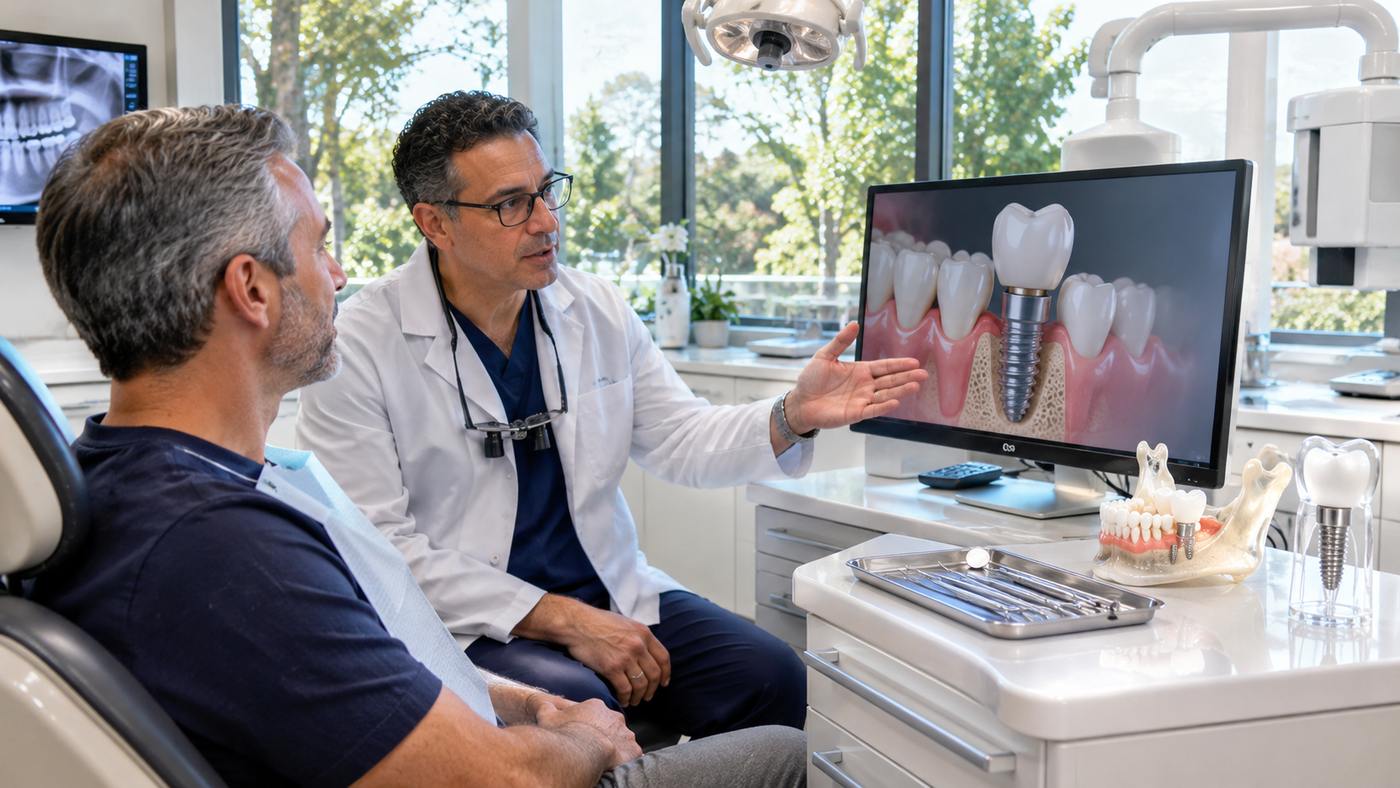
If you are researching who offers dental implants in Redwood City CA, several local dental offices provide implant consultations, surgical placement, and restorative treatment for missing teeth. Options include Peninsula Dental Implant Center, Raju Reddy Oral Surgery, the periodontal practice of Dr. Mauricio Ronderos, Redwood City Dental Care, and Woodside Family Dental. These practices offer different approaches to implant dentistry, ranging from specialist surgical care to comprehensive dental restoration. Understanding their advertised services, the implant procedure, expected expenses, and important safety considerations can help you choose an appropriate provider. This guide explains the available options and how to make an informed decision without relying solely on advertising or patient ratings.
Who Offers Dental Implants in Redwood City CA?
Redwood City, California, has several dental practices that advertise implant dentistry. Patients can explore implant centers, oral and maxillofacial surgeons, periodontists, and general dental offices that provide restorative treatment.
The following five practices are examples of local options, not a ranking of clinical quality. Their services should be confirmed directly before scheduling because staffing, treatment offerings, and appointment availability can change.
1. Peninsula Dental Implant Center
Peninsula Dental Implant Center is located at 3045 Middlefield Road in Redwood City.
The practice focuses on dental implant procedures and related restorative services. Its published information describes treatment options for replacing a single missing tooth, multiple teeth, or an entire dental arch.
The practice identifies Dr. Shivani Gupta as an implant focused dentist and describes using digital imaging, treatment planning technology, and restorative workflows for eligible patients.
Services Worth Discussing
Patients considering this office can ask about individual implants, implant supported dentures, full arch restorations, bone grafting, and the possibility of temporary teeth during treatment.
Because treatment complexity varies, confirm whether the entire procedure can be completed at the office and which clinicians perform each stage.
2. Raju Reddy Oral Surgery
Raju Reddy, DDS, MD, provides oral and maxillofacial surgery services at 11 Birch Street in Redwood City.
His practice lists dental implant surgery, bone grafting, tooth extractions, and other oral surgical procedures.
Oral surgeons may be involved when tooth replacement requires surgical management of the jawbone or coordination with a restorative dentist.
Patients should ask whether their implant crown or final prosthesis will be completed at the surgical office or by a separate dental provider.
3. Dr. Mauricio Ronderos Periodontal Practice
Dr. Mauricio Ronderos, DDS, MS, MPH, operates a periodontal and dental implant practice at 358 Marine Parkway in the Redwood Shores area of Redwood City.
The practice focuses on periodontics, dental implants, bone grafting, and procedures involving the gums and supporting bone.
A periodontist may be particularly relevant when implant treatment involves gum disease, reduced bone support, or a need for specialized tissue evaluation.
Why Periodontal Health Matters
Dental implants depend on healthy surrounding tissues and suitable bone support.
Patients with existing periodontal problems may need those conditions assessed and managed before implant placement.
The appropriate sequence of treatment should be determined through an individualized examination.
4. Redwood City Dental Care
Redwood City Dental Care operates at 20 Birch Street and advertises general dentistry, cosmetic treatment, implant crowns, and implant supported dentures.
The practice is associated with Dr. Ihab M. Hanna, whose published professional background includes additional implant related dental training.
Patients seeking treatment within a comprehensive dental office may wish to ask how implant surgery, restoration, and follow up appointments are coordinated.
Confirm which clinician will place the implant and who will design and attach the final replacement tooth.
5. Woodside Family Dental
Woodside Family Dental is located at 1690 Woodside Road, Suite 204, in Redwood City.
The practice, led by Dr. Shikha Puri, advertises dental implant care alongside general and restorative dentistry.
Its published information describes implant evaluation, dental imaging, and treatment planning.
Patients may discuss single tooth replacement, restorative options, and whether additional surgical assessment or a referral is necessary.
How to Compare These Providers
Each practice offers a different combination of general dental care, surgical services, and implant related treatment.
The most appropriate provider depends on your oral health, the number of missing teeth, medical history, treatment complexity, insurance arrangements, and personal preferences.
A consultation should explain who performs the surgical procedure, who provides the final restoration, and what happens if complications occur.
What Are Dental Implants and How Do They Work?
A dental implant is a medical device surgically placed into the jaw to provide support for a replacement tooth or dental prosthesis.
Most conventional systems include an implant body, a connecting component called an abutment, and a visible restoration.
The restoration may be a dental crown, a bridge, or a denture designed to attach to implants.
Understanding Osseointegration
After placement, the surrounding jawbone gradually heals in contact with the implant surface.
This process is called osseointegration and helps establish stable support for the restoration.
Healing varies according to bone condition, general health, surgical technique, and other factors.
Some patients require several months before the final restoration can be attached.
Why Implants Are Different From Traditional Bridges
A conventional dental bridge generally gains support from neighboring teeth.
An implant supported replacement uses an anchor placed within the jawbone.
Both treatments have advantages and limitations.
The decision should consider the condition of nearby teeth, available bone, cost, maintenance requirements, and patient preferences.
Types of Dental Implant Treatments Available
Different tooth replacement situations require different treatment approaches.
An individual missing tooth may need a relatively straightforward plan, while replacing an entire arch can involve extensive surgical and restorative considerations.
Single Tooth Dental Implants
A single implant can support one replacement crown without necessarily preparing adjacent healthy teeth for a traditional bridge.
The clinician evaluates the available space, gum condition, bone support, and bite before recommending the procedure.
The final crown is designed to coordinate with neighboring teeth in shape and appearance.
Implant Supported Bridges
When several teeth are missing, implants may support a bridge containing multiple replacement teeth.
The number and position of implants depend on the proposed restoration and the patient’s anatomy.
A comprehensive examination is necessary to determine whether this approach is appropriate.
Implant Supported Dentures
Implant supported dentures use strategically placed implants to help retain or support a removable or fixed dental prosthesis.
They may offer improved stability compared with conventional removable dentures for suitable patients.
However, cleaning requirements, component maintenance, and expected costs differ between designs.
Full Arch Dental Implant Restoration
Full arch treatment replaces the teeth of an upper or lower jaw using multiple implants and a connected restoration.
Some approaches use four implants, while others require additional support depending on anatomical and restorative factors.
The number of implants should be selected through clinical planning rather than assuming one arrangement is appropriate for everyone.
Same Day Teeth and Immediate Loading
Some providers advertise teeth in a day or immediate restoration.
In selected cases, temporary replacement teeth can be attached soon after implant placement.
This does not necessarily mean the jawbone has completed healing or that the final permanent restoration has been delivered.
Patients should ask whether the advertised result involves temporary or definitive teeth and what additional visits are expected.
How to Choose a Qualified Dental Implant Provider
Selecting a practitioner involves more than identifying the nearest clinic.
Dental implant treatment requires examination, planning, surgical judgment, appropriate restorative design, and continuing maintenance.
Verify California Dental Licensure
The Dental Board of California provides an official process for checking professional dental licenses.
Patients can review whether a dentist holds an active license and examine available public disciplinary information.
Licensure establishes legal authorization to practice dentistry, but it does not by itself establish experience with a particular complex procedure.
Understand Professional Training
Dental implants may be placed by appropriately trained dentists, periodontists, or oral and maxillofacial surgeons.
Periodontists receive additional specialty training involving gum tissues and supporting bone.
Oral surgeons receive specialty training in surgical conditions involving the mouth and jaws.
General dentists may also undertake extensive implant related education and clinical training.
Ask About Relevant Clinical Experience
Questions worth asking include how frequently the clinician performs your proposed treatment, what additional training they have completed, and how they manage unusual anatomy or complications.
Also ask whether the practice coordinates care with specialists when additional expertise is needed.
Avoid assuming that one professional designation alone guarantees the best outcome.
Evaluate Communication
A responsible provider should explain the diagnosis, available treatment options, expected benefits, realistic risks, and likely financial responsibilities.
You should feel comfortable asking for clarification.
A treatment recommendation should be supported by findings from your examination rather than a generic package offered to every patient.
What Happens During the Dental Implant Procedure?
The process can involve several stages, and the precise sequence varies between patients.
Understanding these stages makes it easier to plan appointments and ask informed questions.
Initial Consultation and Examination
The dentist begins by reviewing your dental concerns, oral health, relevant medical history, and treatment goals.
The examination may assess gum condition, remaining teeth, bite alignment, and available space for a restoration.
Diagnostic imaging is commonly necessary to evaluate the proposed implant site.
Imaging and Treatment Planning
Dental radiographs and, when clinically appropriate, cone beam computed tomography can help clinicians examine bone anatomy and important surrounding structures.
Three dimensional imaging may be particularly useful for assessing implant positions near nerves, the sinus, or areas with limited bone support.
However, advanced imaging should be prescribed according to clinical need rather than treated as mandatory for every situation.
Creating an Individualized Plan
The clinician determines the proposed implant position, restoration design, surgical approach, and whether preparatory treatment is required.
The plan should also identify expected stages, estimated timing, and alternative treatments.
Tooth Extraction or Bone Grafting
If a damaged tooth remains, extraction may be necessary before or during implant treatment.
Some patients also need bone grafting when the available bone cannot adequately support the proposed implant.
Grafting can affect both the overall cost and treatment timeline.
The need for additional surgery should be explained using findings from the examination.
Surgical Implant Placement
During surgery, the implant is positioned in the prepared jawbone according to the treatment plan.
Local anesthesia is commonly used, and other anesthesia or sedation options may be considered when appropriate.
The provider should explain the proposed approach, associated risks, and recovery instructions.
Healing and Final Restoration
After placement, bone integration takes time.
Depending on the treatment plan, a temporary restoration may be used while healing occurs.
Once the clinician confirms sufficient stability and appropriate tissue conditions, the final crown, bridge, or denture can be fitted.
A properly designed restoration should support function while allowing practical cleaning.
Who Is a Suitable Candidate for Dental Implants?
Many adults with missing teeth may be considered for dental implants, but eligibility cannot be determined from age or appearance alone.
A clinical evaluation is essential.
Bone and Gum Health
Adequate bone support and healthy surrounding tissues are important considerations.
Significant periodontal disease, existing infection, or bone deficiency may need treatment before an implant can be placed.
Some patients can undergo preparatory procedures that improve the available conditions, but these options are not suitable for everyone.
Medical History and Healing
Certain medical conditions and medications can influence healing or treatment planning.
Patients should provide accurate information about diabetes, medications that affect bone metabolism, previous radiation treatment, tobacco use, and other relevant health factors.
These considerations do not automatically rule out implants.
A dentist may coordinate with the patient’s physician when additional medical assessment is needed.
Why Smoking Matters
Tobacco use can interfere with healing and is associated with increased implant complications.
Discuss smoking and nicotine use honestly with the treating clinician.
Patients may benefit from a plan to stop smoking before treatment and remain tobacco free during healing.
Understanding Implant Risks
Dental implant surgery can involve infection, injury to surrounding structures, nerve related symptoms, sinus complications, and failure of the implant to integrate or remain stable.
Problems can also develop after restoration, including inflammation around the implant and mechanical issues involving the crown or connecting components.
The FDA recommends discussing benefits, risks, medical history, and the implant system with the dental provider before treatment.
How Much Do Dental Implants Cost in Redwood City?
The cost of dental implant treatment in Redwood City varies according to the required care.
There is no reliable universal price for every patient.
A straightforward replacement of one tooth may involve different procedures and costs from an implant requiring extraction, bone grafting, and a custom restoration.
What Influences the Final Cost?
Common cost considerations include:
- Consultation and diagnostic imaging
- Tooth extraction when required
- Bone grafting or related surgery
- Implant placement
- Abutment and final crown
- Temporary restorations where needed
- Sedation or anesthesia services
- Follow up care and maintenance
Not every patient needs every listed service.
Ask for an itemized treatment plan that identifies included procedures and possible additional charges.
Compare Complete Treatment Quotes
A quoted implant placement fee may not include the final crown.
Similarly, an advertised full arch price may exclude necessary preparatory treatment or later restorative stages.
Compare written proposals based on the same clinical scope rather than the lowest headline price.
Ask About Dental Insurance
Insurance benefits vary significantly.
Some plans may contribute toward particular stages of treatment, while others have exclusions, waiting periods, annual limits, or restrictions affecting implant coverage.
Ask the dental office for procedure codes and a written estimate.
Contact your insurer to confirm benefits and your expected financial responsibility.
Consider Payment Arrangements
Some practices offer installment arrangements or financing through external providers.
Review interest rates, repayment schedules, fees, and the complete borrowing cost before agreeing.
A convenient monthly payment should not replace an evaluation of whether the overall treatment plan is financially manageable.
Dental Implant Recovery and Long Term Care
Recovery after implant surgery depends on the extent of treatment, the patient’s health, and whether additional procedures were performed.
The treating clinician should provide individualized instructions.
Early Recovery
Temporary swelling, tenderness, or minor bleeding may occur after surgery.
Patients may receive guidance about suitable foods, oral hygiene, activity restrictions, and prescribed medications.
Follow the specific instructions provided by your clinician.
Do not assume that instructions given to another patient apply to your procedure.
When to Contact the Dental Office
Contact the treating provider promptly if you develop worsening pain, increasing swelling, persistent bleeding, fever, a loose implant, or other symptoms that concern you.
Severe or rapidly progressing symptoms may require urgent medical assessment.
Maintaining the Restoration
Dental implants do not develop cavities in the same way as natural teeth, but surrounding tissues can become inflamed or infected.
Regular brushing, appropriate cleaning between teeth or around the restoration, and professional maintenance remain essential.
The clinician should demonstrate cleaning techniques suitable for your specific implant design.
Long Term Follow Up
Implant restorations require periodic evaluation.
Your dentist may examine the surrounding gums, assess bite forces, review hygiene, and check for mechanical wear.
The appropriate visit frequency depends on individual risk factors and dental health.
Even a well functioning implant should not be treated as permanently maintenance free.
Important Questions to Ask During Your Consultation
Before selecting a dental implant provider, prepare a short list of questions.
This can help you compare treatment proposals without feeling pressured.
Ask who will perform the surgery and who will complete the final restoration.
Request an explanation of why the proposed implant treatment is appropriate for your dental condition.
Discuss alternative procedures, including conventional bridges and dentures where applicable.
Find out whether bone grafting, extraction, or periodontal treatment is necessary.
Ask what imaging will be used, which risks are particularly relevant to your anatomy, and how unexpected complications are managed.
Finally, request a written treatment schedule and comprehensive financial estimate.
Is Getting a Second Opinion Worthwhile?
A second opinion may be particularly useful when treatment involves multiple implants, significant bone grafting, full arch restoration, or a substantial financial commitment.
Another qualified clinician can review the diagnosis and explain whether alternative approaches deserve consideration.
Differences in treatment recommendations do not automatically mean one provider is wrong.
Complex cases may support more than one clinically reasonable plan.
Common Mistakes When Searching for Dental Implants in Redwood City
One mistake is selecting a practice solely because it advertises a low starting price.
An incomplete price comparison can overlook important stages of treatment.
Another is assuming that same day teeth means permanent restorations and complete healing on the day of surgery.
Some immediate restorations are temporary and require additional follow up.
Patients should also avoid assuming that every missing tooth requires an implant.
The condition of the mouth, available alternatives, personal goals, and financial circumstances should guide the decision.
Choosing a provider without reviewing professional licensure, relevant experience, and treatment coordination can create unnecessary uncertainty.
Finally, overlooking maintenance responsibilities may affect long term oral health.
An appropriate plan should include both initial treatment and continuing care.
Frequently Asked Questions
Who offers dental implants in Redwood City CA?
Local providers include Peninsula Dental Implant Center, Raju Reddy Oral Surgery, Dr. Mauricio Ronderos, Redwood City Dental Care, and Woodside Family Dental. Confirm current services directly.
How much does a dental implant cost in Redwood City?
Costs depend on the implant, restoration, imaging, possible extractions, grafting, and other required treatment. Request a written, itemized estimate after examination.
How long does dental implant treatment take?
Some cases allow immediate temporary restoration, while others require several months for healing and integration. The schedule depends on the individual’s treatment plan.
Are dental implants better than dental bridges?
Implants and bridges have different benefits, limitations, and maintenance requirements. A dentist should compare them based on your teeth, bone support, health, and budget.
Can people with bone loss receive dental implants?
Some patients with inadequate bone may qualify after grafting or other appropriate treatment. A qualified clinician must assess the anatomy and available options.
Are dental implants permanent?
Implants are designed for long term function, but no implant is guaranteed to last forever. Good hygiene, regular dental visits, and management of risk factors remain important.
Conclusion
Finding out who offers dental implants in Redwood City CA is the first step toward choosing suitable care for missing teeth. Several local practices advertise implant services, but their clinical approaches, surgical capabilities, and restorative arrangements differ. Comparing professional qualifications, individualized treatment plans, complete costs, and follow up care can help patients make informed decisions. A comprehensive consultation and clear understanding of the benefits, risks, and alternatives provide the strongest foundation for choosing a dental implant provider.
