
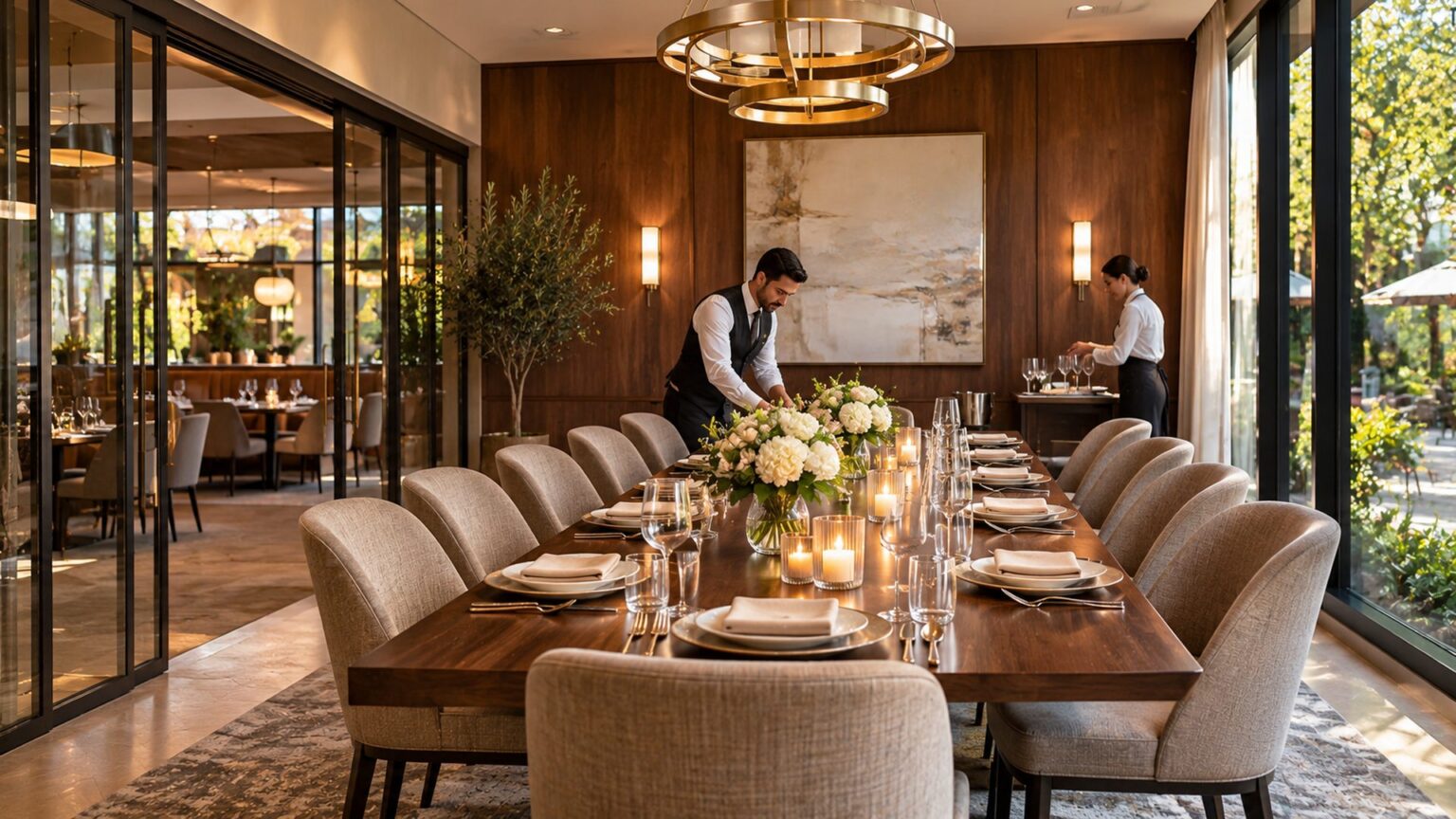
A Restaurant with Private Event Spaces gives hosts a dedicated setting for celebrations, business gatherings, and milestone dinners without requiring them to manage a separate catering venue. The right space combines comfortable seating, dependable food service, suitable privacy, and clear booking terms. Yet two restaurants that advertise private dining may offer very different experiences. This guide explains how to compare rooms, menus, prices, accessibility, and event policies so your guests enjoy the occasion and you understand the full commitment before booking.
Private dining is not automatically formal or expensive. Options range from small rooms for family meals to larger spaces designed for presentations or receptions. What matters is matching the restaurant’s actual capabilities to your event rather than choosing solely from attractive photographs.
What Makes a Restaurant with Private Event Spaces Worth Booking?
A useful private dining venue should offer a room that fits the guest count, a food and beverage arrangement that suits the occasion, and staff who can support the planned schedule. Confirm whether the room is genuinely enclosed, partially separated, or part of a larger shared area. These distinctions affect conversation, noise, and how freely your group can use the space.
A clear proposal should explain the room layout, included services, any minimum spending requirement, and what happens if your plans change. A restaurant that answers these questions clearly gives you a stronger basis for comparison than one offering only a package price.
Fully Private Rooms, Semi Private Areas, and Buyouts
A fully private room usually has its own boundaries and doors, although sound isolation varies. A semi private area might use partitions, curtains, or a section of the main dining room. A restaurant buyout reserves an entire venue or an agreed portion for one event. None is universally best. A small birthday dinner may work well in a quiet alcove, while a confidential meeting may require an enclosed room.
Confirm the Room, Not Just the Venue
Ask for photographs or a floor plan of the exact room being offered. A restaurant may have several rooms with different capacities, views, sound levels, and accessibility features. Verify the entry route, restrooms, nearby activity, and whether other groups will use adjoining spaces at the same time.
Four Benefits of Hosting an Event in Private Dining
1. More Control Over the Guest Experience
A dedicated room helps guests find one another and makes it easier to arrange seating. Hosts can choose whether the atmosphere should feel relaxed, celebratory, or focused. The amount of control depends on restaurant policies, so clarify decoration, music, photography, and access before making plans.
2. Food and Service in One Location
Restaurants already have kitchens, dining equipment, and service teams. This can simplify coordination compared with renting an empty room and separately hiring food service. It does not mean every service is included. Special linen, upgraded place settings, dedicated bartenders, or extended room access may cost extra.
3. Menus That Can Match the Occasion
Many venues offer group menus, shared platters, or individually selected courses. A prearranged menu can help the kitchen serve a group at a predictable pace. Ask what choices guests can make, how dietary requirements are handled, and when final selections must be submitted.
4. A Clearer Event Schedule
A reserved dining area can support welcome drinks, speeches, a meal, and a closing toast without moving guests between locations. This works best when the restaurant agrees to a realistic timeline. Hosts should confirm whether room access includes setup, guest arrival, dining, and cleanup time.
Match the Space to Your Event Type
Different gatherings place different demands on a venue. A restaurant suitable for an anniversary dinner may not have the technology or acoustics needed for a company presentation. Start with the purpose of the event and identify what would make it successful for guests.
Birthdays, Anniversaries, and Family Milestones
For personal celebrations, prioritise comfortable conversation, flexible seating, and practical rules for cakes, decorations, and children. Ask whether the restaurant provides dessert service and whether outside cakes are permitted. Confirm any cutting fee rather than assuming you may bring food without restrictions.
Corporate Dinners and Client Meetings
Business events may require a quiet setting, dependable internet access, presentation equipment, and prompt service. Check the room’s acoustics and visibility from every seat. If confidential discussions are expected, ask specifically about sound privacy. A closed door alone does not guarantee conversations cannot be heard elsewhere.
Rehearsal Dinners and Wedding Celebrations
A rehearsal dinner may involve family introductions, speeches, and guests arriving from different locations. Look for simple transport access, an organised seating plan, and a menu that accommodates a range of preferences. Confirm whether the room can support a microphone or a brief presentation if needed.
Showers, Graduations, and Community Gatherings
These occasions may need extra space for gifts, displays, or short activities. Ask which decorations are allowed and whether guests can move chairs. A room with enough seats can still feel cramped if tables, gift stations, and circulation paths take up the remaining floor area.
Determine Guest Capacity Before Comparing Prices
Capacity should be based on the actual seating arrangement, not just the largest number printed on a venue listing. A room that holds forty people for a standing reception may seat fewer for a plated dinner. Tell the event coordinator how guests will eat, move around, and participate.
Seated Dinner, Reception, or Presentation Layout
A banquet arrangement uses tables and requires service aisles. A reception may allow more people to stand, subject to occupancy rules. Presentation layouts must also account for screens, speakers, and sightlines. Ask the venue to confirm the legal and practical maximum for your exact format.
Accessibility Is Part of Capacity
Check the entrance, door widths, routes to the room, restroom access, and seating options. Ask about steps, elevators, and any barriers that guests using mobility aids might encounter. Accessible arrangements should be confirmed for the specific space rather than assumed from a general website description.
Leave Room for Service and Movement
Guests need room to enter, leave their seats, and reach restrooms. Servers also need clear paths. Include space for strollers, mobility devices, coat storage, or event materials when relevant. A slightly larger room may be more comfortable than filling every available seat.
Evaluate Private Event Menus and Dietary Needs
A strong event menu fits the budget, guest preferences, kitchen capacity, and event length. Discuss the available service formats before choosing dishes. A plated meal, buffet, and shared family style service create different expectations for timing and staffing.
Plated, Family Style, and Buffet Service
Plated service provides a defined sequence of courses and can support formal gatherings. Family style dishes encourage sharing, but tables require enough space for serving platters. Buffets offer flexibility but need safe food handling, suitable access, and an organised line. Ask which formats the restaurant can execute well for your group size.
Handle Allergies Carefully
Provide dietary information early, including allergies, vegetarian needs, and other restrictions. Ask how the kitchen prevents cross contact and whether the proposed dishes can be prepared safely. Avoid promising a completely allergen free meal unless the restaurant can substantiate that claim. Guests with serious allergies should communicate directly with the venue when appropriate.
Questions for the Event Coordinator
Find out when the final menu is due, how substitutions are priced, and whether individual orders are allowed. Confirm who pays for drinks and whether a limited beverage package is available. If there are children in the group, ask about portion sizes and suitable meals rather than assuming the main menu will work for everyone.
Understand Room Fees, Minimum Spend, and Service Charges
The advertised menu price may be only one part of the final bill. Some restaurants charge a room rental fee. Others require a minimum food and beverage purchase for exclusive use of the space. A minimum spend is not always an additional fee, but it may create a shortfall charge when purchases do not reach the agreed amount.
Ask for an Itemised Estimate
A detailed quote should identify the food price, beverages, room charge or minimum spend, taxes, service charges, and optional extras. Check whether gratuity is included and whether an additional tip is expected or optional. Service charge rules and tax treatment depend on the location and venue, so request clarification in writing.
Use Total Cost Per Guest for Comparison
Divide the expected final cost by the number of attendees, while keeping fixed charges visible. A lower menu price can be offset by a room fee or mandatory add ons. If guest numbers are uncertain, ask for estimates at both your likely attendance and the minimum attendance you can reasonably expect.
Clarify Deposits and Final Numbers
Find out when payment is due and whether the deposit is refundable. Ask when the final guest count becomes binding and how unexpected additional guests are handled. These details can matter more than minor differences in per person menu prices.
Inspect Location, Parking, and Arrival Logistics
A beautiful room is less useful if guests struggle to reach it. Consider travel distance, nearby parking, public transport access, and the ease of finding the entrance. When guests are arriving from several areas, pick a location that does not place unreasonable travel demands on one group.
Check the Actual Arrival Experience
Ask where drivers should stop, whether valet service is available, and whether parking is validated. If the private room has a separate entrance, request precise directions. In busy entertainment districts, discuss how guests will locate the venue when outdoor signs or nearby streets are crowded.
Consider Weather and Seasonal Conditions
An outdoor terrace can be appealing, but an event dependent on good weather needs an alternative plan. Ask whether a backup indoor space is guaranteed or subject to availability. Confirm any extra charges for switching layouts and what happens if weather makes the original area unusable.
Review Booking Policies Before Paying a Deposit
A Restaurant with Private Event Spaces may offer attractive menus while applying strict contractual terms. Read the agreement as carefully as the food proposal. Important provisions can include arrival time, event duration, payment deadlines, cancellation rules, and responsibility for damage.
Changes, Cancellations, and Overtime
Ask what happens if the event date changes or attendance drops. Some venues set deadlines for adjustments and charge for guaranteed numbers even when fewer people attend. Check when overtime fees begin and whether staff can extend service on the day. Do not rely on verbal assurances that are absent from the written agreement.
Outside Vendors and Decorations
Confirm whether outside florists, photographers, musicians, and cake suppliers may enter the space. There may be restrictions on candles, adhesives, confetti, amplified music, or wall decorations. Obtain approval before ordering materials that the venue might not permit.
Clarify Setup and Breakdown Windows
If the reservation begins at six, find out whether decorators can enter at five or only at six. Confirm when personal items must be removed. A short setup window can affect the design of even a modest event.
Tour the Restaurant Before Making a Decision
Photos are useful for narrowing options, but a walkthrough reveals details that pictures often miss. Visit during a comparable time of day if possible. Notice lighting, background noise, table spacing, restroom access, and how easily you can hear someone speaking from across the room.
Test What Matters for Your Event
For a speech, stand where the speaker will be and check the sightlines. For a business meeting, ask for a demonstration of the screen and audio equipment. For a family dinner, look at chair comfort and the distance between tables. These simple checks often reveal whether the venue will work as expected.
Ask to Meet the Main Contact
Find out who will handle the event from booking through service. Some restaurants use a sales coordinator for planning and a separate manager on the day. Request a clear handoff process and a contact method for urgent changes. The more details you settle early, the less the host needs to troubleshoot during the gathering.
How to Find a Restaurant with Private Event Spaces Near You
Start with the neighbourhoods that make sense for your guests, then narrow the options by group size and event type. Restaurant websites, local venue directories, and direct phone enquiries can help you identify rooms that may not be prominently advertised. Confirm current availability with the venue itself; a listing may show an attractive room without reflecting its current use or booking conditions.
Compare Locations Using the Same Questions
Ask every shortlisted restaurant for the same details: room capacity for your layout, a sample group menu, full estimated charges, accessibility information, and available dates. Consistent questions prevent one attractive feature from hiding a major limitation elsewhere. A venue close to hotels or transit may be particularly helpful when guests are visiting from outside the city.
Consider the Right Time of Day
Lunch events, weekday gatherings, and evening celebrations can have different minimums or room availability. Ask whether a less busy day offers more flexibility, but never assume a lower rate without confirmation. The ideal time should suit guests first and pricing second.
Plan the Experience Beyond the Meal
Private dining is also about how an occasion feels as it unfolds. A thoughtful seating plan, a clear start time, and an appropriate pace between courses help guests stay comfortable. Tell the restaurant whether your group plans speeches, games, awards, or extended conversation so service does not interrupt key moments.
Coordinate Speeches and Equipment
If anyone will speak to the group, confirm whether a microphone is needed and where the speaker can stand. Test any projector, screen, or audio connection in advance. Ask whether the restaurant supplies a technician or whether the host must operate the equipment. A small private room may need no amplification, but background music and adjoining dining areas can change what guests hear.
Give Guests Useful Information
Send attendees the venue address, arrival time, parking guidance, dress expectations if any, and a contact for questions. If guests will pay individually, say so before the event and confirm that the restaurant can handle separate payments. When the host is covering the meal, explain which drinks or extras fall outside the hosted arrangement to avoid awkward surprises.
Design a Comfortable Finish
Check when the room must be vacated and allow time for guests to collect belongings without rushing. Arrange any gifts, equipment, or decorations so they can be removed within the agreed window. A reliable restaurant with private event spaces should explain how its team will manage the final course, payments, and room turnover.
A Practical Booking Timeline
Start by confirming your preferred date, estimated attendance, budget, and type of meal. Shortlist venues that can accommodate the required layout. Ask each restaurant for room availability and an itemised proposal before spending time on detailed decoration plans.
Once you choose a venue, review the agreement and pay any required deposit. Share the initial schedule and dietary information. Closer to the event, confirm final numbers, menu choices, seating layout, accessibility arrangements, and any audiovisual needs. Send guests accurate arrival instructions and review the final invoice afterward.
Keep One Written Event Plan
A simple document can record the contact person, timeline, menu, payment milestones, room layout, vendor permissions, and special guest requirements. Share the approved version with the restaurant and anyone helping to organise the occasion. This reduces conflicting instructions and makes last minute changes easier to manage.
Common Mistakes to Avoid
Do not choose a venue based solely on its maximum advertised capacity. Avoid assuming that a semi private area is soundproof, that all drinks are included, or that outside decorations are automatically allowed. Another common mistake is overlooking the minimum spend when a few guests cancel.
Compare the complete guest experience rather than the appearance of the room alone. A comfortable layout, realistic service schedule, clear pricing, and attentive communication are often more valuable than elaborate decor that does not suit your event.
Frequently Asked Questions
1. How do I find a Restaurant with Private Event Spaces for a small group?
Search for venues offering private dining rooms, then confirm the minimum guest count, exact room layout, menu requirements, and booking terms before reserving.
2. What is the difference between private and semi private dining?
Private dining usually provides a dedicated enclosed room, while semi private areas remain partly connected to the main restaurant. Actual sound and visual privacy vary.
3. Do restaurants charge extra for private event rooms?
Some charge a rental fee, while others use food and beverage minimums. Ask for a written estimate that includes taxes, service charges, and possible extras.
4. Can restaurants accommodate dietary restrictions at private events?
Many offer options, but availability and cross contact controls vary. Share requirements before booking and obtain confirmation for guests with serious allergies.
5. How far in advance should I book a private dining space?
Reserve as early as practical, particularly for popular dates or large groups. Availability varies by city, season, guest count, and venue.
6. Can a private restaurant room host a business presentation?
Some rooms support meetings, but confirm seating, acoustics, internet access, screens, power outlets, and any equipment fees before committing.
Conclusion
Choosing a restaurant for a private event is easier when you start with guest needs rather than appearances. Confirm the room’s actual privacy, capacity, menu flexibility, total cost, and booking policies before paying a deposit. A walkthrough and a written event plan can prevent misunderstandings while helping the restaurant deliver the experience you want. With careful comparisons, a private dining event can feel organised, welcoming, and personal from arrival to the final course.
