
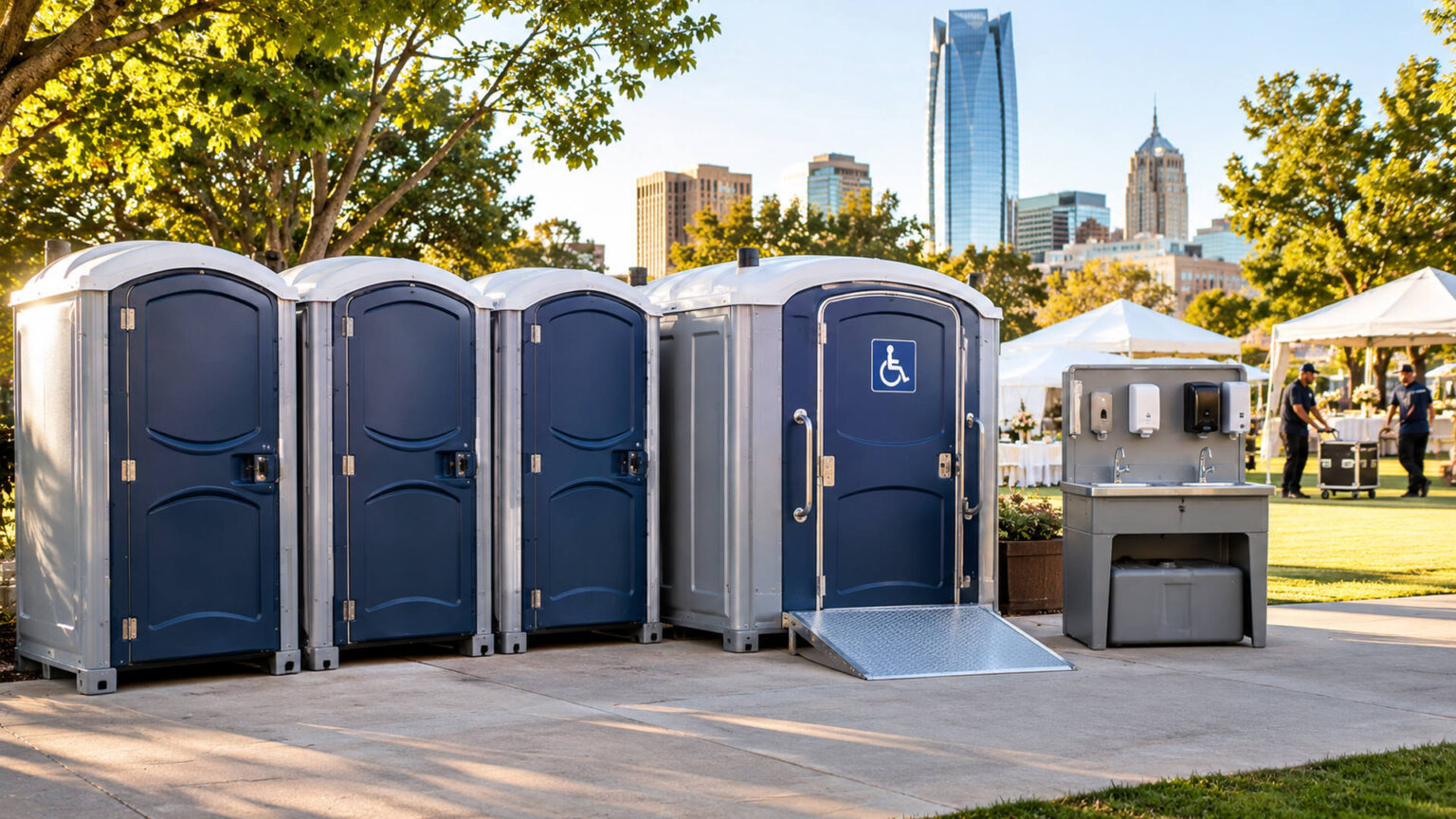
Planning porta potty rental in OKC involves more than choosing a toilet and arranging delivery. A clean, appropriately sized restroom setup depends on attendance, event duration, accessibility, placement, service frequency, and the requirements of the location. Oklahoma City hosts outdoor celebrations, building projects, neighborhood gatherings, and commercial events with very different sanitation needs. This guide explains how to select portable units, compare rental quotes, prepare the site, and keep facilities usable from the first guest or worker to the final pickup.
Portable toilets offer temporary sanitation where permanent facilities are unavailable, insufficient, or too far away. Their value depends on reliable servicing, safe access, and realistic capacity planning. A rental company should be able to explain what is included, not simply provide a unit price.
What Does a Portable Restroom Rental Include?
A typical rental combines the temporary use of one or more portable toilets with transportation, placement, and collection. Depending on the contract, the provider may also handle waste pumping, cleaning, deodorizing, and restocking supplies. The exact package matters because a short weekend celebration and a months long construction project need different service arrangements.
Standard Equipment and Optional Additions
Basic units commonly provide a toilet, a holding tank, ventilation, a locking door, and toilet paper. Features vary by provider. Upgrades may include an interior hand sanitizer dispenser, a sink, additional space, or improved lighting. Separate handwashing stations can be particularly valuable where food is prepared or served.
Do not assume that delivery, cleaning visits, handwashing, and pickup are included in every advertised price. Ask for a written description of the unit and services.
17 Easy Ways to Plan Porta Potty Rental in OKC
1. Define the Purpose Before Requesting Quotes
Start by identifying whether the units will serve a wedding, festival, backyard celebration, construction crew, temporary workplace, or emergency facility closure. Each situation has a different pattern of use. A wedding needs guest comfort and discreet placement, while a jobsite prioritizes durable units and reliable access throughout the working day.
Tell prospective providers the occasion, venue address, dates, operating hours, and expected number of users. For porta potty rental in OKC, accurate details support a useful recommendation and reduce last minute changes.
2. Estimate Attendance and Peak Demand
Count everyone likely to use the facilities, including guests, workers, vendors, and event staff. Then identify periods when demand may rise sharply, such as a concert intermission or the end of a wedding meal. Total attendance alone cannot predict waiting times.
For an event with 200 attendees, a four hour schedule and an eight hour schedule may call for different quantities and service plans. Ask the supplier to explain its estimate instead of accepting a universal ratio. Existing permanent restrooms may reduce the number needed only if they are available, working, and accessible to the same users.
3. Account for Event Duration and Food Service
Longer events create more restroom visits and can increase demand for waste capacity and supplies. Food service and alcohol availability may also affect restroom use. A short daytime market has different needs from an evening event with extended dining and entertainment.
Share the event program with the provider, including the first arrival and last departure. If guests may remain on site longer than originally planned, build that possibility into the sanitation plan.
4. Choose the Right Type of Portable Toilet
Different units address different needs. Standard toilets suit many temporary applications. Larger accessible units provide more room and features for users who require them. Flushable designs may offer greater comfort, while multi stall restroom trailers can support more formal events when site conditions and budgets allow.
Standard Portable Restrooms
A standard unit is usually the most straightforward choice for outdoor work and many public gatherings. Check its condition, ventilation, door hardware, and available hygiene supplies before accepting delivery.
Accessible Units
An accessible portable toilet is not simply a wider standard unit. Appropriate interior clearance, accessible entry, grab bars, and ground conditions all matter. Ask for the exact features of the model being delivered.
Restroom Trailers
Trailers may offer flushing fixtures, sinks, and climate controlled interiors. They also require more space and may need power, water, or other site provisions. Request those specifications before reserving one.
5. Make Accessibility Part of the First Plan
People using wheelchairs or other mobility aids need practical routes to the facilities, not just an accessible unit on the invoice. Where applicable, accessibility standards for clusters of single user portable toilets generally call for at least five percent accessible units, with no fewer than one per cluster. Confirm the requirements that apply to your site and event rather than treating this figure as the entire compliance checklist.
Plan stable, reasonably level approaches and sufficient maneuvering space. Avoid placing an accessible unit beyond curbs, loose gravel, obstructed pathways, or steep slopes. An accessible restroom that cannot be reached safely is not an effective solution.
6. Confirm Oklahoma City Permits and Venue Rules
An outdoor public event may require permits or approvals depending on its location, use of public space, size, and activities. Oklahoma City parks and special event arrangements can also have specific sanitation expectations. A venue without usable permanent restrooms may require the organizer to arrange temporary facilities.
Check with the relevant city office, park authority, or property manager early. For porta potty rental in OKC, a private event on private land may have different requirements from a street festival or event in a public park. Do not assume that a restroom rental company obtains every permit on the organizer’s behalf.
7. Plan for Construction Site Sanitation Requirements
Employers have sanitation responsibilities when workers are present on construction sites. Federal construction sanitation rules specify minimum toilet facilities based on workforce size and require practical access. For crews of 20 workers or fewer, the general construction rule calls for at least one toilet facility, but larger crews and particular operations require further evaluation.
Before setting the quantity, confirm the applicable safety rules, workforce count, shift pattern, and any site specific obligations. A unit placed far from active work areas may be technically present yet inconvenient or unsuitable. Ask the provider whether servicing can follow the changing layout of the project.
8. Select Locations That Guests Can Find
Place toilets where people can locate them without crossing active traffic lanes, construction hazards, or restricted areas. Make walking routes straightforward and give the facilities enough separation from dining and gathering areas to feel comfortable.
Privacy matters, but hiding toilets behind a remote building can create access problems after dark. For larger events, placing several small groups of units near different activity zones may be more useful than concentrating all facilities in one distant corner.
9. Check Delivery Truck Access Before Booking
Portable toilets need suitable delivery access, and service trucks must be able to reach their holding tanks later. A narrow gate, low tree branch, soft lawn, or parked vehicle may prevent the contractor from completing the job as scheduled.
Tell the supplier about curbs, slopes, unpaved surfaces, restricted loading windows, and any locked entrances. Ask how much clear space is required for unloading and subsequent pumping. Never assume a unit can be carried through any path or placed on an unstable surface.
10. Consider Oklahoma Weather and Ground Conditions
Oklahoma City conditions can include strong winds, severe thunderstorms, summer heat, and periods of heavy rainfall. These conditions affect placement and maintenance even when the toilets themselves are designed for outdoor use.
For porta potty rental in OKC, choose firm, level ground and discuss appropriate positioning or securing methods with the rental company. Avoid areas that flood or collect stormwater. During hot weather, ventilation and more frequent sanitation checks may improve usability. Weather planning should protect users and delivery crews without making unsupported claims that any unit is stormproof.
11. Add Handwashing Facilities Where Needed
Hand sanitizer and handwashing are not interchangeable in every setting. A separate station with running water, soap, and a drying method may be important for food service, certain worksites, and events with relevant health requirements.
Ask how the station’s fresh water and wastewater tanks will be maintained. Place handwashing equipment along a clear route from the toilets while keeping access practical for every user. Confirm the specific requirements for any food preparation or temporary food service activity.
12. Choose a Service Schedule Based on Usage
Servicing may include pumping waste, cleaning interior surfaces, treating odors as appropriate, and restocking consumables. A unit that serves a small crew during a short week does not have the same needs as one used heavily at a crowded festival.
Ask how often the provider will inspect and service each unit, and when additional visits become necessary. For a multi day event, discuss daily checks and possible pump outs. A predictable service plan helps prevent overflowing tanks, empty dispensers, and unpleasant conditions.
13. Compare Total Rental Costs, Not Just Unit Prices
The final cost of porta potty rental in OKC can depend on unit type, quantity, rental duration, delivery distance, location access, service frequency, and pickup conditions. Additional charges may apply for urgent orders, weekend service, damage, or cleaning beyond normal use.
Request an itemized quote that separates base rental, transportation, scheduled servicing, extra service visits, supplies, and taxes where applicable. Avoid relying on a single generic price because it may not describe the full service your event or site needs.
14. Ask About Unit Condition and Hygiene
Request clean, operational equipment with secure doors, working locks, and sufficient toilet paper. For longer rentals, clarify who handles routine condition checks between scheduled service visits. The organizer should have a way to report a problem promptly.
A provider should explain how its units are cleaned and what happens when a tank fills sooner than expected. Strong fragrances are not a substitute for adequate servicing. Cleanliness depends on waste removal, maintained surfaces, supplies, and responsive support.
15. Book Early When Dates Matter
High demand can occur around major event weekends and busy construction periods. Booking earlier increases the opportunity to compare unit types, review delivery logistics, and confirm site requirements. There is no guaranteed reservation window that works for every supplier.
If your date is flexible, ask whether alternatives change availability or transport arrangements. Confirm the reservation in writing with the exact delivery and collection expectations. Do not depend solely on an informal phone conversation for a time sensitive event.
16. Review the Rental Agreement Carefully
Look for the agreed quantities, equipment types, service dates, permitted placement area, and responsibility for damage. Ask when cancellation fees begin, whether changes in unit count are allowed, and how the provider handles delayed pickup.
Define Emergency Contacts
Make sure an authorized person can reach the supplier during the event or work shift. The contract should explain what happens if a unit becomes unusable, requires urgent pumping, or cannot be accessed because of site conditions. Clear responsibility reduces confusion when people are already waiting to use the facilities.
17. Schedule a Final Site Check Before Guests Arrive
Walk through the restroom area before opening the event or beginning the next shift. Check that the doors operate, supplies are present, units stand securely, and access routes are clear. Look for mud, pooling water, poor lighting, or obstructions that could cause problems later.
For public gatherings, identify who will monitor the area during use. A brief inspection shortly before peak attendance can catch issues that a delivery receipt cannot reveal.
How Many Portable Toilets Do You Need?
There is no responsible single answer based only on guest count. Attendance, event hours, alcohol service, existing restrooms, accessibility requirements, and pumping opportunities affect the decision. A qualified supplier should be able to provide a quantity recommendation with assumptions explained.
An Event Planning Example
Imagine an outdoor community celebration with 150 guests, several food vendors, and a six hour program. Tell the rental provider whether attendees arrive together, whether other bathrooms will be open, and how far away those facilities are. Ask for a proposed standard unit count, accessible facilities, handwashing setup, and contingency service. Then confirm the plan with the venue and any permitting authority.
A Construction Planning Example
A jobsite with 18 workers on one shift has different needs from a project with several crews and changing work zones. Start with applicable construction sanitation requirements, then assess practical access and frequency of use. The legal minimum may not provide the best worker experience during peak periods, and site conditions can justify additional facilities.
Portable Restroom Pricing in Oklahoma City
Reliable quotes are location and project specific. The base rental figure may look attractive but exclude delivery outside a normal service zone, additional cleanings, or premium units. A downtown event with limited delivery windows can involve different logistics from an accessible suburban jobsite.
What Usually Changes the Quote?
The biggest variables are often rental length, number and type of units, delivery and pickup access, and cleaning frequency. Handwashing stations, accessible equipment, and restroom trailers can also affect the total. Ask whether early delivery or late retrieval adds a separate charge.
How to Compare Competing Offers
When comparing porta potty rental in OKC, give each provider the same address, dates, attendance estimate, and service expectations. Compare written totals and what happens if plans change. One quote may include scheduled cleaning while another treats it as an added service. Choose the arrangement that meets sanitation needs rather than the one with the smallest headline number.
Event Rentals Versus Long Term Jobsite Rentals
An event rental often concentrates many users into a short period, making line management and supply checks important. The organizer may need multiple toilet clusters, accessible routes, and special arrangements for food vendors or evening activities.
Construction rentals typically involve recurring daily use over weeks or months. Regular pumping, reliable access, and easy relocation as a site changes become more important. A provider may offer different contract terms for long projects, but verify the actual terms rather than assuming that longer rentals always cost less per week.
Practical Placement Tips for Popular OKC Settings
A downtown gathering may have restricted delivery hours and limited curb access. A neighborhood block event may need coordination with street closures and nearby residents. A park event can require confirmation of where temporary equipment may stand and whether existing restrooms will be available on the chosen date.
Wherever the venue sits in the Oklahoma City area, choose positions that avoid storm drains, sensitive landscaping, vehicle routes, and unstable ground. For neighboring communities outside Oklahoma City’s municipal limits, verify the rules of that specific jurisdiction. An Oklahoma City address and an OKC area marketing description are not always the same thing.
How to Evaluate a Local Rental Company
A useful supplier for porta potty rental in OKC should ask questions before recommending equipment. Look for clear descriptions of available units, dependable delivery arrangements, service intervals, and a process for urgent problems. Ask what geographic areas the company actually serves and whether it uses its own cleaning teams or a separate subcontractor.
Check that the business can supply accessible units where required and explain safe placement. Reviews may help identify recurring communication issues, but a detailed written quote and a practical site plan offer stronger grounds for a decision than star ratings alone.
Mistakes That Can Ruin an Otherwise Good Rental
Ordering too few units creates queues and sanitation problems. Ordering without checking access can prevent delivery. Leaving handwashing out of a food centered event may create avoidable hygiene concerns. Another mistake is assuming one cleaning schedule is suitable for every level of use.
Do not place restrooms near entrances in ways that block movement or create accessibility barriers. Avoid waiting until the evening before an event to resolve permit or placement questions. Most preventable rental problems begin with missing details rather than the portable toilet itself.
Frequently Asked Questions
1. How much does porta potty rental in OKC cost?
Prices vary by unit type, number of toilets, rental duration, delivery location, and service frequency. Request an itemized local quote for a useful total.
2. How many portable toilets should I rent for an event?
Base the quantity on attendance, event length, peak use, existing restrooms, and accessibility needs. Ask the provider and venue to verify the plan.
3. Are accessible portable restrooms available?
Many rental providers offer accessible models, but specifications and availability vary. Confirm the unit, accessible route, and any applicable event requirements before booking.
4. How often are portable toilets cleaned during a rental?
Service frequency depends on expected usage, rental length, weather, and the agreement. High traffic events may require more frequent cleaning and pumping.
5. Can a porta potty be delivered to a construction site?
Yes, when the site has suitable placement and vehicle access. Employers should also verify applicable sanitation rules and schedule sufficient servicing.
6. Do Oklahoma City events need permits for portable toilets?
Some events require city or venue approvals, and sanitation plans may be part of that process. Confirm requirements for the actual location and event type.
Conclusion
Thoughtful porta potty rental in OKC starts with the people using the facilities, not a generic price or unit count. Choose appropriate restroom types, confirm accessibility and local requirements, and plan delivery routes and cleaning before the site becomes busy. Compare detailed contracts so supplies, servicing, and pickup responsibilities are clear. With a realistic sanitation plan, events and work crews can have dependable facilities without avoidable last minute problems.
