
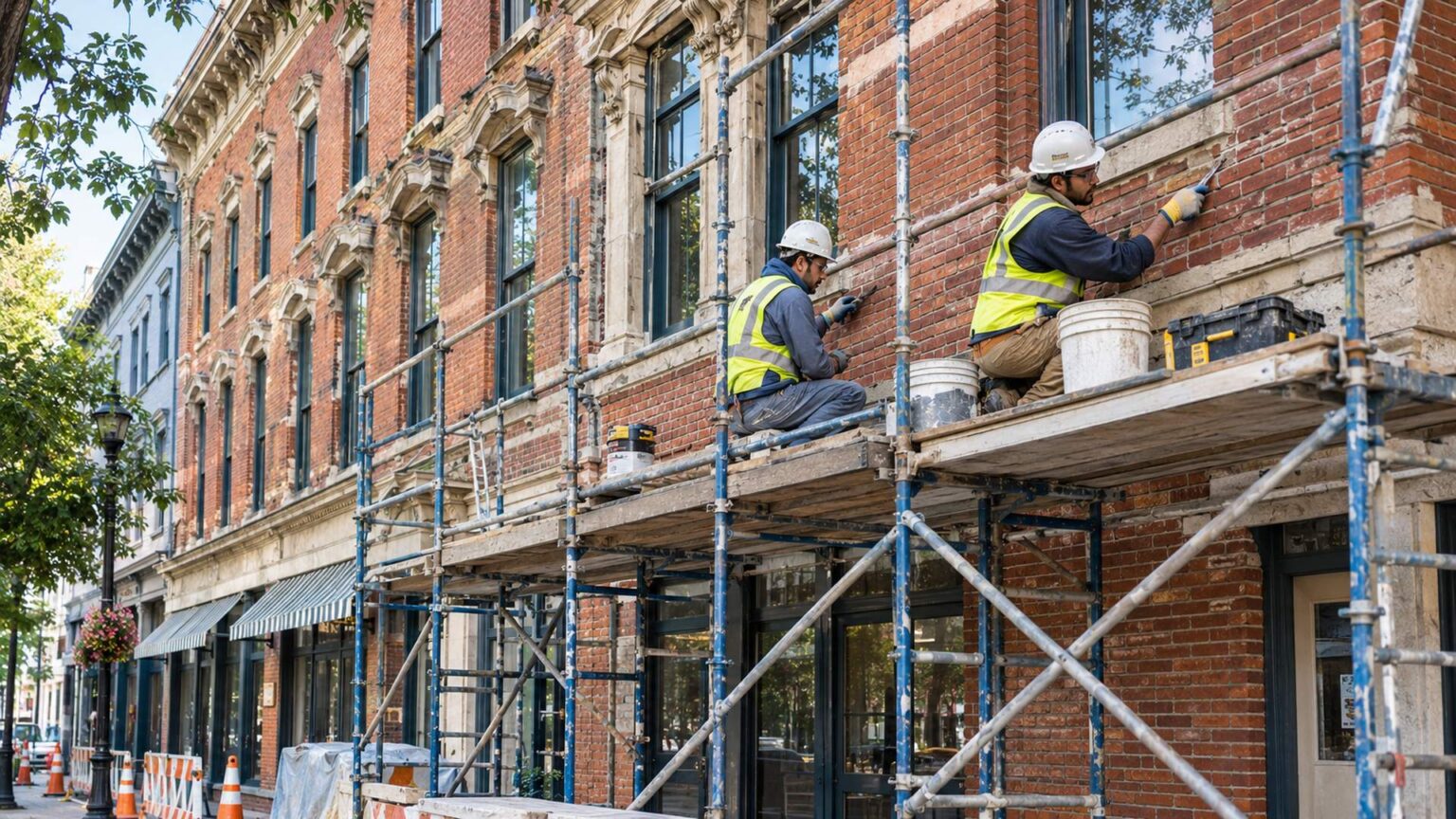
A building’s exterior does more than create a first impression. It helps protect the structure, manages exposure to changing weather, and contributes to the property’s long term condition. Investing in facade restoration in New Jersey can address deteriorating masonry, damaged architectural details, moisture problems, and aging exterior surfaces before they develop into more extensive repair needs.
New Jersey buildings face a combination of seasonal temperature changes, rainfall, humidity, and freezing conditions. Properties near the coast may also experience salt exposure and strong winds. Over time, these conditions can affect brickwork, stone, concrete, mortar joints, and exterior coatings.
Restoring a facade requires more than cosmetic improvement. Property owners need to understand the causes of deterioration, choose compatible repair methods, and work with qualified professionals who can evaluate the building’s condition.
This guide explains the essential restoration process, common warning signs, suitable materials, project planning considerations, and practical maintenance strategies for residential and commercial properties.
What Is Building Facade Restoration?
Facade restoration is the process of repairing, preserving, and improving the exterior surfaces and architectural components of a building.
The purpose is to correct deterioration, restore suitable protective functions, and maintain the appearance and character of the structure.
A facade restoration project may involve several types of work, depending on the building’s construction and condition.
Common services include:
- Brick and stone masonry repair
- Mortar joint repointing
- Concrete crack and surface repairs
- Exterior cleaning and stain removal
- Damaged architectural feature restoration
- Window perimeter and joint sealing
- Repair of deteriorated metal components
- Replacement of damaged facade materials
- Exterior coating and protective treatment
- Water infiltration assessment and correction
Not every building requires all these services. A professional condition assessment helps establish which repairs are necessary.
Restoration Versus Complete Facade Replacement
Restoration focuses on retaining sound existing materials while repairing damaged areas.
Complete replacement involves removing and rebuilding substantial portions of an exterior system.
Restoration may be appropriate when the facade remains structurally serviceable and deterioration is limited to repairable components.
Replacement may become necessary when materials are extensively damaged or the existing assembly can no longer perform its intended function.
A qualified architect, engineer, or restoration specialist can help determine the appropriate approach.
Why Facade Restoration Matters in New Jersey
The exterior condition of a building can affect maintenance costs, occupant safety, moisture management, and overall appearance.
Professional facade restoration in New Jersey is particularly important for buildings with aging masonry and exterior systems exposed to repeated seasonal changes.
Protecting Against Moisture Damage
Water is a major contributor to exterior deterioration.
Rainwater can enter through open mortar joints, damaged flashing, cracked masonry, or poorly sealed transitions.
Once moisture reaches vulnerable materials, it may contribute to staining, corrosion, deterioration, and interior damage.
Restoration should identify the source of moisture entry rather than simply conceal visible symptoms.
Managing Freezing and Thawing Conditions
During colder weather, water absorbed into certain porous materials can freeze and expand.
Repeated freezing and thawing may gradually contribute to cracking, surface scaling, or brick deterioration.
The amount of damage depends on the materials, their moisture content, and the conditions they experience.
Appropriate repairs and effective drainage can help reduce avoidable exposure.
Preserving Architectural Character
New Jersey includes many historic neighborhoods and established communities with brick, stone, and decorative masonry buildings.
These structures may contain original craftsmanship that would be difficult to reproduce.
Careful restoration helps preserve architectural details while allowing necessary repairs.
Using compatible materials is especially important when working with older masonry.
Supporting Long Term Property Maintenance
Unaddressed facade deterioration can lead to more complicated repairs.
Small defects do not always become serious problems, but regular assessments make it easier to identify changes before they affect larger areas.
A planned maintenance approach also helps property owners prioritize work and manage budgets.
Common Signs Your Building Needs Facade Restoration
Recognizing deterioration early allows building owners to investigate potential problems before committing to major repairs.
Some conditions are primarily cosmetic. Others may indicate water intrusion or structural concerns.
Cracked or Deteriorating Brickwork
Brick walls may develop cracks from settlement, thermal movement, moisture exposure, or other conditions.
Small cracks should be evaluated in context because their significance depends on their location, pattern, and whether they are changing.
Stair step cracking, displaced masonry, or widening gaps may warrant closer professional examination.
Crumbling Mortar Joints
Mortar helps connect masonry units and contributes to the performance of the wall assembly.
Over time, mortar can erode, crack, or separate from adjacent materials.
Deteriorated joints may create pathways for moisture and reduce the effectiveness of the masonry assembly.
Selective repointing can address damaged joints when the underlying masonry remains sound.
Spalling and Surface Deterioration
Spalling occurs when portions of a material’s surface break away.
It can affect brick, stone, and concrete.
Possible causes include moisture exposure, incompatible repairs, corrosion, and repeated freezing conditions.
The appropriate treatment depends on the cause and severity of the damage.
Water Stains and White Deposits
Discoloration can indicate moisture movement through exterior materials.
White crystalline deposits on masonry are commonly called efflorescence.
These deposits may occur when water transports soluble salts to the surface.
Cleaning can improve appearance, but recurring deposits require an investigation of the moisture source.
Loose or Bulging Facade Components
Displaced masonry, leaning wall sections, loose stonework, and unstable decorative features can present serious safety concerns.
These conditions should not be treated as routine cosmetic repairs.
Restrict access to potentially hazardous areas and obtain an assessment from a qualified professional.
7 Essential Steps for Successful Facade Restoration
A carefully organized restoration process helps identify underlying problems and supports more durable results.
The following steps provide a practical framework for planning exterior building repairs.
1. Begin With a Detailed Facade Inspection
Every successful restoration project starts with understanding the existing building.
An inspection should identify visible damage, construction materials, signs of moisture, previous repairs, and areas requiring additional investigation.
A professional may examine:
- Brick and stone surfaces
- Mortar joint conditions
- Concrete components
- Window and door transitions
- Exterior sealants
- Cornices and decorative details
- Flashing and drainage features
- Accessible structural connections
Different conditions may require different forms of evaluation.
For example, visible staining may justify further moisture investigation, while displaced masonry may require engineering assessment.
Documenting the Existing Condition
Photographs, written notes, and repair location drawings can help establish the scope of work.
Good documentation also makes it easier to compare conditions during future inspections.
Building owners should retain these records as part of their maintenance history.
2. Identify the Causes of Deterioration
Repairing visible damage without understanding its cause can result in recurring problems.
A cracked wall may reflect ordinary material movement, differential settlement, corrosion, or an issue with the supporting structure.
Similarly, deteriorating masonry may be affected by water entering through the roof, flashing, or window openings.
The repair strategy should address identified causes wherever practical.
Evaluating Moisture Pathways
Water can enter a facade through more than one location.
Areas that deserve attention include roof edges, parapets, coping stones, window perimeters, and transitions between different materials.
Water may also move through an exterior assembly before becoming visible inside.
Professional assessment helps distinguish the point where moisture appears from the location where it enters.
3. Select Compatible Restoration Materials
Material compatibility is fundamental to exterior repairs.
New products must work appropriately with the existing building materials and expected exposure conditions.
For example, some older brick buildings were constructed using relatively soft masonry and lime based mortar.
Applying an unnecessarily hard replacement mortar can create performance problems in certain historic assemblies.
A suitable repair considers mortar strength, permeability, movement, appearance, and the characteristics of adjacent masonry.
Matching Existing Masonry
When replacing damaged brick or stone, consider more than color.
Dimensions, surface texture, porosity, and physical performance also matter.
A replacement that looks similar but behaves differently may not be suitable for the original wall.
Historic properties may require additional investigation to identify appropriate materials.
4. Repair Damaged Brick, Stone, and Mortar
Masonry repair is often a central part of facade restoration in New Jersey.
The work may involve replacing individual damaged units, stabilizing localized deterioration, and renewing failed mortar joints.
The correct method depends on the wall’s construction and existing condition.
Understanding Mortar Repointing
Repointing involves removing deteriorated mortar from joints and installing appropriate replacement mortar.
The process requires careful joint preparation and workmanship.
Improper removal methods can damage the edges of surrounding brick or stone.
The new mortar should be compatible with the masonry, properly installed, and cured under suitable conditions.
Repairing Damaged Brick
Some damaged bricks can be replaced individually while preserving adjacent sound masonry.
The repair should maintain the wall’s intended bond pattern and appearance.
Where brick damage is associated with movement, corrosion, or underlying structural problems, additional investigation may be necessary before replacement.
Restoring Stone Details
Stone restoration may include limited patching, joint repairs, stabilization, or replacement of deteriorated pieces.
Decorative stone components require particular care because they contribute to the building’s architectural identity.
The repair material and method should suit the stone’s properties and condition.
5. Correct Water Infiltration Problems
Exterior restoration should address ineffective moisture management when it contributes to deterioration.
This may involve repairing damaged flashing, correcting open joints, replacing deteriorated sealants, or improving drainage details.
A waterproof appearance does not necessarily mean a wall is managing moisture correctly.
Some exterior wall systems are designed to allow limited moisture entry while directing water back outside.
Repair methods should respect the intended assembly rather than blocking every opening indiscriminately.
Replacing Deteriorated Sealants
Sealants are commonly used around windows, doors, expansion joints, and certain transitions.
They can deteriorate because of age, movement, exposure, or improper installation.
Replacement requires suitable surface preparation, correct joint configuration, and a compatible product.
Applying new sealant over failing material may not provide an effective repair.
6. Use Appropriate Cleaning and Surface Treatments
Cleaning can improve the appearance of restored masonry, but aggressive methods may permanently damage exterior materials.
Historic brick, limestone, sandstone, and architectural concrete can respond differently to cleaning products and equipment.
Professionals should evaluate the material and perform appropriate test applications before large scale treatment.
Avoiding Excessive Cleaning Pressure
High pressure washing and abrasive blasting can damage certain masonry surfaces.
Removing the protective outer surface of a brick may increase its vulnerability to future deterioration.
Cleaning should use the least aggressive effective method suitable for the material and condition.
Evaluating Protective Coatings
Water repellent products and other coatings are sometimes considered during restoration.
However, they are not universally appropriate.
An unsuitable coating may change appearance, interfere with moisture movement, or create additional maintenance problems.
The decision should depend on the specific wall assembly, product characteristics, and underlying condition.
7. Complete Quality Checks and Plan Ongoing Maintenance
Restoration does not end when the last repair is installed.
A final review should confirm that the agreed work has been completed and that visible concerns have been addressed.
The review may include checking mortar joints, repaired surfaces, sealant application, drainage details, and surrounding areas.
Project documentation should identify the materials and repair methods used.
Building owners should also establish a reasonable maintenance schedule.
A well documented restoration project provides a useful foundation for future inspections and repairs.
Different Facade Materials Require Different Restoration Methods
Buildings across New Jersey use a variety of exterior materials.
A method suitable for one surface may be inappropriate for another.
Brick Facades
Brick restoration commonly includes mortar repairs, selective brick replacement, cleaning, and water entry investigation.
For older buildings, preserving sound original masonry is often preferable to unnecessary replacement.
Contractors should understand the interaction between brick and mortar before specifying repairs.
Natural Stone Facades
Natural stone restoration depends on the stone type and its condition.
Limestone, granite, and sandstone have different properties and may require different cleaning and repair approaches.
Stone replacement must account for dimensions, anchorage, compatibility, and appearance.
Concrete Facades
Concrete deterioration can involve cracking, surface delamination, and corrosion of embedded reinforcement.
When corrosion contributes to damage, repairing only the exposed surface may not resolve the problem.
A qualified professional should evaluate significant deterioration and recommend appropriate repairs.
Stucco and Rendered Surfaces
Stucco may develop cracks from movement, moisture problems, or installation defects.
Repairs should consider the underlying substrate and the existing wall system.
Simply applying a new finish over a damaged area can conceal conditions that require more extensive correction.
Metal and Architectural Features
Some facades contain metal panels, anchors, lintels, railings, or decorative elements.
Corrosion and failed connections can affect both appearance and safety.
Repairs should address the condition of these components and their attachment to the building.
Facade Restoration for Historic Buildings in New Jersey
Historic properties often require a more careful approach than ordinary exterior renovation.
Original masonry, ornamental stonework, decorative cornices, and traditional construction methods may contribute significantly to a building’s character.
A good restoration plan should identify which materials can be retained and which elements genuinely need replacement.
Preserving Original Architectural Details
Unnecessary removal of historic features can reduce the building’s authenticity.
Where practical, repairs should retain sound original materials and respect existing profiles, textures, and construction details.
Replacement components should be based on the actual building rather than unsupported decorative assumptions.
Understanding Historic District Requirements
Certain properties may be subject to local historic preservation review.
The approval process can depend on the municipality, property designation, and proposed work.
Owners should confirm applicable requirements before changing visible facade materials, colors, architectural features, or other regulated elements.
Historic approval and construction permit requirements may be separate.
Understanding Facade Restoration Costs
The cost of exterior restoration varies considerably.
There is no single reliable price for all buildings because the amount and complexity of work can differ significantly.
Owners should request estimates based on a documented assessment rather than a general price assumption.
Factors That Influence Project Costs
The most important cost considerations may include:
- Total facade area
- Type and condition of existing materials
- Severity of deterioration
- Required structural investigation
- Extent of masonry replacement
- Mortar joint repair quantities
- Scaffolding and access requirements
- Architectural details and specialized work
- Permit and professional design requirements
- Site protection and waste handling
A building with extensive decorative stonework may require more specialized labor than a simpler exterior with comparable surface area.
Likewise, difficult access can add considerable planning and equipment needs.
Why the Lowest Estimate May Not Be the Best Choice
Contractors sometimes price different scopes of work.
One proposal may include comprehensive joint preparation and localized replacement, while another may cover only visible surface treatment.
These estimates should not be considered equivalent without reviewing the details.
Ask for clear descriptions of materials, repair quantities, access arrangements, exclusions, and procedures for unexpected conditions.
Planning for Unexpected Repairs
Hidden deterioration can become visible after damaged materials are removed.
Owners should discuss how unforeseen work will be evaluated and authorized.
A written change process helps prevent confusion about additional costs or schedule adjustments.
Safety, Permits, and Professional Oversight
Facade restoration involves construction activities that may affect public areas, occupied buildings, and workers at height.
Safety planning should be part of the project from the beginning.
Determining Permit Requirements
New Jersey construction requirements depend on the type of repair and the applicable rules.
Some work may require construction permits, professional documents, or municipal review.
Before starting, confirm the requirements with the local construction office.
Do not assume that every cosmetic repair is exempt or that every restoration project follows the same approval process.
Managing Scaffolding and Public Access
Tall facades may require scaffolding, aerial lifts, or other access equipment.
Professional contractors should use suitable equipment, maintain safe work practices, and protect affected pedestrian areas.
Projects near sidewalks, entrances, or occupied spaces may require additional coordination.
Recognizing Hazardous Materials
Older buildings may contain lead based paint or other hazardous materials.
Certain renovation activities can disturb these materials.
Appropriate assessment and safe work procedures should be established before potentially hazardous coatings or components are disturbed.
When Engineering Assessment Is Necessary
Structural concerns should be evaluated by appropriately qualified professionals.
Bulging walls, significant displacement, unstable masonry, and suspected connection failures are not ordinary cosmetic defects.
Repairing visible cracks without addressing structural movement may leave the underlying condition unresolved.
How to Choose a Facade Restoration Contractor
Selecting the right contractor is one of the most important decisions in a restoration project.
Experience with similar building materials and conditions matters more than broad claims about construction expertise.
Review Relevant Project Experience
Ask for examples of completed work involving similar masonry, building height, and architectural characteristics.
A contractor experienced in modern concrete repair may not necessarily specialize in historic brickwork.
Look for clear explanations of how the company evaluates deterioration and selects repair materials.
Verify Credentials and Coverage
Confirm applicable contractor registration or licensing requirements, insurance coverage, and the qualifications needed for the proposed work.
Ask who will perform specialized repairs and whether subcontractors will be involved.
Where engineering services are necessary, verify that qualified professionals will provide the required assessment or design.
Request a Detailed Written Proposal
A useful restoration proposal should explain the scope clearly.
It should identify the proposed repair methods, materials, preparation work, access arrangements, and project exclusions.
Ask how damage discovered during construction will be documented and priced.
Evaluate Communication and Project Planning
The contractor should explain potential challenges without making unrealistic promises.
Discuss weather delays, work hours, building access, occupant protection, and expected disruptions.
For larger projects, establish who will coordinate inspections, site decisions, and communication with property management.
Common Mistakes to Avoid During Facade Restoration
Even well intentioned building repairs can create problems when unsuitable methods are used.
One common mistake is addressing staining or cracking without investigating its cause.
Another is choosing replacement materials based only on appearance.
For example, inappropriate mortar can create compatibility problems in older masonry.
Aggressive surface cleaning can also remove material that should remain intact.
Other avoidable mistakes include:
- Delaying investigation of unstable exterior components
- Applying coatings without understanding moisture movement
- Using unsuitable sealants or joint repair methods
- Failing to protect pedestrians and surrounding property
- Approving work without a clear written scope
- Overlooking applicable permits or preservation requirements
- Skipping final inspection and project documentation
A carefully developed restoration plan reduces the likelihood of these problems.
How Long Does Facade Restoration Take?
The project timeline depends on the amount of work, access conditions, material availability, weather, and any required approvals.
Localized repairs may involve a relatively limited schedule.
Extensive projects on larger occupied buildings can require multiple phases and additional coordination.
Mortar, concrete repairs, sealants, and other products also have specific application and curing requirements.
Work should not be rushed simply to meet an arbitrary completion date.
During planning, ask the contractor to identify major work stages and explain which conditions could affect progress.
Clear scheduling expectations make it easier to coordinate residents, tenants, businesses, and building operations.
Maintaining a Restored Building Facade
Regular maintenance helps protect the investment made in restoration.
A building owner should develop an inspection and maintenance plan appropriate to the structure’s age, materials, and exposure conditions.
Conduct Periodic Visual Inspections
Look for new cracks, deteriorating mortar, loose components, staining, and changes around windows or roof edges.
Document visible changes with photographs.
When deterioration appears to be progressing, arrange a professional evaluation rather than assuming it is harmless.
Keep Water Management Systems Working
Gutters, downspouts, roof drainage components, flashing, and related systems can influence the amount of water reaching exterior walls.
Keeping these systems maintained may help reduce avoidable moisture exposure.
Persistent leaks should be investigated promptly.
Address Minor Defects Appropriately
Small maintenance issues are sometimes easier to correct before surrounding materials deteriorate.
However, a minor visible defect may have a more significant underlying cause.
Repairs should be based on proper assessment rather than appearance alone.
Maintain Restoration Records
Preserve inspection reports, photographs, material specifications, warranties, and records of completed work.
These documents can support future maintenance decisions and help new contractors understand previous repairs.
A record of recurring damage may also reveal conditions that deserve further investigation.
Making Facade Restoration a Long Term Property Strategy
Building exterior restoration is most effective when it forms part of a broader property maintenance plan.
Rather than waiting for widespread deterioration, owners can prioritize inspections, moisture management, and timely repairs.
For commercial buildings, this approach can help coordinate work with operations and future capital improvements.
For residential properties, it can support the preservation of architectural details and exterior performance.
Successful facade restoration in New Jersey depends on understanding the building, using compatible materials, correcting underlying problems, and selecting qualified professionals.
A carefully planned project can help preserve an exterior’s appearance and serviceability while supporting more informed long term maintenance decisions.
Conclusion
Facade restoration is an important part of protecting and maintaining residential and commercial buildings throughout New Jersey. Effective projects begin with proper inspection, address the underlying causes of deterioration, and use repair methods suited to the existing materials. Choosing experienced professionals, understanding local requirements, and maintaining completed work can help reduce avoidable damage and preserve architectural character. A thoughtful restoration strategy supports a safer, more attractive, and better maintained building exterior.
Frequently Asked Questions
1. What is facade restoration in New Jersey?
Facade restoration in New Jersey involves repairing and preserving exterior building surfaces, including brick, stone, concrete, mortar joints, and architectural features. The work aims to correct deterioration and maintain the building’s exterior condition.
2. How much does facade restoration cost in New Jersey?
Costs vary based on building size, material condition, repair complexity, access equipment, and project scope. A professional assessment and detailed written estimate provide a more reliable basis for budgeting.
3. How do I know if my building needs facade restoration?
Common warning signs include cracked masonry, crumbling mortar, spalling, water stains, loose facade elements, and persistent moisture problems. Significant movement or unstable materials require prompt professional evaluation.
4. What is the difference between facade restoration and facade repair?
Facade repair generally addresses specific defects, while restoration may involve a broader program of repairs, material preservation, cleaning, and protective maintenance.
5. How long does a facade restoration project take?
The duration depends on the building’s condition, project size, weather, access requirements, and repair methods. Contractors should provide a project-specific schedule after evaluating the work.
6. Does facade restoration require a permit in New Jersey?
Permit requirements depend on the proposed work and applicable state and municipal rules. Historic properties may also need preservation review, so owners should confirm requirements before construction begins.
7. Can historic brick facades be restored without replacing all the bricks?
Yes. When existing brick remains sound, selective replacement, compatible mortar repointing, and appropriate cleaning may preserve much of the original masonry.
8. How often should a building facade be inspected?
Inspection frequency depends on the building’s age, height, exposure, condition, and applicable requirements. Regular visual checks and professional assessments when warning signs appear are sensible maintenance practices.
