
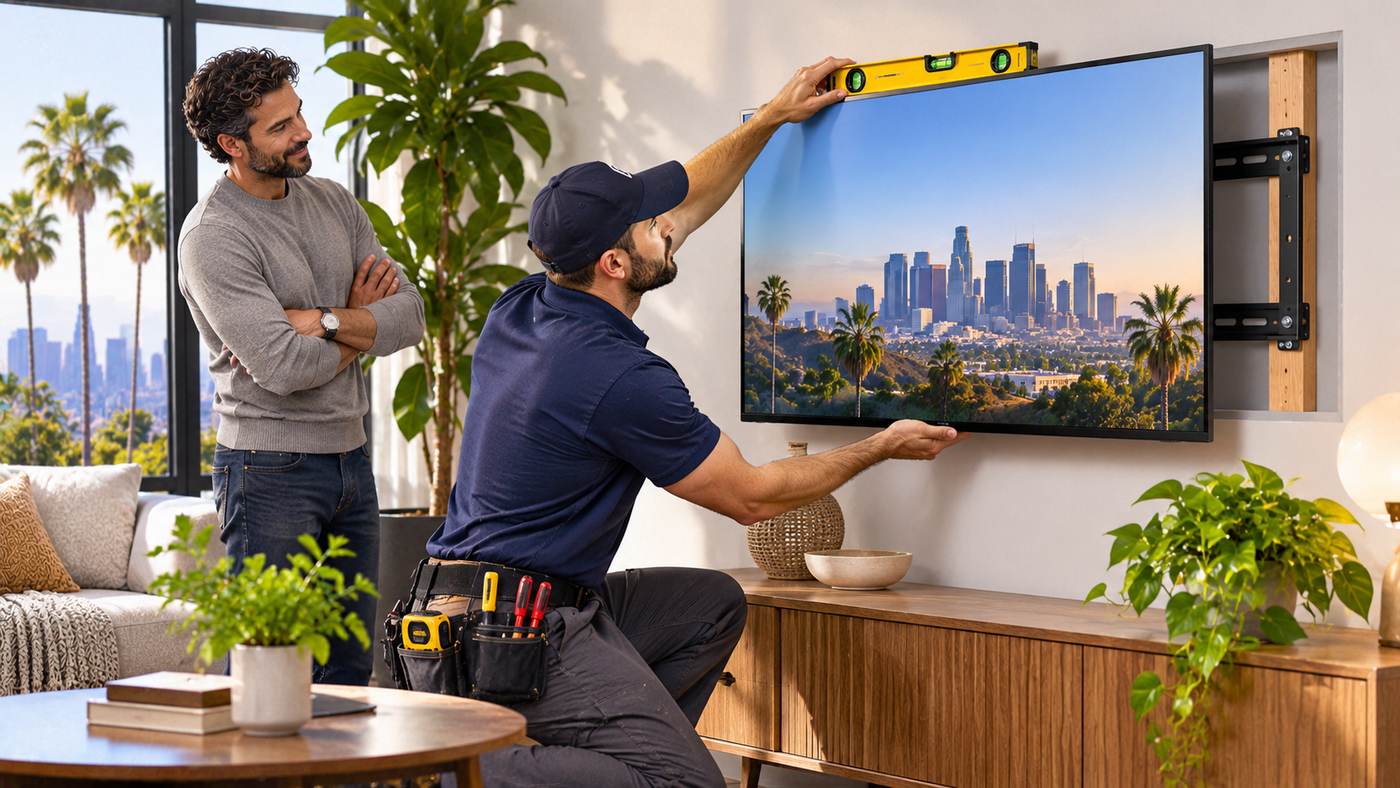
A modern television can transform an ordinary living room into a comfortable entertainment space. Whether homeowners enjoy movies, sports, gaming, or streaming their favorite shows, the placement of the television influences both viewing comfort and the room’s overall appearance.
However, installing a large television on a wall involves more than attaching a bracket and hanging a screen. The installer must consider the television’s weight, the wall’s structural characteristics, compatible mounting hardware, electrical safety, viewing height, and cable connections.
This is why partnering with a professional TV mounting service can be a practical decision for homeowners who want a secure, attractive, and functional entertainment setup.
Professional technicians can assess the proposed installation area, identify suitable mounting methods, and help homeowners select configurations that match their viewing preferences.
They may also provide cable concealment, soundbar mounting, home theater setup, and related installation services.
For homeowners in Los Angeles, where properties range from contemporary apartments to older houses with different wall materials, choosing an appropriate installation approach is particularly important.
A successful installation should protect the television, preserve the surrounding space, and make everyday viewing more comfortable.
This guide explores seven major benefits of professional television installation, common mounting options, safety considerations, installation costs, and practical ways to select a reliable service provider.
What Is a Professional TV Mounting Service?
A professional TV mounting service helps homeowners and businesses install televisions securely on suitable walls or other approved mounting surfaces.
The work may include assessing wall construction, selecting compatible brackets, locating structural supports, securing mounting hardware, hanging the television, and checking alignment.
Depending on the provider, additional services may include cable management, soundbar installation, streaming device configuration, and home theater setup.
How Professional Installation Works
The process generally begins with reviewing the television’s dimensions, weight, and mounting requirements.
A technician then examines the proposed installation location.
The wall type, support structure, viewing position, and available electrical connections influence the recommended approach.
After selecting an appropriate bracket and attachment method, the installer secures the hardware according to the equipment manufacturer’s specifications.
The television is then positioned, checked, and connected to relevant devices.
The technician should confirm that the installation is stable and that the equipment functions correctly before completing the job.
Professional Installation Versus DIY Mounting
Some homeowners can safely install televisions themselves when they have the necessary skills, tools, and suitable wall conditions.
However, unfamiliar wall construction and large televisions can make installation more complicated.
An incorrect attachment may damage the wall or allow the television to fall.
Hiring a qualified professional can help reduce these risks through proper assessment and installation practices.
Why TV Mounting Requires Careful Planning
Modern televisions are often thinner than older models, but their size and weight still create important installation requirements.
An improperly mounted television can present a physical hazard.
Large screens also require careful positioning to avoid uncomfortable viewing angles.
Wall Construction Matters
Different walls have different structural characteristics.
Wood-framed drywall, metal-stud walls, masonry, and concrete may require different mounting methods.
A fastener suitable for one surface may not be appropriate for another.
Installers must identify a suitable load-bearing attachment method.
TV Size and Weight
The screen’s dimensions and weight influence bracket selection.
A mounting bracket should support the television and comply with applicable manufacturer requirements.
Room Layout
Furniture placement, natural lighting, viewing distance, and potential glare can affect positioning.
Electrical Access
Power outlets and signal connections should be considered before installation.
Concealing cables may involve additional electrical requirements.
These details explain why mounting should be treated as a planned installation rather than a decorative afterthought.
Seven Benefits of Hiring a Professional TV Mounting Service
Working with an experienced installer can provide several practical advantages.
1. Improve Installation Safety
Safety is one of the most important reasons to hire professional television mounting specialists.
A wall-mounted television must be supported by hardware compatible with the equipment and wall structure.
An incorrect installation can cause the bracket to loosen or the television to fall.
Identify Suitable Structural Support
Professional installers assess where the mounting bracket can be secured.
For wood-framed walls, this often involves locating appropriate wall studs.
Other wall types may require specialized hardware or reinforcement.
Choose Compatible Fasteners
Different mounting surfaces require different fasteners.
The installer should follow the television and bracket manufacturers’ instructions.
Confirm Bracket Capacity
The bracket must support the television’s weight and mounting configuration.
Check Installation Stability
After installation, the technician should verify that the television and bracket are correctly secured.
Professional service does not eliminate every possible risk, but a properly qualified installer can help avoid common mistakes.
2. Achieve a Comfortable Viewing Height
Television placement affects how comfortably people watch their screens.
A TV installed too high may require viewers to tilt their heads upward.
A poorly positioned screen can also create distracting reflections.
Consider Seating Position
The most suitable height depends on where viewers normally sit.
A television in a family living room may require a different position from one installed in a bedroom.
Evaluate Viewing Distance
Screen size and seating distance influence the viewing experience.
A larger television may be suitable for a room with sufficient viewing space.
Reduce Unnecessary Neck Strain
For typical seated viewing, positioning the screen around a comfortable eye level is often a useful starting point.
However, room layout and furniture may require adjustments.
Consider Window Glare
Nearby windows and lighting can create reflections.
Appropriate positioning or a compatible tilting mount may help manage them.
A professional can explain the trade-offs associated with different locations.
3. Create a Cleaner Living Room Appearance
Wall-mounted televisions can help create a more organized entertainment space.
Instead of occupying a large cabinet or stand, the television becomes part of the wall arrangement.
Reduce Furniture Clutter
Mounting may reduce the need for certain entertainment furniture.
However, devices, speakers, and storage requirements should still be considered.
Improve Visual Balance
A television positioned appropriately can complement the room’s layout.
Organize Connected Devices
Streaming boxes, gaming consoles, and sound equipment can be arranged for easier use.
Support Modern Interior Design
A slim television with a suitable bracket can create a streamlined appearance.
The result should reflect the homeowner’s preferences rather than following one decorative style.
4. Manage and Conceal Television Cables
Visible wires can make an entertainment area look cluttered.
Many homeowners therefore request cable concealment as part of the installation.
Professional services may offer several approaches.
External Cable Covers
Surface-mounted raceways can organize cables along a wall.
They may be a practical option when in-wall work is unnecessary or unsuitable.
In-Wall Signal Cable Routing
Certain appropriately rated low-voltage cables may be routed through suitable wall cavities.
The installation must comply with applicable requirements.
Electrical Power Connections
Ordinary television power cords should not simply be hidden inside walls unless specifically permitted by the applicable product listing and electrical rules.
Recessed outlets or approved in-wall power solutions may require a qualified electrician.
Future Device Access
Cable planning should consider whether the homeowner may later add gaming systems, streaming devices, or audio equipment.
A safe installation should balance appearance with accessibility and electrical requirements.
5. Select the Right TV Mount
Television brackets vary in design and functionality.
The correct choice depends on the television, wall, room layout, and viewing requirements.
Fixed Mounts
A fixed mount positions the television relatively close to the wall.
It can provide a streamlined appearance where frequent adjustment is unnecessary.
Tilting Mounts
A tilting bracket allows limited vertical adjustment.
This may help when a screen needs to be positioned somewhat above the normal viewing level.
Full-Motion Mounts
A full-motion bracket allows certain outward, swiveling, and tilting adjustments.
This can be useful when people watch from different seating positions.
However, extending a television away from the wall can increase the forces on the mounting structure.
The wall and hardware must be suitable for the installation.
Specialized Mounts
Some installations require brackets for particular television designs, corners, or other approved mounting configurations.
A knowledgeable installer can help determine whether a particular bracket is appropriate.
6. Support Additional Entertainment Equipment
Modern entertainment systems often include more than a television.
A household may use soundbars, gaming consoles, streaming devices, surround sound equipment, and smart home technology.
Coordinating these devices can create additional installation requirements.
Soundbar Installation
A soundbar can be mounted or positioned to complement the television.
The installer should consider soundbar compatibility, cable connections, and clearance.
Streaming Device Setup
A technician may assist with connecting supported streaming devices.
Account access and setup should remain under the homeowner’s control.
Gaming Console Connections
Gaming systems may require specific HDMI connections and display settings.
Home Theater Configuration
A more comprehensive entertainment setup may involve projectors, speakers, AV receivers, and other components.
Basic Testing
The technician can verify that the connected equipment operates correctly within the agreed service scope.
An integrated installation can help reduce the complexity of managing several devices.
7. Save Time and Reduce Installation Mistakes
Installing a television can require planning, tools, measurements, and assistance from another person.
Unexpected wall conditions or missing hardware may complicate the work.
Professional installers bring relevant experience to these tasks.
Appropriate Tools
Technicians may use measuring equipment, levels, stud detection tools, and suitable fastening equipment.
Experience With Different Installations
A professional familiar with several wall types may recognize problems that an inexperienced homeowner could overlook.
Reduced Trial and Error
Proper planning can reduce unnecessary drilling or repeated bracket adjustments.
Clearer Installation Scope
A written quotation helps establish which services are included.
Post-Installation Review
Homeowners can confirm that the television is positioned correctly and the agreed work is complete.
The objective is not simply faster installation but a dependable result.
Exploring UrbanOrbits TV Mounting Services in Los Angeles
Homeowners considering partnering with a professional TV mounting service can explore UrbanOrbits, a company providing television mounting and home entertainment installation services throughout Los Angeles County.
UrbanOrbits advertises services involving TV wall mounting, cable management, soundbar installation, home theater systems, and gaming or streaming device setup.
Its website describes appointment options across Los Angeles County, including Glendale, Pasadena, Beverly Hills, Burbank, Santa Monica, and surrounding communities.
Professional Television Installation
UrbanOrbits offers wall mounting for different television types and sizes.
Its published services include bracket selection guidance, secure installation, and positioning assistance.
Cable Management
The company offers solutions for organizing and concealing television cables.
Specific options should be reviewed according to wall construction and applicable electrical requirements.
Soundbar Installation
UrbanOrbits provides soundbar setup for homeowners who want to improve their television’s audio arrangement.
Home Theater Services
The company also advertises installations involving projectors, speakers, AV receivers, and complete entertainment systems.
Gaming and Streaming Setup
UrbanOrbits assists with connecting compatible gaming systems, streaming devices, and related equipment.
Appointment Scheduling
Its website advertises same-day or next-day appointments when technicians are available.
However, actual appointment availability should be confirmed directly.
Transparent Quotations
The company promotes clear quotations based on the installation requirements.
Homeowners should explain their television size, wall type, bracket preferences, and cable concealment needs before booking.
Types of Walls Used for Television Mounting
The wall structure is one of the most important installation considerations.
Drywall With Wood Studs
Wood-framed walls are common in many residential properties.
Installers typically locate appropriate structural supports for the mounting hardware.
Drywall alone should not be assumed capable of supporting a large television and bracket.
Metal-Stud Walls
Metal-stud construction may require a different mounting approach.
The installer must verify whether the wall can support the intended load and whether reinforcement is necessary.
Concrete Walls
Concrete can provide a suitable mounting surface when appropriate anchors and installation techniques are used.
However, installers must assess the actual wall condition and equipment requirements.
Brick and Masonry
Brick and masonry walls require compatible attachment methods.
The condition and type of masonry affect installation decisions.
Plaster Walls
Older homes may contain plaster finishes or other construction materials that require additional care.
An experienced installer should assess the wall before drilling.
How to Choose the Best TV Mounting Location
A good installation location should support safe mounting and comfortable viewing.
Measure the Room
Consider the distance between the television and the primary seating area.
Review Furniture Placement
The screen should be positioned according to how the room is normally used.
Identify Natural Lighting
Windows may create reflections at certain times of day.
Check Power Access
Suitable power connections should be available without unsafe wiring practices.
Consider Future Equipment
Additional devices may require cable access.
Assess Wall Support
Not every visually attractive wall is structurally suitable.
Review Household Needs
Children, pets, and frequent room rearrangement may influence mounting and cable-management decisions.
Mounting a Television Above a Fireplace
Above-fireplace television installations are common in some home designs.
However, they require additional consideration.
Heat Exposure
A fireplace may generate heat that affects the television.
The screen’s location should comply with the manufacturer’s operating temperature requirements.
Viewing Height
Fireplace mantels may position the television higher than is comfortable for typical seated viewing.
Wall Construction
The area around a fireplace may contain masonry, framing, or other materials requiring special assessment.
Hidden Utilities
Installers must avoid interfering with electrical wiring, fireplace components, or other concealed systems.
Mount Selection
A suitable bracket may provide some viewing adjustment, but it cannot eliminate every problem associated with a high mounting location.
Professional assessment is important, and some fireplace locations may be unsuitable.
TV Mounting for Apartments and Rental Properties
Renters and apartment residents face additional considerations.
Property Owner Permission
Tenants should review lease conditions before making permanent changes.
Building Rules
Condominiums and apartment buildings may have restrictions involving drilling, shared walls, or construction work.
Wall Structure
Multi-unit buildings can contain metal studs, concrete, or other materials.
Noise Considerations
Installation work should respect relevant building policies and working hours.
Reversibility
Some renters may prefer less invasive mounting alternatives.
A professional can discuss suitable options, including freestanding arrangements where wall mounting is not permitted.
Understanding Professional TV Mounting Costs
The cost of professional TV installation depends on several factors.
There is no single price suitable for every project.
Television Size
Larger televisions may require additional handling or specialized mounting hardware.
Wall Type
Concrete, masonry, metal studs, and unusual wall conditions can affect the work required.
Bracket Selection
Fixed, tilting, and full-motion brackets vary in design and cost.
Cable Concealment
External cable covers may involve different costs from approved in-wall work.
Electrical Requirements
Adding or relocating electrical outlets may require a qualified electrician and additional charges.
Entertainment Equipment
Soundbars, projectors, and home theater systems may increase the scope.
Location and Scheduling
Travel distance and appointment requirements may influence pricing.
Requesting an Accurate Quote
Before booking, provide the television model, approximate size, wall type, desired location, and additional service requirements.
Ask whether the quote includes the mounting bracket, labor, cable management, and any necessary electrical work.
An itemized estimate makes comparisons easier.
What to Expect During Professional Installation
A typical appointment follows several stages.
Initial Assessment
The technician examines the proposed mounting area and confirms the equipment requirements.
Mount Selection
The bracket is checked for compatibility with the television and wall.
Position Planning
The homeowner and technician agree on the preferred placement.
Installation
The mounting hardware is secured using the appropriate method.
Television Attachment
The screen is attached and checked according to the manufacturer’s instructions.
Cable Organization
Approved cable-management work is completed within the agreed scope.
Device Connections
Relevant audio and video equipment is connected.
Final Inspection
The installer checks alignment, stability, and basic equipment function.
The homeowner should ask questions about the installation and any future adjustments.
How to Choose a Reliable TV Mounting Company
Before hiring a service provider, evaluate the company carefully.
Relevant Experience
Ask whether the installer has experience with the television type and wall construction involved.
Clear Service Descriptions
Understand exactly what the appointment includes.
Suitable Insurance and Qualifications
Confirm relevant insurance and professional qualifications where appropriate.
Electrical modifications should be performed by properly qualified personnel.
Appropriate Mounting Hardware
The company should use hardware suitable for the equipment and surface.
Customer Feedback
Independent customer reviews may provide useful context.
Review patterns rather than relying on one testimonial.
Transparent Pricing
Ask about additional charges before the work begins.
Installation Support
Understand whether any workmanship warranty or follow-up assistance is provided.
Professional Communication
A suitable provider should explain important decisions and answer reasonable questions.
Common TV Mounting Mistakes to Avoid
Several mistakes can cause safety or usability problems.
Attaching a TV Without Suitable Support
Drywall alone should not be assumed capable of supporting the television.
Selecting an Incompatible Bracket
The mount should match the TV’s specifications and intended movement.
Installing the Screen Too High
An excessively high position can create uncomfortable viewing angles.
Ignoring Cable Safety
Electrical power cords should not be routed through walls using unsafe methods.
Overlooking Heat
Above-fireplace installations require careful assessment.
Failing to Check Connections
Relevant cables and devices should be tested before the installation is finalized.
Forgetting Future Access
A tightly mounted television may make certain ports difficult to reach.
Choosing Only by Price
A cheap quotation may exclude necessary hardware, electrical work, or other important services.
Maintaining a Wall-Mounted Television
After installation, homeowners should follow appropriate equipment care and maintenance practices.
Check for Visible Problems
If the bracket appears loose, the screen shifts unexpectedly, or the wall shows signs of damage, stop adjusting the television and arrange professional assessment.
Keep Cables Organized
Avoid pulling connected cables tightly or allowing them to become trapped.
Follow Cleaning Instructions
Use the television manufacturer’s recommended cleaning methods.
Avoid Overloading Mounts
Do not attach additional equipment to the bracket unless the manufacturer permits it.
Review Full-Motion Adjustments
If the television has an adjustable bracket, operate it according to the mount’s instructions.
Seek Professional Help When Relocating
Moving the television to a different wall may require new hardware or structural assessment.
The Future of Home Entertainment Installation
Home entertainment technology continues to evolve.
Modern televisions are increasingly integrated with streaming applications, gaming systems, wireless audio equipment, and smart home features.
Large-format displays and specialized frame-style televisions also create new installation considerations.
Homeowners may want cleaner wall arrangements, improved sound, and convenient device connections.
However, the underlying installation principles remain important.
Televisions still require suitable structural support, compatible mounting hardware, safe power connections, and comfortable viewing positions.
Professional installation services can help homeowners coordinate these requirements while adapting to changing technology.
The strongest entertainment setups combine thoughtful design with dependable installation practices.
Frequently Asked Questions
What are the benefits of hiring a professional TV mounting service?
Professional installation can help ensure appropriate mounting hardware, secure wall attachment, comfortable screen positioning, organized cables, and reliable connections to home entertainment devices.
Can a professional mount a TV on any wall?
Not necessarily. Wall suitability depends on structural conditions, television weight, mounting hardware, and other factors. Some walls require reinforcement or may not be appropriate for a particular installation.
Does UrbanOrbits provide TV mounting in Los Angeles?
Yes. UrbanOrbits advertises TV mounting, cable management, soundbar installation, and home theater services throughout Los Angeles County, subject to appointment availability.
Can TV wires be hidden inside the wall?
Certain appropriately rated signal cables may be concealed using suitable methods. Electrical power wiring requires code-compliant solutions, and electrical modifications may need a qualified electrician.
Conclusion
A properly installed television can improve both the appearance and everyday functionality of a living room.
However, safe wall mounting requires more than selecting a convenient position and attaching a bracket.
Homeowners must consider wall structure, television weight, hardware compatibility, cable management, and viewing comfort.
Partnering with a professional TV mounting service can help address these requirements through experienced installation, appropriate equipment selection, and careful planning.
Professional technicians may also assist with soundbars, streaming devices, and more complete home theater arrangements.
UrbanOrbits provides these services throughout Los Angeles County, offering homeowners an option for TV installation and related home entertainment work.
Before scheduling an appointment, customers should confirm the proposed scope, hardware requirements, pricing, and any necessary electrical work.
Ultimately, a successful television installation combines secure mounting, comfortable viewing, and a clean appearance that suits the home.
Choosing an experienced provider and following the equipment manufacturer’s guidance can help homeowners create a reliable entertainment setup for years to come.
