
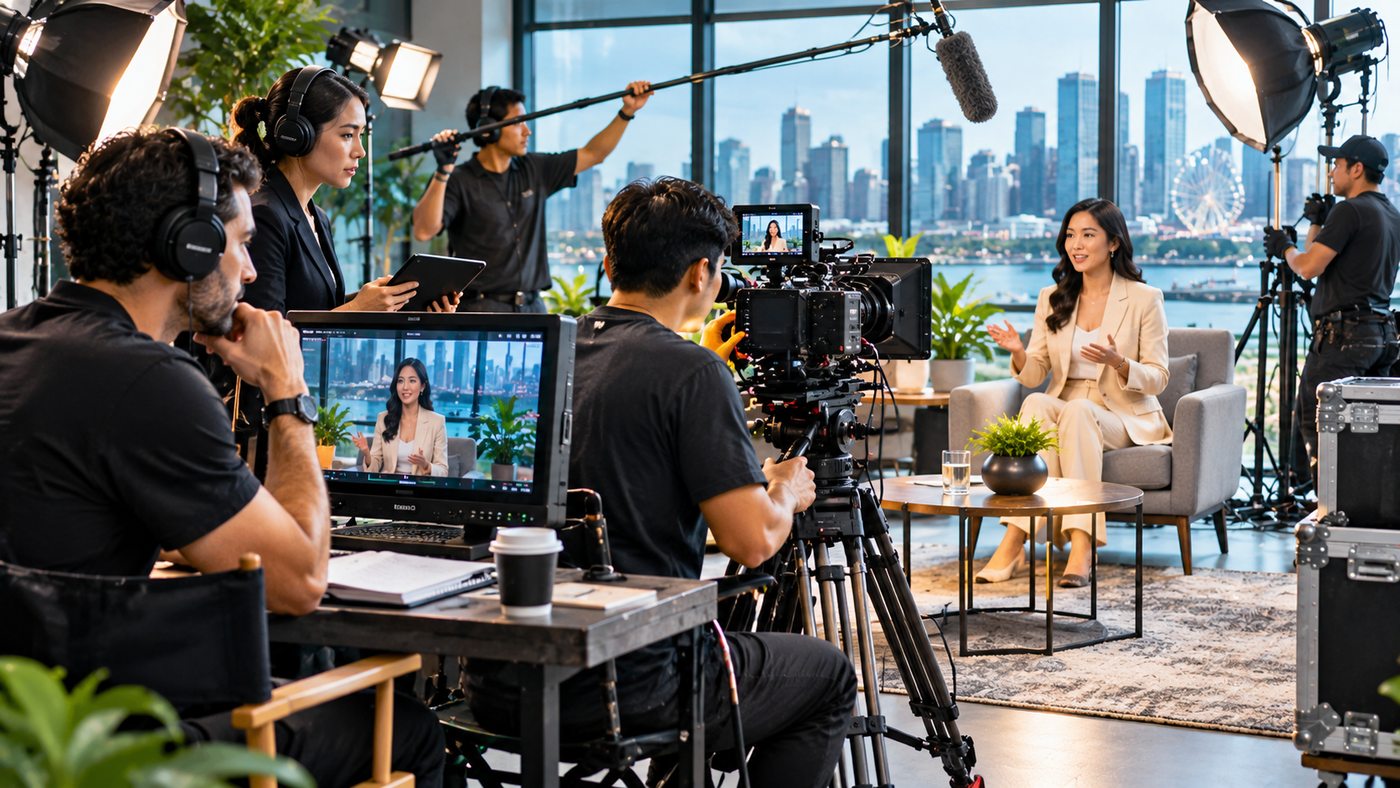
Finding the right video production agency in Asia can make a significant difference to how businesses communicate with their audiences. From corporate films and product advertisements to documentaries, live events, and social media campaigns, professional video production helps organisations present their stories through compelling visual content.
Asia is home to diverse markets, languages, cultures, and media environments. Businesses planning regional or international video campaigns often need a production partner that understands local audiences while maintaining consistent creative and technical standards.
Working with experienced professionals can simplify complex production activities, including location scouting, script development, filming permissions, multilingual coordination, and post-production.
However, not every video production company offers the same capabilities. Some specialise in commercials, while others focus on corporate communications, documentary filmmaking, broadcast production, or digital marketing.
This guide explains what video production agencies do, how to evaluate their services, what influences production costs, and how businesses can choose a suitable creative partner for projects across Asia.
What Is a Video Production Agency?
A video production agency is a professional company that plans, creates, edits, and delivers video content for businesses, brands, broadcasters, organisations, and other clients.
Unlike individual freelance videographers, full-service production agencies may provide a coordinated team of creative directors, producers, camera operators, editors, sound technicians, animators, and production managers.
Their services often cover every stage of video development, from initial planning to final delivery.
What Does a Video Production Agency Do?
A professional agency may handle:
- Creative concept development
- Video marketing strategy
- Scriptwriting and storyboarding
- Production planning and scheduling
- Location scouting and permits
- Casting and talent coordination
- Camera and lighting operations
- Audio recording
- Video editing and colour grading
- Animation and motion graphics
- Multilingual subtitles and localisation
- Content formatting and final delivery
The services required depend on the project’s size, objectives, distribution channels, and production complexity.
Why Businesses Choose Video Production Agencies in Asia
The Asia-Pacific region contains some of the world’s most dynamic business and media markets.
Companies expanding internationally often require high-quality content adapted to different audiences.
A production agency with regional experience can help organisations manage these requirements more efficiently.
Understanding Local Markets
Consumer expectations, cultural references, and communication styles vary across Asian countries.
A campaign designed for audiences in Singapore may require a different approach when distributed in Thailand, Indonesia, Japan, or Vietnam.
Local production knowledge can help businesses avoid cultural misunderstandings and create more relevant messaging.
Access to Professional Production Crews
Regional agencies may maintain networks of experienced directors, cinematographers, producers, lighting specialists, and sound engineers.
Access to reliable local professionals can reduce the need to transport a complete production crew internationally.
Simplified Production Logistics
International filming can involve travel arrangements, equipment transportation, permits, insurance, location access, and local administrative requirements.
A knowledgeable production partner can coordinate these activities and identify potential challenges before filming begins.
Consistent Brand Communication
Companies operating across multiple markets often need video content that reflects a unified brand identity.
Professional agencies can develop shared visual guidelines while adapting language and messaging for local audiences.
Support for Multiple Video Formats
Businesses increasingly distribute content through websites, social media, television, digital advertising, and live-streaming platforms.
An experienced agency can plan production around these different requirements.
Types of Video Production Services Available in Asia
Different businesses require different video formats.
Understanding common production categories can help organisations define their project needs before requesting proposals.
Corporate Video Production
Corporate videos communicate an organisation’s identity, expertise, operations, values, or achievements.
Common formats include company profiles, leadership interviews, recruitment films, internal communications, and investor presentations.
These videos can help audiences understand what a business does and how it operates.
Brand Storytelling Videos
Brand storytelling focuses on communicating a company’s purpose, personality, and relationship with its audience.
Rather than relying entirely on product features, these videos may highlight customer experiences, employee perspectives, or real-world outcomes.
Strong storytelling depends on credible messaging and a clear understanding of the intended audience.
Commercial and Advertising Production
Advertising videos promote products, services, events, or brands.
They may be designed for television, digital campaigns, social media platforms, or connected television.
Production requirements depend on the creative concept, talent, locations, visual effects, and distribution specifications.
Documentary Video Production
Documentaries use research, interviews, observational footage, and narrative structure to explore real subjects.
Businesses and nonprofit organisations may commission documentaries to communicate complex issues, social initiatives, or organisational impact.
Documentary projects require particular attention to factual accuracy, informed consent, and editorial ethics.
Social Media Video Production
Social media content often uses shorter formats and platform-specific presentation styles.
Agencies may produce vertical videos, interviews, promotional clips, educational explainers, and branded content series.
Effective social media video requires clear messaging, engaging visuals, and attention to how audiences consume content on mobile devices.
Live Event Production
Live production services support conferences, product launches, panel discussions, performances, and corporate events.
These projects may require multiple cameras, audio systems, graphics, live switching, and streaming infrastructure.
Reliable technical preparation is especially important because errors during a live broadcast may be difficult to correct.
Animation and Motion Graphics
Animated video can communicate information that is difficult to film.
Businesses use motion graphics for product explanations, financial information, training materials, and technical presentations.
Animation may be particularly valuable when simplifying complex ideas or illustrating processes that are not easily visible.
Exploring Professional Video Production Through AsiaWorks
Businesses seeking a video production agency in Asia may consider AsiaWorks, an established creative video production company with regional operations.
AsiaWorks describes itself as a full-service video agency with offices in Singapore, Bangkok, and Jakarta.
The company works with businesses, brands, broadcasters, platforms, and nonprofit organisations.
Its published services include video production, content strategy, corporate communications, live streaming, immersive content, and audio production.
Regional Production Expertise
AsiaWorks states that it has approximately three decades of experience delivering video and communications projects.
Its regional presence allows the company to coordinate productions in several important Southeast Asian markets.
For international clients, working with professionals familiar with local production environments can help simplify project management.
End-to-End Video Production
The company offers services covering pre-production, filming, and post-production.
These may include scriptwriting, storyboarding, production logistics, camera operations, editing, sound design, and final delivery.
A coordinated workflow can reduce the complexity of managing multiple independent suppliers.
Live Streaming and Broadcast Services
AsiaWorks also provides live streaming and broadcast-related production services.
These capabilities may be relevant to corporate conferences, virtual events, webinars, and other real-time communications.
Video Content Strategy
Professional video production is most useful when connected to clear communication objectives.
AsiaWorks includes content development and strategy among its services, allowing organisations to consider how individual videos contribute to broader marketing or communication activities.
Prospective clients should review relevant portfolio examples, confirm the scope of services, and request a project-specific quotation before selecting any production partner.
The Three Main Stages of Professional Video Production
A successful project generally requires careful coordination across three stages.
These are pre-production, production, and post-production.
1. Pre-Production: Planning the Video
Pre-production establishes the creative and practical foundations of the project.
This stage is essential because unclear requirements can result in delays, unnecessary expenses, or footage that does not support the intended message.
Defining the Video Objectives
The first step is identifying what the video should achieve.
Possible objectives include introducing a company, explaining a service, supporting employee training, documenting an event, or generating qualified customer enquiries.
A video designed to build brand awareness may require a different creative approach from one intended to explain technical procedures.
Understanding the Target Audience
The production team should identify who will watch the video.
Important considerations include audience location, language, professional background, interests, and expected viewing platform.
A corporate communication aimed at industry specialists may require more detailed technical information than a general consumer advertisement.
Scriptwriting and Storyboarding
Scripts define the message, dialogue, and narrative structure.
Storyboards help communicate the intended visual sequence.
Together, they allow stakeholders to review the concept before filming begins.
Location Scouting
Location scouting identifies suitable places for filming.
The team may evaluate lighting, background noise, access, electricity, available space, and visual appearance.
International projects may require additional permission and logistical arrangements.
Production Scheduling
A production schedule coordinates crew availability, locations, equipment, transportation, and filming activities.
Careful scheduling can reduce unnecessary downtime and improve coordination.
2. Production: Capturing Professional Footage
Production is the stage where planned scenes are filmed or recorded.
The complexity of the process depends on the project.
A simple executive interview may require a small team, while a regional advertising campaign could involve multiple locations and substantial production resources.
Camera Operations
Professional cinematographers select suitable cameras, lenses, framing, and movement techniques.
Their choices influence how the audience experiences the content.
Lighting Design
Lighting helps establish mood, improve visibility, and create a consistent visual appearance.
It is particularly important for interviews, product advertisements, and indoor filming.
Sound Recording
Clear audio is essential for many business videos.
Poor sound can make professional visuals difficult to use effectively.
Production teams may employ dedicated microphones, sound recordists, and monitoring equipment.
Directing and Talent Coordination
Directors guide presenters, actors, and other participants.
They also coordinate with the technical crew to achieve the intended creative result.
On-Site Production Management
Producers oversee schedules, logistics, communication, and practical requirements.
Effective coordination helps the team respond to changing conditions without losing sight of project objectives.
3. Post-Production: Creating the Final Video
Post-production transforms recorded material into a finished communication asset.
Video Editing
Editors select and arrange footage to establish narrative flow, timing, and continuity.
They may combine interviews, supporting footage, graphics, and other visual elements.
Colour Correction and Grading
Colour correction helps maintain accurate and consistent image appearance.
Colour grading establishes the desired visual style.
Sound Design
Audio editing may include dialogue cleanup, music integration, sound effects, and final mixing.
Commercial music must be appropriately licensed for the intended use.
Motion Graphics
Motion graphics can provide titles, diagrams, statistics, and visual explanations.
They are especially useful for technical or information-heavy content.
Subtitles and Localisation
Regional campaigns may require subtitles, translated scripts, or alternative voiceovers.
Localisation should preserve the original message while accounting for language and cultural context.
Final Quality Control
Before delivery, the agency should check technical specifications, spelling, captions, visual consistency, audio levels, and required versions.
How Much Does Video Production Cost in Asia?
Video production costs vary considerably.
There is no universal price because the resources required depend on the production brief.
A single-camera interview filmed in one location will usually have different cost drivers from a commercial involving actors, multiple locations, specialised equipment, and extensive post-production.
Factors That Influence Production Cost
Important pricing factors include:
- Video duration and complexity
- Creative development requirements
- Number of filming days
- Production crew size
- Camera and lighting equipment
- Filming locations
- Travel and accommodation
- Talent and casting
- Permits and insurance
- Animation and visual effects
- Editing and revision requirements
- Language localisation
- Usage rights and licensing
The number of finished minutes alone is not a reliable way to estimate cost.
A short, complex advertisement can require more resources than a longer interview-based video.
Requesting an Accurate Quotation
Businesses should provide a clear production brief.
This allows agencies to estimate the required crew, locations, equipment, and editing resources.
A useful quotation should specify deliverables, revision allowances, timelines, exclusions, payment terms, and licensing arrangements.
Comparing incomplete quotations can lead to misleading conclusions about which agency offers better value.
How to Choose the Best Video Production Agency in Asia
Choosing an agency should involve evaluating relevant experience, creative capability, communication, and practical delivery requirements.
Review the Agency’s Portfolio
A portfolio provides insight into production quality, visual style, and project experience.
Look for work that resembles the type of content your business needs.
For example, a company commissioning technical training content should examine relevant corporate or educational productions rather than relying entirely on advertising showreels.
Assess Industry Experience
An agency familiar with your industry may understand common terminology, audience expectations, and filming challenges.
However, specialist industry experience is only one consideration.
Strong production processes and creative adaptability are also valuable.
Evaluate Regional Capabilities
For projects involving multiple Asian countries, investigate the agency’s local resources.
Ask whether it has permanent offices, trusted local partners, or experience coordinating productions in the target locations.
Discuss Communication Processes
Clarify who will manage the project and how decisions will be approved.
Effective communication helps prevent misunderstandings throughout production.
Understand the Creative Approach
The agency should explain how its proposed concept supports your objectives.
Avoid choosing a production partner solely because its work looks visually impressive.
The content must also communicate the intended message effectively.
Check Contract Terms
Review the agreement for intellectual property, confidentiality, usage rights, revision limits, payment schedules, and cancellation provisions.
Professional advice may be useful for complex international projects.
Video Production in Singapore, Thailand and Indonesia
These Southeast Asian markets offer different production environments and business opportunities.
Singapore
Singapore is a major regional centre for international business and corporate communications.
Its commercial environment makes it relevant for company profiles, financial services content, technology marketing, conferences, and executive communications.
Production planning should account for local permissions, location requirements, and applicable regulations.
Thailand
Thailand offers a broad range of urban, coastal, cultural, and natural filming environments.
Bangkok is an established location for production services, commercial filming, documentaries, and corporate communications.
International projects may require local coordination for permits, equipment, crew arrangements, and other operational requirements.
Indonesia
Indonesia offers a large and diverse market with many potential filming locations.
Productions can involve significant geographical and logistical considerations because of the country’s size and regional diversity.
Local knowledge can be particularly useful when planning schedules, locations, and language requirements.
Benefits of Hiring a Regional Video Production Partner
A regional agency may offer advantages compared with managing separate suppliers in every market.
Centralised Project Management
One production partner can help coordinate creative decisions and communication across locations.
More Consistent Branding
Shared production guidelines can help maintain visual and messaging consistency.
Local Cultural Understanding
Regional teams can provide practical insight into audience expectations and production customs.
Access to Established Crew Networks
Experienced agencies may have relationships with local equipment providers, studios, and technical specialists.
Simplified Multilingual Production
A coordinated approach can support translated scripts, voiceovers, subtitles, and multiple delivery versions.
These advantages depend on the agency’s actual operating model and the scope of the project.
Video Marketing Strategy for Businesses in Asia
Producing a high-quality video is only part of a successful communications strategy.
Businesses also need to consider how the content will reach its intended audience.
Define a Clear Purpose
Every video should support a specific communication objective.
This might involve increasing awareness, explaining a product, improving recruitment, or communicating organisational achievements.
Choose Relevant Distribution Channels
The best distribution channel depends on audience behaviour.
Corporate audiences may encounter videos through professional platforms, company websites, industry events, or email communications.
Consumer audiences may discover content through social media and digital advertising.
Adapt Videos for Different Platforms
A landscape corporate video may need shorter vertical versions for mobile-first platforms.
Planning these requirements early can make production more efficient.
Use Localised Messaging
Campaigns targeting multiple countries may benefit from translated narration, subtitles, or culturally adapted versions.
Translation should be reviewed by qualified language professionals where accuracy is important.
Measure Relevant Results
Possible indicators include:
- Video completion rate
- Audience retention
- Website engagement
- Qualified enquiries
- Event attendance
- Lead generation
- Brand awareness measurements
Different objectives require different success metrics.
Common Mistakes to Avoid When Hiring a Video Agency
Businesses can reduce production difficulties by avoiding several common mistakes.
Starting Without a Clear Brief
An unclear brief makes it difficult to estimate cost or develop a suitable creative concept.
Define the audience, objectives, core message, and expected deliverables.
Selecting an Agency Based Only on Price
A low quotation may exclude important services such as location management, revisions, or licensing.
Compare the total project scope.
Ignoring Language Requirements
International campaigns may require more than simple translation.
Voiceover style, terminology, subtitles, and cultural context all deserve attention.
Underestimating Production Timelines
Creative approvals, permits, scheduling, filming, and editing require time.
Allow reasonable flexibility for unexpected changes.
Overlooking Usage Rights
Content usage may depend on music licences, talent agreements, stock footage permissions, and contractual terms.
Confirm rights before publication.
Failing to Plan Distribution
A professional video provides limited value when the business has no clear plan for reaching viewers.
Distribution strategy should be considered during pre-production.
Video Production Agency vs. Freelance Videographer
Both options can be suitable depending on project requirements.
When a Freelance Videographer May Be Suitable
A freelancer may be appropriate for a straightforward interview, local event, or small project with limited technical complexity.
The arrangement may offer flexibility and a simpler production structure.
When an Agency May Be More Suitable
An agency may be preferable when a project requires:
- Multiple production specialists
- Complex creative development
- Several filming locations
- International coordination
- Live broadcast capabilities
- Multilingual content
- Extensive post-production
- Ongoing video campaigns
The most appropriate choice depends on the scope, available resources, and expected outcome.
The Future of Professional Video Production in Asia
Video production continues to evolve as businesses demand more flexible content formats and improved production efficiency.
Several developments are influencing the industry.
AI-Assisted Production Workflows
Artificial intelligence can assist with transcription, captioning, editing, content organisation, and selected visual effects.
However, AI-generated material still requires appropriate review for accuracy, rights, and quality.
Remote Production
Remote collaboration tools allow clients and production teams to participate in reviews and selected workflows from different locations.
This can be valuable for international projects.
Virtual and Immersive Content
Virtual environments, interactive experiences, and immersive video formats may provide new communication opportunities.
Their suitability depends on audience needs and production budgets.
Increased Demand for Short-Form Content
Digital platforms continue to create demand for concise, mobile-friendly video.
Agencies may respond by planning multiple content versions from a single production.
Greater Emphasis on Accessibility
Captions, clear audio, readable graphics, and accessible design can help video content reach broader audiences.
Frequently Asked Questions
What does a video production agency in Asia do?
A video production agency in Asia plans, films, edits, and delivers professional video content. Services may include corporate films, advertising, documentaries, animation, live streaming, and regional production coordination.
How much does professional video production cost in Asia?
Costs depend on filming locations, crew size, equipment, creative complexity, travel, editing, and licensing requirements. Businesses should request a detailed quotation based on their specific project.
Which countries are popular for video production in Southeast Asia?
Singapore, Thailand, and Indonesia are among the markets with established production services. The best location depends on the creative brief, budget, audience, and logistical needs.
What services does AsiaWorks provide?
AsiaWorks advertises video production, content strategy, live streaming, immersive content, audio production, and podcasting services. It has full-service offices in Singapore, Bangkok, and Jakarta.
How long does it take to produce a corporate video?
Production timelines vary according to concept development, approvals, filming requirements, editing complexity, and the number of revisions. Agencies can provide more accurate schedules after reviewing a project brief.
Why hire a regional video production agency?
A regional agency may offer access to local crews, cultural knowledge, location coordination, multilingual support, and centralised project management across several markets.
Can a video production agency create social media videos?
Yes. Many agencies produce short-form content, promotional clips, branded video series, and platform-specific versions for social media and digital advertising.
How do I choose a reliable video production company?
Review relevant portfolio work, verify production capabilities, discuss creative objectives, compare detailed quotations, and clarify contracts, timelines, and usage rights before commissioning the project.
Conclusion
Choosing the right video production agency in Asia requires balancing creative expertise, technical capabilities, regional knowledge, and practical project management. A professional production partner can help businesses develop compelling corporate films, branded content, documentaries, and digital campaigns for audiences across different markets.
Organisations should prioritise clear communication, relevant experience, transparent quotations, and well-defined deliverables when evaluating agencies. With careful planning and a suitable production team, businesses can create video content that communicates their message effectively and supports long-term marketing and communications goals.
