

Application security is changing quickly. While Veracode has been a trusted name for a long time, many development teams in 2026 are exploring newer platforms that focus on speed, automation, and workflows designed for developers. As software delivery cycles get shorter and applications become more complex, security tools need to keep pace without hindering teams.
This article compares Veracode to modern AppSec platforms that offer wider coverage, quicker feedback, and a better fit for today’s cloud-native development practices. It also shows how these newer solutions help teams find vulnerabilities earlier, cut down on distractions, and integrate security smoothly into daily development workflows.
Why Teams Are Moving Beyond Veracode
Veracode is still a solid option for enterprise security. However, modern teams often need tools that suit agile and DevOps settings better.
The main gaps include:
- Slower feedback cycles: Scans can take longer than real-time tools.
- Limited developer experience: Workflows are often less intuitive for engineers.
- Fragmented tooling: Multiple tools may be needed for complete coverage.
- Less cloud-native focus: Optimization for containers and infrastructure-as-code is lacking.
- Real-time visibility: Gain instant insights into vulnerabilities as code changes.
- Scalability: Support growing applications and distributed development teams without performance loss.
Overall, teams are shifting to platforms that emphasize speed, automation, and smooth integration into developer workflows.
1. Aikido Security
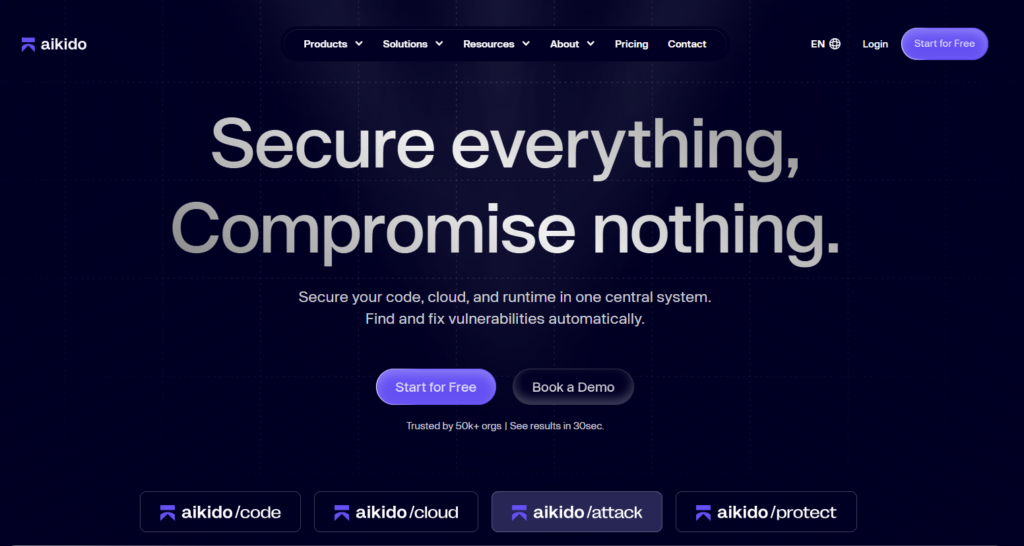
Aikido Security is a modern AppSec platform for developers who need fast, actionable security insights without delaying delivery. It merges several security features into one platform, cutting down on tool sprawl and boosting efficiency.
Strengths
- Static code analysis scans source code continuously to find vulnerabilities early in the development process, before they reach production environments.
- AI-driven prioritization helps engineering teams focus on the most critical and exploitable risks, rather than overwhelming them with low-impact alerts.
- Dependency scanning looks through open-source libraries to find known vulnerabilities and reduce supply chain security risks.
- Container and cloud security coverage is designed for modern infrastructure, assisting teams in securing Kubernetes, containers, and cloud workloads.
- Infrastructure-as-Code scanning checks configuration files to prevent insecure deployments before they are applied.
- Secrets detection identifies accidentally exposed credentials, API keys, or tokens directly in repositories.
- CI/CD integration embeds security checks into development pipelines without slowing down release cycles.
- A centralized dashboard gives a unified view of risks across multiple projects, repositories, and environments.
Additional Features
- Real-time scanning: Monitor code continuously.
- Risk scoring: Prioritize based on impact.
- Collaboration tools: Improve team workflows.
- Multi-repo support: Secure multiple codebases efficiently.
Why Teams Choose it
Aikido is great for teams that want complete security in a single platform with minimal friction. It offers strong coverage along with speed and usability.
It provides solid security with a developer-first experience, making it a strong alternative to traditional tools like Veracode.
2. Arnica
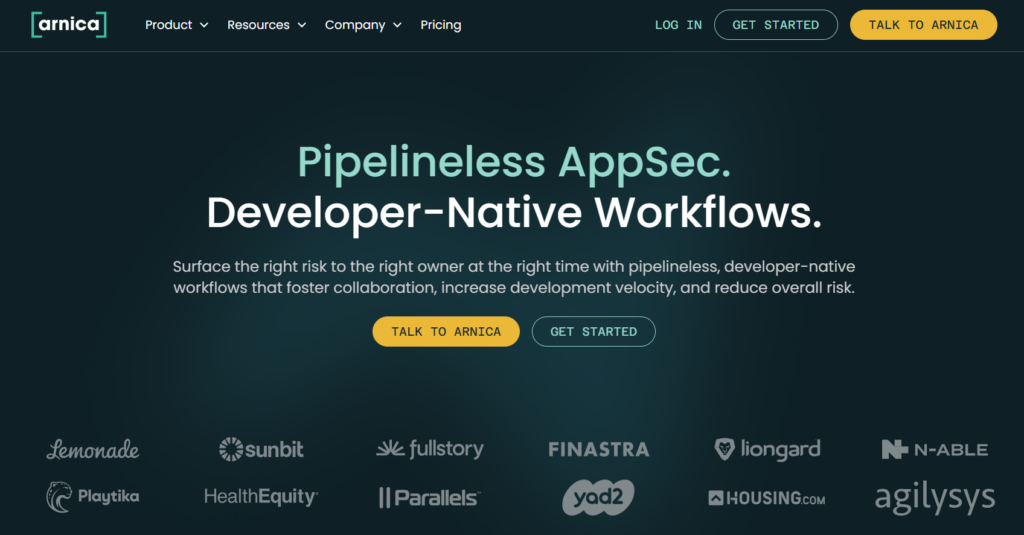
Arnica is a modern AppSec platform designed for fast-moving, cloud-native development environments. It provides real-time security insights within developer workflows.
Strenghts
- Real-time vulnerability detection that identifies security issues immediately as code is pushed or modified in repositories.
- Developer-native workflows that integrate directly into pull requests and collaboration tools to reduce friction in the development process.
- AI-assisted remediation that suggests fixes and prioritizes vulnerabilities based on exploitability and context.
- Comprehensive SAST and SCA coverage that secures both custom code and third-party dependencies in one platform.
- Secrets detection that scans for exposed credentials and sensitive information early in the development lifecycle.
- Ownership mapping that automatically assigns vulnerabilities to the responsible developer or team for faster resolution.
Additional Features
- Cloud-native support: Secure modern architectures.
- Automated insights: Offer context-aware recommendations.
- CI/CD integration: Embed security into pipelines.
- Risk prioritization: Focus on exploitable vulnerabilities.
Arnica enables real-time, developer-focused security with minimal friction. It helps teams reduce the backlog of vulnerabilities while keeping up their speed.
3. Contrast Security
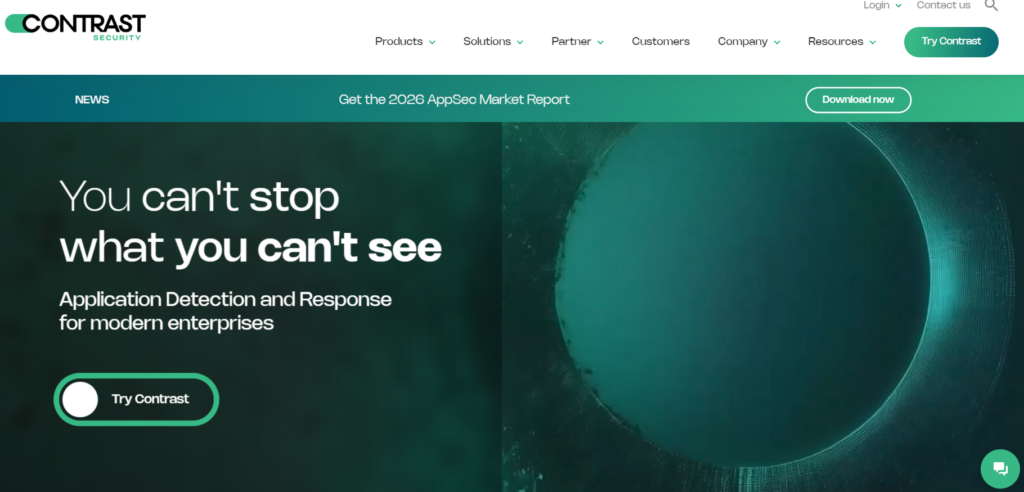
Contrast Security uses runtime instrumentation to find vulnerabilities in live applications. This offers a different approach compared to traditional static analysis tools.
Strenghts
- Runtime vulnerability detection identifies security issues while applications are running in production environments.
- Interactive Application Security Testing (IAST) analyzes application behavior during execution to find hidden weaknesses.
- CI/CD integration automates security testing during build and deployment stages without manual intervention.
- Open-source risk detection helps teams spot vulnerabilities in third-party libraries and dependencies.
- Developer-friendly insights offer practical remediation steps instead of just technical alerts. Continuous monitoring tracks application security even after deployment.
- Attack surface visibility helps teams see which components are exposed and may be exploitable.
Additional Features
- Agent-based security: Embed protection within applications.
- Threat intelligence integration: Improve detection accuracy.
Contrast Security offers continuous visibility into application behavior. It is ideal for teams wanting real-time insights beyond pre-deployment scanning.
4. Semgrep
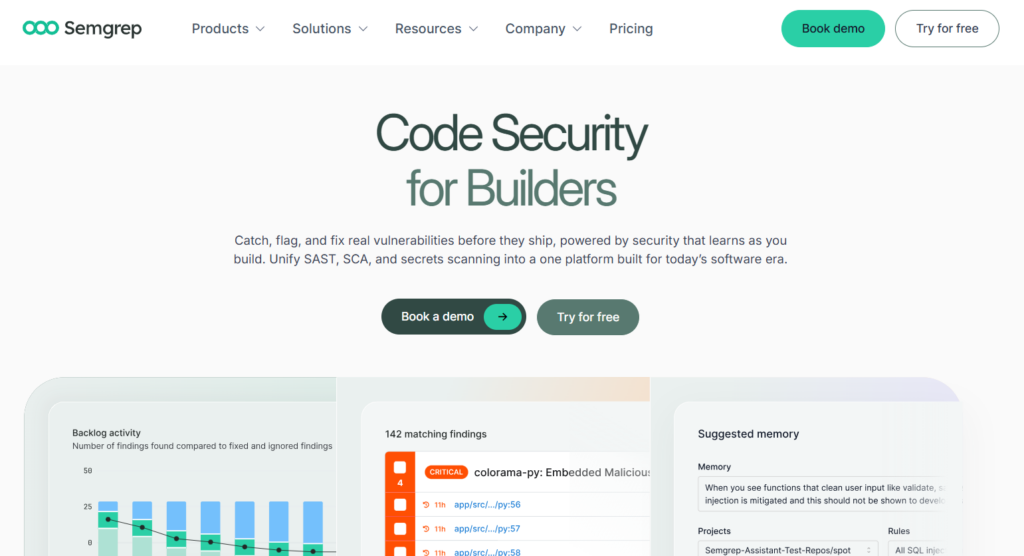
Semgrep is a fast and flexible static analysis tool that allows teams to create custom security rules and integrate them directly into their development workflows.
Strenghts
- Custom rule creation lets teams define their own security checks based on specific coding standards or policies.
- The fast scanning engine is designed for minimal overhead and provides quick feedback during development and CI processes.
- CI/CD integration automates static analysis checks for every code commit and deployment pipeline.
- Strong support from the open-source ecosystem helps teams secure widely used dependencies and libraries.
- Lightweight deployment makes it easy to adopt across teams without complex setup or changes to infrastructure.
- IDE integration offers real-time feedback directly within developer coding environments.
- Community-driven rulesets enable teams to use prebuilt security policies maintained by the larger ecosystem.
Additional Features
- Multi-language support: Handle diverse codebases.
- Policy enforcement: Maintain consistent standards.
Semgrep provides flexibility and speed for teams wanting customizable security. It is a strong choice for developers looking to have control over their security rules.
Quick Comparison Chart
| Category | Veracode | Aikido Security | Arnica | Contrast Security | Semgrep |
| Scanning Speed | Slower, batch-based | Real-time | Real-time | Runtime-focused | Very fast |
| Developer Experience | More enterprise/security-team driven | Developer-first | Developer-native | Developer-friendly | Highly developer-centric |
| Coverage | Strong SAST/SCA | Code, cloud, IaC, containers | Code, dependencies, secrets | Runtime + app security | Code-focused SAST |
| Cloud-Native Support | Limited | Strong | Strong | Strong | Moderate |
| Automation Level | Moderate | High | High | High | High |
| False Positive Reduction | Medium | High (AI correlation) | High | Medium | Medium |
| Best Fit | Large enterprises | Modern dev teams | Fast CI/CD teams | Runtime security focus | Custom rule security |
Final Thoughts
While Veracode is still a solid option for enterprise environments, modern AppSec platforms are changing how security fits into development.
- Faster scans and real-time feedback,
- Broader coverage across code, cloud, and dependencies,
- Improved developer experience with actionable insights.
These platforms help teams reduce friction, improve collaboration, and maintain a fast development pace without sacrificing security. As applications become more complex, it’s crucial to adopt a modern, developer-first approach.
Choosing the right tool relies on your team’s priorities. However, moving toward faster, integrated, and smart security solutions will provide stronger protection in 2025 and beyond.
