
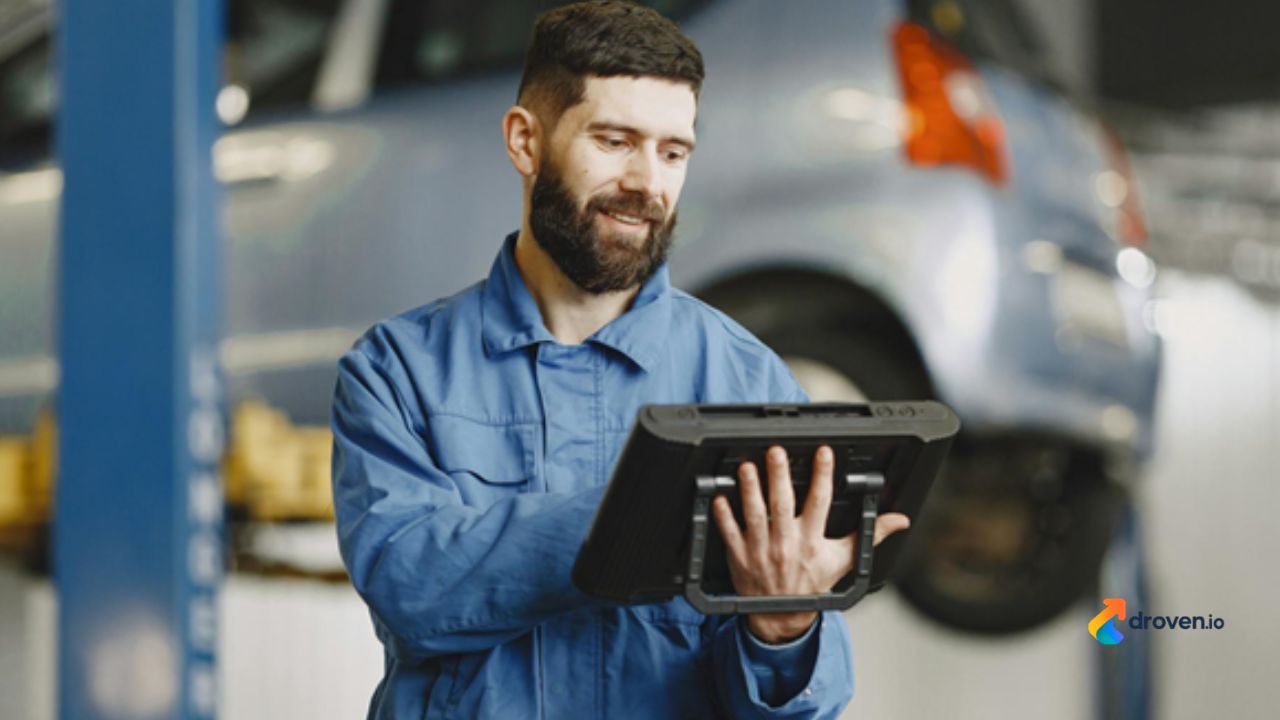
The automotive industry no longer runs on mechanical precision alone. Digital systems now shape how vehicles get designed, assembled, tested, and maintained. From factory floors to after-sales service, technology continues to remove inefficiencies that once slowed operations and increased costs. Companies that adopt these tools are not only speeding up production but also improving accuracy and decision-making across the board.
In this article, we’ll explore how different technologies are driving efficiency across automotive operations and what this means for the future of the industry.
Smart Manufacturing and Automation in Assembly Lines
Automation has reshaped how assembly lines function in modern automotive facilities. Tasks that once depended entirely on manual effort now rely on robotic systems that handle repetitive work with steady precision. These machines don’t get fatigued, and they follow programmed instructions with consistency, which helps maintain uniform output across large production runs.
Beyond speed, automation brings a level of control that is difficult to achieve otherwise. Sensors and embedded systems track each stage of production, allowing manufacturers to identify slow points or inefficiencies without interrupting operations.
Augmented Reality for Workforce Guidance and Precision
Augmented reality is finding a practical place on the factory floor by guiding workers through complex tasks. Instead of relying on printed manuals or separate screens, AR places instructions directly into the workspace. Workers can follow visual cues layered onto the actual components they are assembling, which reduces confusion and speeds up execution.
This approach becomes especially useful in environments where accuracy is critical. Even small errors in assembly can lead to larger issues down the line. With AR, each step appears exactly where it needs to be performed, which helps workers stay aligned with required standards.
Projection-based solutions, like Ansomat, take this a step further by removing the need for wearable devices. AR work instructions by Ansomat are projected directly onto the work surface, showing operators what to do and where to do it. This method keeps hands free, and attention focused on the task itself. It also reduces the time spent switching between instructions and execution. As a result, teams can complete tasks faster while maintaining a high level of accuracy.
Internet of Things (IoT) for Real-Time Monitoring
Connected devices have changed how automotive operations are monitored. With IoT, machines, tools, and systems communicate continuously, sharing data that reflects their current state. This flow of information gives managers a clear picture of what is happening across the production line at any given moment.
Instead of waiting for reports at the end of a shift, teams can respond instantly when something seems off. A drop in performance or an unusual pattern can trigger alerts, allowing technicians to step in before the issue grows. This immediate response helps keep production steady and prevents minor problems from turning into costly disruptions.
Predictive Maintenance Using Data Analytics
Maintenance used to follow a fixed schedule or respond to breakdowns after they happened. That approach often led to unnecessary downtime or unexpected failures. With data analytics, maintenance has become more precise and proactive.
By collecting data from equipment and analyzing patterns, systems can detect early signs of wear or potential failure. This allows maintenance teams to address issues before they interrupt production. Instead of guessing when a machine might need attention, decisions are based on actual performance data.
This shift reduces disruptions while extending the life of equipment. Machines receive care when they need it, rather than too early or too late. The result is a smoother production cycle and better use of resources.
Digital Twins for Process Optimization
Digital twins offer a way to test and refine processes without affecting real-world operations. A digital twin is a virtual model of a physical system, updated with real-time data. It allows manufacturers to simulate changes and see how they might impact performance.
This approach is useful when introducing new workflows or adjusting existing ones. Instead of making changes directly on the production line, teams can experiment in a virtual environment. They can identify potential issues, measure outcomes, and fine-tune processes before applying them in reality.
Artificial Intelligence in Quality Control
Quality control has always been a critical part of automotive production, but the way it’s handled has changed significantly with the use of artificial intelligence. Traditional inspection methods relied heavily on human judgment, which can vary from person to person and shift to shift. AI-powered systems bring consistency into the process by analyzing components with the same level of precision every time.
These systems use cameras and trained models to detect defects that might go unnoticed during manual checks. Whether it’s a minor surface flaw or a structural inconsistency, AI can flag issues quickly and with a high level of accuracy. This reduces the chances of defective parts moving further down the line, where fixes become more expensive and time-consuming.
Another advantage lies in speed. AI can process large volumes of data in seconds, allowing inspections to keep pace with fast-moving production lines. Instead of slowing things down, quality checks become part of a seamless workflow that supports both efficiency and reliability.
Cloud Computing for Centralized Operations
Cloud technology has made it easier for automotive companies to manage operations without being tied to a single location. Data from different departments, plants, or even countries can be stored and accessed through a centralized system. This level of accessibility helps teams stay connected and informed, regardless of where they are working from.
It also simplifies collaboration. Engineers, managers, and technicians can work with the same data set, reducing confusion and miscommunication. Updates happen in real time, so everyone works with the latest information instead of relying on outdated reports or files.
Another benefit is flexibility. As operations grow or change, cloud systems can scale without the need for major infrastructure upgrades. This allows companies to adapt quickly, whether they are expanding production or introducing new technologies into their workflow.
Technology is not just improving automotive operations; it is redefining how they function at every level. What stands out is not any single tool, but how these systems connect and support one another. Data flows from machines to platforms, from vehicles back to manufacturers, and from training systems to the workforce, creating a network that keeps everything aligned.
As this shift continues, the focus moves beyond efficiency alone. It becomes about building operations that can respond, adjust, and improve without losing momentum. Companies that lean into this approach are shaping a future where production is not only faster but also more thoughtful and precise.
