
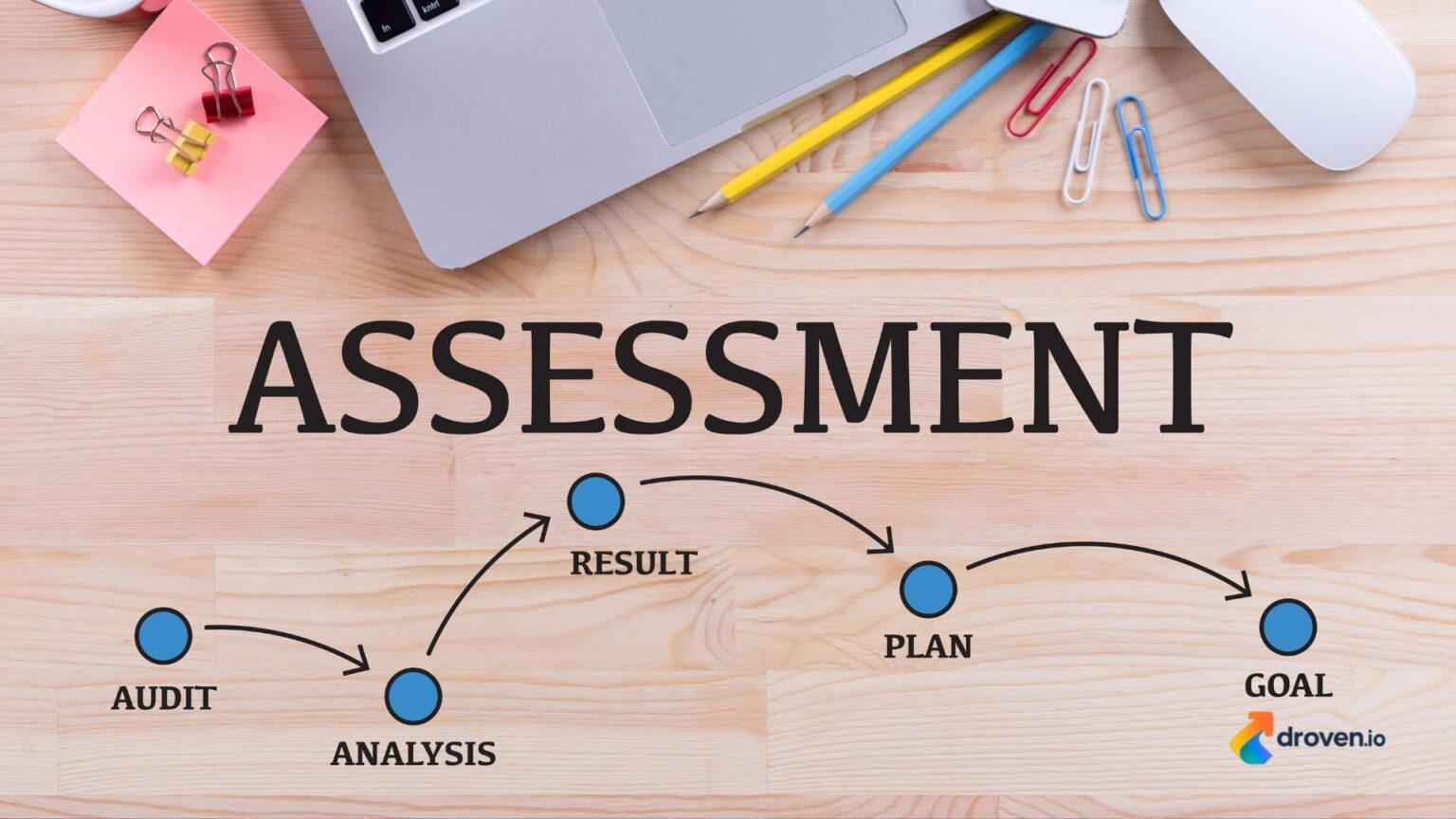
Mental health professionals are administering cognitive assessments more frequently than in the past – a 40% increase from last decade. This is the biggest change in psychological practice today and is indicative of a sea change in how the field of psychology studies human mental functioning, tackles problems with human learning, and attempts to alleviate the suffering of people in psychological pain.
The evolution of psychological practice
For many years, the study of human behavior has been the focus of psychologists. They usually studied their subjects by observing them and by collecting information about their feelings and the symptoms that they were experiencing. Recently, however, there has been a change of direction and mental functions are now being studied in a more objective manner by the use of cognitive assessment. Some psychologists are more comfortable with the more traditional methods of study and do not feel that they need the results of assessment. They rely more on intuition and on how they feel when they are talking to a patient in front of them. Others, however, are eager to learn how to use the assessment tools in order to obtain quantitative data that can be used as evidence for practice, or for what is now commonly referred to as evidence-based practice.
Similar to the changes that have occurred in the physical health care of individuals, in recent years the way in which psychologists and other mental health care professionals diagnose and treat individuals with various forms of mental dysfunction has undergone a significant transformation. As was the case with the physical health care of individuals, in the past, in the past psychologists typically relied upon a physical examination and other subjective type of information to arrive at a diagnosis of a person’s mental health problems. However, there has been a paradigm shift in the way in which psychologists and other mental health care professionals now diagnose and treat a variety of different mental health problems.
Precision in identifying learning challenges
Many of the schools in the world are facing huge pressure to ensure that all students are able to learn in a way that enables them to reach their full potential within the parameters of the academic standards of the school. In order to support students who are having difficulty learning within a classroom environment, it is crucial that appropriate support strategies are put in place to assist these students to achieve their full potential.
Just as all students can benefit from reading comprehension strategies, some students require more support with certain components of reading than others. A student’s weaknesses in verbal comprehsension, for example, can prevent them from benefiting from typical reading strategies even when other strategies are implemented. In these cases, it is often necessary to provide support for specific components of reading and to develop strategies that target a student’s particular cognitive weaknesses.
Now that intelligence testing for students with special needs has been re-introduced by psychologists, students with special needs are able to attend regular classes are now able to have their learning difficulties identified by means of intelligence tests and appropriate learning strategies and support put in place by psychologists and special needs teachers. In contrast to observations made by classroom teachers of students with special needs in regular classrooms, which have failed in the past to identify learning difficulties and as a result provided students with special needs and their parents with ineffective support strategies, intelligence tests of modern times are able to pinpoint areas where students with special needs are having difficulty and aid teachers in helping students with special needs by identifying the best teaching methods to be used with individual students with special needs.
Using data provided by a variety of different measures of cognitive function, psychologists are able to make predictions as to how any given individual will fare in certain learning situations and as a result, these individuals can be led through a series of lessons, and instructional activities which are individually designed to be most beneficial given that individual’s learning style and cognitive abilities. In other words, for instance, a student who is a visual learner, with very good spatial processing skills for example, could potentially reap great rewards from being led through a variety of lessons and instructional activities which are of a visual nature. A student of similar IQ, with similar overall cognitive abilities, but with very good auditory processing skills, on the other hand, would potentially fare much better in learning situations that are of an auditory nature. As a result, this individual could greatly benefit from a variety of different lessons and activities that are designed to improve his or her auditory skills and to teach in a manner that is auditory in nature.
Workplace evaluation
Cognitive assessment is now frequently utilized by companies for the evaluation of potential employees for various roles in the workplace. Individuals with superior processing speed and attention are well suited to high pressure, fast paced environments where they are required to make rapid decisions. These same skills can also indicate an employee’s potential as a manager. Additionally, such testing can identify which employees would benefit from which training programs would reap the greatest benefits.
Cognitive assessment can be a powerful tool in workplace evaluation for a number of purposes. First, it can be used to assess potential candidates for specific roles within an organization. This can help to identify individuals who possess the necessary cognitive functions to perform successfully in given tasks. Secondly, it can be used to assess current employees in order to identify potential leaders, or those who would benefit from specific training programs.
Clinical diagnosis and treatment planning
Various types of mental health disorders, for example, depression, anxiety, and attention deficit hyperactivity disorder (ADHD) each have their own unique set of cognitive deficits. For example, individuals with a diagnosis of depression may report difficulties with concentration and with memory even when they report that they are generally feeling better than they were during their typical depressed mood. Thus, it is not uncommon for a wide variety of different people with various different types of mental health disorders to complete a wide variety of different assessment tools in an effort to identify and better understand the various cognitive deficits that are affecting them.
Cognitive assessment can also provide a measure of specific cognitive deficits that occur in many different mental health disorders. For example, a person who has been diagnosed with clinical depression may continue to experience symptoms of depression even after they report that they are feeling better. The two symptoms of depression that are most resistant to change are concentration difficulties and decreased memory. A person who has been diagnosed with anxiety may have attention and processing efficiency problems that are quite different from the emotional symptoms that they are experiencing. A person with Attention Deficit/Hyperactivity Disorder (ADHD) can have a variety of problems with his or her executive function.
But in addition to the measurement of symptoms, also the improvement of the patient during the treatment can be tracked by means of cognitive assessment. Usually this change occurs before the patient reports an improvement of his or her symptoms.
Technology driving accessibility
Cognitive assessment has the potential to save a great deal of time when compared with traditional clinical methods of assessment. Quantifiable data can be generated more quickly and with greater accuracy, whilst the scores can be standardized to create a comparison with other individuals who have taken the same test in different locations.
Advantage of the computer-based test is that the test can be administered remotely. So people from rural areas, the elderly, people with physical disabilities as well as business people from all over the world can be tested for their cognitive abilities from the comfort of their own homes. The test administrator can be from anywhere in the world as well. The test is administered on the computer and the test questions are scored automatically as soon as the test taker has finished the test. The results are interpreted immediately available for the test administrator. In addition the test questions can be automatically adapted to the test taker’s ability level. This means that the test questions can be made more or less difficult as necessary in order to measure the test taker’s cognitive abilities as precisely as possible. In addition test fatigue can be prevented.
Integration challenges ahead
However, there is still considerable uncertainty and controversy with respect to the use of cognitive assessment for diagnostic and intervention purposes. The use of cognitive assessment data has to be balanced by the clinician’s expertise with the quantitative data and the cultural interpretation of the results with the results themselves. Training programs in psychological assessment place a greater emphasis on the administration of tests than on their interpretation. It is also important to consider whether a set of tests developed on a specific population of participants can be used to assess individuals from other populations. Do test scores from such measures generalize to other groups of people? The
A variety of psychological tests have been normed on a specific group of individuals and have been shown to measure a specific array of abilities. However, it is not clear whether such tests will provide useful information regarding individuals from a variety of different backgrounds. There are a host of socio-economic, educational, and cultural variables which can affect an individual’s performance on a variety of different tests of cognitive ability. Furthermore, a number of studies have provided support for the use of psychological tests in the diagnosis of learning disabilities. However, it has also been shown that test results can be interpreted in a number of different ways.
Cognitive assessment is going to be the means by which psychology can develop an evidence-based practice and this is an area that is currently being refined in order to become more user-friendly. There is a growing movement within the field of psychology that is focusing on the use of assessment in order to develop a practice that is based on measurement. This has the potential to bring about considerable benefits to practice in a number of domains (e.g. educational, clinical, work organizations) by providing a more precise assessment of an individual’s learning, clinical or work-related strengths.
