
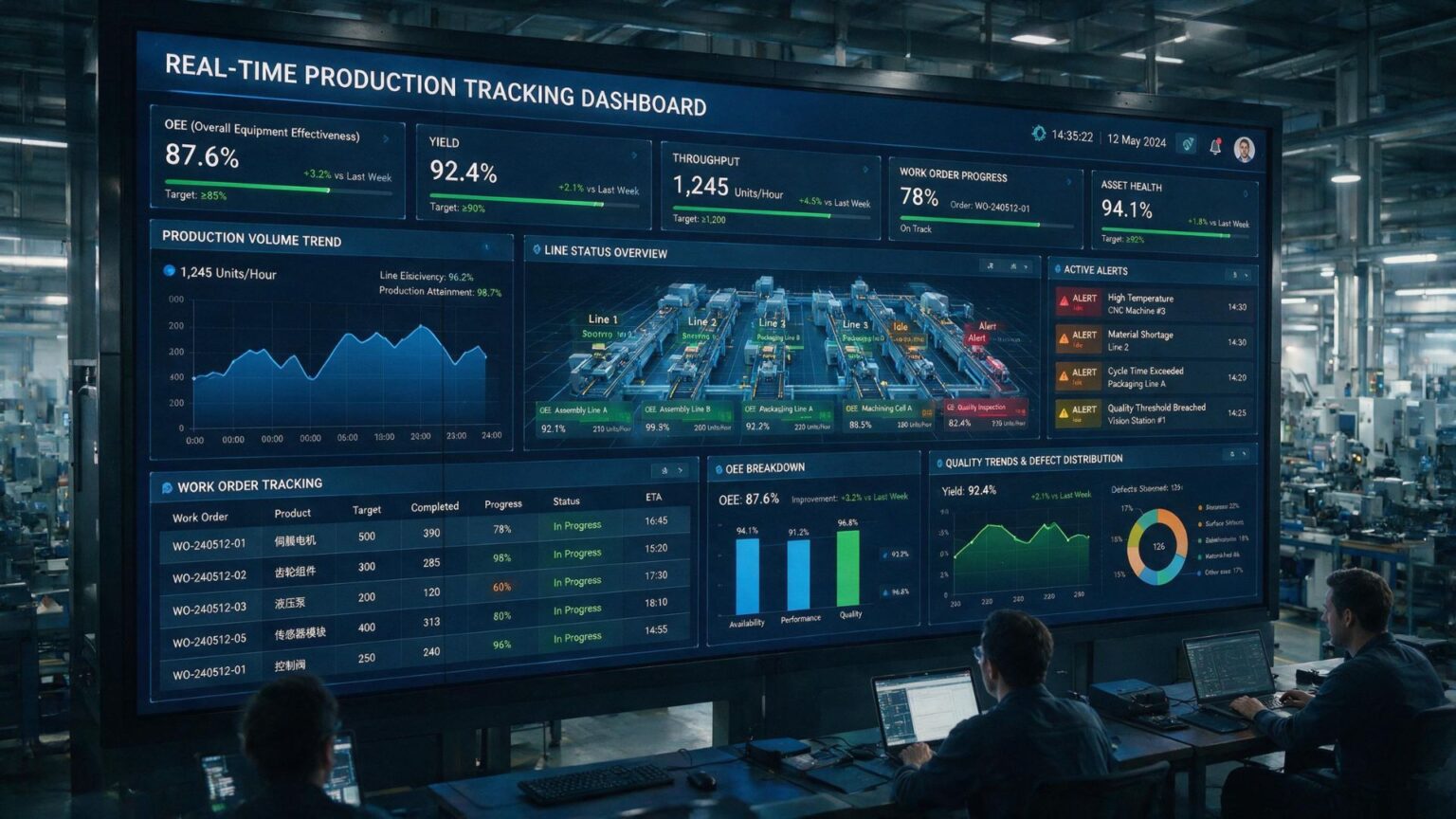
Manufacturing tracking software has become central to how manufacturers improve productivity, optimize resources, and maintain product quality. However, the way production data is collected and consumed has changed dramatically over the past decade.
Many manufacturers still depend on end-of-day reports to understand production performance. While these reports provide historical insights, they no longer support the speed at which modern manufacturing operates. By the time managers review production numbers, the opportunity to correct issues has often already passed.
Today’s manufacturers require immediate visibility into operations. They need to know what is happening on the shop floor as it happens—not several hours later.
This shift is driving the adoption of real-time manufacturing production tracking dashboards. Instead of simply reporting what happened, these dashboards enable organizations to monitor live operations, identify production bottlenecks, and make informed decisions before small issues become costly disruptions.
Why End-of-Day Reporting Is No Longer Enough
End-of-day reporting has traditionally been used to summarize production output, equipment utilization, quality metrics, and downtime. While valuable for historical analysis, it has significant limitations in today’s fast-paced manufacturing environment.
The biggest drawback is timing.
A machine failure discovered at the end of a shift may have already delayed production targets, affected delivery schedules, or increased operational costs. Likewise, quality issues identified hours after production may result in unnecessary scrap, rework, or customer dissatisfaction.
Traditional reporting also limits collaboration. Different departments often work with separate reports, making it difficult to maintain a consistent understanding of production performance across operations, maintenance, and quality teams.
As manufacturing environments become increasingly connected through Industrial IoT, ERP systems, and automation technologies, relying solely on retrospective reporting creates unnecessary operational risk.
How Real-Time Production Tracking Dashboards Are Changing Manufacturing
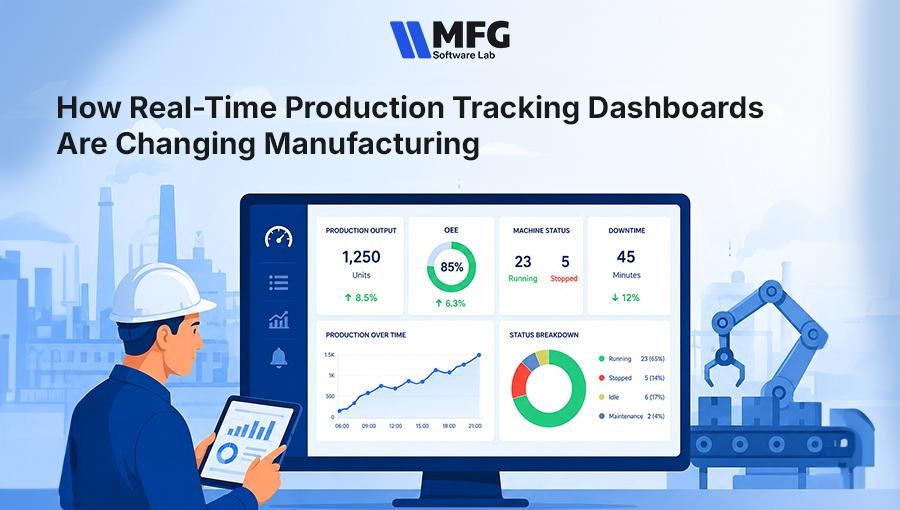
Real-time dashboards provide continuous visibility into production by consolidating live data from machines, sensors, manufacturing execution systems (MES), and enterprise platforms into a single interface.
Rather than waiting until the end of a shift, production managers can monitor key performance indicators throughout the day and respond immediately when performance deviates from expectations.
Instant Production Visibility
Modern dashboards display live operational metrics such as:
- Production output
- Machine availability
- Overall Equipment Effectiveness (OEE)
- Downtime events
- Quality performance
- Production targets
This enables supervisors to identify issues as they emerge instead of discovering them after production has ended.
Faster Decision-Making
When production data is available in real time, decisions no longer depend on manual reporting cycles.
If equipment performance begins to decline, maintenance teams can intervene before failures occur. If production targets begin slipping behind schedule, supervisors can adjust staffing, scheduling, or workflows immediately.
Improved Cross-Functional Collaboration
Real-time dashboards create a shared source of operational truth across departments.
Production teams, maintenance engineers, plant managers, and quality specialists all work from the same live information instead of relying on separate reports generated at different times.
This improves communication and accelerates problem-solving across the organization.
The Business Benefits Beyond Visibility
The value of real-time dashboards extends well beyond monitoring production metrics.
Reduced Downtime
Live monitoring enables organizations to detect abnormalities before they escalate into major equipment failures.
Predictive alerts and performance trends allow maintenance teams to schedule interventions proactively, reducing both planned and unplanned downtime.
Better Resource Utilization
Real-time insights help manufacturers optimize labor allocation, machine utilization, and production scheduling throughout the day.
Instead of reacting after production is complete, managers can make adjustments that improve overall operational efficiency.
Higher Product Quality
Quality deviations become visible immediately, allowing production teams to isolate issues before large batches are affected.
This reduces scrap, minimizes rework, and supports more consistent production outcomes.
What Manufacturers Should Consider Before Implementation
Implementing a real-time manufacturing production tracking dashboard requires more than deploying visualization software.
Manufacturers should first evaluate how production data flows across the organization.
Questions to consider include:
- Are machines connected and capable of sharing live data?
- Can existing ERP, MES, and IoT platforms integrate effectively?
- Which KPIs truly influence production decisions?
- Who needs access to operational insights?
- How will data quality be maintained?
Organizations that begin with clearly defined operational objectives typically achieve stronger outcomes than those focused solely on technology deployment.
Equally important is designing dashboards around business decisions rather than displaying every available metric. Too much information can create confusion rather than clarity.
Final Thoughts
Manufacturing is moving from reactive reporting to continuous operational intelligence.
As factories become increasingly connected, production leaders need visibility that supports immediate action rather than historical review. Real-time dashboards provide that capability by transforming production data into actionable insights that improve efficiency, quality, and decision-making.
For manufacturers, replacing end-of-day reporting is not simply about adopting new technology. It is about creating a more agile operation that can respond to changing production conditions with speed and confidence.
Many enterprises partner with a manufacturing software development firm who can build scalable dashboard solutions, integrate enterprise systems and customize digital platforms.
Organizations that invest in real-time production visibility today will be better positioned to improve operational performance, reduce downtime, and build smarter manufacturing environments for the future.
