
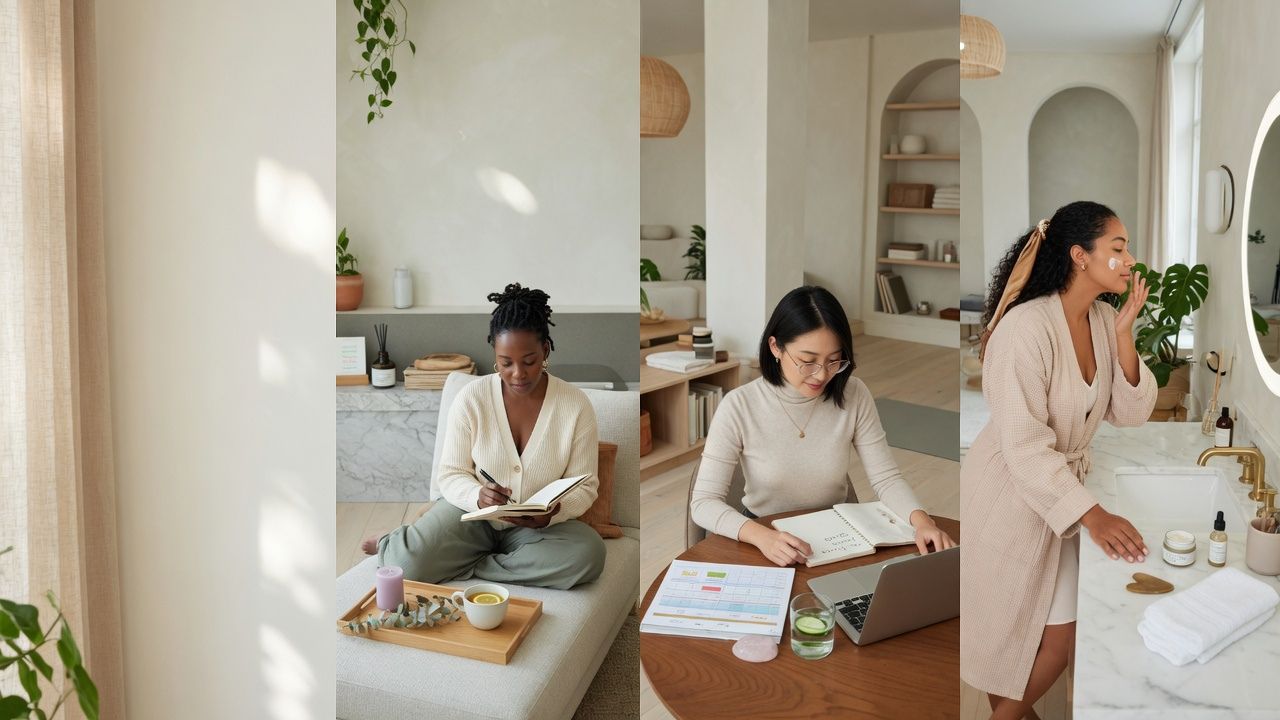
Self-care has changed. For a long time, the phrase was tied to bubble baths, candles, spa days, and a quiet hour away from everybody else. Those things still matter. A good face mask after a rough week can feel like a small reset. But women are now giving self-care a fuller meaning.
It is no longer just about taking a break after life has already drained you. It is about building a life where you are not always running on empty.
Across work, home, friendship, beauty, money, and healing, women are asking better questions. What do I need? What can I no longer carry? What brings me peace instead of pressure? Those questions sound simple, but they can change everything.
For many women, self-care now looks like setting limits at work, choosing rest without guilt, caring for skin and hair in ways that feel personal, spending time alone without feeling lonely, and getting serious about savings. It also includes emotional recovery, especially after stress, burnout, trauma, or unhealthy patterns that were once treated as normal.
This new self-care is not soft in a weak way. It is steady. It is practical. It is honest.
Boundaries Are Becoming a Form of Daily Care
A boundary does not always sound sweet. Sometimes it sounds like “I can’t make it.” Sometimes it sounds like “I need more time.” Sometimes it sounds like not replying right away because your mind is tired and your evening belongs to you.
That is still care.
Women have often been praised for being available. Available to family. Available to work. Available to friends. Available to fix, listen, plan, smooth things over, and keep everyone else calm. There is beauty in being dependable, but there is also a cost when dependability turns into self-erasure.
Here’s the thing. You can love people and still need limits. You can care deeply and still decide that not every problem belongs in your hands.
In the workplace, boundaries are becoming part of professional survival. Women are learning to ask clearer questions before taking on extra work. Is this urgent? Who owns this task? What can be moved if this becomes the priority? That kind of language helps protect time, energy, and focus. It also pushes back against the quiet expectation that women should absorb extra labor without complaint.
At home, boundaries can be even harder. Saying no to a boss is one thing. Saying no to family can feel like walking through wet cement. Still, many women are realizing that peace at home starts with honest limits. You cannot host every gathering, answer every call, lend every dollar, or carry every emotional load and still feel whole.
Boundaries do not make a woman cold. They make it clear.
For women who are healing from addiction, stress, or a painful life season, boundaries can also support recovery. Some people need structured care and a safe place to rebuild their routines, and resources such as inpatient addiction treatment in Massachusetts can be part of that larger healing process.
A boundary is not a wall around the heart. It is a door with a handle. You decide when it opens.
Rest Is Finally Getting the Respect It Deserves
Rest has been treated like a reward for too long. Finish the work, then rest. Take care of everyone, then rest. Push through the week, then rest. But what happens when the work never ends?
Many women know that answer too well.
Rest is now becoming a core part of self-care because burnout has become too common to ignore. The body keeps score. So does the mind. Poor sleep, short patience, brain fog, anxiety, and constant fatigue are not just signs of a busy life. They are often signs that the body has been asking for help for a long time.
Honestly, rest can feel uncomfortable at first. Some women sit down and immediately think of everything they should be doing. Laundry. Emails. Groceries. A call they forgot to return. A form they need to submit. The brain starts making noise the minute the body gets still.
But that is exactly why rest matters.
Rest does not have to be fancy. It can be a slow morning without grabbing the phone first. It can be going to bed before midnight. It can be sitting in the car for five quiet minutes before walking into the house. It can be a Sunday afternoon with no plans, no errands, and no need to make the day productive.
There is a small rebellion in doing less.
Women are also changing how they talk about rest with each other. Instead of bragging about being exhausted, more women are naming their need for quiet. They are canceling plans when their bodies ask for space. They are taking mental health days when possible. They are letting their homes look lived-in instead of perfect. And no, that does not mean they are careless. It means they are human.
Rest becomes even more important when emotional pain is involved. Stress, grief, anxiety, and substance use can all wear down the nervous system. In those moments, real care may need to include therapy, community support, medical guidance, or treatment. Programs that offer Mental health and addiction treatment in Alabama can help people who need more than a good night’s sleep to feel steady again.
A nap will not fix every problem. But a life without rest creates more problems than most people admit.
Beauty Is Moving Away From Pressure and Back Toward Pleasure
Beauty has always had a complicated relationship with women. It can feel joyful, cultural, creative, and personal. It can also feel like pressure. Look polished. Look young. Look natural, but not too natural. Put in effort, but do not look like you tried too hard.
That is exhausting.
Now, many women are shifting beauty away from performance and back toward care. Skincare, hair care, fragrance, makeup, nails, and personal style are becoming rituals that help women feel connected to themselves. Not perfect. Connected.
A simple skincare routine can become a small moment of calm. Cleanser, moisturizer, sunscreen, maybe a serum if it fits the budget. It does not need to be a ten-step routine from TikTok. It does not need to cost half a paycheck. The point is not to chase every trend. The point is to pause and care for the body you live in.
Hair care carries its own emotional weight. Wash days, protective styles, silk scarves, edge control, deep conditioner, and salon visits are not just about looks. They can also be about identity, memory, confidence, and culture. There is something grounding about taking time with your hair, especially when the world keeps rushing you.
Beauty can also help women return to themselves after hard seasons. A fresh haircut after a breakup. Lip gloss before a meeting. A favorite perfume before a solo dinner. Clean nails after weeks of stress. These small choices may seem light, but they can hold real emotional meaning.
Still, there is a balance. Beauty should not become another job. Women deserve to enjoy beauty without being ruled by it. You can love makeup and still reject impossible standards. You can enjoy fashion and still wear sweatpants when life calls for comfort. You can age, change, gain weight, lose weight, cut your hair, grow it back, and still belong to yourself.
For women recovering from stimulant misuse or other substance-related struggles, caring for the body again can feel tender and slow. Medical support can help create a safer first step when the body needs help stabilizing.
Beauty is not shallow when it helps a woman feel present in her own skin. It becomes shallow only when it demands that she disappear behind the image.
Financial Wellness Is Part of Peace Too
Money is emotional. People pretend it is only math, but it is not.
A late bill can ruin your sleep. A small emergency fund can help you breathe. Debt can make you feel trapped. A savings goal can make the future feel possible. That is why financial wellness belongs in the self-care conversation.
More women are talking openly about money because silence has not helped. They are asking about credit, savings, investing, rent, childcare, emergency funds, salary talks, and retirement. They are using budgeting apps, spreadsheets, cash envelopes, bank alerts, and group chats where friends share honest money tips.
This is self-care with receipts.
Financial wellness does not mean being rich. It means having a clearer relationship with your money. It means knowing what comes in, what goes out, and what needs to change. It means giving yourself permission to plan without shame.
For some women, that starts with small steps. Saving ten dollars a week. Canceling one subscription. Calling a bill provider before a payment is late. Asking for a raise with notes prepared. Read the fine print before signing up for another loan or credit card. These moves may not look glamorous, but they build confidence.
A softer life still needs a budget. That may sound like a contradiction, but it is true. Peace often grows from structure. Not rigid control, but enough structure to stop every month from feeling like a surprise.
Money boundaries matter here, too. Women are learning that helping their families does not mean harming themselves. Paying for everything does not prove love. Lending money you cannot afford to lose creates stress that follows you around the house. It is okay to be generous with limits.
Financial stress can also connect with deeper issues, including addiction, trauma, and emotional instability. When someone is rebuilding life after substance use, financial recovery often becomes part of the process. A Substance abuse recovery center can support people as they work toward steadier routines and healthier choices.
Financial wellness is not cold or materialistic. It is one way women protect their future selves.
Friendships, Home Life, and Solo Time Are Part of the Same Story
Self-care does not stop with work, rest, beauty, or money. It also shows up in the people around you and the spaces you return to every day.
Friendship is a big part of this shift. Women are paying closer attention to how they feel after spending time with certain people. Do they feel lighter? Heard? Safe? Or do they leave feeling judged, used, or quietly compared?
Not every friendship has to be perfect. People have bad days. Life gets messy. But a healthy friendship should not feel like a constant test. It should have room for honesty, laughter, repair, and rest.
Home life matters too. A peaceful home does not have to look like a magazine spread. It just needs to support the life you are trying to live. Clean sheets can be self-care. A cleared kitchen counter can feel like relief. A small reading corner, a candle, a plant that somehow survives, or a playlist while cooking dinner can change the mood of a whole evening.
Then there is solo time.
More women are taking themselves on dates. Coffee alone. A movie alone. A museum visit. A walk through Target with no rush. A lunch where nobody asks to taste your food. It sounds simple, but spending time alone by choice can rebuild confidence. It reminds you that your own company is not a punishment.
There is emotional recovery in that. Quiet recovery. The kind that does not always announce itself.
A woman may not wake up one day fully healed. She may just notice that she no longer answers the phone every time it rings. She may realize she can sit in silence without panic. She may buy herself flowers without waiting for someone else to do it. She may check her bank account without fear. She may look in the mirror and feel kinder than she used to.
That is self-care, too.
Women are redefining self-care because the old version was too small. A face mask is nice, but it cannot replace boundaries. A spa day feels good, but it cannot fix a life built on exhaustion. A new outfit can lift your mood, but peace also needs rest, money, care, honest friendships, and emotional support.
The new self-care is fuller. It includes softness, but it also includes structure. It includes beauty, but it also includes bills. It includes rest, but it also includes hard conversations. It includes saying yes to joy and no to what drains you.
And maybe that is the point.
Self-care is no longer just about escaping life for a few quiet minutes. It is about shaping a life that gives you room to breathe.
