
The global market has fully entered an era where generic templates, uninspired layouts, and cookie-cutter interfaces no longer support meaningful corporate growth. With automation tools now capable of generating functional, basic landing pages in a matter of seconds, the baseline for what makes a business website “acceptable” has shifted dramatically.
Today, the real challenge isn’t just deploying a portal that functions; it is crafting an optimized digital destination that captures immediate user intent. Standing out in a crowded digital landscape requires an intentional blend of cutting-edge technology, striking geometric trends, and highly empathetic, human-centric user experience (UX) engineering. For expanding regional economies, your platform must serve as a high-speed revenue engine tailored explicitly to how modern consumers interact with screen spaces.
1. Modular Geometry: The Power of the Bento Grid Layout
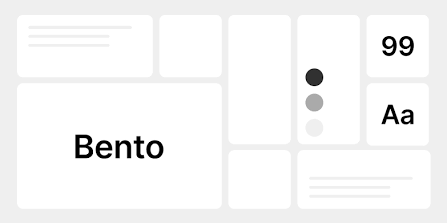
Visually, the structure of the web has broken free from traditional horizontal banners and rigid left-aligned lists. One of the most significant architectural movements shaping modern interfaces is the widespread integration of the Bento Grid layout. Inspired by the clean, compartmentalized style of Japanese bento boxes, this structure organizes complex datasets, social proofing blocks, and media assets into neat, rounded rectangular modules of varying proportions.
The Bento Grid System Simplifying Content Delivery. Source: Mockuuups Studio
This geometric style is highly effective because it matches the natural cognitive patterns of modern web users, who tend to scan pages rapidly rather than read them chronologically. It allows a business to display a diverse mix of information—such as a brief value proposition, live operational metrics, customer validation quotes, and high-visibility calls to action—side-by-side without creating visual clutter. Furthermore, its block-based geometry translates seamlessly across varied screen resolutions, solving mobile responsiveness layout bugs before they even start.
2. Speed Engineering: Treating Velocity as a Core Feature
A beautiful visual design cannot rescue an interface that operates sluggishly. Page load speed is an essential pillar of the modern user journey, and search engine parameters actively penalize slow domains. To maintain organic search authority, a corporate infrastructure must score flawlessly on specialized performance audits.
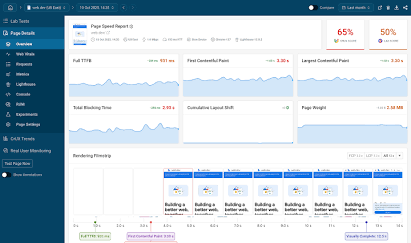
Monitoring Comprehensive Technical User Experience Analytics. Source: DebugBear
[User Clicks Link] ──> [Server Response (TTFB)] ──> [Largest Contentful Paint] ──> [Interactive Ready]
│ │
Target: < 200ms Target: < 2.5 Seconds
Achieving top-tier system speeds requires absolute technical discipline, including compressing heavy graphics into lightweight next-gen formats like WebP or AVIF, leveraging server-side data compilation, and setting up lazy loading so assets render only as a user scrolls them into physical view. Keeping your site fast and responsive retains traffic, minimizes drop-offs, and directly increases conversion rates.
3. Designing for the Hyper-Local Intent Cycle
While massive corporations focus on broad, national keyword classifications, regional enterprises scale by dominating localized search traffic. When a consumer turns to a device to act on an immediate need—such as finding a trusted service provider or specialized contractor nearby—search engines use complex geographic filters to surface accurate, nearby recommendations.
To capture these high-value micro-moments, a website’s underlying code must be optimized for local search engine optimization (SEO). This means embedding clean localized schema data, implementing custom geographic landing blocks, and optimizing site speed so the platform loads instantly on mobile networks. When a brand effectively blends high-end design with local search visibility, it establishes immediate authority exactly when a consumer is ready to buy.
4. Accessibility and Semantic Compliance are Non-Negotiable
Designing a visually breathtaking website means very little if a significant portion of your audience cannot navigate it comfortably. Global digital accessibility compliance guidelines have evolved from an afterthought into a foundational development framework.
True accessibility means going far beyond basic image alt text. Modern web development demands:
- Keyboard-Only Navigation: Ensuring all menus, interactive widgets, and forms can be fully operated without a mouse.
- Aria-Labels and Semantic HTML: Structuring code so screen readers can interpret screen transitions or pop-ups accurately.
- Contrast Ratios: Intentionally testing text color overlays against backgrounds to serve users with low-vision or color vision deficiencies.
When a website is built cleanly from the ground up, search engine crawlers find it highly readable as well. Exceptional accessibility directly powers exceptional organic discovery, ensuring your business ranks better organically over the long haul.
5. Merging Technical Precision with Authentic Local Strategy
Building an industry-leading digital presence requires a specialized combination of custom interface programming, conversion psychology, and localized search engine strategy. For companies striving to break away from the noise in growing regional economies, template-based site builders simply cannot deliver the necessary performance, custom functionality, or tailored UX pipelines required to scale.
If your strategic objective is to secure an authoritative, market-leading position within competitive regional corridors, partnering with an elite agency for Web Design Whitby ensures your platform is engineered for long-term growth. Collaborating with a dedicated local expert ensures your site features clean code, responsive frameworks, and powerful conversion architectures built for your specific target audience. Professional development handles the technical heavy lifting, turning your website into an automated lead generator.
Strategic Technical Checklist for Growing Enterprise Brands
Before launching a comprehensive redesign or expanding into a new market segment, benchmark your current digital property against these critical performance targets:
| Structural Variable | Industry Target | Strategic Impact |
| Mobile Speed Score | 90+ on PageSpeed Insights | Directly influences organic mobile search visibility and digital ad performance. |
| First Input Delay | Under 100 Milliseconds | Establishes immediate perceived system responsiveness upon the first interaction. |
| Semantic Structure | 100% Validated HTML5 | Enables flawless parsing by indexers and human assistive devices alike. |
| Local Schema Integration | Complete Geo-Coordinates | Pinpoints physical service areas for map-based discovery algorithms. |
The 3-Second Golden Rule: If a first-time visitor cannot identify exactly what your business does and what action they should take next within three seconds of landing on your homepage, your current interface architecture is leaking potential revenue.
Building a meaningful presence online requires a balance of visual artistry, technical engineering, and profound empathy for the end user. By leaning into modular design architectures like the bento grid, optimizing for intense local search visibility, and ensuring your mobile platform functions with lightning-fast efficiency, you transform a simple URL into an invaluable, conversion-driving business asset.
