
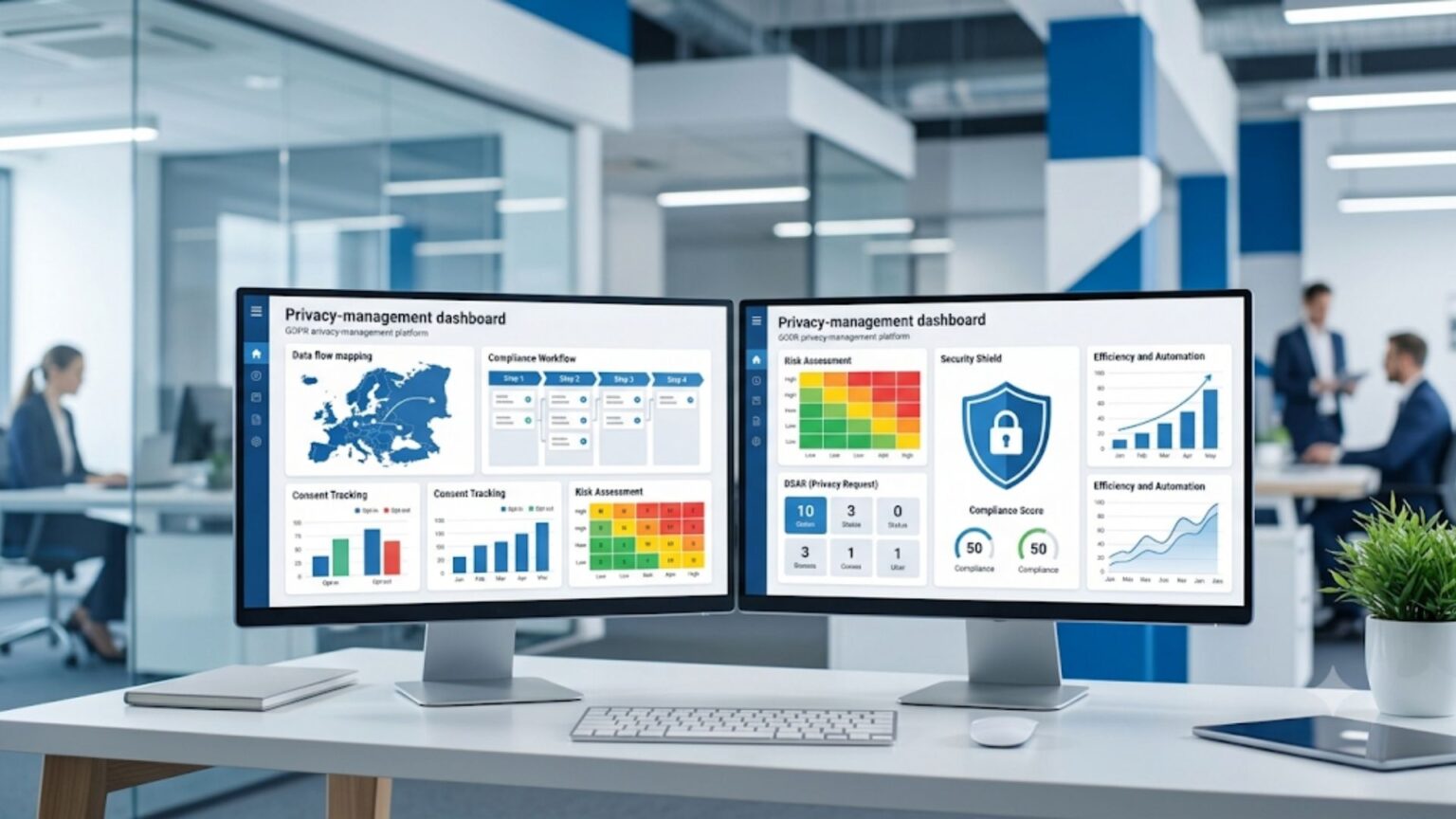
Picking a GDPR tool is not easy when two options both look like they do the same thing. DataGuard and OneTrust are two of the most common choices, but they work quite differently. This article walks through what each one does so you can pick the right one for your team.
The short version: DataGuard is built for businesses that want expert help included, not just software. OneTrust is a bigger platform that covers more countries and privacy laws, but you run it yourself.
Table of Contents
- What They Both Do
- Quick Comparison
- DataGuard
- OneTrust
- The Main Differences
- Which One to Pick
What They Both Do
Both tools take the manual work out of GDPR compliance. Here is what each one handles:
- Keeping your record of processing activities (RoPA) up to date
- Managing requests from people who want to see, change, or delete their data (DSARs)
- Running data protection impact assessments (DPIAs)
- Managing cookie consent on your website
- Tracking your vendors and making sure data processing agreements are in place
- Logging data breaches and walking you through whether to report them
- Storing records and evidence in case of an audit
Quick Comparison
| Feature | DataGuard | OneTrust |
| Main focus | GDPR for EU companies | Global privacy rules |
| Who it’s for | SMEs and larger businesses in the EU | Large companies or global teams |
| Expert help | Includes compliance experts and guidance | Mostly software, help available as an extra service |
| Setup | Help from a consultant | You set it up yourself or with the IT team |
| Automation | High, with expert support | High, mostly automated software |
| Laws covered | GDPR, NIS2, ISO 27001, TISAX®, EU AI Act | GDPR, CCPA, LGPD, and more |
| Price | Custom pricing | Custom pricing |
DataGuard
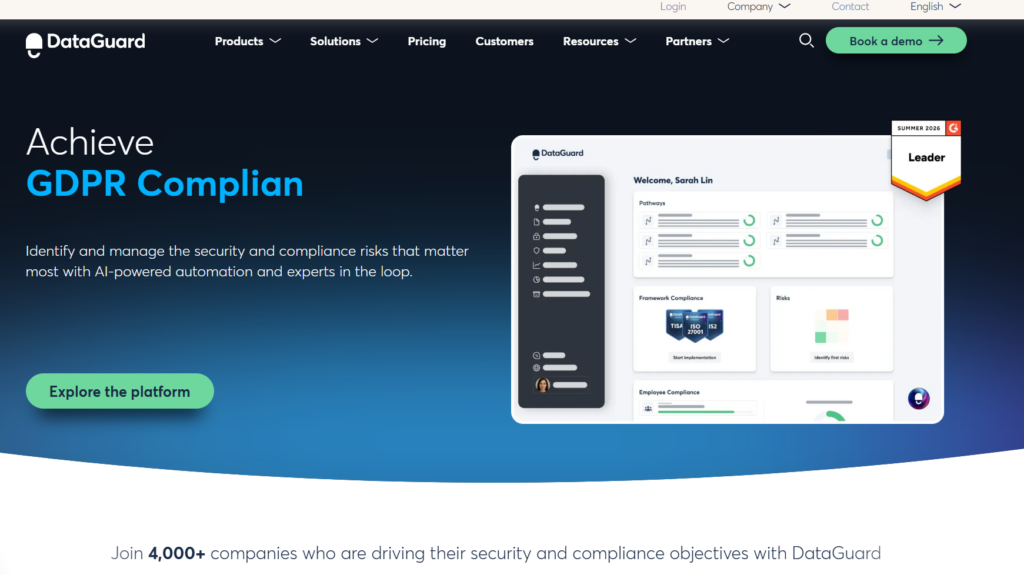
DataGuard is built for European businesses. What makes it different from most tools is that it comes with real people, not just software. Access to data protection and compliance experts is a core part of the DataGuard offering.
What It Automates
- Processing records: Builds and keeps your RoPA updated as you add tools and vendors
- Impact assessments: Step-by-step DPIA process with ready-made templates
- Data requests: Tracks incoming DSARs, sets deadlines, and sends reminders
- Cookie consent: Manages banners and stores consent records
- Vendor tracking: Logs all data processors and flags missing agreements
- Breach workflow: Guides you through documenting a breach and deciding if it needs to be reported within 72 hours
- Privacy policies: Generates notices based on what your company actually does
- Audit log: Keeps a full record of every action taken in the platform
Why People Choose It
- Access to compliance experts is a key part of DataGuard’s offering, with additional advisory and DPO services available depending on the plan selected
- Expert guidance is available to help review compliance documentation rather than relying solely on auto-generated outputs.
- Supports broader compliance initiatives, including GDPR, NIS2, ISO 27001, TISAX®, and the EU AI Act
- The platform explains things in plain language, which helps teams without a legal background
- Reduces compliance-related manual work by up to 40%
Good fit for
Companies that want GDPR compliance handled without building an internal privacy function; including those that are still early in building their compliance program
Cons:
- Designed around guided workflows and expert support, which may feel less flexible for teams that prefer full in-house control
Pricing:
On request, a free consultation is available
OneTrust
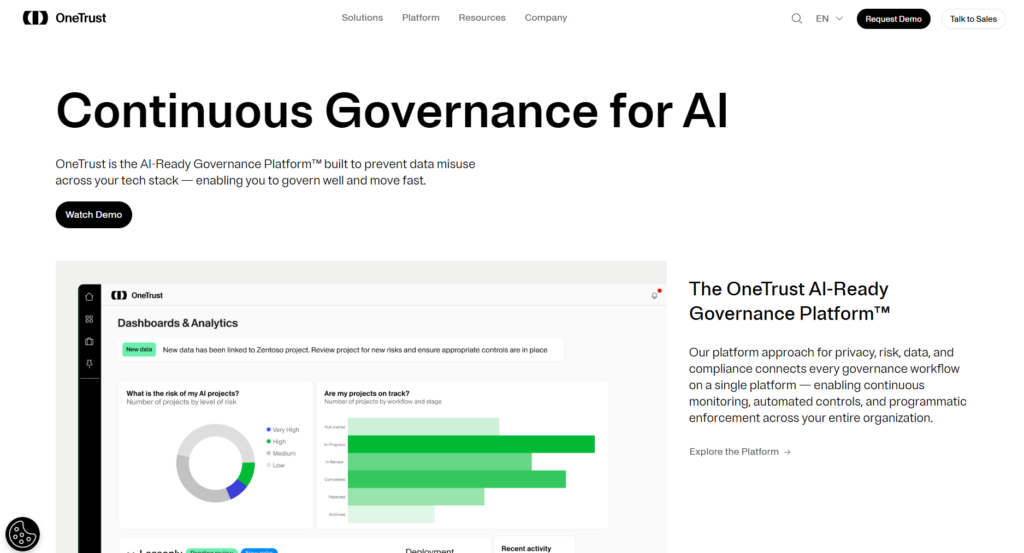
OneTrust is a privacy platform used by companies of all sizes. It covers GDPR but also a long list of other privacy laws, which makes it useful for businesses that operate in multiple countries. It is a self-serve tool, meaning you configure and run it yourself.
What It Automates
- Data mapping: Finds and maps personal data across your systems and tools
- Processing records: Keeps your RoPA updated based on the data map
- Data requests: A portal where people submit requests that get routed to the right team
- Impact assessments: Templates and approval workflows for running DPIAs
- Cookie consent: Banners and preference centres for websites and apps
- Vendor reviews: Sends security questionnaires to suppliers and tracks replies
- Breach workflow: Documents and tracks breach reports
- Privacy notices: Creates and versions your privacy documentation
- Audit exports: Pulls compliance reports when you need them
Why People Choose It
- Covers many privacy laws from one place, including CCPA, LGPD, and UK GDPR
- Integrates with major enterprise platforms such as Salesforce, ServiceNow, Microsoft 365, and many other business systems.
- Can be configured to fit large or complex organizational structures
- Works well for teams that already have privacy or legal staff in-house
Good fit for
Larger companies or those operating across multiple countries that have an internal team to manage the platform.
Cons:
- Can feel overwhelming for small or mid-sized businesses that only need GDPR-focused automation.
- Implementation can become resource-heavy, especially in large enterprise deployments
Pricing:
Pricing available via quote; plans vary based on company size and modules selected.
The Main Differences
- Expert support: DataGuard places a strong emphasis on expert support and compliance guidance. OneTrust is primarily a software platform. Organizations typically manage compliance internally, although implementation and support services are available through OneTrust and partners. If you have no one in-house who knows GDPR, this is the biggest difference between the two.
- GDPR depth vs broader coverage: DataGuard places a strong emphasis on GDPR and European compliance requirements, while OneTrust covers a broader range of global privacy frameworks.
- Setup: DataGuard places a stronger emphasis on guided onboarding and expert support, while OneTrust is often managed by internal privacy teams or implementation partners.
- Scale: OneTrust is built to handle large, complex organizations with multiple business units. DataGuard offers solutions for both SMEs and larger businesses, but is especially well-suited to teams that need compliance handled without extensive internal resources.
Which One to Pick
For most businesses looking for GDPR software, DataGuard is the stronger choice. It is especially well-suited to companies based in the EU that want both software and expert support in one package. If you do not have a dedicated privacy expert or legal team, DataGuard makes compliance easier by guiding the platform. It is also a good fit if GDPR is your main priority and you need support for related requirements such as NIS2 or ISO 27001.
OneTrust can still be a good option for large organizations with established privacy or legal teams. Its platform offers customization and supports a wide range of global privacy laws.
Finally. if you are still building your compliance program and want expert support included, DataGuard is likely the better starting point.
