
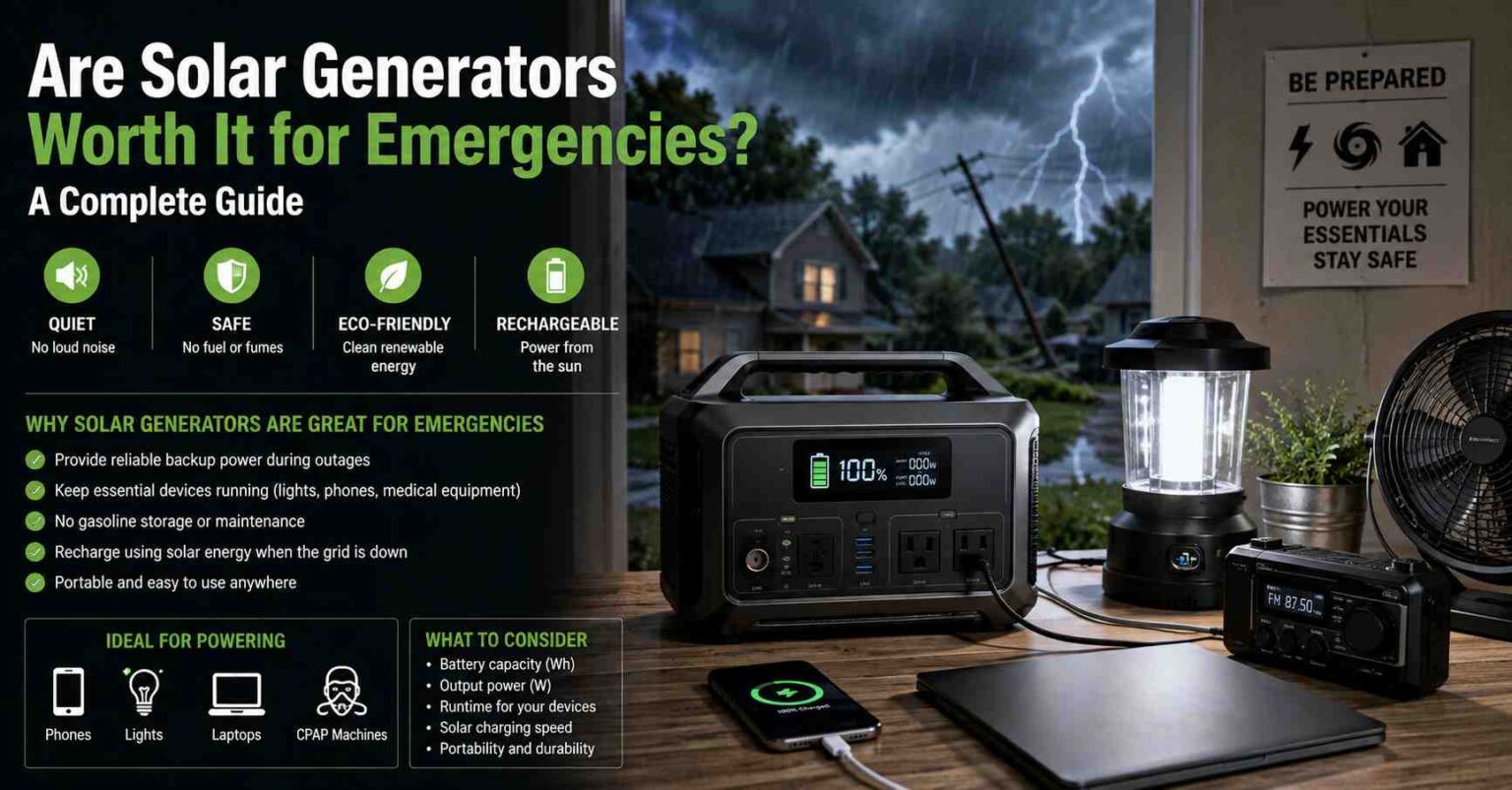
Solar generators are often worth it for emergencies when you need quiet, safe, low-maintenance backup power for essential devices. They can keep phones charged, run lights, power medical equipment with suitable capacity, and support small appliances during outages caused by storms, grid failures, or evacuation situations. Unlike fuel-powered options, they do not require gasoline storage, produce no exhaust during use, and can recharge from the sun when the grid stays down. That said, they are not the right fit for every emergency plan. Their value depends on the size of the battery, the inverter output, recharge speed, and the type of equipment you need to run. Understanding how they work and where they fall short helps you decide whether a solar generator is a smart investment.
How Solar Generators Work During Emergency Situations
Converting Solar Energy Into Usable Backup Power
A solar generator stores electricity in a battery and delivers it through built-in outlets when grid power fails. During an emergency, solar panels collect sunlight and convert it into direct current electricity. The generator’s charge controller regulates that incoming energy to protect the battery and improve charging efficiency. The stored power then passes through an inverter, which converts it into usable alternating current for common household devices, while USB and DC ports can supply compatible electronics directly. This setup allows you to recharge and use power without fuel, noise, or fumes. In practice, the system acts like a portable battery station that can keep critical devices running as long as battery capacity and solar input match your energy needs.
Key Features That Affect Emergency Performance
Emergency performance depends on more than battery size alone. Capacity, usually measured in watt-hours, determines how much energy the unit can store, while continuous wattage and surge rating show what it can actually power. A higher-quality inverter helps the generator handle sensitive electronics more safely. Battery chemistry also matters, since longer-life options can better withstand repeated outage use. Charging flexibility is another key factor: wall charging is fastest before a storm, while solar input becomes essential during extended blackouts. Port selection, display clarity, and built-in safety protections also affect real-world usability. For emergency use, the best systems balance enough storage, dependable output, and practical recharge options rather than relying on one headline specification.
Are Solar Generators Worth the Investment for Emergencies?
Main Benefits of Using Solar Generators as Backup Power
Solar generators are worth the investment for many households because they solve several backup power problems at once. They are easy to use, require little upkeep, and start instantly without pull cords or engine maintenance. Since they do not burn fuel during operation, they are suitable for indoor use in well-managed spaces where exhaust from gas equipment would be dangerous. They also run quietly, which matters during overnight outages, apartment living, or campsite emergencies. Another major advantage is energy independence during longer disruptions. If sunlight is available, you can keep recharging the battery instead of searching for fuel. For people focused on essential loads rather than whole-home backup, that combination of convenience, safety, and rechargeability is compelling.
Factors to Consider When Choosing a Solar Generator
Solar generators are designed to provide flexible and efficient power solutions, but choosing the right model depends on your specific energy needs. Different devices require different levels of power output, so it is important to consider whether a unit can support your essential appliances and electronics. Solar charging performance may vary depending on weather conditions, sunlight availability, and installation location, making proper planning important for extended power needs. Battery capacity, charging options, portability, and system size all influence how well a solar generator fits your lifestyle. Larger systems may provide more stored energy, while compact models offer easier transportation for outdoor activities and travel. By matching the generator’s features with your daily power requirements, you can create a more reliable and practical energy setup.
What to Consider When Choosing an Emergency Solar Generator
Checking Power Capacity, Output, and Runtime Needs
Start by listing the devices you absolutely need during an outage, then add both their running wattage and expected daily use. This gives you a realistic picture of the battery capacity required. A phone and lights need far less power than a refrigerator, CPAP machine, or microwave. Next, check the generator’s continuous output and surge capability to make sure it can start and run those items safely. Runtime is simply stored watt-hours divided by actual device consumption, adjusted for inverter losses. It is smarter to size for essentials over 24 to 48 hours than to buy based on vague marketing claims. Choosing enough capacity for your real emergency loads prevents both overspending and underpreparing.
Choosing a Reliable System for Home and Outdoor Use
Reliability comes from the full system, not just the battery pack. Look for durable construction, a proven battery management system, clear operating displays, and multiple charging methods so you can recharge from wall power before an event and solar afterward. If you plan to use it at home and outdoors, portability, handle design, and weather-conscious setup become important. You should also consider outlet variety, pass-through charging, and whether the unit can support sensitive electronics cleanly. For households that want one backup solution for blackouts, road trips, and outdoor work, a portable solar generator can offer practical flexibility. The best choice is a model sized for essential loads, easy to transport, and simple to operate under stress.
Conclusion
Solar generators are worth it for emergencies when your goal is dependable backup for essential devices, not full-house power for every appliance. They offer clear advantages: quiet operation, no fuel handling, indoor-friendly use, low maintenance, and the ability to recharge from sunlight during extended outages. Their limits are just as important. Battery capacity, inverter output, weather-dependent solar charging, and purchase price all shape how useful they will be when the grid goes down. For most people, the right approach is to match a unit to realistic emergency needs such as communication, lighting, refrigeration, and medical or small household equipment. If you size the system carefully and plan your loads in advance, a solar generator can be a practical and worthwhile part of emergency preparedness.
