
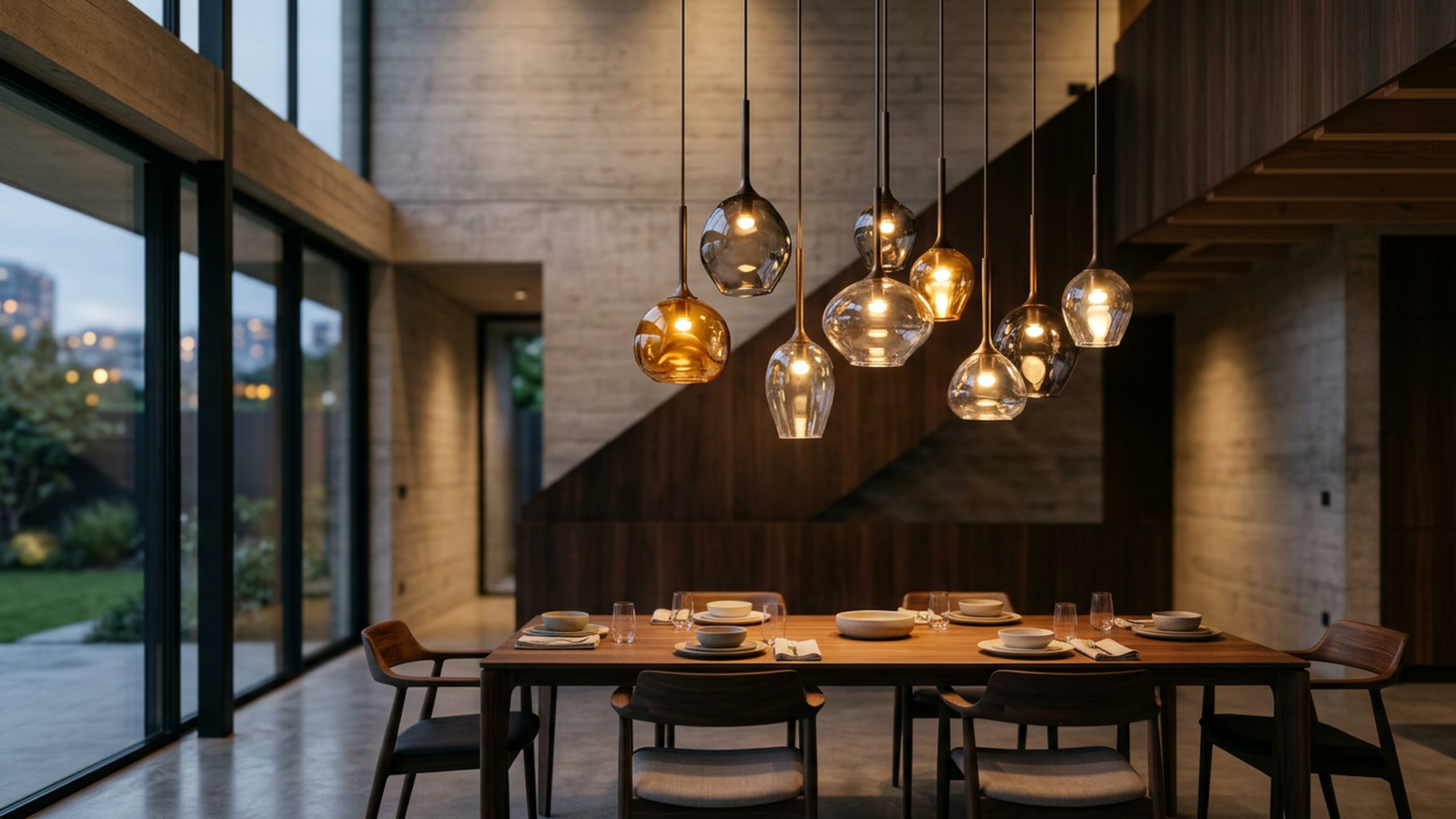
Lighting shapes how a space feels. In fact, it is often the detail that people notice first. However, standard fixtures rarely fit a unique project. That is where custom lighting comes in. A custom lighting configuration turns your vision into a one-of-a-kind fixture. This guide explains what custom lighting is, what can be customised, the process, and how Luminaire Authentik crafts tailored pieces. Use it to plan your next project.
What Custom Lighting Configuration Means
Custom lighting is exactly what it sounds like. It is lighting designed for your specific project. Therefore, no two pieces are the same.
A custom fixture is built to your space. You choose the size, the materials, and the finish. As a result, the piece fits your room perfectly. It also reflects your style. On the other hand, off-the-shelf lighting forces you to compromise. Consequently, custom lighting is the answer when a project demands something unique.
This matters most in design-led spaces. Hotels, restaurants, and boutiques all benefit. So do high-end homes and offices. In each case, the lighting is part of the design. Therefore, it should be designed, not bought. In short, custom lighting configuration turns lighting into a signature, not an afterthought.
Who Custom Lighting Is For
Custom lighting is not for everyone. In fact, it suits specific projects best. However, the range is wider than you might think.
Architects and designers are the core audience. They specify custom fixtures for projects that need cohesion. Therefore, they need a partner who can build to their drawings. Homeowners with a clear vision come next. A statement pendant or a tailored installation elevates a home.
Then, there are the commercial spaces. Hotels need fixtures that match their brand. Restaurants need lighting that sets a mood. Retail spaces need pieces that draw the eye. Events need temporary but striking installations. In short, custom lighting configuration serves anyone who wants lighting that belongs to the space alone.
What Can Be Customised
The beauty of custom lighting is the control it gives you. In fact, almost every aspect of a fixture can be tailored.
The size is the first choice. A fixture can be scaled to fit a double-height lobby or a small reading corner. Then, there are the materials. Glass, metal, wood, and fabric all change the character of the piece. The finish comes next. Brushed, matte, polished, or painted, the finish sets the tone.
The configuration matters too. A single pendant or a cluster. A long linear run or a sculptural arrangement. Each choice changes how the light fills the room. Luminaire Authentik customises each piece in size, materials, and finishes. Then, the fixture is crafted in its own workshop. In other words, the possibilities are open, and the result is truly yours.
The Process: From Vision to Installed Fixture
Understanding the process removes the mystery. A custom lighting configuration follows a clear path. Here is how it works.
The first step is discovery. The team learns your vision and your space. Then, it understands the project requirements. Next comes the proposal. You receive a personalised quotation. It includes pricing, specifications, and early concepts.
Then, the development stage begins. Technical drawings refine every detail. Materials are selected. Visual renderings show the final piece. Consequently, you approve the design before anything is built. After that, fabrication begins. The fixture is crafted using quality materials and specialised techniques. Finally, delivery completes the process. The team coordinates carefully and provides the documentation you need.
This five-step process is how Luminaire Authentik works. In short, you are guided from the first idea to the finished installation.
Why a Workshop Matters
Where a fixture is made matters as much as how it is designed. Therefore, a dedicated workshop is a real advantage.
A workshop means control. The same team that designs the fixture also builds it. As a result, the quality stays consistent. There is no handoff to an unknown factory. Consequently, the details you approved are the details you get.
A workshop also means skill. Custom lighting requires specialised techniques. Glass blowing, metalworking, and careful assembly all demand experience. Luminaire Authentik crafts its pieces in its own workshop. In other words, the company controls the whole journey, from drawing to delivery.
How Custom Lighting Fits Your Project
Custom lighting works best when it is planned early. Therefore, think about it at the design stage, not the end.
Early planning lets the lighting shape the space. For example, a custom fixture can be scaled to the room’s proportions. It can also be finished to match the materials around it. As a result, the lighting feels inevitable rather than added.
Custom lighting also solves practical problems. A room with unusual dimensions needs a fixture that fits. A brand needs lighting that matches its identity. In each case, a tailored piece does what stock lighting cannot. Consequently, custom lighting configuration is both a design choice and a practical solution.
What to Prepare Before You Start
A little preparation makes the process smoother. In fact, the more you bring, the better the result.
Start with your vision. Gather inspiration images and references. Then, define the space and its dimensions. Know the ceiling height and the room’s purpose. This helps the team understand the scale. Also, think about the materials you prefer. Metal or glass. Warm or cool finishes.
Finally, consider your budget and timeline. Custom work takes time. Therefore, plan for the lead time. Luminaire Authentik asks for these details in its project form. Project type, location, budget, and installation date all matter. In short, the more you share, the smoother the collaboration.
Why Designers Choose Luminaire Authentik
Choosing the right partner is the key decision. Therefore, look for a company built for custom work.
Luminaire Authentik collaborates with architects and designers. Its pieces are made to integrate seamlessly into each space. The company offers a custom catalog. You can see the range of what is possible. Then, you can start your own project.
The company works across project types. Hotels, restaurants, offices, retail, and events all feature in its form. This breadth shows real experience. Moreover, the workshop-based approach means quality is built in. In short, the company is designed for the custom journey from start to finish.
Start Your Custom Project Today
Your project deserves lighting that belongs to it. Therefore, do not settle for standard fixtures. Start a custom lighting configuration instead.
The process is simple. Share your vision and your space. Then, receive a tailored proposal. Review the renderings. Approve the design. Finally, receive your bespoke fixture. It is a clear path from idea to installation.
Luminaire Authentik invites you to start. Fill out the contact form and the team will respond. In short, your custom lighting project is one conversation away.
Conclusion
In conclusion, custom lighting configuration is the difference between a space that is lit and a space that is designed. A bespoke fixture fits your dimensions, your materials, and your vision. It solves problems that stock lighting cannot. It also gives your project a signature. The process, from discovery through fabrication to delivery, is clear and guided. Luminaire Authentik brings the workshop, the skill, and the experience to every project. So, whether you are an architect, a designer, or a homeowner with a vision, custom lighting is within reach. Start your project. Your space deserves light that belongs to it alone.
Frequently Asked Questions
1. What is a custom lighting configuration?
A custom lighting configuration is a bespoke lighting fixture designed and built to your specific size, materials, finishes, and project needs.
2. What can be customised in a lighting fixture?
Size, materials, finishes, and arrangement can all be customised, from single pendants to clusters and linear runs.
3. How does the custom lighting process work?
The process moves through discovery, proposal, development, fabrication, and delivery, with renderings approved before anything is built.
4. Who is custom lighting for?
Architects, designers, homeowners, and commercial spaces such as hotels, restaurants, and retail all benefit from bespoke fixtures.
5. How long does custom lighting take?
Timelines vary by project complexity, so the best approach is to share your project details and installation date early in the process.
6. How do I start a custom project with Luminaire Authentik?
Fill out the contact form with your project type, location, budget, and vision, and the team will guide you from idea to installation.
