
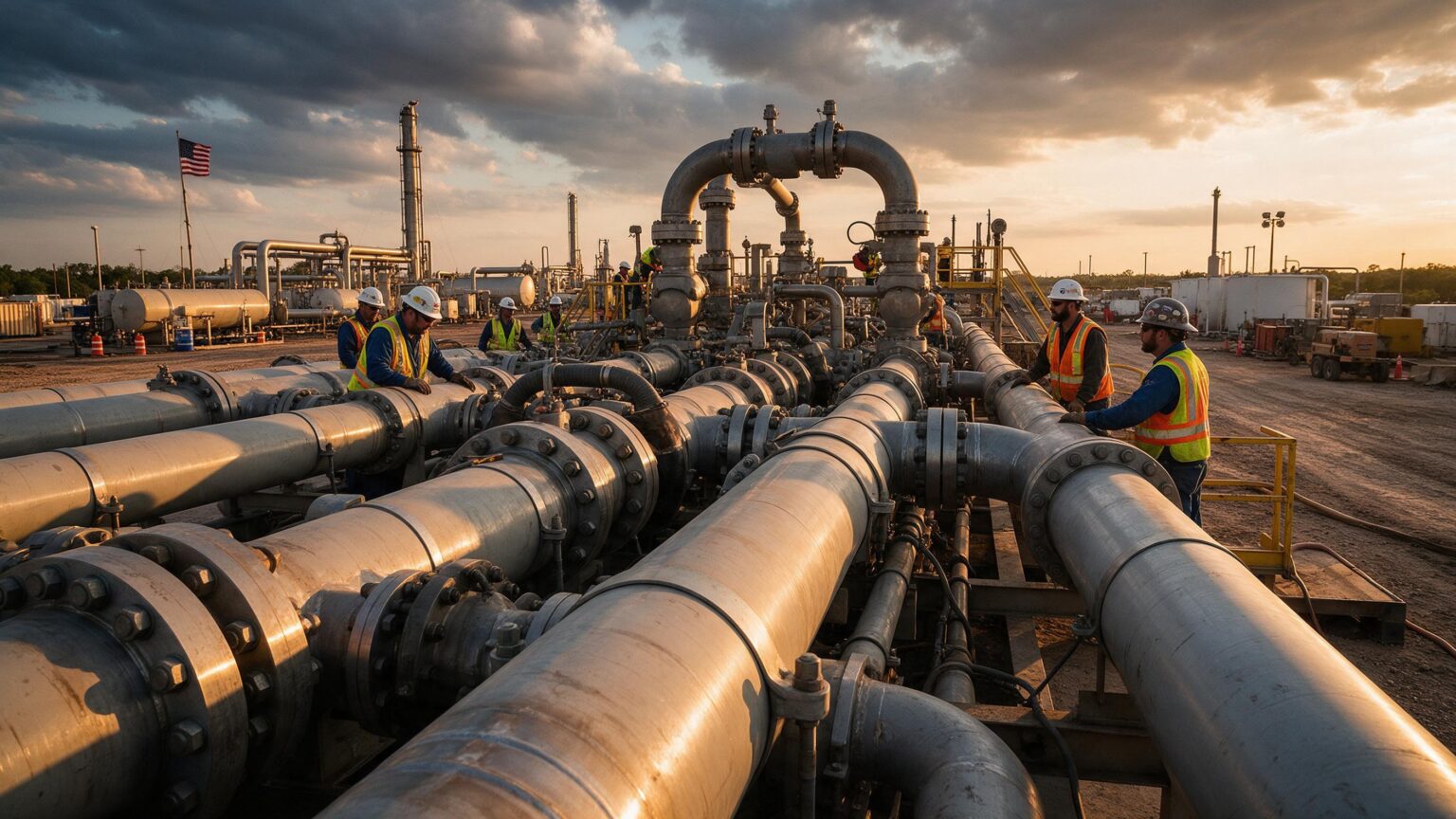
Pipeline infrastructure in the United States carries an enormous operational burden. Whether transporting crude oil across state lines, moving natural gas through midstream distribution networks, or handling produced water in upstream operations, the physical equipment that makes up any pipeline system has to perform without interruption across a wide range of conditions. Off-the-shelf components are adequate in some situations, but in many project environments, they simply do not fit the engineering reality on the ground.
This becomes particularly evident when project managers and procurement teams are working with nonstandard pressure requirements, unusual flow dynamics, challenging terrain, or regulatory constraints that vary by jurisdiction. In these cases, waiting for a standard product to be adapted after the fact often introduces delays and creates compatibility issues that compound over time. The decision to plan for custom pipeline equipment from the early stages of a project is not a premium choice — it is, in many cases, the more practical one.
Understanding what custom pipeline equipment actually involves, how it is specified, and where it provides the most value across oil and gas project types helps procurement leads, project engineers, and operations managers make better decisions before problems appear in the field.
What Custom Pipeline Equipment Actually Means in Practice
The term “custom” in pipeline equipment does not refer to cosmetic modification or simple resizing. It describes equipment that is engineered to specific operational parameters, fabricated to exact dimensional or material requirements, and validated for the exact service conditions it will encounter. This includes items such as pipeline manifolds, pressure vessels, separator packages, pig launchers and receivers, and specialty fittings that standard catalogs do not address adequately.
For teams beginning the specification process, reviewing a reliable Custom Pipeline Equipment guide provides a structured starting point for understanding what categories of equipment are typically customized, what drives those customization decisions, and what fabrication documentation is required to support inspection and regulatory approval.
The distinction between “modified standard” and “fully custom” equipment matters here. Modified standard equipment takes an existing design and adjusts a few parameters. Fully custom equipment begins from engineering drawings that reflect the project’s unique service conditions. Both have legitimate applications, but conflating them during procurement planning leads to specifications that do not match actual project needs.
Why Standard Catalog Equipment Falls Short in Complex Projects
Standard pipeline equipment is designed for the median use case. It fits the most common pressure ratings, the most frequently encountered fluid types, and installation environments that fall within a predictable range. Projects that operate at the edges of those ranges — high-pressure gas transmission, corrosive produced fluids, remote locations with extreme ambient temperatures — regularly find that standard components create points of failure or require workarounds that increase long-term maintenance cost.
The issue is not that standard equipment is poorly made. It is that the economics of standardization require manufacturers to optimize for volume, which means the specifications are averaged across many applications rather than tailored to any single one. When a project pushes against those averages, the gap between what the catalog offers and what the project actually requires becomes a reliability risk.
The Engineering Foundation Behind Custom Fabrication
Custom pipeline equipment fabrication starts with a detailed engineering review that covers operating pressure, temperature range, fluid composition, flow velocity, and the specific standards the equipment must meet. In the United States, this commonly includes compliance with standards published by the American Society of Mechanical Engineers, as well as applicable Department of Transportation pipeline safety regulations, which govern design, material selection, and testing requirements for equipment used in interstate and intrastate pipeline systems.
From that foundation, a fabricator develops drawings, selects materials appropriate for the service environment, and determines the welding, testing, and inspection requirements that will apply. This process takes more time upfront than purchasing off-the-shelf equipment, but it produces equipment that performs consistently in the actual operating environment without ongoing modifications.
Key Equipment Categories That Are Commonly Customized
Certain categories of pipeline equipment are customized far more frequently than others, and understanding which ones and why helps procurement and engineering teams allocate time and budget appropriately during project planning.
Pig Launchers and Receivers
Pipeline pigging systems are used throughout the oil and gas industry for cleaning, inspection, batching, and product displacement. The challenge with pig launchers and receivers is that they must be sized and configured to match the specific pipeline diameter, operating pressure, and the type of pig being used — and those variables differ significantly from one system to the next.
A launcher that is slightly undersized or configured with the wrong closure type creates operational disruptions every time a pigging run is needed. Over a pipeline’s operating life, those disruptions accumulate into significant unplanned downtime. Custom fabrication of these units ensures they integrate with the mainline without compromise and operate reliably across the full range of scheduled maintenance activities.
Manifold and Valve Skid Assemblies
Manifolds and valve skids are frequently custom-built because they must integrate multiple flow paths, isolation points, and instrumentation connections within a physical footprint that fits an existing or planned facility layout. A skid that does not match the available space, the piping connection points, or the pressure class of the surrounding system requires field modification — which introduces additional welding, inspection, and certification requirements that were not budgeted.
When a valve skid is designed as part of the project engineering rather than adapted after the fact, it arrives ready to install and meets all the instrumentation and safety requirements specified for the facility. This reduces commissioning time and removes a common source of schedule overruns in upstream and midstream project delivery.
Pressure Vessels and Separator Packages
Pressure vessels used in separation, storage, or process applications within pipeline systems must be designed to the specific operating pressures and fluid characteristics of the project. The composition of produced fluids — particularly the presence of hydrogen sulfide, carbon dioxide, or produced water — directly affects material selection, coating requirements, and the inspection standards that apply.
Separator packages that are designed for a specific well’s production profile and fluid chemistry operate more efficiently and require less intervention than units specified for generic service. Over time, this efficiency difference translates into lower operating costs and better facility uptime.
How Fabrication Quality Affects Long-Term Operational Reliability
Custom pipeline equipment is only as reliable as the fabrication process behind it. The engineering specification sets the performance target, but fabrication quality determines whether the equipment actually meets that target over its service life. This distinction matters because two pieces of equipment with identical drawings can perform very differently depending on the welding standards applied, the material traceability maintained, and the inspection procedures followed during fabrication.
Material Traceability and Documentation
For equipment used in oil and gas pipeline systems, material traceability is not optional. Every piece of pressure-containing material must be documented back to its mill certification, and that documentation must be retained as part of the equipment’s permanent record. This is a regulatory requirement in many applications and a practical necessity when equipment needs to be repaired, modified, or recertified later in its service life.
Fabricators who maintain rigorous documentation practices produce equipment that is easier to manage throughout its operational life. Gaps in material records create complications during regulatory inspections and can force operators into costly revalidation exercises that would not have been necessary with complete original documentation.
Inspection Standards and Their Role in Acceptance
Custom-fabricated pipeline equipment is subject to inspection requirements that vary based on the service conditions, the applicable code, and the regulatory jurisdiction. Nondestructive examination of welds, hydrostatic testing, and dimensional verification are standard elements of a credible inspection program. The American Petroleum Institute, whose standards are widely referenced across the United States oil and gas industry, provides detailed guidance on the inspection requirements for various categories of pressure equipment used in pipeline service.
Equipment that has been fabricated and inspected to a clearly documented standard arrives on site with a verifiable performance baseline. This baseline matters during commissioning, during facility audits, and in the event of an incident investigation. The absence of clear inspection documentation shifts liability and creates ambiguity that is difficult to resolve after the fact.
Procurement Planning for Custom Pipeline Equipment
The procurement process for custom pipeline equipment requires more lead time and earlier engagement with fabricators than standard purchasing. This is not a complication — it is a structural feature of how custom fabrication works, and projects that account for it correctly avoid the schedule problems that come from treating custom equipment like a catalog purchase.
Defining Requirements Before Engaging Fabricators
The quality of a custom equipment outcome is directly tied to the clarity of the requirements provided to the fabricator. Vague service conditions, undefined pressure ratings, or incomplete piping connection specifications lead to requests for information during fabrication that delay delivery and sometimes result in equipment that requires modification after arrival on site.
The most effective procurement teams develop a detailed scope of supply before engaging fabricators. This scope includes the service conditions, the applicable standards, the inspection requirements, the documentation deliverables, and the physical installation constraints. Fabricators who receive a complete scope can price accurately and schedule realistically. Those who receive incomplete information typically build contingency into their pricing and timelines.
Evaluating Fabricators Beyond Price
Price is a necessary consideration in any procurement decision, but for custom pipeline equipment, fabricator capability and quality management systems matter more than unit cost in determining project outcome. A fabricator with a documented quality management system, experienced welding personnel, and a track record with the applicable code will consistently produce equipment that meets specification and passes inspection on first submission.
Fabricators who compete primarily on price, without demonstrating equivalent quality systems, introduce risk that tends to surface during inspection or commissioning — at the worst possible point in the project schedule.
Closing Considerations for Project Teams
Custom pipeline equipment is a practical tool for managing the gap between what standard products offer and what specific project conditions require. It is not a premium upgrade or a last resort — it is the appropriate solution when operating parameters, regulatory requirements, or integration constraints make standard equipment inadequate.
The decisions that shape custom equipment outcomes are made early: in how requirements are defined, in how fabricators are selected, and in how quality and documentation are managed through the fabrication process. Project teams that treat custom equipment procurement as an extension of their engineering discipline — rather than a purchasing transaction — consistently see better results in commissioning performance, regulatory acceptance, and long-term operational reliability.
For oil and gas projects operating in the United States, where regulatory oversight is rigorous and downtime costs are significant, that consistency is not incidental. It is the point of the entire process.
