
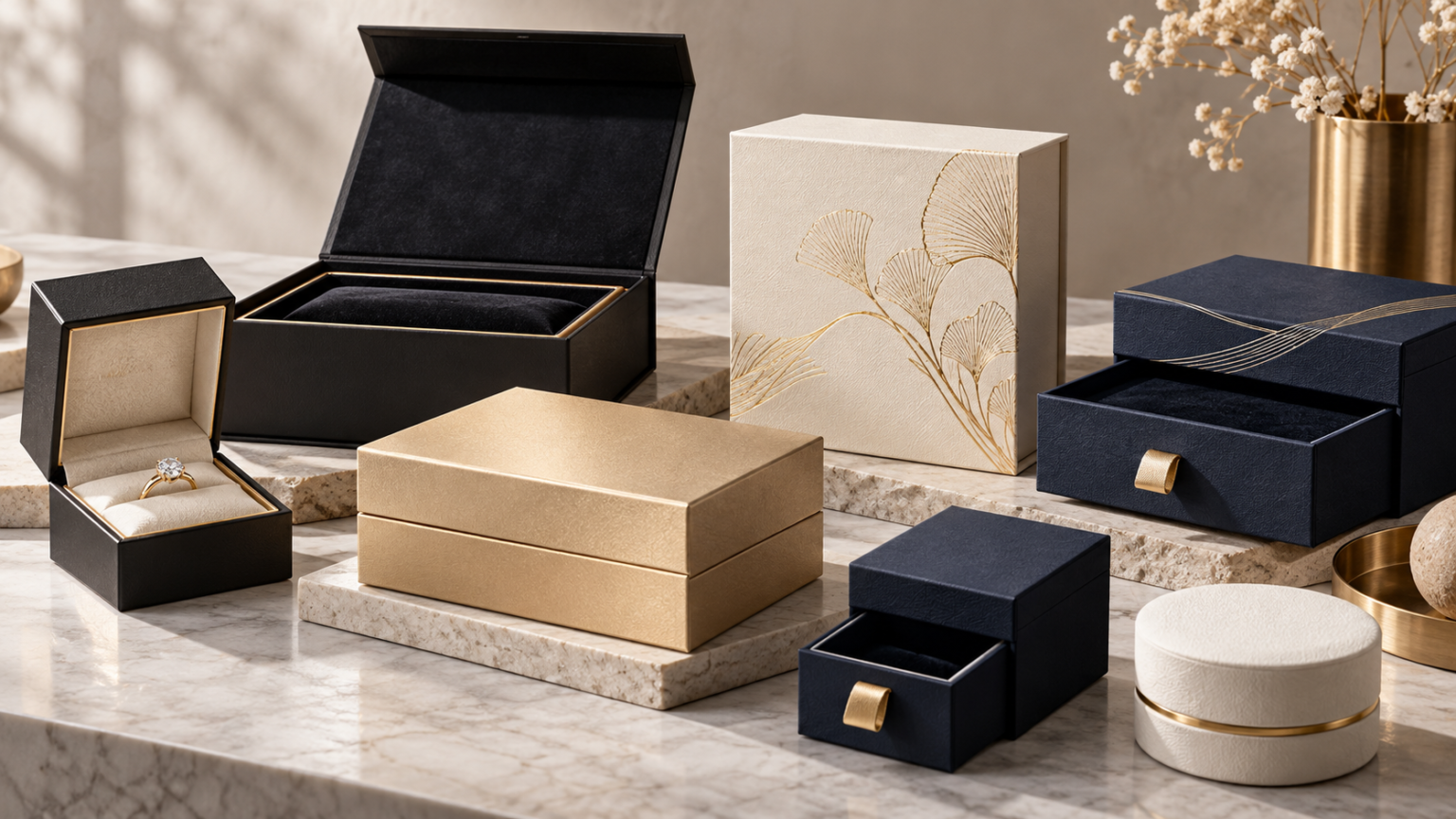
Packaging is no longer simply a container used to transport products from manufacturers to customers. In competitive retail and eCommerce markets, it also influences how a product is presented, handled, remembered, and perceived. For businesses seeking distinctive presentation and stronger product protection, custom printed rigid boxes offer a practical combination of sturdy construction, attractive printing, and tailored design. From luxury cosmetics and jewelry to electronics and corporate gifts, these packaging solutions help brands communicate quality while creating a more engaging customer experience.
Consumers encounter packaging at several important moments. They see product photographs online, examine displays in stores, receive deliveries, and open their purchases at home. Each interaction creates an opportunity for the packaging to reinforce the product’s value and the brand’s identity.
However, effective premium packaging requires more than an attractive logo. The materials, structural design, internal protection, finishing techniques, and overall opening experience must work together.
Understanding these elements helps businesses make packaging decisions that support their products, customers, and long-term commercial goals.
What Are Custom Printed Rigid Boxes?
Custom printed rigid boxes are premium packaging containers typically manufactured from thick paperboard or greyboard and covered with printed or decorative wrapping materials.
Unlike conventional folding cartons, most rigid boxes arrive in a preassembled form and retain their structure without requiring the customer to fold or assemble them. Some specially engineered collapsible rigid boxes are exceptions.
The rigid core provides structural stability, while the outer wrap offers a surface for brand colors, product information, patterns, textures, and decorative finishes.
These boxes are also commonly known as setup boxes or luxury rigid packaging boxes.
How Rigid Packaging Differs From Standard Cardboard Boxes
The primary difference lies in construction.
A conventional folding carton is generally produced from relatively lightweight paperboard that is cut, creased, folded, and glued.
A rigid box usually consists of a thicker board structure covered with a separate decorative layer. This construction creates a substantial feel and helps maintain clean edges and a defined shape.
Corrugated shipping boxes serve a different purpose. Their fluted construction is designed for transportation, stacking, and protection during distribution.
A rigid presentation box may still require an additional protective shipping carton, particularly for fragile or valuable products delivered through parcel networks.
Materials Commonly Used in Rigid Boxes
The materials depend on the product, budget, appearance, and protective requirements.
Common components include:
- Greyboard or chipboard for structural strength
- Coated or uncoated paper for external wrapping
- Textured specialty paper for decorative presentation
- Printed artwork for brand identification
- Paperboard, molded pulp, or foam inserts for product positioning
- Ribbons, handles, or magnetic closures for selected designs
The combination of these materials determines how the packaging looks, feels, opens, and performs.
1. Custom Printed Rigid Boxes Strengthen Brand Identity
Brand recognition develops through consistent visual and physical experiences.
Product packaging is one of the few branded materials customers may interact with directly after completing a purchase. It can communicate identity without relying entirely on advertisements or digital screens.
Custom printed rigid boxes allow businesses to apply their visual identity across the external and internal surfaces of the packaging.
Consistent Colors and Visual Elements
Brand colors help connect packaging with websites, advertisements, product labels, and retail displays.
A business using a recognizable color palette can extend that identity to its premium boxes.
For example, a skincare company might choose soft neutral colors, minimal typography, and understated metallic details.
A technology accessories brand might prefer darker colors, geometric patterns, and a clean, modern layout.
Neither approach is automatically better. The appropriate design depends on the customers and the product’s market position.
Logo Placement and Recognition
The location of a logo influences the visual balance of packaging.
A centered logo may create a formal presentation, while a smaller mark positioned near an edge can support a minimalist appearance.
Brand symbols can also appear inside the lid, on protective sleeves, or alongside product information.
The objective is to create a recognizable visual identity without overwhelming the customer.
Connecting Packaging With Brand Storytelling
Packaging provides an opportunity to explain what makes a product distinctive.
Short statements about craftsmanship, product design, sourcing, or care instructions can make the presentation more informative.
A handmade jewelry brand, for instance, may include a concise message explaining the design inspiration behind a collection.
When branding elements work together, the box becomes more than a protective container. It becomes a physical expression of the company.
2. Premium Rigid Boxes Improve Product Presentation
Product presentation matters because customers often form expectations before using the item itself.
The appearance and handling of packaging can shape those expectations.
A carefully designed rigid box gives the product a defined location and creates a deliberate opening experience.
Creating an Attractive First Impression
Premium packaging communicates through several visual and physical details.
These include surface texture, print alignment, lid fit, interior arrangement, and the quality of the finishing.
Clean construction and thoughtful design can make a product appear more considered.
Conversely, poorly aligned graphics, damaged corners, or loose-fitting interiors can reduce the impact of even an expensive product.
This is why packaging quality should be evaluated alongside graphic design.
Supporting Luxury Product Positioning
Luxury products often rely on details that communicate craftsmanship and attention.
A sturdy box with a refined surface can complement that positioning.
For example, a fragrance packaged in a fitted rigid box may be presented more deliberately than the same bottle placed loosely inside a basic carton.
The packaging does not change the quality of the fragrance, but it can influence the overall purchase experience.
Improving Retail Display
Rigid packaging can also support retail merchandising.
Its stable construction may help maintain an orderly appearance on shelves or counters when appropriately designed.
Consistent dimensions, attractive colors, and clear product identification make it easier to present multiple variations of a product range.
For retailers, packaging that is easy to organize can contribute to a cleaner and more coherent display.
3. Rigid Box Packaging Provides Structural Protection
Visual appeal should never come at the expense of product safety.
One of the practical advantages of custom printed rigid boxes is their sturdy paperboard construction.
However, structural rigidity alone does not guarantee protection from shipping impacts.
The effectiveness of a packaging design depends on the complete system, including internal fit, cushioning, closures, and any outer shipping container.
Reducing Unnecessary Product Movement
Products that move excessively inside a box may suffer scratches or impact damage.
Custom inserts help position items securely.
A fitted paperboard tray can hold a cosmetic bottle in place, while a carefully designed foam insert may provide cushioning for certain electronic accessories.
The correct insert depends on the product’s weight, shape, fragility, and expected handling conditions.
Protecting Delicate Product Surfaces
Jewelry, watches, decorative items, and premium cosmetics may require protection from surface contact.
Soft linings, dividers, sleeves, or fitted compartments can reduce movement and prevent components from rubbing against one another.
The materials should be selected carefully to avoid unwanted abrasion or material compatibility issues.
Considering Shipping Conditions
For eCommerce businesses, the presentation box is often only one part of the shipping solution.
Outer corrugated cartons, suitable void fill, and appropriate cushioning may still be required.
Businesses shipping fragile products should evaluate the complete package through relevant distribution testing or realistic handling trials.
This helps identify weaknesses before large quantities are shipped to customers.
4. Custom Packaging Creates a More Memorable Unboxing Experience
The unboxing experience begins when a customer first touches the packaging and continues until the product is removed.
For some buyers, this process is particularly meaningful when receiving gifts, luxury products, or limited-edition merchandise.
Custom printed rigid boxes can help brands create an opening sequence that feels organized and intentional.
Making the Opening Process Feel Special
A two-piece rigid box offers a traditional lift-off lid experience.
A magnetic closure box provides a hinged presentation with a closing mechanism.
Drawer-style packaging reveals the product through a sliding tray.
Each style creates a different interaction.
The best option is the one that suits the product and the intended customer experience, rather than the most elaborate design available.
Adding Thoughtful Interior Details
The interior can feature complementary colors, product information, or a brief thank-you message.
A ribbon pull tab may help customers remove a fitted product without damaging the packaging.
Separately packed accessories can be organized into compartments, making the contents easier to understand.
These details should improve usability instead of adding unnecessary complexity.
Encouraging Organic Product Sharing
Customers sometimes photograph or share aesthetically pleasing purchases on social platforms.
Distinctive packaging may make the product more visually appealing in these photographs.
However, attractive packaging does not guarantee social media exposure or increased sales.
Its strongest role is to support a consistent and satisfying ownership experience.
5. Different Rigid Box Styles Support Different Product Needs
Not every product benefits from the same packaging structure.
The available styles make it possible to choose a solution based on presentation, convenience, storage requirements, and budget.
Two-Piece Lid and Base Boxes
This familiar format includes a separate lid and bottom section.
It is widely used for jewelry, clothing accessories, premium stationery, and gift sets.
The straightforward construction creates a clean presentation, while the lid can be printed or decorated independently.
Magnetic Closure Rigid Boxes
Magnetic closure boxes typically use a hinged flap containing concealed magnets.
They are popular for presentation kits, business gifts, luxury accessories, and selected retail products.
The magnetic mechanism can provide a satisfying opening and closing experience.
However, it adds materials and construction complexity, which may affect cost and end-of-life recycling.
Drawer-Style Rigid Boxes
Drawer packaging consists of an outer sleeve and an inner sliding tray.
This structure is suitable for smaller items such as watches, cosmetics, confectionery gift sets, and premium accessories.
A ribbon pull or thumb notch can make the tray easier to open.
Book-Style Rigid Boxes
Book-style packaging opens in a manner resembling a hardcover book.
It can provide a broad interior surface for storytelling, product instructions, or decorative artwork.
This format is often considered for presentation collections and corporate gifts.
Collapsible Rigid Boxes
Traditional setup boxes occupy their full assembled volume during transportation and storage.
Collapsible rigid designs are engineered to fold flat before use.
For businesses ordering large quantities, this can help manage storage space and freight volume.
However, the folding construction must be evaluated for durability, assembly time, and compatibility with the product.
6. Advanced Printing and Finishing Techniques Improve Visual Appeal
Printing and decorative finishes distinguish ordinary packaging from a carefully developed brand presentation.
Custom printed rigid boxes can incorporate several finishing methods, depending on the materials and manufacturing process.
Choosing the right combination helps create visual interest without making the design unnecessarily expensive.
Full-Color Printing
Full-color printing can reproduce illustrations, patterns, gradients, and complex branding artwork.
Offset printing is commonly used for printed paper wraps in larger production runs.
Digital printing may be appropriate for certain short runs, prototypes, or applications, depending on supplier capabilities.
Accurate color reproduction requires attention to artwork settings, printing specifications, paper stock, and proof approval.
Matte and Gloss Finishes
Matte surfaces create a restrained appearance with reduced reflectivity.
Gloss finishes emphasize shine and can make printed colors appear visually vibrant.
Neither finish is universally superior.
Product category, brand style, handling requirements, and customer expectations should guide the choice.
Foil Stamping
Foil stamping adds metallic or decorative accents to selected areas.
Gold, silver, and other foil colors can be used for logos, borders, or subtle design details.
This technique works particularly well when applied selectively rather than covering the entire surface.
Embossing and Debossing
Embossing raises a design element above the surrounding surface.
Debossing creates an indented impression.
Availability depends on the construction method, board, wrap material, and supplier equipment.
A physical sample is useful because the final tactile effect may differ from a digital rendering.
Spot UV and Specialty Coatings
Spot UV creates a contrasting glossy area on selected parts of the design.
It can highlight logos, typography, or patterns.
Soft-touch coatings offer a different tactile character.
Businesses should remember that specialty laminates and coatings can affect cost, durability, and recycling compatibility.
7. Custom Printed Rigid Boxes Support Product Differentiation
In crowded markets, businesses need customers to recognize their products and understand what makes them distinctive.
Packaging can support this objective when it reflects a clear product position.
Custom printed rigid boxes give brands control over the dimensions, visual arrangement, materials, and product presentation.
Differentiating Products Within the Same Category
Consider two premium candle brands offering products with similar sizes and fragrance profiles.
One brand may choose a minimalist white rigid box with a small embossed logo.
Another may use a colorful illustrated wrap with a carefully fitted interior.
Both approaches can be effective for different customer groups.
The important point is that packaging should reinforce a deliberate brand personality.
Designing Collections and Limited Editions
Brands can update colors, sleeve designs, and printed artwork to distinguish seasonal collections.
A consistent box structure may allow several product variations to share common dimensions while retaining individual visual identities.
This approach can also simplify some aspects of product organization and packaging planning.
Creating Gift-Ready Products
Gift buyers often value presentation because the packaging becomes part of the giving experience.
Custom printed rigid boxes can make selected products suitable for gifting without extensive additional wrapping.
A thoughtfully designed gift box may be kept for storage or reused for another purpose.
However, gift appeal depends on the product, target audience, and design quality rather than the box type alone.
8. Rigid Packaging Can Support More Thoughtful Material Choices
Sustainability has become an important packaging design consideration, but environmental performance is more complicated than simply choosing a paper-based material.
Rigid boxes commonly contain paperboard, yet additional components may include plastic laminates, synthetic fabrics, foam, adhesives, magnets, and decorative coatings.
These details affect material recovery and recycling compatibility.
Choosing Appropriate Paperboard
Businesses may consider paperboard with documented recycled content or responsibly sourced virgin fiber.
The right material must still provide adequate strength and be suitable for the intended printing and finishing process.
Using recycled content is not automatically equivalent to making an entire package recyclable.
These are separate environmental characteristics.
Reducing Unnecessary Packaging Components
A practical strategy is to remove materials that provide little functional or visual value.
For example, a precisely designed paperboard insert may be appropriate in place of a more complex multi-material arrangement for some products.
Oversized boxes can also require unnecessary filling materials and occupy additional transportation space.
Right-sizing the package helps balance product protection with material efficiency.
Understanding Recyclability Limitations
The recyclability of a completed rigid box depends on its materials, attached components, and local recycling systems.
Foam inserts, concealed magnets, plastic films, and certain composite finishes may complicate disposal.
Businesses should avoid claiming that every rigid box is fully recyclable without appropriate evidence.
In the United States, the Federal Trade Commission’s Green Guides explain how environmental marketing claims should be supported and qualified.
Designing for Reuse
Durable packaging may have value beyond the initial product purchase.
Customers may reuse attractive rigid boxes for storing photographs, accessories, keepsakes, or stationery.
That possibility can inform the design, although actual reuse depends on consumer behavior.
A box should not be described as environmentally sustainable solely because it is strong enough to be reused.
Environmental decisions should consider material sourcing, production, transportation, functionality, and end-of-life outcomes together.
9. Custom Rigid Boxes Can Support Long-Term Brand Value
Packaging is a recurring business expense, so its commercial value deserves careful evaluation.
Custom printed rigid boxes typically involve more construction and material requirements than basic folding cartons.
This can make them less suitable for low-priced, high-volume products where the packaging budget is limited.
For other categories, the additional investment may support a premium product strategy.
Aligning Packaging With Product Price
A product’s packaging cost should make sense relative to its selling price and expected contribution margin.
A luxury watch accessory, premium skincare collection, or executive gift set may justify a more elaborate presentation than an inexpensive everyday consumable.
The objective is not to maximize packaging expenditure.
It is to choose a packaging solution that supports customer expectations without undermining profitability.
Supporting Repeat Customer Experiences
Consistency matters when customers make repeat purchases.
A box that arrives in good condition, opens reliably, and presents the product neatly can contribute to a positive experience.
Packaging alone cannot establish customer loyalty, but it can support a broader strategy built around dependable product quality and service.
Balancing Presentation With Practical Costs
The total packaging cost may include design, sampling, materials, printing, inserts, finishing, assembly, storage, shipping, and waste.
Businesses should assess these costs together.
A complex design that looks impressive but creates frequent handling problems may be less useful than a simpler, well-engineered solution.
Long-term packaging value comes from balancing appearance, protection, usability, and commercial practicality.
How to Choose the Best Custom Printed Rigid Boxes for Your Products
Selecting suitable packaging starts with understanding the product rather than selecting a decorative finish.
A brand should establish the functional requirements before finalizing appearance.
Measure Your Product Accurately
Record the product’s length, width, height, and weight.
Include any accessories, protective materials, or instructions that must fit inside the package.
Allowances for inserts and lid clearance should be incorporated into the final dimensions.
A box that fits too tightly may damage the product or prevent proper closure.
An oversized box may increase material use, shipping volume, and the need for additional protective components.
Define the Packaging’s Main Purpose
Ask whether the box will primarily serve as:
- Premium retail display packaging
- Gift presentation packaging
- eCommerce product packaging
- Protective storage packaging
- Corporate promotional packaging
- A reusable presentation or keepsake box
A package can serve several purposes, but identifying the main priority makes design decisions easier.
Select a Suitable Board and Wrap
Board thickness should be chosen according to product weight, dimensions, and structural requirements.
Larger boxes or heavier products may require different construction specifications.
The external wrapping paper should be compatible with the printing method and decorative finish.
Request material samples before confirming the production specification.
Evaluate Interior Protection
Do not treat an insert as an afterthought.
The product’s position inside the box is central to both protection and presentation.
Consider whether the item needs cushioning, separation, support, or a convenient removal feature.
For fragile goods, ask the packaging supplier how the completed design can be evaluated under realistic shipping conditions.
Review the Brand Artwork
The design should account for fold locations, wrap edges, seams, and areas where printing may be covered during assembly.
Important text and logos must remain within suitable safe areas.
Confirm the manufacturer’s artwork requirements and review the final dieline rather than relying solely on a flat visual mockup.
Understanding the Manufacturing Process of Rigid Boxes
Knowing how rigid packaging is manufactured can help businesses communicate more effectively with suppliers and avoid preventable mistakes.
Step 1: Structural Planning
The process begins by defining box dimensions, style, board requirements, and the intended contents.
The manufacturer creates a structural layout that accounts for board thickness and assembly requirements.
Step 2: Artwork Preparation
The printed wrap is designed using the approved structural specifications.
Artwork must account for edges, corners, folding allowances, and print registration.
Brand colors and decorative details should be checked before the design is approved.
Step 3: Board Cutting and Assembly
The structural board is cut and formed into the required configuration.
For conventional rigid boxes, the pieces are assembled into a stable shape before the outer wrap is applied.
Step 4: Printing and Surface Finishing
The wrapping material is printed and receives the selected decorative treatments.
Depending on the design, this may include lamination, foil stamping, or other finishing techniques.
Step 5: Wrapping and Final Construction
The printed material is applied to the structural board.
Precise alignment is important to avoid uneven edges, wrinkles, exposed board, and visible defects.
Step 6: Insert Installation and Quality Inspection
Interior components are fitted after the main structure has been prepared.
Quality checks may cover dimensions, closure function, printing accuracy, appearance, and product fit.
Step 7: Packing and Distribution
Completed rigid boxes are packed for delivery.
Because conventional rigid boxes occupy their full assembled volume, freight and storage planning can be significant considerations.
Collapsible structures may be evaluated when reducing shipping volume is a priority.
What Affects the Cost of Custom Printed Rigid Boxes?
Pricing depends on the combination of materials, construction, order quantity, and decorative requirements.
A reliable quotation should reflect the actual design specification rather than an assumed standard unit price.
Box Dimensions and Board Requirements
Large packaging generally consumes more material.
Board thickness, internal support, and structural complexity can also influence production costs.
Printing and Decorative Finishes
Standard printing and elaborate finishing treatments have different manufacturing requirements.
Additional foil applications, embossing, specialty wraps, or complex artwork can affect pricing.
Order Quantity
Higher quantities can distribute certain setup costs across more units.
However, the relationship between quantity and unit price varies by manufacturer and production method.
Businesses should compare realistic order volumes rather than purchasing excessive packaging solely to obtain a lower quoted unit price.
Inserts and Accessories
Custom foam, molded pulp, paperboard dividers, ribbons, and magnetic closures can add material and assembly costs.
Only include components that meaningfully improve protection, convenience, or the intended presentation.
Freight and Storage
Shipping costs can be especially relevant for assembled rigid boxes because they occupy more space than flat-packed alternatives.
Request a complete quotation that clarifies shipping, packaging, taxes, duties, and other applicable charges.
How to Order Custom Rigid Packaging Without Costly Mistakes
A successful packaging project benefits from clear communication between the brand and the manufacturer.
Before requesting pricing, prepare a concise specification covering the product and its packaging requirements.
Include the desired style, internal dimensions, product weight, approximate quantity, print design, finishes, inserts, and delivery destination.
For example, a cosmetics company could specify a two-piece rigid box for a glass skincare bottle, with a fitted paperboard insert, matte printed wrap, and a simple foil-stamped logo.
This gives the manufacturer more useful information than asking for a general luxury packaging price.
Request a Prototype
A prototype helps verify dimensions, opening performance, product fit, and visual presentation.
Digital mockups can be helpful for early design decisions, but they may not fully communicate physical texture, precise colors, or structural behavior.
A physical production sample is particularly valuable for expensive or fragile products.
Confirm the Production Specification
Before approving a full order, check the final dimensions, materials, printing colors, finishes, insert design, quantity, and tolerances.
Also clarify whether the supplier will keep the approved artwork and specifications for repeat orders.
Establish a Realistic Schedule
Production planning should account for design review, sample approval, manufacturing, quality checks, shipping, and possible customs processing.
Rush production may be available from some suppliers, but it should not replace proper approval procedures.
A clearly documented schedule reduces the risk of packaging arriving after a product launch or promotional event.
Inspect the Delivered Packaging
When the order arrives, examine representative boxes from different cartons.
Look for consistent dimensions, clean edges, correct colors, secure closures, and properly fitted inserts.
Report any significant defects promptly and retain photographs where necessary.
A defined quality standard makes future orders easier to manage.
Common Mistakes Businesses Should Avoid
Even attractive designs can create problems when practical requirements are overlooked.
One common mistake is prioritizing appearance without considering product fit. A visually impressive box offers limited value if it cannot hold the product securely.
Another is selecting too many decorative treatments. Adding multiple finishes can increase costs and may make the artwork appear unnecessarily busy.
Incorrect dimensions are also expensive because they can require new tooling, redesign, or replacement production.
Some businesses overlook the cost of transporting and storing assembled boxes.
Others approve designs without inspecting samples, creating a greater risk of disappointment when the final packaging arrives.
Environmental claims require similar caution. A paperboard box should not automatically be marketed as completely recyclable when its finishes or accessories could limit recovery.
Finally, brands should avoid ordering quantities that exceed reasonable demand forecasts.
Good packaging decisions depend on careful planning, measurable requirements, and communication with the supplier.
Frequently Asked Questions
1. What are custom printed rigid boxes made from?
They generally use a thick greyboard or chipboard structure covered with printed paper or decorative wrapping material. Inserts and accessories vary by design.
2. Are custom printed rigid boxes suitable for luxury products?
Yes. Their sturdy structure, customizable finishes, and refined presentation make them suitable for jewelry, cosmetics, fragrances, premium gifts, and selected electronics.
3. Can rigid boxes protect fragile products during shipping?
They provide structural support, but fragile products may also need fitted cushioning and protective outer shipping cartons. Testing the complete package is recommended.
4. Are custom printed rigid boxes recyclable?
Some paper-based constructions can be recycled, but compatibility depends on coatings, adhesives, inserts, magnets, and local recycling facilities.
5. What is the minimum order quantity for custom rigid boxes?
Minimum orders vary by supplier, design, and manufacturing process. For example, Custom Boxes Deals currently advertises a minimum of 100 units per design.
6. How can businesses reduce the cost of custom printed rigid boxes?
Choose practical dimensions, avoid unnecessary finishes, simplify inserts, compare realistic order quantities, and account for freight and storage costs.
Conclusion
Custom printed rigid boxes bring together product protection, visual identity, and premium presentation in a single packaging solution. When thoughtfully designed, they can enhance the customer experience, support product differentiation, and communicate attention to detail. Businesses achieve the strongest results by balancing attractive printing with practical construction, appropriate materials, and realistic costs. Investing in the right packaging is ultimately about creating a consistent experience that complements the quality of the product inside.
