
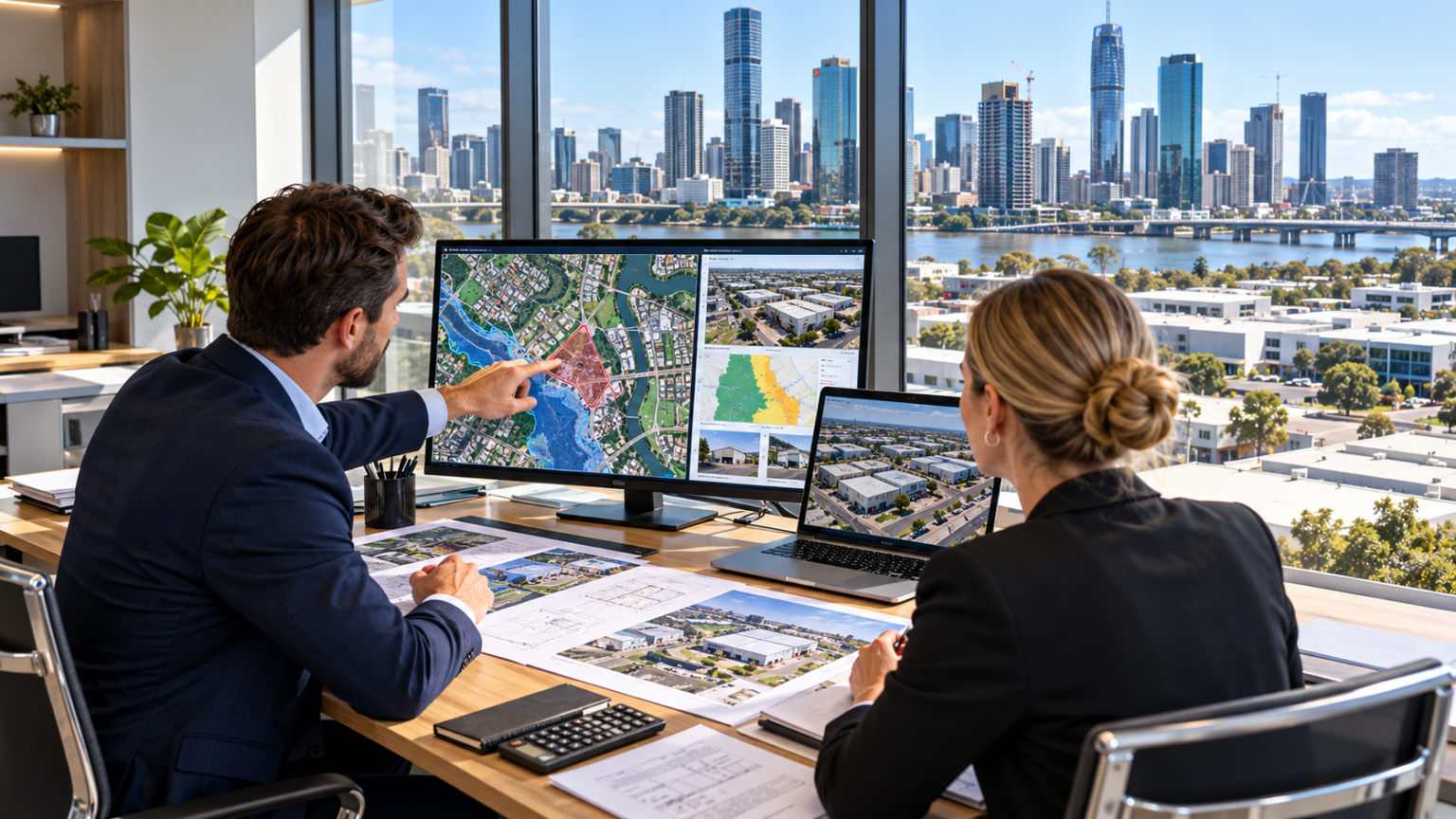
Buying commercial property is one of the most significant financial decisions an investor or business owner can make. Whether the property is a retail shop, office building, warehouse, industrial facility, or development site, the purchase involves more than negotiating a competitive price. Investors need to understand the land, surrounding infrastructure, planning restrictions, environmental exposure and long-term investment potential. A comprehensive Commercial Property Report can bring together important property and location information, helping Australian buyers identify potential risks and opportunities before making major financial commitments.
Australia’s commercial property market includes assets with very different characteristics. A warehouse in an established industrial precinct may offer advantages that are not immediately visible in its sale listing. Similarly, an attractive retail property could have planning restrictions, flood exposure or access limitations that affect future business operations.
These factors demonstrate why commercial property research should go beyond photographs, rental estimates and advertised yields.
A property’s value is influenced by its legal use, location, accessibility, surrounding development and physical characteristics. Understanding these factors requires reliable information gathered from several sources.
Online property reports can make this initial research easier by presenting relevant data in a more accessible format.
However, no single report replaces every aspect of commercial property due diligence. Buyers may still need a solicitor, licensed or qualified valuer, building inspector, accountant, surveyor or environmental consultant.
The best results come from using a property report as an early research tool and then investigating significant findings before committing to a transaction.
What Is a Commercial Property Report?
A commercial property report is a structured document that provides information about a commercial property and its surrounding environment.
Depending on the report provider and available datasets, it may contain planning information, zoning, land characteristics, registered interests, environmental overlays, location data, and market insights.
The purpose is to help users understand factors that may influence the property’s suitability, use, development potential, and investment risk.
Commercial property reports are particularly useful during the early stages of acquisition when buyers need to compare different opportunities.
Instead of searching multiple information sources independently, users may be able to review a consolidated overview of relevant property information.
What Does a Commercial Property Report Include?
The contents vary considerably between providers.
A location and planning report may focus on zoning, easements, heritage controls, flood risk and nearby infrastructure.
A market-focused report may emphasise recent sales, rental activity, comparable properties and estimated market values.
A building condition report is different again. It normally involves assessing the physical condition of a property, often through an on-site inspection.
These different reports should not be treated as interchangeable.
Before purchasing, users should check exactly what information is included, when it was updated, and whether the provider covers the relevant council area.
Who Needs a Commercial Property Report?
Commercial property reports can support decisions made by investors, business owners, developers, buyers’ agents, real estate professionals and property advisers.
A business owner may use a report to investigate whether a proposed premises suits its activities.
An investor may want to understand risks affecting long-term value and leasing demand.
A developer may focus on planning constraints, surrounding land use and infrastructure.
An adviser may use several reports to help compare properties across a shortlist.
The value of the information depends on the question the user is trying to answer.
1. Check Zoning and Permitted Commercial Property Uses
Zoning is one of the most important matters to examine before buying commercial real estate.
A property may appear ideal for a particular business, but its planning controls can restrict the activities permitted on the site.
Understanding Commercial Property Zoning
In Queensland, land is allocated to planning zones that guide the types of development and land use considered appropriate.
These can include commercial, industrial, residential, mixed-use and other zones.
However, the zone name alone does not determine whether a specific business activity can operate without approval.
Local planning schemes establish more detailed requirements.
A purchaser therefore needs to investigate both the property’s zoning and the proposed activity.
Why Zoning Matters to Business Owners
Imagine purchasing a warehouse with plans to convert part of it into a public retail showroom.
The building may have sufficient internal space, convenient parking,g and excellent road access.
Nevertheless, the proposed use may require development approval or be subject to conditions.
A buyer who assumes the existing building can accommodate any business activity may face unexpected restrictions.
A commercial property report can help identify the relevant planning context before the buyer proceeds with further enquiries.
Existing Use Versus Proposed Use
A building’s current use does not automatically prove that a different activity will be approved.
Existing operations may rely on historical approvals or lawful existing-use rights.
Before making a decision, buyers should confirm the approved use and investigate any proposed change.
Development Potential
Zoning also affects future development possibilities.
An investor considering an extension, redevelopment or change of use needs to understand the relevant planning framework.
Building height limits, site coverage, setbacks, parking requirements and other controls may be relevant.
These details should be reviewed with the appropriate council and planning professional.
Why Planning Overlays Matter
A property may be affected by additional planning overlays even when its basic zoning appears suitable.
For example, flood, heritage, character, or infrastructure-related controls can create separate considerations.
This is why zoning should be reviewed alongside the broader planning information.
A complete investigation focuses on what can legally and practically be done with the site.
2. Understand Easements, Property Boundaries and Infrastructure
Commercial property ownership may be affected by registered interests and infrastructure arrangements that are not obvious during an inspection.
These can influence the usable area, access and development potential.
What Is an Easement?
An easement is a legal interest that provides certain rights over land.
Common examples involve access, drainage, sewerage or utility infrastructure.
An easement may limit where structures can be built or require the owner to preserve access for an authorised party.
For commercial developments, this can be particularly important.
How Easements Affect Commercial Projects
Consider an investor planning to extend an industrial building across an unused portion of a block.
A registered sewerage easement may affect the proposed building footprint.
The land may appear physically available, yet the legal and infrastructure arrangements could prevent or complicate the extension.
Identifying this issue before purchase can help avoid costly redesigns.
Electricity and Utility Infrastructure
Electrical infrastructure may also influence site design.
Depending on the property, there may be overhead lines, underground services or designated infrastructure corridors.
A report identifying nearby infrastructure can help buyers decide which additional investigations are needed.
However, mapping does not replace service location investigations or engineering advice.
Water, Sewerage and Stormwater
Commercial premises depend on suitable services.
Different businesses have different requirements for water supply, wastewater management and stormwater drainage.
For example, a food processing business may require different infrastructure from a small professional office.
A property may be connected to services but still lack sufficient capacity for the proposed activity.
Buyers should verify actual service availability, capacity, connection arrangements and upgrade costs.
Title and Boundary Verification
A property data report may identify possible registered interests, but buyers should still obtain and review relevant official title searches and plans.
A solicitor or conveyancer can help assess registered easements, covenants and other restrictions.
If boundaries or encroachments are uncertain, a licensed surveyor may be required.
The distinction is important: a map-based indication is useful research, but it is not a substitute for legal title examination.
3. Identify Flood Risk, Environmental Constraints and Heritage Controls
Environmental and planning-related risks can significantly affect commercial property use.
Some risks influence development approvals, while others create potential operating costs or require specialist investigations.
Understanding Flood Risk
Flood exposure is an important consideration in several parts of Australia, including areas of Queensland.
A property’s flood-related planning information may identify whether it falls within mapped flood hazard areas.
This can influence building design, insurance considerations, site access and development planning.
However, being outside a mapped flood overlay does not guarantee that flooding cannot occur.
Flood maps have defined assumptions, limitations and update schedules.
Flood Risk and Business Continuity
Flood exposure can affect more than the building itself.
A warehouse may remain structurally sound during a flood event but become inaccessible because surrounding roads are closed.
A retail business may experience interruptions to trading, deliveries or utilities.
Buyers should therefore investigate access routes and operational exposure alongside the site’s mapped risk.
Environmental Contamination
Commercial and industrial sites may have histories involving activities that could contaminate land.
Examples include fuel storage, industrial processing, waste disposal or particular chemical operations.
In Queensland, the Environmental Management Register and Contaminated Land Register provide information about land associated with relevant activities or contamination.
These registers are useful research sources, but they do not replace a complete environmental assessment.
When Specialist Environmental Advice Is Needed
A property with a history of industrial use may warrant further investigation.
A suitably qualified environmental professional can assess the need for document reviews, sampling or additional testing.
This may be particularly important when a buyer intends to redevelop the site or introduce a more sensitive land use.
Heritage and Character Protections
Heritage-related controls may affect demolition, alterations, building appearance or other proposed works.
Character protections can also influence changes to certain buildings or streetscapes.
These controls do not necessarily make a property unsuitable for investment.
They do, however, need to be understood before development plans are finalised.
Turning Risk Information Into Practical Decisions
An identified risk should prompt further assessment rather than an automatic decision to reject the property.
For example, flood exposure may be manageable through appropriate design and operational measures.
A heritage-listed building may remain commercially viable when its restrictions are reflected in renovation and maintenance plans.
The key is to understand the implications before the investment becomes binding.
4. Evaluate Location, Transport and Surrounding Amenities
Location remains a major influence on commercial property demand.
However, a good location means different things to different businesses.
A distribution warehouse may depend on freight access, while a neighbourhood retail shop may rely heavily on customer convenience.
Public Transport Accessibility
Transport connections can matter for office employees, retail customers and service businesses.
Nearby train stations, bus stops and other public transport facilities may improve convenience.
A location report can help identify the distance to relevant transport infrastructure.
However, proximity alone does not prove that services are frequent, accessible or suitable for the intended users.
Shopping Centres and Commercial Activity
Nearby shopping centres and established commercial precincts can influence local activity.
For some businesses, neighbouring retailers may support customer visits.
For others, they may create direct competition.
An investor should therefore examine the type of surrounding activity rather than assuming that proximity to retail automatically increases value.
Road Access and Freight Movement
Industrial and warehouse properties often need practical road access.
Important considerations may include heavy vehicle routes, loading facilities, road restrictions, vehicle turning space, and travel connections.
A property with convenient motorway access can still present difficulties if its driveway or loading configuration is unsuitable.
Site-specific assessment remains necessary.
Nearby Emergency Services
The location of emergency services may be relevant to some businesses and property users.
A location report may identify nearby facilities.
However, distance to an emergency services building is not a reliable measure of emergency response time.
Response arrangements depend on operational conditions and the nature of the incident.
Surrounding Parks and Amenities
Office tenants and employees may value access to parklands, cafés and local services.
These features can contribute to workplace convenience.
They should be considered alongside rental affordability, transport, building services and the needs of intended occupants.
Infrastructure Projects and Future Development
Major road works, new transport infrastructure or redevelopment projects can change a precinct.
Some improvements may increase accessibility, while construction activities or altered traffic patterns may cause temporary disruption.
Investors should distinguish confirmed projects from proposals and consider the likely timing of any changes.
5. Assess Property Value and Commercial Investment Potential
Commercial property investment involves understanding both the property’s current characteristics and its potential financial performance.
A property report can provide information that supports this analysis.
However, a property’s value cannot be determined reliably from location indicators alone.
Looking Beyond the Asking Price
An advertised sale price represents the seller’s position.
It is not independent proof of market value.
Buyers should consider comparable transactions, property condition, lease arrangements, location and demand.
A qualified valuer may be required to provide a formal valuation for the transaction or financing arrangement.
Understanding Rental Income
For an investment property, rental income is an important consideration.
But the advertised annual rent does not tell the complete financial story.
An investor should investigate lease incentives, vacancies, recoverable outgoings, management expenses, maintenance costs and other obligations.
Two properties producing similar gross rental income may have very different net operating results.
Gross Yield and Net Yield
Gross rental yield is generally calculated by dividing annual gross rental income by the purchase price and expressing the result as a percentage.
For example, a hypothetical property purchased for $1,000,000 with annual gross rent of $70,000 has a gross yield of 7%.
That does not mean the investor receives a 7% net return.
Expenses, vacancies, finance costs, tax and capital works may substantially affect the overall outcome.
Net yield measures are more useful when calculated consistently using clearly defined income and expenditure assumptions.
Comparable Sales and Market Evidence
Comparable sales can help investors understand prevailing market conditions.
However, commercial properties are often difficult to compare directly.
Building age, tenant quality, lease duration, permitted use, site area, and location may differ significantly.
Market research should account for these differences.
Understanding Future Investment Potential
Future performance depends on uncertain factors, including tenant demand, economic conditions, interest rates, infrastructure investment and changes in local planning.
A property report can identify relevant current information, but it cannot guarantee capital growth or future rental income.
Investors should test both optimistic and conservative scenarios.
6. Use Property Reports Alongside Legal and Building Due Diligence
A commercial property report is valuable, but buyers should recognise its limits.
Not every risk can be identified through publicly available mapping and planning datasets.
Review Legal Ownership
A solicitor or conveyancer should assess the legal documentation relevant to the property.
This includes title information, registered interests and the conditions of the proposed purchase.
Contract obligations and due diligence deadlines also need careful attention.
Examine Existing Leases
An income-producing commercial asset may come with one or more tenants.
The value of the investment can depend heavily on the lease terms.
Buyers should investigate remaining lease periods, options, rent review mechanisms, incentives, security arrangements and responsibilities for outgoings.
For relevant Queensland retail shop leases, specific legislation may also apply.
Check Building Condition
A planning or location report should not be mistaken for an on-site building inspection.
A qualified building professional may need to assess structural condition, roofing, drainage, building services, defects and foreseeable maintenance.
Specialist inspections may also be necessary for fire systems, electrical services, air conditioning or other building components.
Examine Building Compliance
The intended business may require particular fire safety, accessibility, health, building or operating approvals.
A premises that suits one business may require costly upgrades for another.
The buyer should confirm approvals and compliance requirements with the relevant authorities and qualified advisers.
Check Financial and Tax Arrangements
Commercial property transactions can involve GST, transfer duty, financing costs, land tax and other tax considerations, depending on the jurisdiction and transaction.
These matters require advice based on the actual ownership structure and proposed purchase.
A property research report should not be treated as tax or legal advice.
Understand the Due-Diligence Deadline
Buyers should know when contractual obligations become unconditional.
Important investigations may need to be completed within a defined contractual period.
A lawyer can advise on appropriate contract conditions and the consequences of failing to complete investigations in time.
The purpose of early reporting is to identify questions while there is still an opportunity to investigate them.
7. Compare Multiple Properties and Strengthen Investment Decisions
One of the greatest practical uses of commercial property reports is comparing several potential investments.
A buyer may be attracted to two properties for different reasons.
One may offer a lower asking price, while the other provides better transport connections or fewer planning constraints.
A consistent comparison process helps identify the real differences.
Comparing Planning Restrictions
If one property has complex overlays and another has relatively straightforward planning conditions, the development implications may differ.
However, the presence of an overlay does not automatically mean that a site has lower value.
Its significance depends on the investor’s intended use.
Comparing Environmental Exposure
Flood mapping, contamination indicators and heritage controls can help identify where additional investigation may be necessary.
Different risks can involve different financial and operational implications.
Evaluating Business Suitability
An owner-occupier should consider whether the building supports day-to-day operations.
For example, a professional services firm may prioritise employee access and office fit-out.
A logistics company may focus on storage capacity, loading arrangements and freight movement.
A property report helps frame these questions.
Supporting Price Negotiations
Documented risks can be relevant during negotiations.
If further investigations establish that a property requires expensive drainage improvements or that a planned extension is restricted, buyers may reassess the price they are willing to pay.
Negotiations should rely on verified findings and reasonable cost estimates rather than assumptions based solely on map layers.
Improving Decision Records
Investors and property professionals may review numerous assets before selecting one.
Keeping consistent research records allows the reasons for each decision to be explained later.
Reports can also help advisers identify which specialist investigations were requested and why.
Knowing When to Walk Away
Not every property will satisfy the investor’s requirements.
In some situations, the combined cost of maintenance, legal constraints, environmental work and uncertain income may make the opportunity unsuitable.
A disciplined due-diligence process helps investors recognise these situations before they become expensive commitments.
Commercial Property Reports for Different Asset Types
Different property sectors require different research priorities.
Although the core due-diligence principles remain consistent, the most important questions depend on the asset.
Retail Properties
Retail properties are influenced by customer accessibility, surrounding businesses, tenancy demand, and operating requirements.
Buyers should investigate permitted use, parking, foot traffic, lease terms and nearby development.
Retail lease requirements also need careful legal review.
Office Buildings
Office properties depend on tenant requirements, location and the quality of building facilities.
Relevant matters may include transport accessibility, air conditioning, lifts, accessibility, fit-out suitability and future maintenance.
Location data provides useful context, but building-specific inspections remain essential.
Industrial and Warehouse Properties
Industrial sites often require particular attention to zoning, vehicle access, utilities and environmental conditions.
Previous land use may be relevant to contamination investigations.
Warehouse users should also consider loading infrastructure, clearances, fire safety, and operational suitability.
Mixed-Use Properties
Mixed-use buildings may accommodate different activities within one development.
Planning controls, access arrangements and building services can become more complicated.
Buyers should confirm what uses are approved and whether additional conditions apply.
Commercial Development Land
Vacant or underdeveloped land may offer redevelopment opportunities.
However, development potential depends on planning permissions, site characteristics, infrastructure availability, access and financial feasibility.
Early property reporting is valuable, but detailed development assessment may require planners, surveyors, engineers and other specialists.
PropCheck Commercial Property Reports in Queensland
PropCheck is an Australian property information platform focused on making property and town planning data easier to understand.
The company describes its reports as combining information from local councils and Queensland government agencies.
Its current website particularly emphasises Brisbane and Queensland property research.
According to its published report inclusions, users can obtain information relating to identified easements, heritage and character protections, flood risk, electricity infrastructure and the proximity of selected amenities.
These features can support the early investigation of commercial properties.
Property Planning and Risk Information
PropCheck’s reports can help buyers identify planning-related questions before committing to further due diligence.
For example, an identified flood overlay may prompt additional investigation into insurance, drainage or site access.
An indicated easement may lead to a formal title review.
A heritage-related result may suggest the need for planning advice before redevelopment.
These findings are useful starting points rather than final legal or engineering conclusions.
Location and Surrounding Amenities
The company’s stated report inclusions identify whether selected facilities, including public transport, shopping centres and parklands, are located within 500 metres of the property.
The reports also identify nearby emergency services infrastructure.
This information can help users assess location characteristics.
However, proximity should not be confused with quality, service availability or accessibility.
Understanding Report Coverage
PropCheck’s website discusses property research across Queensland while indicating that its currently advertised individual and standard subscription products are focused on the Brisbane City Council area.
Users should confirm that the specific property address and council area are supported before purchasing.
Coverage may change as additional areas become available.
What PropCheck Does Not Replace
A PropCheck property data report should not be assumed to include an onsite structural inspection, a certified property valuation, a current title search, a complete environmental investigation, or legal advice.
Some broader commercial property information is discussed on the company’s industry pages, but users should check exact report inclusions and confirm which datasets are available for the chosen property.
PropCheck Commercial Property Report Pricing
PropCheck offers individual reports and subscription options for users who need repeated access to property information.
The following prices were listed on the company’s products page in October 2026.
Single Property Report
The advertised price for one report is $49 AUD.
This option may suit someone investigating an individual property rather than carrying out ongoing research.
Essentials Subscription
The Essentials plan is listed at $129 AUD per month.
It includes access to up to five reports per month, with storage for previously purchased reports and standard local support.
Premium Subscription
The Premium plan is advertised at $199 AUD per month.
It allows up to ten reports per month, includes storage for those reports, and advertises premium local support.
Monthly Business Essentials
The Monthly Business Essentials plan is listed at $500 AUD per month.
It includes up to fifty reports and additional business-oriented features, including unlimited report storage and map or report regeneration.
Yearly Business Essentials
The Yearly Business Essentials plan is advertised at $5,000 AUD per year.
The published package includes up to 1,000 reports and business-oriented features.
Business Premium
The Business Premium package is offered on a price-on-application basis.
The manufacturer advertises unlimited reports, multiple-user licensing options, ion,s and customised business branding.
Users should verify the current pricing, access conditions, coverage and package limitations before subscribing.
The most appropriate package depends on how frequently property reports are required.
How to Use a Commercial Property Report Before Buying
A report becomes most valuable when the information leads to a structured investigation.
Step 1: Confirm the Property Details
Begin by checking the property’s address, lot information, and relevant council area.
Ensure the report relates to the correct land parcel.
Step 2: Review Zoning and Overlays
Identify the reported planning zone and any relevant overlays.
Consider how these affect the existing use and intended future use.
Step 3: Investigate Easements and Services
Note identified easements and nearby infrastructure.
Request official documents or specialist advice where required.
Step 4: Assess Environmental Risks
Review available flood, heritage and other environmental indicators.
Determine whether further technical investigations are needed.
Step 5: Examine the Surrounding Area
Consider transport connections, neighbouring land uses, amenities and relevant development plans.
Assess these factors against the intended business or investment strategy.
Step 6: Obtain Specialist Advice
Ask appropriate professionals to investigate significant legal, financial, building, environmental or planning matters.
A report should guide these enquiries rather than replace them.
Step 7: Make an Evidence-Based Decision
Combine the available findings with the price, lease arrangements, physical condition and financial analysis.
Record any unresolved issues and understand their significance before becoming unconditionally committed.
Common Mistakes When Reviewing Commercial Property Reports
One common mistake is assuming a property report contains everything needed to complete due diligence.
In reality, reports have different purposes and levels of detail.
Another mistake is relying on outdated information.
Planning schemes, available infrastructure, surrounding development, and market conditions can change.
Buyers should confirm when the report was prepared and whether important findings remain current.
Some investors also misinterpret mapped hazards.
A flood overlay identifies a relevant risk or planning consideration, but it does not provide a complete prediction of future flooding.
Likewise, the absence of a contamination register entry does not guarantee that land is uncontaminated.
A further mistake is confusing planning information with building condition.
A property may have relatively few planning constraints while still needing significant repairs.
Finally, investors should avoid using estimated values or advertised rental yields as substitutes for detailed financial assessment.
Commercial property decisions are strongest when different sources of evidence are reviewed together.
The Future of Commercial Property Reporting in Australia
Property research continues to change as government agencies and data providers improve access to planning and location information.
More Accessible Property Data
Digital reporting systems can make selected property information easier for buyers and advisers to obtain.
This can help users identify potential issues earlier.
Improved Mapping Technology
Geographic information systems can display planning overlays, infrastructure and environmental data in ways that are easier to understand.
However, maps remain subject to source accuracy, update schedules, es and interpretation.
Faster Preliminary Due Diligence
Online reports can help users review several potential properties before deciding which ones justify more detailed investigation.
This may improve research efficiency.
Greater Focus on Climate and Environmental Exposure
Flooding, severe weather and environmental conditions are relevant to many property decisions.
Investors may increasingly examine these issues alongside traditional location and financial analysis.
Better Collaboration Between Property Professionals
Accessible reports can help buyers, planners, conveyancers and other advisers work from a common set of initial findings.
Specialists can then investigate issues within their areas of expertise.
More Transparent Investment Decisions
The long-term value of property technology lies in making important information easier to identify and evaluate.
No technology can eliminate all investment uncertainty.
However, reliable and clearly explained data can improve the quality of decisions.
Frequently Asked Questions
1. What is a Commercial Property Report?
A Commercial Property Report is a document containing information about a commercial asset, potentially including zoning, easements, planning restrictions, environmental indicators, location characteristics, and market data.
2. Why is a Commercial Property Report important before buying?
It can help identify potential risks, development constraints, and location factors before a buyer commits to an investment, supporting a more informed due diligence process.
3. Does a commercial property report show zoning and flood risks?
Many reports include planning and environmental mapping information. PropCheck identifies zoning-related data, easements, heritage matters, and flood risk among its property research features.
4. How much does a commercial property report cost in Australia?
Prices vary by provider and report type. PropCheck currently advertises a single property report for $49 AUD, with subscription packages for multiple reports.
5. Can a commercial property report replace a building inspection or valuation?
No. Property data reports do not automatically replace on-sitebuilding inspections, formal valuations, title searches, environmental assessments, or professionallegal advicee
6. Where can I obtain a Commercial Property Report for Brisbane?
PropCheck offers online property reporting focused on Brisbane and Queensland planning information. Confirm the property’s council coverage and exact report inclusions before ordering.
Conclusion
A Commercial Property Report is a valuable starting point for researching commercial real estate in Australia. By examining zoning, easements, flood risk, infrastructure and surrounding amenities, buyers can identify important questions before committing capital. Reports are most effective when used alongside legal, financial b, building, nd environmental due diligence. With reliable information and qualified advice, investors can make more informed decisions about commercial property opportunities.
