
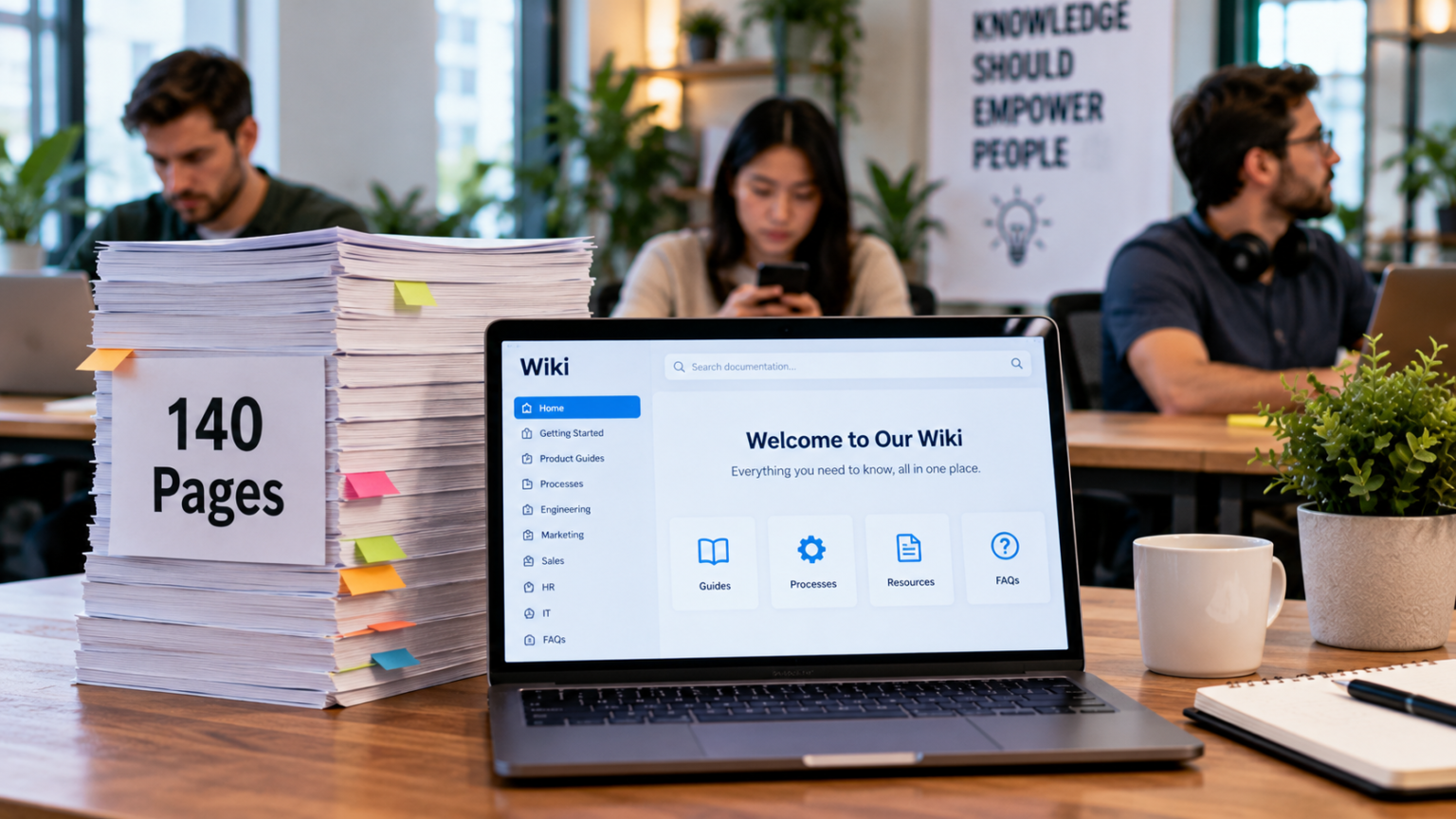
A four-person startup I worked with spent most of its first month building an internal wiki. By the end, it had 140 pages covering everything from brand voice to how to expense a train ticket. By month three, nobody opened it. The monthly investor update, meanwhile, still took the CEO a full day, mostly spent hunting for numbers scattered across three tools and a dozen chat threads.
Writing Is the Bottleneck Nobody Budgets For
Early teams write constantly. Investor updates, customer onboarding emails, help articles, job descriptions, sales follow-ups, release notes. None of it shows up in a product roadmap, and all of it eats founder hours.
AI drafting helps most when you feed it raw material instead of a blank request. Paste in call notes, last month’s metrics, and three bullet points about what went wrong, then ask for a first draft of the investor update. The result usually needs twenty minutes of editing instead of three hours of writing. Ask for “an investor update for a SaaS startup” with nothing attached and you’ll get generic filler that takes longer to fix than to write yourself.
Check every number and claim in the draft. Models fill gaps with plausible details, and an investor who spots a wrong revenue figure remembers it.
Voice notes work well too. A founder who talks through a product decision on a walk can have it transcribed and shaped into a decision memo before lunch.
When the Workspace Gets Heavy
Founders start searching for Notion alternatives when their workspace slows down, fills with dead pages, or turns into a maze new hires can’t find their way through. Often the tool isn’t the problem. A team that built 140 pages in a month will build 140 pages in the next tool too.
Delete first. Archive anything untouched for 60 days and see what anyone asks for.
There are still good reasons to switch. Large databases with thousands of rows can get sluggish. Some teams need offline access for travel or field work. Others want plain markdown files they can move anywhere, or tighter permissions for contractors who should see one project and nothing else. Budget for migration pain either way. Internal links break, embedded files lose their place, and someone spends a week fixing pages that worked fine before.
Apps From a Spreadsheet
No-code app builders let a non-technical founder turn a spreadsheet into a working mobile app in an afternoon. A coffee subscription startup I know built an inventory tracker its warehouse staff use on their phones, with a barcode field, a photo for damaged bags, and a running count by roast. A home cleaning company built a job checklist that crews tick off room by room.
Read the fine print before building something customers will use. When comparing pricing plans for Glide or any similar builder, look at how each tier counts users, data rows, and app actions, not just the monthly headline price. An internal tool for six employees stays cheap. Open the same app to 2,000 customers and the bill can climb several tiers within a month.
Spreadsheet-backed apps also hit performance walls. Lists slow down past tens of thousands of rows, complex calculations get awkward, and offline use is often limited.
When Do You Actually Need an Engineer?
Fewer cases than founders assume, but a few are clear. Taking payments inside your own product, holding sensitive customer data, connecting to systems that have to stay reliable around the clock, or passing a security review from a large enterprise customer all call for real engineering. So does any app that has outgrown its builder’s limits and keeps breaking under load.
Twenty Pages Were Enough
The four-person startup eventually archived 120 of its wiki pages. Nobody noticed. The 20 that survived covered onboarding, pricing decisions, and how to run a customer call, and people actually read them. The investor update now takes about 90 minutes, drafted from a metrics sheet and the week’s call notes. The team still doesn’t have an engineer for internal tools, and it no longer feels like it needs one.
