
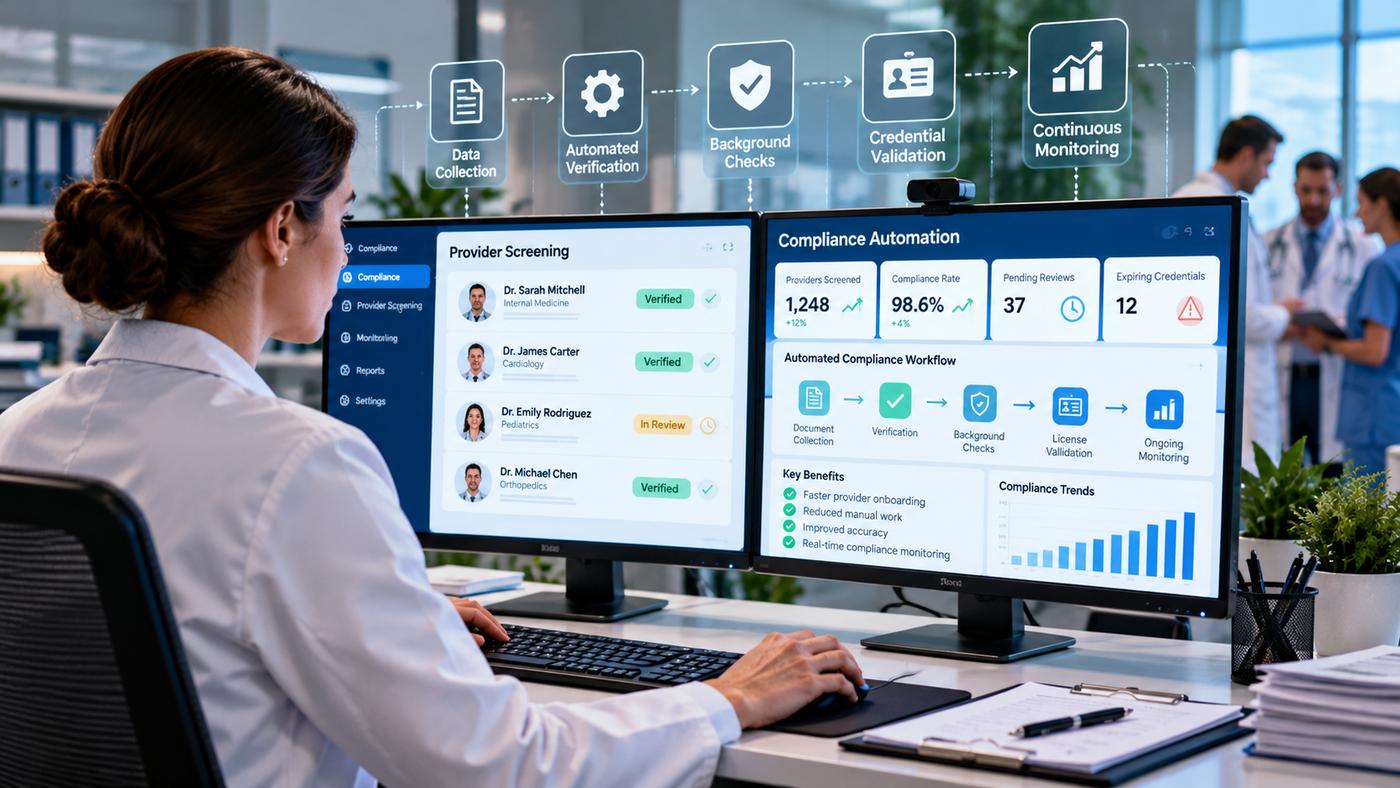
Healthcare organizations are under increasing pressure to maintain accurate records, protect sensitive information, and meet regulatory requirements. As provider networks grow and compliance processes become more complex, manual checks can create unnecessary administrative work and leave gaps in oversight.
Automation is helping organizations manage these responsibilities more efficiently. By combining reliable data sources, automated screening, and consistent monitoring workflows, healthcare teams can improve compliance operations while allowing staff to focus on higher-value tasks.
The Challenges of Manual Healthcare Compliance
Traditional compliance processes often rely on spreadsheets, separate databases, and manual reviews. Although these methods may work for smaller organizations, they become difficult to maintain as the number of employees, contractors, vendors, and healthcare providers increases.
Manual screening can also make it harder to maintain consistent schedules and document every action. When records are spread across different systems, compliance teams may spend considerable time collecting information instead of reviewing potential risks.
Automation helps address these challenges by centralizing workflows and reducing repetitive administrative tasks.
Why Ongoing Provider Screening Matters
Healthcare compliance does not end once a provider has been hired or approved. An individual’s eligibility can change over time, making ongoing monitoring an important part of an organization’s compliance program.
For example, the Office of Inspector General maintains the List of Excluded Individuals and Entities (LEIE), which identifies individuals and entities excluded from participating in federally funded healthcare programs. Organizations need appropriate processes to check relevant employees, contractors, and providers against applicable exclusion databases.
A reliable LEIE exclusion screening process can help healthcare organizations identify potential matches and investigate them before they create larger compliance problems. Because a potential match is not automatically proof of exclusion, appropriate verification and documentation remain essential.
How Automation Improves Compliance Workflows
Automated compliance systems can support several important activities.
1. Consistent screening schedules
Automated workflows help organizations run recurring checks instead of relying entirely on staff to remember each screening task. This can make routine compliance activities more consistent and easier to manage.
2. Centralized information
Bringing screening results and related records into one platform can reduce the need to switch between databases and spreadsheets. Teams can more easily review previous checks, investigate potential matches, and maintain documentation.
3. Faster review of potential matches
Automation can flag records that require additional attention, allowing compliance personnel to focus on investigating potential issues. Human review remains important to distinguish genuine matches from individuals with similar names or identifying information.
4. Better audit documentation
A structured workflow can preserve screening dates, results, reviewer decisions, and supporting records. This helps organizations demonstrate how they manage compliance responsibilities and respond to internal or external audits.
Integrating Compliance Into Digital Transformation
Healthcare technology initiatives often focus on improving patient experiences, operational efficiency, and data management. Marketing and communications teams are also adopting tools such as Predis.ai to streamline social media content creation and support more efficient digital workflows across healthcare organizations.
Compliance automation should be considered part of the same transformation rather than an isolated administrative function.
Integrating screening processes with existing systems can reduce duplicate data entry and make recurring tasks easier to coordinate. However, organizations should evaluate data accuracy, access controls, privacy protections, and system compatibility before implementing new tools.
A successful implementation also requires clear procedures for reviewing flagged records, escalating concerns, and documenting final decisions. Technology can make these processes more efficient, but it should support—not replace—sound compliance policies and professional judgment.
Choosing the Right Healthcare Compliance Technology
When evaluating compliance solutions, healthcare organizations should look beyond basic database searches. Useful capabilities may include recurring screening, access to relevant federal and state exclusion sources, centralized reporting, and clear audit trails.
Solutions such as Streamline Verify support healthcare organizations with exclusion screening and ongoing compliance monitoring workflows. The right approach depends on an organization’s size, provider network, internal resources, and regulatory obligations.
Organizations should also establish clear ownership of screening responsibilities and regularly review their procedures to ensure they remain appropriate as regulations, systems, and workforce needs evolve.
Final Thoughts
Automation is changing how healthcare organizations manage compliance by making recurring screening, recordkeeping, and review workflows more structured and efficient. When implemented thoughtfully, these tools can reduce administrative burdens and improve visibility into potential risks.
The most effective approach combines dependable technology with accurate data, consistent monitoring, and qualified human review. By treating compliance as an ongoing operational priority, healthcare organizations can build more reliable processes and better prepare for changing requirements.
