
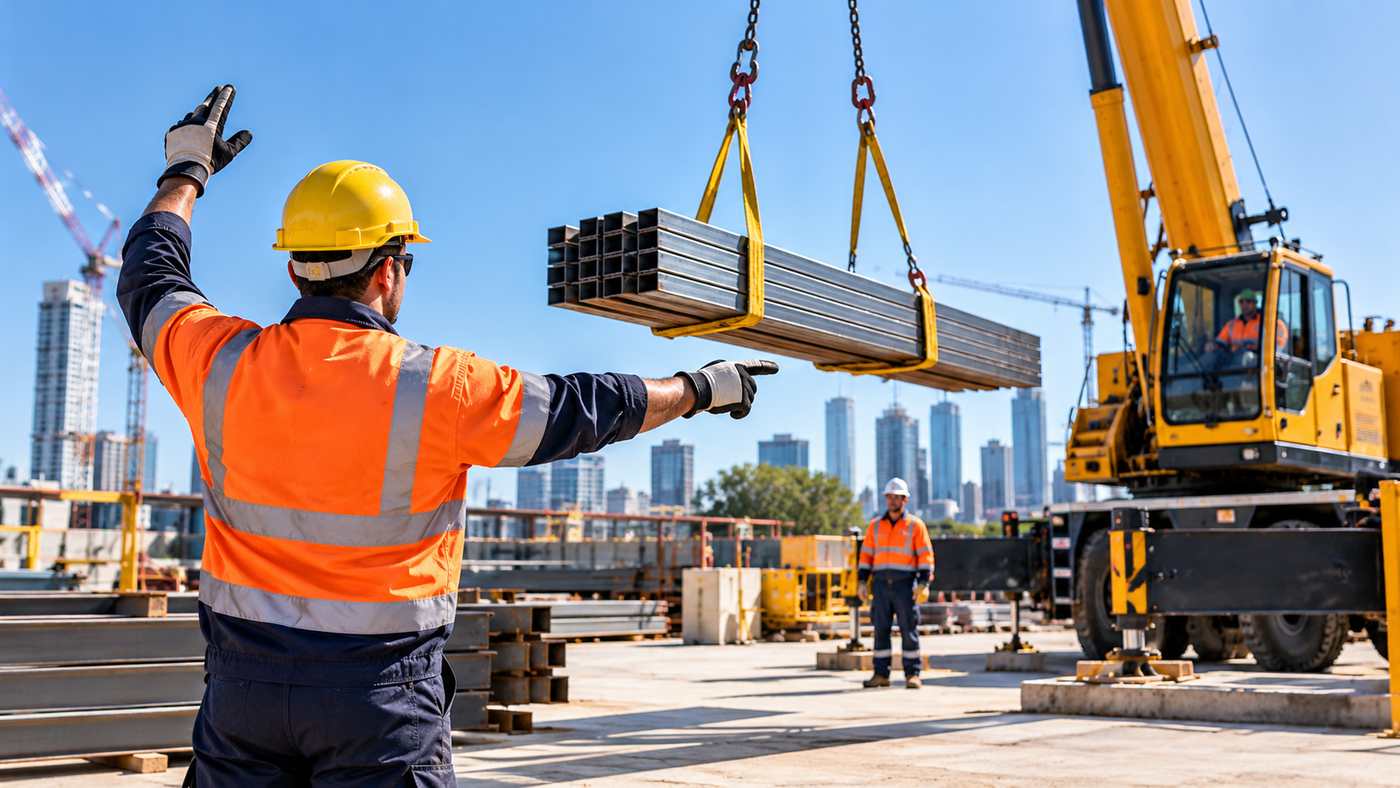
Construction sites, mining facilities, warehouses and industrial workplaces frequently rely on cranes to move heavy equipment and materials. Although crane operators control the lifting equipment, safely moving suspended loads also requires skilled workers on the ground. These professionals help identify lifting hazards, select suitable equipment and communicate with crane operators throughout lifting operations.
Obtaining a Dogman Ticket is an important step for Australians who want to work in crane-related lifting operations. Commonly known as a dogging licence or DG licence, this qualification pathway helps workers develop the knowledge and practical skills required to handle suspended loads safely.
A dogman plays a critical role in managing lifting operations where equipment, communication and load movement must be carefully coordinated. Their responsibilities involve more than attaching chains or slings. They must understand load characteristics, inspect lifting gear, recognize potential hazards and provide clear instructions to crane operators.
This guide explains what a dogging licence is, how to obtain one in Australia, what training involves, how much courses may cost and the career opportunities available after certification.
What Is a Dogman Ticket?
A Dogman Ticket is the commonly used name for a High Risk Work Licence with the DG classification in Australia.
This licence authorizes a qualified individual to perform dogging work within the scope established by Australian workplace health and safety regulations.
Dogging work generally includes selecting and inspecting lifting gear, applying appropriate slinging techniques and directing crane or hoist operators when suspended loads move outside their direct line of sight.
The role requires a strong understanding of lifting principles, workplace safety and communication procedures.
Workers normally complete nationally recognized training and a licensing assessment before applying for the relevant high risk work licence through their state or territory regulator.
What Does a Dogman Do?
A dogman, also called a dogger, assists with the safe movement of loads using cranes and other suitable lifting equipment.
Their responsibilities commonly include:
- Identifying hazards associated with lifting operations.
- Evaluating the size, shape and weight of loads.
- Considering the load’s centre of gravity.
- Selecting suitable lifting gear.
- Inspecting slings, chains, shackles and other equipment.
- Applying appropriate slinging techniques.
- Communicating with crane operators.
- Monitoring the load during movement.
- Helping maintain safe lifting areas.
- Following workplace lifting procedures and safety requirements.
The exact responsibilities depend on the worksite, equipment and complexity of the lift.
A dogman must understand when an operation is outside their competence or licensing scope and seek appropriate supervision or specialist assistance.
Why Is a Dogging Licence Important in Australia?
Crane-related lifting operations can involve significant safety risks.
Heavy suspended loads may cause serious injuries or property damage if they are incorrectly secured, improperly balanced or moved through an unsafe area.
A qualified dogman helps manage these hazards by supporting well-planned lifting operations.
Meeting Workplace Licensing Requirements
Australian workplace health and safety laws require workers performing specified high risk activities to hold the appropriate licence, subject to applicable exceptions.
Dogging falls within the high risk work licensing framework.
A DG licence demonstrates that a worker has completed the required assessment process and obtained authorization for this class of work.
Employers are also responsible for ensuring that workers performing licensed activities have the appropriate qualifications.
Improving Crane Operation Safety
A dogman helps coordinate lifting activities between the crane operator and ground personnel.
When visibility is restricted, clear communication is particularly important.
Proper training teaches workers to recognize potential hazards, use established communication methods and understand when lifting activities should stop.
Supporting Employment Opportunities
Dogging skills are relevant to industries that regularly move heavy or awkward materials.
These include commercial construction, civil infrastructure, engineering, manufacturing, mining and industrial maintenance.
A DG licence can help workers qualify for suitable positions, although employment also depends on experience, location, additional qualifications and employer requirements.
7 Essential Steps to Obtain a Dogman Ticket in Australia
The licensing pathway involves training, assessment and an application to the relevant government authority.
Understanding the process before enrolling can help applicants prepare for the requirements and avoid unnecessary delays.
Step 1: Understand the Role and Eligibility Requirements
Before applying for dogging training, determine whether the work you intend to perform requires a DG licence.
Dogging activities generally involve applying judgment when selecting slinging equipment or methods, or directing a load that is outside the crane operator’s view.
Applicants for a High Risk Work Licence must generally be at least 18 years old.
Training providers may also require:
- Suitable photographic identification.
- A Unique Student Identifier (USI).
- Sufficient English language and numeracy skills.
- Appropriate personal protective equipment.
- The physical ability to participate safely in practical training.
Workers entering construction sites may also need general construction induction training, commonly associated with the White Card.
Always review the entry and licensing requirements for the state or territory where you plan to undertake training.
Step 2: Choose a Registered Training Organisation
The next step is to find a Registered Training Organisation authorized to deliver the relevant dogging qualification.
The nationally recognized training unit is:
CPCCLDG3001 – Licence to Perform Dogging
This unit focuses on the knowledge and practical skills needed for safe dogging operations.
Before enrolling, compare providers based on their accreditation, training facilities, course duration, assessment arrangements and total fees.
What to Look for in a Training Provider
A suitable training provider should offer:
- Nationally recognized training.
- Qualified instructors and assessors.
- Appropriate crane and lifting equipment.
- Practical learning opportunities.
- Clear assessment procedures.
- Transparent course fees.
- Information about the licensing application process.
Practical training is especially valuable because participants must demonstrate their ability to perform relevant tasks safely.
Choosing a course solely because it is inexpensive may not provide the most appropriate learning experience.
Step 3: Complete Theoretical Dogging Training
Dogging courses include theoretical learning designed to develop an understanding of lifting operations.
Participants study workplace hazards, lifting equipment, load characteristics and communication procedures.
Training commonly addresses the factors affecting the stability and movement of suspended loads.
Understanding Load Weight and Balance
One important topic is evaluating the load before lifting.
Workers must understand why mass, load shape and centre of gravity affect the selection of lifting methods and equipment.
An incorrectly assessed load can create instability or place excessive stress on lifting components.
Training also explains the importance of working within equipment ratings and approved lifting plans.
Understanding Lifting Equipment
Participants learn about equipment such as:
- Chain slings.
- Wire rope slings.
- Synthetic lifting slings.
- Shackles and hooks.
- Lifting beams.
- Approved lifting attachments.
The course covers how equipment should be selected and inspected according to relevant requirements.
Workers must recognize that damaged, unidentified or unsuitable equipment should not be used.
Step 4: Participate in Practical Training
Practical training allows participants to apply their theoretical knowledge in controlled learning environments.
Under qualified supervision, trainees practice evaluating lifting tasks and using appropriate equipment.
They may also learn how to communicate with crane operators and recognize changing worksite conditions.
Developing Communication Skills
Communication is an important component of dogging work.
Training may include hand signals, whistles and two-way radio procedures.
These communication methods help coordinate lifting operations when the crane operator cannot directly observe every part of the load’s movement.
Workers must follow the communication arrangements established for the particular lift and worksite.
Practicing Hazard Identification
Participants also learn to assess hazards that could affect lifting safety.
Examples include overhead obstructions, unstable ground conditions, nearby workers and unexpected load movement.
Developing the ability to recognize hazards early supports safer decisions during lifting activities.
Step 5: Complete the Required Assessment
After receiving training, participants must demonstrate their knowledge and practical competency.
The licensing assessment generally includes theoretical and practical components conducted under the applicable regulatory framework.
Participants may be evaluated on their ability to:
- Interpret lifting instructions.
- Identify workplace hazards.
- Evaluate load characteristics.
- Select suitable lifting equipment.
- Inspect lifting gear.
- Demonstrate appropriate slinging techniques.
- Communicate effectively with crane operators.
- Follow required safety procedures.
Assessment requirements vary according to the relevant regulator.
Applicants who do not demonstrate the required competency may need additional training before being reassessed.
Passing an assessment is an important achievement, but it should not be confused with automatically holding a government-issued licence.
Step 6: Apply for Your DG High Risk Work Licence
After successfully completing the required training and assessment, applicants must follow the licensing process established by the appropriate state or territory authority.
This may involve submitting assessment evidence, identity information and payment for the licence application.
For example, Queensland requires successful applicants to submit their High Risk Work Licence application within 60 days of completing the practical assessment.
Other jurisdictions have their own application procedures and requirements.
The training provider should explain the relevant process.
Importantly, a Statement of Attainment alone is not the same as a DG High Risk Work Licence.
Applicants must satisfy the applicable legal requirements before performing unsupervised licensed dogging work.
Step 7: Maintain Your Licence and Apply Safe Work Practices
Obtaining a licence is the beginning of professional responsibility, not the end of learning.
Australian High Risk Work Licences generally remain valid for five years and require renewal.
Workers should monitor expiry dates and maintain their knowledge of workplace safety procedures.
Ongoing development may include:
- Participating in workplace safety briefings.
- Following updated lifting procedures.
- Reviewing relevant equipment instructions.
- Maintaining effective communication skills.
- Completing employer-required refresher training.
- Reporting hazards and unsafe equipment.
- Seeking additional qualifications when responsibilities expand.
Experience, professional judgment and a strong safety culture are important throughout a dogman’s career.
How Long Does Dogman Training Take?
Many Australian training providers deliver dogging courses over approximately four to five days.
The exact duration depends on the provider’s course structure, participant requirements and assessment arrangements.
Training generally combines classroom instruction with supervised practical activities.
Can You Complete Dogman Training Online?
Dogging requires hands-on skills involving physical lifting equipment and operational safety.
Although some learning materials or revision activities may be available digitally, the qualification requires appropriate practical training and assessment.
Applicants should be cautious about providers advertising fully online licensing without explaining how the mandatory practical assessment is completed.
A legitimate course should clearly describe its training delivery and assessment process.
How Much Does a Dogman Ticket Cost in Australia?
Dogging course fees vary across Australian states, training organizations and locations.
As an indicative guide, publicly advertised training prices from several providers fall around AUD $1,100 to $1,700.
However, this is not a fixed national price range. Providers may charge more or less, and fees can change.
The advertised price may include classroom training, practical instruction and assessment, but the exact inclusions differ.
Additional Costs to Consider
Applicants should check whether the following are included:
- High Risk Work Licence application fees.
- Reassessment costs if required.
- Personal protective equipment.
- Transport and accommodation.
- Replacement documentation.
- Additional training or support services.
Certain industries or eligible workers may have access to subsidized training programs.
Funding availability depends on individual circumstances, the provider and applicable government or industry programs.
Before paying for a course, request an itemized explanation of the total cost.
Essential Skills Developed During Dogging Training
A dogging qualification involves more than passing a test.
The learning process develops practical skills that support safe lifting operations.
Hazard Awareness
Workers learn to identify conditions that could create risks before or during lifting activities.
This includes recognizing dangerous working areas, unexpected obstacles and equipment-related concerns.
Equipment Inspection
Dogmen must understand how to inspect lifting gear for damage and suitability.
Equipment should be checked against relevant instructions, specifications and workplace procedures.
Load Assessment
Understanding the characteristics of a load helps workers determine whether the proposed lifting arrangement is suitable.
Factors include weight, shape, stability, lifting points and centre of gravity.
Communication and Teamwork
Safe lifting operations depend on clear communication between the dogman, crane operator and other authorized workers.
Training helps participants understand the importance of consistent signals and well-defined responsibilities.
Safety Decision-Making
Dogging workers must recognize when conditions are unsafe and when lifting should be paused until concerns have been resolved.
This responsibility supports both individual safety and the protection of others on site.
Dogman Ticket vs. Rigging Licence: What Is the Difference?
Dogging and rigging are closely related activities, but they are not identical.
A dogging licence primarily covers the application of slinging techniques and the directing of relevant lifting operations.
Rigging involves additional activities associated with moving, placing or securing structures and equipment using mechanical load-shifting methods.
Australia has several rigging licence classes, including basic, intermediate and advanced rigging.
Dogging Licence Scope
A qualified dogger may perform work involving the selection and inspection of lifting gear, appropriate slinging activities and the direction of crane or hoist movements within the DG licence scope.
Rigging Licence Scope
Qualified riggers may undertake additional work according to their licence class.
Depending on the class, this can involve structural steel, hoists, precast members and other specialized rigging activities.
The basic rigging training unit has a prerequisite involving dogging competency or a valid dogging licence.
Workers interested in career progression should review the applicable rigging training and licensing requirements rather than assuming a DG licence authorizes all rigging activities.
Where Can You Work With a Dogman Licence?
A DG licence can be useful in several industries where crane-assisted lifting operations are common.
Construction and Civil Infrastructure
Building and infrastructure projects frequently involve moving structural components, machinery and construction materials.
Qualified dogging workers support these activities by assisting with safe load handling and crane communication.
Mining and Resources
Mining operations often use heavy lifting equipment for maintenance, equipment installation and infrastructure work.
Dogging competency can be relevant to these operations, although employers may require additional site-specific training.
Manufacturing and Engineering
Industrial facilities sometimes use overhead cranes and hoists to move heavy machinery or manufactured components.
Qualified workers may support these lifting activities within their authorized scope.
Transport and Logistics
Certain freight yards, ports and industrial storage facilities require workers with appropriate lifting qualifications.
The exact licensing needs depend on the equipment, lifting procedures and responsibilities involved.
Career Opportunities After Obtaining a Dogman Ticket
Completing the licensing pathway can support entry into crane-related and industrial lifting occupations.
Potential roles include:
- Dogger or dogman.
- Construction lifting crew member.
- Crane crew support worker.
- Industrial load-handling worker.
- Mining maintenance support worker.
- Civil construction worker.
- Lifting operations assistant.
A licence does not guarantee employment, but it can help demonstrate that a worker is authorized to carry out relevant activities.
Opportunities for Career Progression
Some workers use dogging as a foundation for further training in rigging or crane-related operations.
Additional qualifications may create opportunities for more specialized responsibilities.
However, each type of high risk work has its own licensing requirements.
Workers should obtain the relevant authorization before undertaking activities outside their existing licence class.
Common Mistakes to Avoid When Getting a Dogman Licence
Preparation can make the training and licensing process easier.
Several mistakes are worth avoiding.
Choosing an Unverified Training Provider
Not every organization advertising workplace training is authorized to deliver a particular nationally recognized qualification.
Always confirm the provider’s registration and scope of training.
Underestimating Practical Assessment
Dogging work requires physical coordination, technical understanding and careful communication.
Reading course materials without engaging fully in practical instruction may leave important skill gaps.
Confusing Training Completion With Licensing
Successfully completing the training unit does not automatically mean a worker holds a government-issued DG licence.
Applicants must complete the applicable licensing process.
Ignoring Licence Expiry Dates
High Risk Work Licences require periodic renewal.
Workers should monitor their licence status and submit renewal applications in accordance with regulator requirements.
Attempting Work Outside the Licence Scope
A DG licence is not equivalent to every crane or rigging qualification.
Workers must understand their authorized responsibilities and avoid activities requiring additional licensing.
How to Prepare for Your Dogman Training Course
Preparation can help participants make effective use of the training period.
Before attending, read the course information supplied by your training organization.
Confirm the training location, identification requirements, protective equipment and assessment arrangements.
It can also be useful to become familiar with basic workplace safety concepts, including load stability, hazard reporting and safe communication.
During training, ask questions whenever instructions or technical concepts are unclear.
Practical understanding is more valuable than simply memorizing assessment answers.
Participants should also take the opportunity to observe experienced instructors and understand why each procedure is important.
Frequently Asked Questions
1. What is a Dogman Ticket in Australia?
A Dogman Ticket is the common name for a DG High Risk Work Licence that permits a worker to perform specified dogging activities, including slinging loads and directing crane movements.
2. How long does it take to get a Dogman Ticket?
Many dogging training courses take approximately four to five days. The overall licensing process can take longer because assessment and government application requirements must also be completed.
3. How much does a Dogman Ticket cost?
Training fees vary by provider and location. Some Australian courses are advertised around AUD $1,100 to $1,700, with additional licensing or other fees potentially applying.
4. Do you need experience to complete dogging training?
The CPCCLDG3001 unit has no formal prerequisite unit. However, applicants must meet relevant eligibility, training and assessment requirements, including the conditions for obtaining a High Risk Work Licence.
5. Is a Dogman Ticket valid across Australia?
A current Australian High Risk Work Licence is generally recognized nationally, subject to applicable laws and licence conditions. Workers should verify requirements with the relevant regulator.
6. How long does a Dogman Licence last?
An Australian DG High Risk Work Licence generally remains valid for five years. Licence holders must arrange renewal and continue meeting applicable requirements.
Conclusion
Obtaining a Dogman Ticket can be a valuable step toward working in Australia’s construction, mining and industrial lifting sectors. The qualification pathway develops essential knowledge of load handling, lifting equipment, workplace hazards and crane communication.
By choosing an authorized training provider, completing the required assessments and obtaining the correct DG licence, workers can prepare for important responsibilities in high risk lifting operations. Ongoing safety awareness, practical experience and compliance with licensing requirements remain essential for a successful career.
