
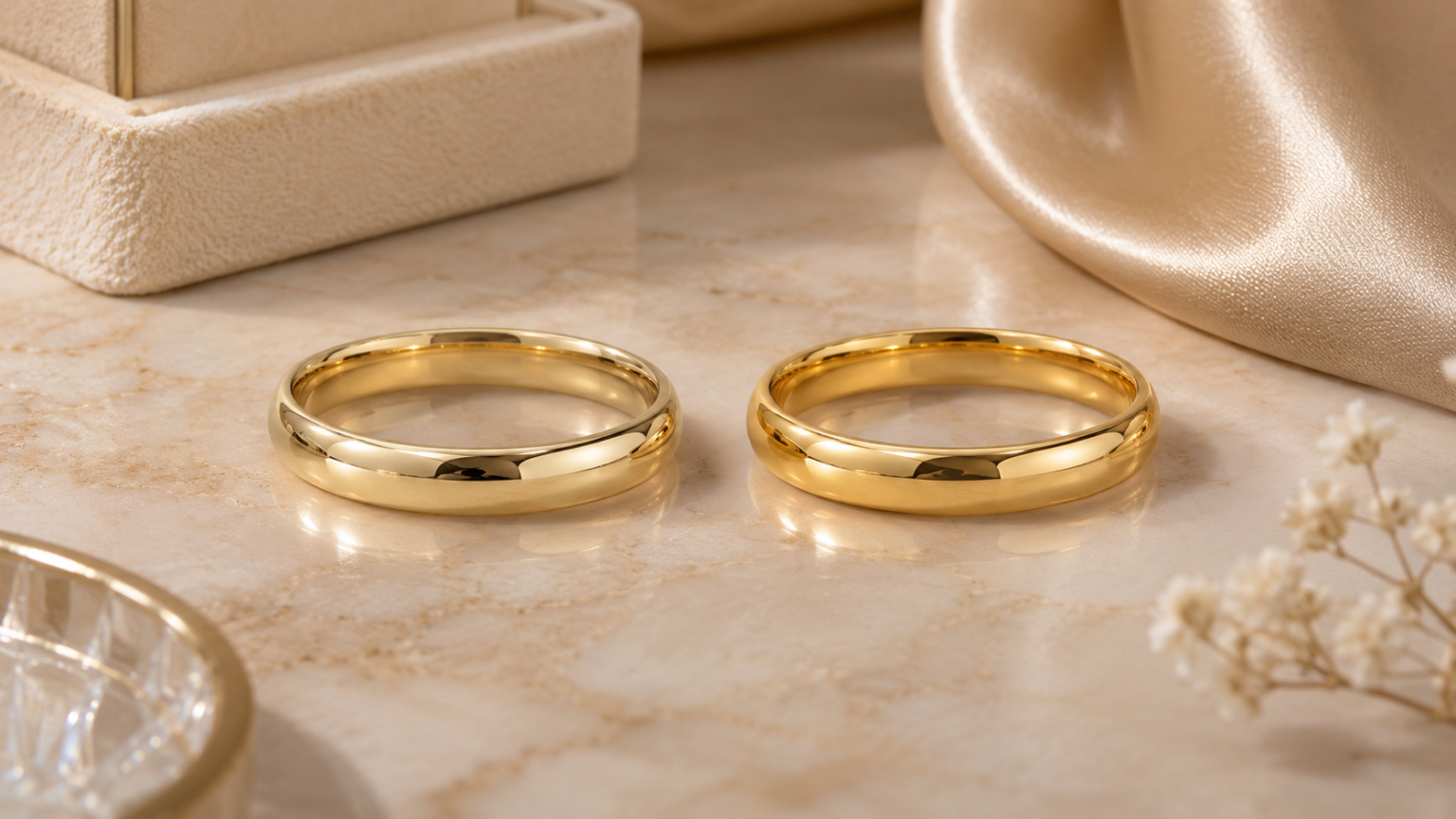
Choosing the right gold jewelry involves more than finding a beautiful design. Gold purity affects appearance, durability, cost, and how a piece performs with regular use. Understanding 14k vs 18k gold helps buyers make informed decisions when shopping for engagement rings, wedding bands, necklaces, bracelets, and other valuable accessories. Both options contain genuine gold, but their different metal compositions make them suitable for different needs.
Some buyers prefer jewelry that can handle daily activities, while others prioritize richer color and higher gold content. Neither option is automatically better for everyone. The right choice depends on personal preferences, lifestyle, budget, metal sensitivity, and the construction of the jewelry itself.
Understanding these differences before purchasing can help you choose jewelry that looks attractive, feels comfortable, and remains suitable for your intended use.
What Is the Difference Between 14K and 18K Gold?
The main difference between 14K and 18K gold is their purity. Fourteen karat gold contains approximately 58.3% pure gold, while eighteen karat gold contains 75% pure gold.
The remaining portion consists of other metals that affect hardness, color, and other physical characteristics.
In practical terms, 14K gold contains more alloying metals, which can make it a durable choice for frequently worn jewelry. Meanwhile, 18K gold has a higher gold concentration and often provides a richer yellow appearance.
However, the exact performance of either option depends on its alloy composition, jewelry design, manufacturing quality, and how the owner wears and maintains it.
Both gold types can be excellent choices for high quality jewelry. Their differences become more important when comparing specific pieces intended for everyday or occasional use.
Understanding Gold Purity and Karat Measurements
Gold purity is measured using the karat system, which divides the metal composition into 24 parts. Pure gold is described as 24K because all 24 parts are gold.
Although pure gold is valued for its natural color and chemical stability, it is relatively soft compared with many gold alloys. Jewelry manufacturers combine gold with other metals to achieve particular properties and colors.
What Is 14K Gold?
Fourteen karat gold contains 14 parts gold out of 24, equivalent to approximately 58.3% pure gold.
The remaining 41.7% consists of alloying metals, which may include copper, silver, zinc, or other metals depending on the formulation.
These additional metals can improve resistance to deformation and make certain 14K alloys particularly suitable for jewelry worn regularly.
Many people choose 14K gold for engagement rings, wedding bands, chains, and bracelets because it offers a practical combination of gold content, appearance, and price.
It is also available in yellow, white, and rose gold varieties.
What Is 18K Gold?
Eighteen karat gold contains 18 parts pure gold out of 24, making it 75% gold.
The remaining 25% consists of other metals selected to achieve particular colors and material properties.
Because it contains more gold, 18K yellow gold often has a deeper golden appearance than comparable 14K yellow gold.
It is commonly used in fine jewelry, designer collections, wedding bands, and pieces where higher gold purity is an important purchasing consideration.
Eighteen karat gold is not too delicate for jewelry. Well designed 18K pieces can provide many years of reliable use, although individual alloys and settings require appropriate care.
Why Do Jewelry Manufacturers Mix Gold With Other Metals?
Pure gold is highly malleable, meaning it can be shaped relatively easily. This characteristic is valuable during manufacturing but can make pure gold less practical for certain delicate jewelry components.
Alloying gold allows manufacturers to adjust mechanical properties and create different colors.
Common Metals Used in Gold Alloys
Copper can contribute strength and a reddish tone. Silver can affect color and workability. Palladium may be used in certain white gold alloys, while nickel is also used in some formulations.
The precise combination matters because two pieces with the same karat rating can behave differently.
Gold purity alone does not reveal every detail about hardness, sensitivity, or long term performance.
Seven Important Factors When Comparing 14K and 18K Gold
Several practical differences can influence which gold purity works best for a particular piece of jewelry. Understanding these factors helps buyers look beyond appearance and evaluate long term suitability.
1. Durability and Resistance to Everyday Wear
Durability is one of the most important considerations when comparing gold jewelry.
Many common 14K gold alloys provide greater hardness and resistance to deformation than comparable 18K formulations. This can make 14K gold particularly attractive for frequently worn rings and bracelets.
However, hardness is not determined by gold purity alone.
Different combinations of alloying metals, manufacturing processes, and heat treatments can produce noticeable differences in mechanical performance.
Both 14K and 18K gold can develop scratches through contact with harder materials. Neither should be considered completely scratch resistant.
A well constructed 18K ring may perform better than a poorly manufactured 14K ring, especially when its design provides adequate support and protection.
For everyday jewelry, the thickness of the band, quality of the setting, and expected activities deserve as much attention as the karat rating.
2. Gold Color and Overall Appearance
Gold color plays an important role in jewelry selection, especially when the buyer wants a specific appearance.
Eighteen karat yellow gold generally displays a richer, more saturated golden tone because of its higher gold content.
Fourteen karat yellow gold can appear slightly lighter or more muted, although the difference varies among manufacturers.
Yellow Gold
Yellow gold combines pure gold with selected metals to create a traditional golden appearance.
Both purity levels can produce attractive jewelry. Buyers who prefer a pronounced gold color may favor 18K, while those who want a subtler tone may appreciate 14K.
White Gold
White gold contains gold mixed with metals that reduce its natural yellow appearance.
Many white gold pieces receive rhodium plating to produce a bright, reflective finish. That coating can gradually wear away, exposing the underlying alloy color.
Neither 14K nor 18K white gold is guaranteed to remain bright white without maintenance.
Rose Gold
Rose gold obtains its pink or reddish appearance primarily from copper in the alloy.
Because 14K gold allows a larger proportion of alloying metals, some 14K rose gold formulations may display a stronger pink tone than comparable 18K versions.
Actual color depends on the complete metal formulation, so visual inspection is more reliable than relying on purity alone.
3. Purchase Price and Overall Affordability
Price is often a deciding factor when evaluating 14k vs 18k gold for jewelry purchases.
For pieces of equal weight, 18K gold contains approximately 28.6% more pure gold than 14K gold.
That difference increases the intrinsic value of the gold content when the same gold price is used for both calculations.
However, it does not mean every 18K jewelry item costs exactly 28.6% more than an equivalent 14K item.
Retail pricing also reflects labor, manufacturing complexity, gemstones, brand positioning, distribution expenses, and seller margins.
A simple 18K band may cost less than an elaborate 14K ring containing valuable gemstones.
For a fair comparison, buyers should evaluate pieces with similar designs, weights, craftsmanship, and additional materials.
The goal is to understand what contributes to the quoted price rather than assuming higher purity always represents better overall value.
4. Skin Sensitivity and Metal Allergies
Some people experience irritation when wearing jewelry containing certain metals.
Nickel is a recognized cause of allergic contact dermatitis and may be present in some gold alloys, particularly certain white gold formulations.
Because 18K gold contains a smaller proportion of alloying metals, some buyers assume it is automatically safer for sensitive skin.
That assumption is not always correct.
An 18K alloy containing a problematic metal may cause irritation, while a carefully formulated nickel free 14K alloy may be more comfortable for the same person.
Gold purity does not identify every ingredient in the jewelry.
Buyers with known metal allergies should request information about the alloy composition and consider materials specifically selected to avoid their allergens.
For persistent skin reactions, professional medical guidance is more useful than choosing jewelry solely by karat rating.
5. Weight, Comfort, and Wearing Experience
Comfort matters when jewelry will remain on the body throughout the day.
Pure gold is relatively dense, so an 18K alloy may weigh more than a comparable 14K alloy when both pieces have identical dimensions.
However, the difference varies with the other metals used in each formulation.
Jewelry thickness, shape, width, and construction can have a greater effect on comfort than a small difference in metal density.
For example, a wide ring may feel restrictive during temperature changes or hand swelling regardless of its gold purity.
A carefully shaped band with rounded inner edges may feel more comfortable during extended wear.
When possible, buyers should try on jewelry and assess the fit during ordinary movement rather than choosing based on gold content alone.
6. Maintenance, Polishing, and Repairs
Both gold types require maintenance to preserve their appearance.
Regular contact with hard surfaces can produce scratches, while lotions, skin oils, and household residues may reduce surface shine.
Depending on their alloy composition and construction, some 18K pieces may show surface marks more readily than harder 14K alternatives.
Professional polishing can improve the appearance of many scratched pieces, although repeated polishing removes small amounts of material.
Repairs also depend on the design. A delicate chain, thin setting, or intricate gemstone arrangement may require specialized handling.
The karat rating does not guarantee easy resizing or repair.
When purchasing valuable jewelry, buyers should ask whether the design can be maintained, resized, and repaired by a qualified jeweler.
7. Long Term Value and Resale Potential
Eighteen karat jewelry contains more fine gold per unit of weight, giving it a higher gold content value than equivalent weight 14K jewelry.
Consider two plain pieces, each weighing 10 grams.
The 14K piece contains approximately 5.83 grams of pure gold, while the 18K piece contains 7.5 grams.
This difference becomes relevant when estimating the value of recoverable precious metal.
Nevertheless, jewelry resale prices are rarely identical to original retail prices.
A reseller may account for refining costs, business expenses, testing, and profit margins. Gemstones and decorative craftsmanship may not receive their original retail valuation.
Certain collectible or designer pieces can have value beyond their metal content, but that depends on market demand and authenticity.
For most everyday purchases, jewelry should be selected primarily for personal use and suitability rather than guaranteed financial returns.
Which Gold Is Better for Different Types of Jewelry?
The intended use of jewelry can help determine which purity provides the most practical balance of appearance, cost, and performance.
Engagement Rings and Wedding Bands
Engagement rings and wedding bands experience frequent contact with everyday objects.
For someone who regularly works with their hands, 14K gold may be attractive because many of its alloys offer useful resistance to deformation.
Eighteen karat gold can also be an excellent choice, especially for buyers who prefer a richer yellow appearance.
Setting construction is particularly important when a ring contains valuable gemstones.
Why Ring Settings Matter
A secure setting protects the stone by keeping it properly positioned during normal use.
Prong dimensions, stone placement, metal condition, and workmanship all influence security.
A higher karat rating does not automatically make a setting more attractive or dependable.
A qualified jeweler can explain whether a particular design suits the buyer’s expected activities.
Necklaces and Gold Chains
Necklaces generally encounter different types of wear than rings because they experience less frequent contact with hard surfaces.
This makes both 14K and 18K gold practical options.
Buyers who want richer yellow color and higher gold content may prefer 18K for a necklace or pendant.
However, chain construction deserves close examination.
Thin links can bend or break under excessive tension, while weak clasps may compromise the security of the entire piece.
A solid, well manufactured 14K chain can be a better practical purchase than a fragile 18K design.
Chain thickness, link style, clasp quality, and how frequently the necklace will be worn should guide the decision.
Bracelets and Everyday Accessories
Bracelets are exposed to considerable movement and contact with desks, clothing, and other objects.
For frequent wear, 14K gold may provide a useful balance between affordability and resistance to everyday handling.
An 18K bracelet may be preferable when the buyer values higher gold purity and a richer appearance.
In either case, the strength of the connections and reliability of the clasp are important.
A bracelet with delicate decorative elements should receive appropriate care regardless of purity.
Earrings and Special Occasion Jewelry
Earrings often experience less mechanical stress than rings and bracelets.
As a result, both purity levels can work well for many earring designs.
Eighteen karat gold may appeal to buyers seeking fine jewelry with higher gold content, particularly for occasional wear.
Fourteen karat gold remains an attractive choice for simple studs, hoops, and everyday accessories.
For earrings, weight and the composition of the posts are particularly important.
People with sensitive ears should verify the actual materials that contact their skin instead of assuming a particular karat rating will prevent irritation.
How to Choose Between 14K and 18K Gold Before Buying
Selecting the right gold jewelry requires a combination of practical research and personal preference.
Rather than focusing exclusively on purity, buyers should evaluate the complete piece, including craftsmanship, comfort, intended use, and price.
Check Gold Purity Markings
Gold jewelry commonly carries markings that indicate its stated purity.
A piece marked 14K may also display a fineness marking of 585, while 18K jewelry commonly carries a 750 marking.
These numbers represent standardized fineness designations.
However, a stamped marking alone does not establish authenticity. Counterfeit or incorrectly marked products can exist.
For expensive purchases, buyers should choose reputable sellers who can explain their authentication procedures and provide suitable documentation.
Compare the Complete Jewelry Design
Two rings with identical gold purity may differ significantly in durability and manufacturing quality.
Examine the thickness of the metal, finish, gemstone security, and overall construction.
Consider whether the jewelry has delicate components that could become damaged during normal use.
A piece with a slightly lower gold purity but stronger construction may offer greater practical value than a more delicate design.
Understand What the Price Includes
The price of jewelry includes more than the market value of its gold content.
Manufacturing costs, craftsmanship, gemstones, finishing, and retail expenses influence the final amount.
When comparing products, ask about the jewelry’s weight, gold purity, gemstone specifications, and applicable service policies.
Transparent pricing helps buyers evaluate whether additional cost reflects higher gold content, better construction, or other features.
How to Maintain 14K and 18K Gold Jewelry
Proper care can help maintain the appearance and condition of both gold types.
For ordinary solid gold jewelry without delicate gemstones, gentle cleaning with lukewarm water, mild soap, and a soft cloth is often appropriate.
A soft brush may help remove residue from accessible areas, but special finishes and gemstone settings require additional caution.
Avoid exposing jewelry unnecessarily to harsh chemicals, abrasive cleaning materials, and activities that create strong impacts.
Store individual pieces separately to reduce contact scratches and prevent chains from becoming tangled.
Jewelry containing pearls, opals, treated gemstones, or other sensitive materials may require different cleaning methods.
Professional inspections are especially useful for rings with gemstones, frequently worn bracelets, and chains showing signs of wear.
Frequently Asked Questions
Is 14K gold better than 18K gold for everyday wear?
14K gold is often a practical everyday option because many common alloys offer good resistance to deformation. However, construction quality and alloy composition also matter.
Does 18K gold scratch more easily than 14K gold?
Some 18K alloys are softer than comparable 14K alloys and may show scratches more readily. Actual scratch resistance depends on the specific metals and manufacturing process.
Why is 18K gold usually more expensive than 14K gold?
18K gold contains 75% pure gold compared with approximately 58.3% in 14K gold. This higher gold content generally increases its material value.
Can you tell the difference between 14K and 18K gold by looking?
18K yellow gold often appears richer in color, but alloy composition and lighting affect appearance. Visual inspection alone cannot reliably confirm gold purity.
Is 18K gold better for sensitive skin?
Not necessarily. An 18K alloy may contain metals that cause allergic reactions. People with sensitivities should verify the specific alloy ingredients before purchasing.
Which is better for an engagement ring, 14K or 18K gold?
Both can work well. 14K may suit frequent wear and practical budgets, while 18K appeals to buyers who prioritize higher gold purity and a richer yellow color.
Conclusion
Choosing between 14k vs 18k gold ultimately depends on how the jewelry will be worn, the buyer’s budget, and the qualities they value most. Fourteen karat gold often provides a practical balance of durability, appearance, and affordability, while eighteen karat gold offers higher purity and a richer traditional gold color. Neither option guarantees superior performance in every design, so craftsmanship, comfort, and alloy composition deserve careful consideration. Understanding these factors makes it easier to select beautiful, reliable jewelry that suits personal needs and expectations.
