
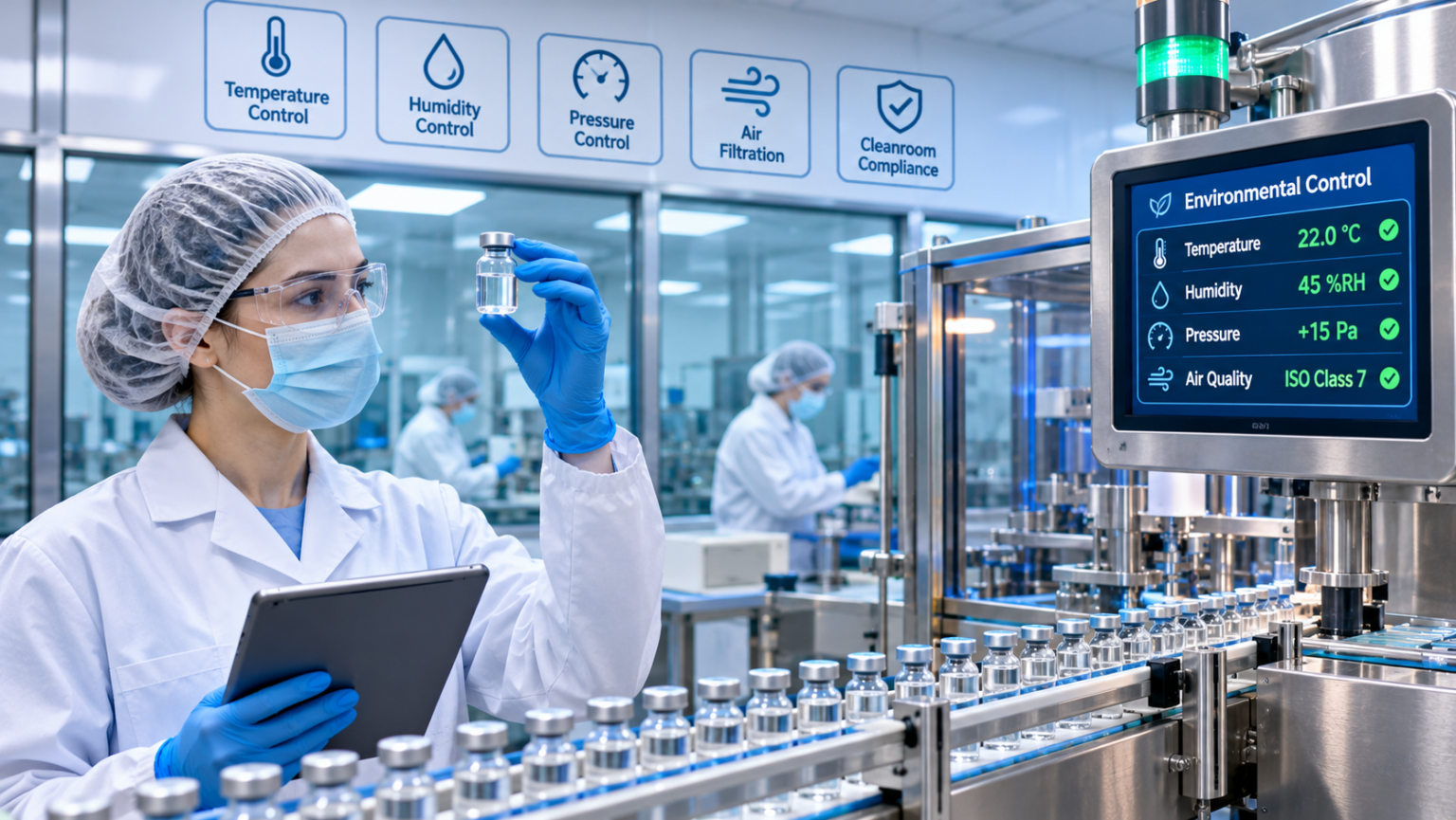
Pharmaceutical manufacturing demands absolute precision, unyielding product purity, and total compliance with international quality standards. Because modern medicines directly impact human health and patient safety, the environments in which drugs are synthesized, processed, and packaged must be rigorously controlled. Fluctuations in ambient temperature, relative humidity, air cleanliness, and atmospheric pressure can compromise chemical stability, encourage microbial contamination, and ruin entire production batches. Establishing strict environmental control across cleanrooms and processing bays guarantees product efficacy, protects sensitive active ingredients, and upholds regulatory compliance.
Maintaining Precise Relative Humidity for Powder and Tablet Integrity
Relative humidity control is one of the most critical environmental parameters in pharmaceutical processing facilities. Active pharmaceutical ingredients and excipients utilized in tablet compression and capsule filling are often highly hygroscopic, meaning they absorb moisture rapidly from surrounding air.
When humidity levels rise above target thresholds, fine pharmaceutical powders absorb ambient moisture, causing particles to clump, stick to tooling dies, and flow unevenly through high-speed tableting machinery. This physical instability leads to weight variations across individual tablets, inconsistent dosage yields, and compromised dissolution rates that render medications ineffective or unsafe for human consumption.
Conversely, excessively dry environments generate static electricity charges that cause lightweight powders to scatter, cling to stainless steel surfaces, and misbehave during encapsulation. Integrating advanced environmental infrastructure—such as precision in-duct humidification systems within central air handling units—maintains steady relative humidity between thirty-five and fifty percent. Controlled moisture levels eliminate static discharge, preserve powder flowability, and guarantee uniform active drug dosages across every manufactured batch.
Preventing Moisture Absorption in Hygroscopic Compounds
Stabilizing ambient humidity prevents hygroscopic active ingredients from absorbing water vapor during high-speed blending and milling operations.
Consistent moisture levels preserve powder flow characteristics, ensuring tablet presses fill die cavities accurately every single cycle. Humidity control safeguards dosage uniformity.
Eliminating Static Electricity in Dry Processing Bays
Maintaining proper relative humidity allows air to dissipate static charges naturally, stopping fine powders from clinging to equipment walls.
Preventing electrostatic buildup reduces product loss, improves weight accuracy, and protects sensitive electronic scale instrumentation from electrical interference. Static dissipation optimizes processing efficiency.
Regulating Cleanroom Temperature for Chemical Stability and Operator Comfort
Temperature regulation within pharmaceutical manufacturing cleanrooms plays a dual role in protecting sensitive chemical compounds and maintaining human operator comfort. Many biological drugs, vaccines, and complex active ingredients are thermally sensitive, degrading rapidly if exposed to ambient heat.
Maintaining consistent cool temperatures prevents thermal degradation, preserves enzyme activity, and extends the shelf life of raw materials during processing. Precise climate control ensures that chemical reaction rates remain predictable during liquid compounding and synthesis phases, preventing unwanted side reactions or purity loss.
Furthermore, cleanroom technicians must wear non-linting, protective full-body suits that trap body heat. Controlling room temperatures prevents operator overheating and excessive sweating. Sweat accumulation inside protective suits increases human discomfort and elevates the risk of liquid shedding or microbial contamination escaping into sterile cleanroom environments.
Preserving Thermolabile Active Ingredients
Maintaining cleanroom temperatures within strict pharmaceutical baselines protects delicate biological molecules from thermal denaturation during processing.
Controlled cool environments ensure active ingredients maintain therapeutic potency throughout complex multi-step manufacturing workflows. Temperature control safeguards drug efficacy.
Mitigating Operator Sweat and Contamination Risks
Keeping cleanrooms cool reduces physical perspiration among technicians wearing multi-layered sterile garments during long production shifts.
Minimizing operator sweat reduces biological shedding risks, helping maintain sterile boundaries within critical processing zones. Thermal management supports aseptic compliance.
Ensuring Sterile Air Purity Through HEPA Filtration and Airflow Design
Airborne particulate contamination poses a severe threat to sterile drug manufacturing, particularly during aseptic filling of injectable medications and intravenous fluids. Unfiltered facility air carries microscopic dust, fungal spores, bacteria, and skin flakes that can settle directly into open drug vials.
Pharmaceutical facilities utilize multi-stage air filtration networks featuring high-efficiency particulate air filters capable of trapping 99.97% of airborne particles down to 0.3 microns. Cleanroom HVAC systems supply continuous laminar airflow that sweeps clean, filtered air across sterile work surfaces, washing away airborne contaminants before they reach open product containers.
In addition to filtration, maintaining proper air change rates ensures that any particles generated by machinery or operators are diluted and exhausted rapidly from the processing area. Continuous air purification maintains class-certified cleanroom standards, preventing batch contamination and protecting patient health.
Utilizing Laminar Flow Enclosures in Aseptic Filling
Directing unidirectional laminar streams of sterile air over open filling lines creates a protective air curtain that deflects airborne contaminants away.
Continuous laminar airflow ensures vials remain pristine during liquid dispensing, stopper placement, and aluminum crimping steps. Airflow management maintains fill sterility.
Maintaining High Air Change Rates for Particle Clearance
Exchanging cleanroom air volume dozens of times per hour flushes out human-generated particulates and machinery heat rapidly.
High air turnover prevents contaminant accumulation, ensuring processing bays recover cleanroom purity levels quickly following operator movements. Air exchange secures environmental cleanliness.
Establishing Differential Pressure Cascades to Prevent Cross-Contamination
Cross-contamination between different drug manufacturing suites represents a major hazard in multi-product pharmaceutical facilities. Powerful active compounds, such as antibiotics or highly potent oncology drugs, must never migrate into adjacent processing rooms where different medications are being produced.
Pharmaceutical architects utilize differential pressure cascades to manage airflow movement between connected cleanrooms. By maintaining higher atmospheric pressure inside high-purity processing rooms relative to surrounding corridors, air flows outward when doors open, preventing unconditioned or contaminated corridor air from rushing inside.
Conversely, containment rooms handling hazardous or highly potent compounds are kept under negative pressure relative to adjacent areas. Negative pressure holds potent dust particles inside the processing room, protecting operators and preventing cross-contamination from spreading into neighboring facility hallways.
Implementing Positive Pressure Barriers for Product Protection
Maintaining positive pressure differentials inside sterile filling suites forces clean air outward through doorways, stopping outside dust ingress.
Positive pressure cascades protect exposed drug formulations from ambient corridor contamination continuously. Pressure management safeguards product purity.
Utilizing Negative Pressure Isolation for Potent Drugs
Keeping high-containment suites under negative air pressure ensures hazardous powder dust remains trapped within dedicated extraction systems.
Negative pressure containment protects facility workers from hazardous exposure while preventing cross-contamination across shared corridors. Containment pressure secures workplace safety.
Preventing Microbial Growth and Mold Contamination
Microbial contamination caused by bacteria, yeast, or mold spores represents an existential threat to pharmaceutical operations. Microbial proliferation inside processing suites can result in product recalls, massive financial losses, and severe regulatory enforcement sanctions.
Microorganisms thrive in warm, humid environments where condensation accumulates on cold stainless steel pipes, walls, or ceiling panels. Maintaining strict environmental control—specifically controlling relative humidity below sixty percent—prevents moisture condensation and halts fungal and bacterial growth on facility surfaces.
Furthermore, smooth, non-porous cleanroom surfaces are continuously disinfected using validated sporicidal agents. Environmental monitoring programs track airborne microbes and surface bioburden continuously, verifying that environmental controls successfully prevent biological contamination across all active manufacturing bays.
Eliminating Surface Condensation through Dew Point Control
Managing indoor dew points prevents moisture from condensing on cold water pipes, HVAC ducts, and stainless steel vessel walls.
Dry facility surfaces eliminate the moisture films required for mold spores and bacterial colonies to germinate. Condensation control stops microbial growth.
Monitoring Bioburden and Environmental Microflora
Conducting routine air sampling and surface swab testing tracks background microbial levels across processing zones continuously.
Identifying biological trends early empowers quality assurance teams to adjust sanitation protocols before microbial counts breach regulatory limits. Microflora monitoring enforces biological safety.
Satisfying Regulatory Compliance and Data Integrity Standards
Environmental control in pharmaceutical manufacturing is not merely an internal quality preference; it is a strict legal requirement enforced by global health authorities. Regulatory bodies mandate that drug manufacturers demonstrate total control over manufacturing environments as part of Good Manufacturing Practice guidelines.
Modern pharmaceutical facilities utilize automated environmental monitoring systems that record temperature, relative humidity, pressure differentials, and airborne particle counts continuously. These automated networks log environmental telemetry to secure, unalterable digital databases, generating detailed audit trails for every production batch.
Demonstrating that environmental parameters remained within validated specifications throughout a drug’s entire manufacturing cycle provides essential proof of product quality. Robust environmental monitoring ensures seamless regulatory audits, prevents batch rejections, and maintains public trust in pharmaceutical safety.
Generating Unalterable Digital Audit Trails
Continuous environmental monitoring software logs climate metrics automatically, creating transparent data records required for batch releases.
Automated telemetry eliminates human recording errors, ensuring data integrity during rigorous regulatory compliance inspections. Digital logging proves environmental compliance.
Meeting Good Manufacturing Practice Mandates
Adhering strictly to validated environmental parameters satisfies global health agency regulations for drug consistency and safety.
Comprehensive environmental documentation proves that facility operations uphold high safety standards from raw material entry to final packaging. Regulatory compliance secures market access.
Conclusion
Environmental control is a foundational pillar of modern pharmaceutical manufacturing that directly dictates product quality, batch consistency, and patient safety. By maintaining precise relative humidity to safeguard powder flowability, regulating cleanroom temperatures for chemical stability, deploying HEPA filtration for sterile air purity, establishing differential pressure cascades to prevent cross-contamination, halting microbial growth through condensation control, and logging environmental data for regulatory compliance, pharmaceutical manufacturers establish an unyielding defense against contamination. Investing in robust environmental control infrastructure protects valuable drug formulations, prevents costly batch losses, and ensures that life-saving medications reach patients in their purest, most effective form.
