
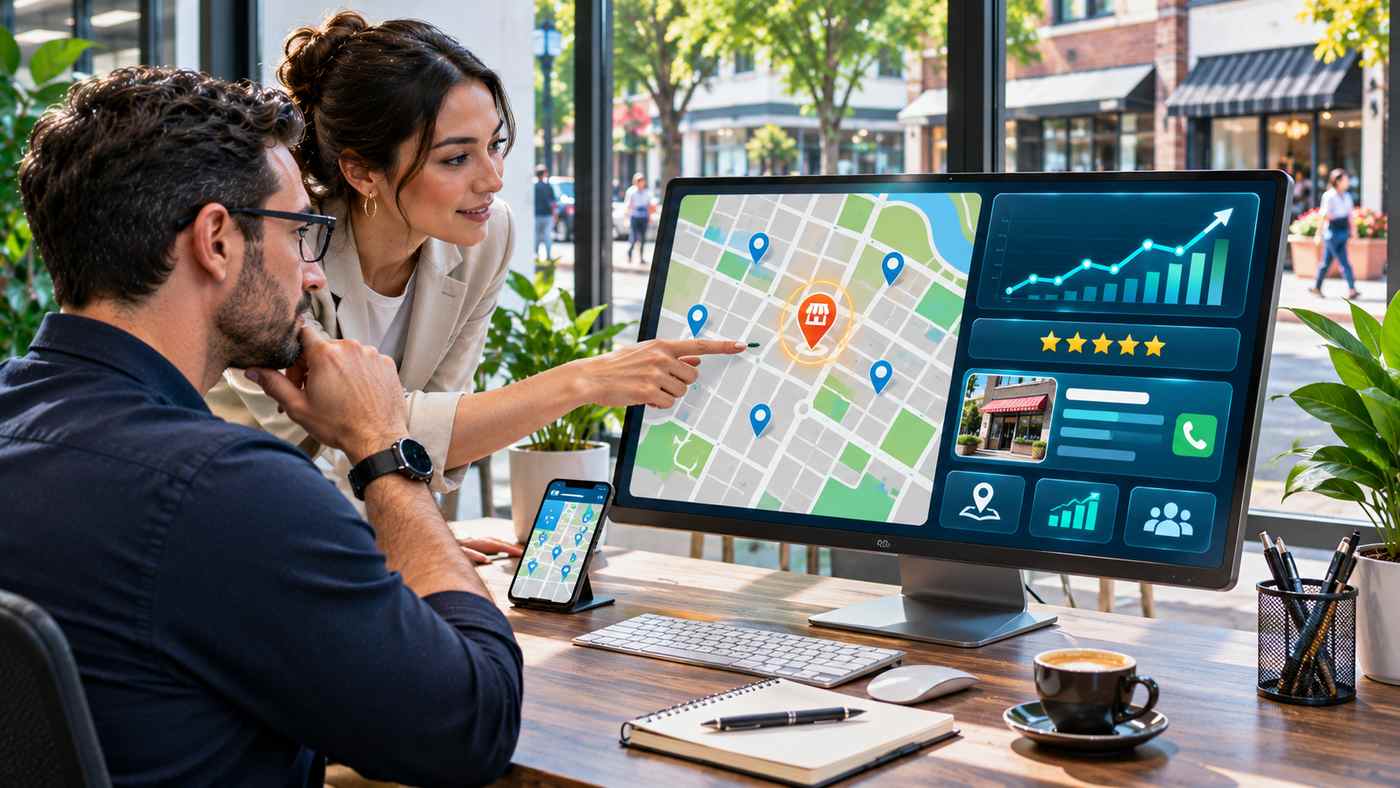
Local businesses depend heavily on online visibility to attract customers who are actively searching for products and services in their area. Whether someone needs a plumber, dentist, restaurant, cleaning company, or digital marketing agency, Google Maps often plays an important role in helping them choose a business.
For companies competing in local markets, maps ranking optimization can help improve visibility in relevant Google Maps results, strengthen customer trust, and create more opportunities for phone calls, website visits, and enquiries.
However, appearing prominently in Google Maps requires more than creating a Google Business Profile. Businesses must provide accurate information, choose appropriate categories, develop relevant website content, manage genuine customer reviews, and maintain consistent business details across important online platforms.
Google primarily evaluates local businesses using three factors: relevance, distance, and prominence. Understanding these factors is essential for building a realistic local SEO strategy.
This guide explains how Google Maps rankings work, which optimization techniques can improve local visibility, and how businesses can build a sustainable local search presence in 2026.
What Is Maps Ranking Optimization?
Maps ranking optimization is the process of improving a business’s online presence to increase its visibility in Google Maps and location-based search results.
It involves optimizing a Google Business Profile, improving local website content, managing customer reviews, maintaining accurate business listings, and strengthening the business’s online reputation.
When someone searches for a service such as “electrician near me” or “best dentist in Chicago,” Google may display a group of nearby businesses with their locations, ratings, contact information, and websites.
This section is commonly called the Google Local Pack or Map Pack.
Businesses appearing in relevant local results can make it easier for nearby customers to discover their services.
However, a prominent position does not automatically guarantee more customers. The business must also provide reliable information, useful services, and a positive customer experience.
Why Google Maps Rankings Matter
Google Maps provides customers with information they can use before contacting a business.
Potential customers may examine:
- Business location and service areas.
- Opening and closing hours.
- Customer ratings and reviews.
- Contact details.
- Business photographs.
- Available products and services.
- Website information.
- Directions and accessibility.
An accurate and informative listing can help people decide whether a company meets their requirements.
For local service providers, this visibility can support qualified enquiries from customers who are already interested in purchasing a service.
How Does Google Determine Local Maps Rankings?
Google identifies three primary factors that influence local search rankings.
Understanding these factors helps businesses prioritize useful improvements rather than relying on unsupported SEO tricks.
Relevance
Relevance describes how closely a business matches what someone is searching for.
For example, a company specializing in residential plumbing may be relevant to searches about leaking pipes, drain cleaning, or plumbing repairs.
Google uses available business information to understand the services and products offered.
Choosing accurate categories and providing detailed descriptions can help communicate that information.
Distance
Distance measures how far a business is from the location associated with a search.
When someone searches for a nearby service, Google considers the relationship between the searcher’s location and relevant businesses.
This means Maps results can change when the same keyword is searched from different areas.
Businesses cannot legitimately improve proximity by creating false addresses or misleading locations.
Prominence
Prominence reflects how well-known or established a business is.
Google considers information from various sources, including websites, links, reviews, and other relevant signals.
Genuine customer reviews and positive ratings can contribute to local prominence.
However, no single activity guarantees a particular ranking.
A strong local SEO strategy should support relevance, trustworthy business information, and genuine customer relationships.
7 Proven Strategies to Improve Google Maps Rankings
Improving local search visibility requires several coordinated activities.
The following strategies can help businesses establish a stronger presence and provide useful information to potential customers.
1. Optimize Your Google Business Profile
Google Business Profile is the foundation of a business’s presence in Google Maps.
An incomplete or inaccurate listing can make it difficult for customers to understand what the company offers.
Verify Your Business Profile
Start by claiming or verifying the business through Google’s official verification process.
The available verification methods depend on the business and its circumstances.
Verification helps establish authorized management of the listing.
However, it does not guarantee a top ranking.
Choose the Right Business Categories
Categories help Google understand the nature of a business.
The primary category should accurately describe the company’s main activity.
For example, a business providing residential plumbing services should select a relevant plumbing category rather than an unrelated home improvement classification.
Additional categories may be appropriate when they accurately reflect genuine business operations.
Avoid adding categories solely to target unrelated search terms.
Complete Important Business Information
Provide accurate details about the company.
These may include its business name, address, telephone number, website, operating hours, and relevant services.
The information should match how the business operates in the real world.
Google also requires businesses to use their genuine names rather than adding promotional keywords that are not part of the actual business name.
Keep Business Hours Updated
Customers often search for companies that are currently open or available during particular hours.
Incorrect opening hours can create frustration and missed enquiries.
Update special schedules when necessary, including public holidays or temporary changes.
Add Genuine Business Photographs
Useful photographs can help customers understand the business.
Depending on the industry, suitable images may include the storefront, workplace, products, completed projects, or relevant facilities.
Photographs should accurately represent the business.
Avoid misleading images that create unrealistic expectations.
2. Conduct Local Keyword Research
Local keyword research identifies the terms customers use when searching for relevant services in specific geographic areas.
It helps businesses understand which search queries deserve attention.
Identify Core Service Keywords
Start with the main services offered.
For example, a roofing company may research:
- Roof repair.
- Emergency roofing services.
- Residential roof replacement.
- Commercial roofing.
- Roof inspection.
- Roof maintenance.
These terms can then be combined with relevant locations when appropriate.
Understand Geographic Search Intent
Customers may search using city names, neighbourhoods, or phrases such as “near me.”
However, simply adding a location name to every keyword does not create a useful SEO strategy.
The webpage should genuinely serve the audience associated with the location.
Evaluate Search Intent
Search intent explains what the user hopes to accomplish.
Someone searching for “how to repair a leaking roof” may want educational information.
A person searching for “emergency roof repair near me” is more likely looking for a business that can provide immediate assistance.
These queries require different types of content.
Prioritize Commercially Relevant Keywords
A keyword with high search volume is not always the best opportunity.
A lower-volume local keyword can be valuable when it closely matches the company’s services.
Businesses should evaluate relevance, realistic competition, and the potential to generate qualified enquiries.
3. Improve Local Website SEO
A Google Business Profile should be supported by an informative and technically accessible website.
The website provides additional information about the business and helps customers understand its services.
Create Dedicated Service Pages
Important services may deserve separate pages.
For example, a home improvement company could create pages for kitchen renovations, bathroom remodelling, flooring installation, and other services.
Each page should explain the work involved and answer common customer questions.
Avoid creating pages that contain only a heading and repeated keywords.
Develop Relevant Location Pages
Businesses serving multiple genuine locations may benefit from dedicated location pages.
These pages should contain useful, distinct information.
Examples include actual service coverage, available services, contact details, and relevant local considerations.
Do not create numerous nearly identical pages with only the city name changed.
Google’s spam policies address doorway pages created primarily to manipulate search visibility.
Optimize Page Titles and Headings
Page titles should clearly describe the topic.
A useful local title may combine the main service with an appropriate location.
Headings should organize content logically so visitors can find information easily.
Avoid repeating the same phrase unnecessarily throughout the page.
Improve Internal Linking
Internal links connect related website pages.
For example, a general home maintenance article may link to relevant plumbing, roofing, and electrical service pages.
These links help visitors discover related information and assist search engines in understanding the website’s structure.
Maintain Mobile-Friendly Pages
Many people explore local businesses using smartphones.
A website should be easy to navigate on smaller screens.
Important information, such as contact details and service descriptions, should be accessible without unnecessary effort.
Review Technical SEO
Technical issues can reduce the effectiveness of local content.
Businesses should review indexing, redirects, broken links, page performance, and website architecture.
Google Search Console can help identify relevant search visibility and indexing information.
4. Build Genuine Customer Reviews
Customer reviews can influence how people perceive local businesses.
They also contribute to Google’s assessment of local prominence.
However, review management should focus on authenticity rather than manipulating ratings.
Encourage Honest Feedback
Businesses can invite customers to share their genuine experiences.
Google Business Profile provides options for creating review links and QR codes.
These can be included in suitable follow-up communications.
The invitation should allow customers to share either positive or negative opinions.
Avoid Fake Reviews
Purchasing reviews, creating fabricated customer accounts, or providing incentives in exchange for ratings can violate Google’s policies.
These practices may result in reviews being removed or restrictions being applied to the profile.
A trustworthy reputation develops through genuine customer experiences.
Respond to Positive Reviews
When a customer shares positive feedback, a professional response can show appreciation.
Avoid using identical promotional messages for every review.
A short, thoughtful reply is usually more useful.
Handle Negative Reviews Professionally
Negative feedback should not automatically be ignored or challenged aggressively.
A business can acknowledge concerns and explain how the customer may contact the appropriate team.
Avoid discussing private customer information publicly.
When a review violates platform policies, it may be reported through Google’s official process.
Learn From Customer Feedback
Repeated complaints about waiting times, communication, or service quality may reveal operational problems.
Using reviews to improve the customer experience can have long-term value beyond search visibility.
5. Maintain Accurate Local Citations
Local citations are online references to a business’s name, address, telephone number, and other details.
They may appear in directories, industry websites, professional associations, and other relevant platforms.
Understand NAP Consistency
NAP stands for Name, Address, and Phone number.
Businesses should maintain accurate information across their important online listings.
For example, an outdated telephone number may prevent a potential customer from contacting the company.
Accuracy is more important than forcing every harmless formatting variation to appear identical.
Focus on Relevant Directories
Not every directory provides meaningful value.
Prioritize established platforms that are relevant to the business, industry, or location.
A local professional association may be more useful than dozens of unrelated directories.
Correct Duplicate Listings
Duplicate or outdated profiles can confuse customers.
Businesses should use official platform procedures to correct inaccurate information.
Avoid Mass Directory Submissions
Submitting business information to hundreds of low-quality websites does not guarantee stronger rankings.
A sustainable approach prioritizes genuine relevance and accurate information.
6. Strengthen Local Authority With Content and Ethical Links
Local visibility is influenced by the broader information available about a business online.
Useful content, genuine community participation, and relevant editorial mentions can support credibility.
Publish Helpful Local Content
Businesses can create resources addressing questions relevant to their customers.
For example, a landscaping business might publish a guide explaining seasonal lawn care in its region.
A property maintenance company could explain common building maintenance concerns.
The content should provide accurate advice and avoid unnecessary keyword repetition.
Build Industry Relationships
Participation in professional associations, community initiatives, and legitimate partnerships may create opportunities for relevant online coverage.
Such relationships should reflect real activities.
Earn Quality Backlinks
Links from credible and relevant websites can help search engines discover information and understand website relationships.
However, a large number of low-quality backlinks does not automatically improve search performance.
Links should be evaluated according to their relevance and context.
Avoid Manipulative Link Building
Google prohibits buying or selling links that pass ranking credit for the purpose of manipulating search results.
Paid sponsorships and advertisements should use suitable link attributes.
Businesses should understand how their SEO provider acquires links.
Consider Professional Local SEO Services
Businesses without dedicated internal SEO resources may benefit from external assistance.
Companies researching maps ranking optimization can explore UPSEO’s local SEO offering, which describes services involving Google Business Profile optimization, keyword research, local content, citations, and link outreach.
However, any proposed campaign should be evaluated against Google’s published guidelines.
An external provider cannot guarantee a particular Maps ranking, and backlink activities should follow the applicable spam policies.
7. Monitor Google Maps Performance and Business Enquiries
Optimization should be evaluated using meaningful information rather than relying entirely on ranking positions.
The ultimate objective is usually to attract relevant customers.
Review Google Business Profile Performance
Google provides performance information for eligible Business Profiles.
Depending on the available features, businesses may examine profile interactions such as calls, website clicks, and direction requests.
These metrics can indicate how customers engage with the listing.
Understand Geographic Ranking Differences
Google Maps rankings vary according to search location.
A business may appear prominently near its premises but less visibly from another neighbourhood.
Some third-party tools use map grids to estimate visibility across different locations.
These measurements should be treated as estimates rather than official Google rankings.
Track Website Conversions
Google Analytics can help businesses examine website interactions when configured appropriately.
Relevant actions may include completed enquiry forms, booking requests, or other meaningful conversions.
Customer relationship management systems can provide additional context.
Measure Lead Quality
Not every click or phone call represents a genuine sales opportunity.
A business should evaluate whether enquiries match its services and intended customers.
For example, a plumbing company may value qualified emergency service calls more than unrelated website visits.
Compare Results Over Time
Local search visibility can fluctuate because of competition, seasonality, and changes in customer demand.
Evaluate trends over appropriate periods rather than making decisions based on one day’s rankings.
Google Maps SEO for Service-Area Businesses
Some businesses serve customers at their locations rather than operating a public storefront.
Examples include plumbers, cleaning contractors, electricians, and mobile repair services.
Google has specific Business Profile guidelines for these companies.
Set Accurate Service Areas
Eligible service-area businesses can define relevant geographic areas where they operate.
These areas should reflect actual business operations.
Hide the Address When Required
A business that does not receive customers at its address generally needs to hide the public-facing address according to Google’s guidelines.
This helps customers understand the business model.
Avoid Fake Locations
Creating profiles for nonexistent branches or virtual offices that do not meet Google’s eligibility criteria can violate platform policies.
Businesses should maintain profiles only for legitimate eligible operations.
Common Google Maps SEO Mistakes to Avoid
Several practices can undermine local visibility.
Keyword Stuffing in Business Names
A business name should reflect the actual company name.
Adding unrelated services or promotional phrases can create policy problems.
Incorrect Business Categories
Irrelevant categories can misrepresent the company.
Use classifications that accurately describe the business.
Buying Customer Reviews
Fake and incentivized reviews can undermine trust and violate Google’s guidelines.
Creating Thin Location Pages
Location pages should contain useful information rather than duplicated content with changed city names.
Ignoring Website Quality
A Business Profile alone may not answer every customer question.
A clear, useful website supports the overall customer journey.
Using Low-Quality Backlink Schemes
Manipulative link building can create risks without delivering sustainable value.
Focusing Only on Rankings
Ranking positions are useful indicators, but qualified enquiries, customer interactions, and conversions are more important business outcomes.
How Long Does Maps Ranking Optimization Take?
There is no guaranteed timeline for improving Google Maps rankings.
Results depend on the business’s location, competition, current visibility, relevance, reputation, and the changes implemented.
Initial Audit and Profile Improvements
The first stage may involve reviewing profile information, categories, website pages, and existing citations.
Critical inaccuracies should be corrected early.
Content and Local SEO Development
The next stage may involve improving service pages, strengthening internal links, maintaining accurate listings, and developing relevant educational content.
These changes can require time to be processed by search engines.
Ongoing Monitoring
Businesses should review performance over subsequent weeks and months.
Changes may not occur consistently across every location or search query.
A responsible SEO agency should explain uncertainty rather than promising guaranteed first-place results.
The Future of Google Maps Optimization in 2026
Local search continues to evolve as Google introduces new discovery experiences and AI-powered features.
Businesses should focus on maintaining reliable information that helps customers make decisions.
Accurate Business Information Remains Essential
Business names, categories, services, opening hours, and contact details should reflect real operations.
Customer Trust Matters
Genuine reviews and professional communication can help customers evaluate businesses.
Artificial reputation manipulation is not a sustainable approach.
Local Content Supports Discovery
Informative service pages and useful location-based resources can help customers understand a business’s offerings.
AI Search Introduces Additional Discovery Opportunities
AI-powered search experiences may display or summarize information about nearby services.
However, no special optimization technique guarantees inclusion in these answers.
Google recommends continuing to follow established SEO practices.
Business Outcomes Should Guide Strategy
The most useful local search campaign supports genuine customer enquiries and long-term business goals.
Businesses should connect performance reporting with measurable results.
Frequently Asked Questions
1. What is maps ranking optimization?
Maps ranking optimization is the process of improving a business’s visibility in Google Maps through accurate Business Profile information, local SEO, genuine customer reviews, relevant website content, and appropriate online reputation management.
2. What are the most important Google Maps ranking factors?
Google identifies relevance, distance, and prominence as the three main local ranking factors. Accurate business information, genuine reviews, and relevant online content can support visibility.
3. How long does it take to rank higher on Google Maps?
Results vary according to location, competition, business relevance, and existing visibility. Improvements may take weeks or months, and specific rankings cannot be guaranteed.
4. Can a local SEO agency improve Google Maps rankings?
A qualified agency can help businesses improve profile information, local content, citations, reviews, and performance tracking. However, Google controls its ranking systems, so no agency can guarantee a top position.
Conclusion
Maps ranking optimization helps local businesses become more discoverable to customers searching for nearby products and services. Accurate Google Business Profiles, relevant website content, genuine reviews, and trustworthy business information provide a strong foundation for local search visibility.
A successful strategy should follow Google’s guidelines and prioritize real customer needs rather than ranking manipulation. By maintaining consistent information and measuring meaningful business outcomes, companies can strengthen their local online presence and support sustainable growth.
