
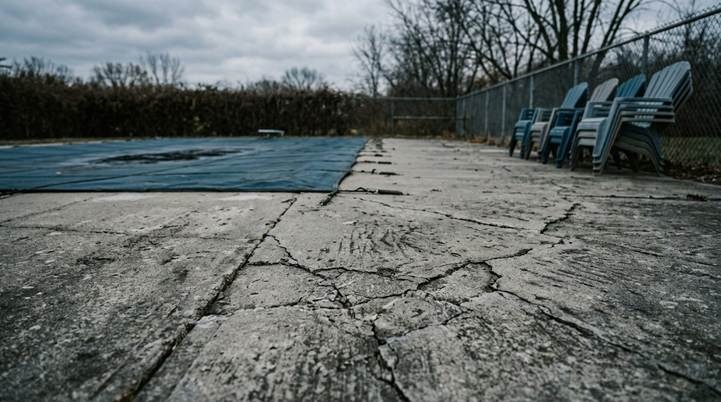
Deferred maintenance can create hidden risks that impact property values and resident safety.
By a community association industry contributor.
The agenda for your monthly board meeting looks familiar. You will approve last month’s minutes, review the financials, and discuss the same three landscaping bids. It feels productive, but this routine is often a mask for being stuck in a rut. The real risks to your community’s financial health and property values are not on the agenda. They are hidden in old ways of thinking and decisions that have been put off.
This slow drift toward problems is very common for volunteer boards. You are juggling full-time jobs and personal lives, so keeping things the same feels efficient. The problem is that costs for insurance, utilities, and labor don’t stay the same. Neither do changing state laws or local rules. Relying on last year’s budget with a small cost-of-living increase is a recipe for a surprise special assessment that will hit homeowners hard. The strongest communities have boards that learn to plan ahead, not just react to problems. This shift often happens with support from professional CAP Management hoa property managers who help volunteers plan for the future.
A good board doesn’t just manage the property; it leads the association with a plan for the future. This means asking harder questions and moving beyond the comfortable cycle of day-to-day tasks.
Quick answer: The most damaging HOA mistakes are not big failures but quiet mistakes of inaction. They include neglecting the reserve study, confusing daily tasks with long-term planning, and ignoring new laws. Avoiding these traps means taking a forward-thinking approach instead of just reacting to daily tasks.
What’s inside
· Why Is Our Reserve Study Gathering Dust?
· Are We Confusing ‘Management’ with ‘Governance’?
· How Does Ignoring New Local Laws Create Financial Risk?
· Frequently Asked Questions
Why Is Our Reserve Study Gathering Dust?
Your reserve study becomes useless when it’s treated as a one-time report instead of a living financial plan for major repairs.
A reserve study is a long-term budget for major repairs and replacements. It lists all major shared property, like roofs, boilers, and asphalt, and estimates how long they will last and how much they will cost to replace in the future. The goal is to create a steady, predictable funding plan so that monthly dues can cover these costs over time. It is the community’s best tool for avoiding financial shocks and sudden, huge bills.
The “dusty binder” problem happens because the world changes faster than the report’s estimates. A sudden jump in labor costs, a new and better siding material, or a new local rule can make a five-year-old study dangerously out of date. When the board doesn’t update the funding plan based on these real-world changes, a gap between the money you have and the money you will need begins to grow silently.
❝ A common way to measure financial health is the “percent funded” level. It compares the money you have saved to the cost of wear and tear on your property over time. While not a legal requirement in most places, many experts believe a reserve fund that is over 70% funded is strong. A fund below 30% signals a high risk of future special assessments.
This is not just an accounting issue. An underfunded reserve means that when a 25-year-old elevator finally breaks down, the board has two choices: take out a loan with high interest rates or charge a special assessment of ten thousand dollars or more to every owner. This can create a huge financial burden for residents, lower property values, and make it hard for potential buyers to get a mortgage for a home in your community. A board that plans ahead uses the reserve study as the starting point for an annual discussion about the community’s future, not a document to be filed away.
Are We Confusing ‘Management’ with ‘Governance’?
Yes, and this confusion leads boards to hire someone to check off tasks when they really need help with long-term planning.
Management is the “how” of running an HOA. It includes collecting dues, paying bills, sending violation notices, and scheduling maintenance. These are the necessary, day-to-day tasks. Governance, however, is the “why” and “what.” It is the board’s job to set long-term goals, ensure the HOA stays financially healthy, plan for replacing big-ticket items, and update the community’s rules to keep up with changing laws and resident needs. A board that only focuses on management is steering the ship without looking at the map.
A good partner should support both, but many companies are only good at the day-to-day tasks. The risk is hiring a company that is great at paying bills but offers no advice on how rising insurance costs or new local energy rules will affect your budget three years from now. This leaves the board to handle all the important planning work alone.
❝ Your manager works for the board to carry out decisions. A true governance partner works with the board to help you make better decisions. The first saves you time on tasks. The second protects you from major financial and legal risks.
When choosing a partner, you can tell the difference between a task manager and a planning advisor by asking specific, forward-looking questions.
| Aspect | Management (The ‘How’) | Governance (The ‘Why’ and ‘What’) |
| Focus | Daily Operations | Long-Term Strategy & Policy |
| Time Focus | Present (This month) | Future (Next 5 to 20 years) |
| What They Do | Paying invoices, enforcing rules | Setting financial goals, updating rules |
| How Success Is Measured | Tasks completed on time | The community’s financial health and property values |
Instead of asking about their online portal, ask how they help boards with the annual budget. Do they just plug in a 3% increase, or do they show you different budget options based on the reserve study and current costs? Ask for a sample board meeting packet. A management-focused company will give you financial reports and violation lists. A governance-focused company will include a manager’s report with advice for the future, a review of potential risks, and updates on long-term goals.
How Does Ignoring New Local Laws Create Financial Risk?
It creates costs you didn’t plan for, like fines, legal fees, and actions against homeowners that won’t hold up in court.
Changes to the law aren’t just ideas for lawyers; they are new rules for how you operate that can have a real financial impact. For boards in Colorado, two recent examples show this risk: the City of Denver’s Energize Denver Ordinance and the statewide law HB22-1137. Ignoring them is not an option, as the costs of not following the rules are paid from the association’s budget, which means they are paid for by every owner.
The Energize Denver Ordinance is a set of rules about energy use in large buildings. It requires commercial and multifamily buildings over 25,000 square feet to meet specific energy goals by 2030, with smaller goals along the way. The financial risk is clear: not following the rules results in fines that get bigger every year. A board that is not tracking its energy use and planning for upgrades (like new lighting, insulation, or HVAC systems) is choosing to pay penalties that will only grow over time. This turns a project you could have planned for into a penalty you have to pay over and over again.
❝ The main job of a board is not just to know the current rules, but to have a system for finding and adapting to new ones. Ask any potential management partner: “What is your process for tracking city and state law changes that affect HOAs, and how do you tell your client boards what they need to do?”
At the state level, Colorado House Bill 22-1137 greatly changed how associations can enforce their rules. It put new limits on the fines that can be charged for certain violations and created stricter rules for notifying homeowners before trying to collect debt or foreclose. A board that keeps using its old fine system or collection policy is likely breaking the law. The financial risk here comes in two ways: the association could spend thousands in legal fees trying to defend an action that is no longer allowed, and a court could rule that its claims or fines are not valid, wiping out the money it was trying to collect.
Frequently Asked Questions
What are the most common red flags of poor HOA management? Look for problems that keep coming back. Slow replies to the board and residents, financial reports that are late or have errors, and a high turnover of vendors are all major warning signs. These issues suggest the company lacks the systems or skills to handle basic tasks, which means it probably cannot give good long-term advice either.
What is the difference between an HOA manager and a property manager? An HOA manager is hired by the board to manage the community as a whole. Their work covers common areas, finances, and enforcing the rules for the entire association. A property manager usually works for one owner to rent out, maintain, and collect rent for a specific unit.
How can our board spot an underfunded reserve before it becomes a crisis? Your reserve study should include a “percent funded” number. The further it falls below 70%, the more attention it needs. Another clear sign is when the board keeps putting off major repairs from the study because there isn’t enough money. If your monthly savings are well below what the study recommends, you are falling behind.
What are the most common HOA violations? Parking problems, trash and recycling bins left out, and changes to homes made without approval are among the most frequent violations. The key to fair enforcement is a clear, written policy that explains each step, from a friendly reminder to formal warnings and possible fines. Uneven enforcement is a leading cause of resident frustration and legal challenges.
Should the management fee be the main deciding factor? Choosing only on price is a real risk. The lowest bid often covers only basic office work, which leaves the board to handle financial planning, legal rules, and big decisions alone. A slightly higher fee may cover deeper support, which can save the community much more over time by avoiding costly mistakes.
The Difference Between an Administrator and an Advisor
The most damaging mistakes an HOA board makes are rarely sudden. They are the slow result of focusing on daily tasks while ignoring long-term risk. An underfunded reserve is not a one-time error. It comes from years of budgets that put low monthly dues ahead of long-term health. Fines for breaking new laws are not bad luck. They happen when there is no system to track and adapt to changing rules.
In the end, choosing a management partner is a choice between hiring an administrator and hiring an advisor. An administrator carries out the board’s decisions. An advisor helps the board make better ones. This difference decides whether you are simply handing off tasks or gaining a real partner for the future.
Your community’s financial health and legal standing depend on the board’s ability to lead, not just oversee daily tasks. The right partner doesn’t just take work off your plate. They help you see what is coming, protect homeowners’ investments, and build a stronger community for the future.
About the author
Cap Management is an independently owned firm providing HOA management services for communities across Colorado. The company helps volunteer boards with financial oversight, long-term project planning, and bringing sustainable practices and technology into community operations. By focusing on planning ahead and following local and state rules, such as Denver’s building energy requirements, its work aims to build financially stable and strong communities.
