
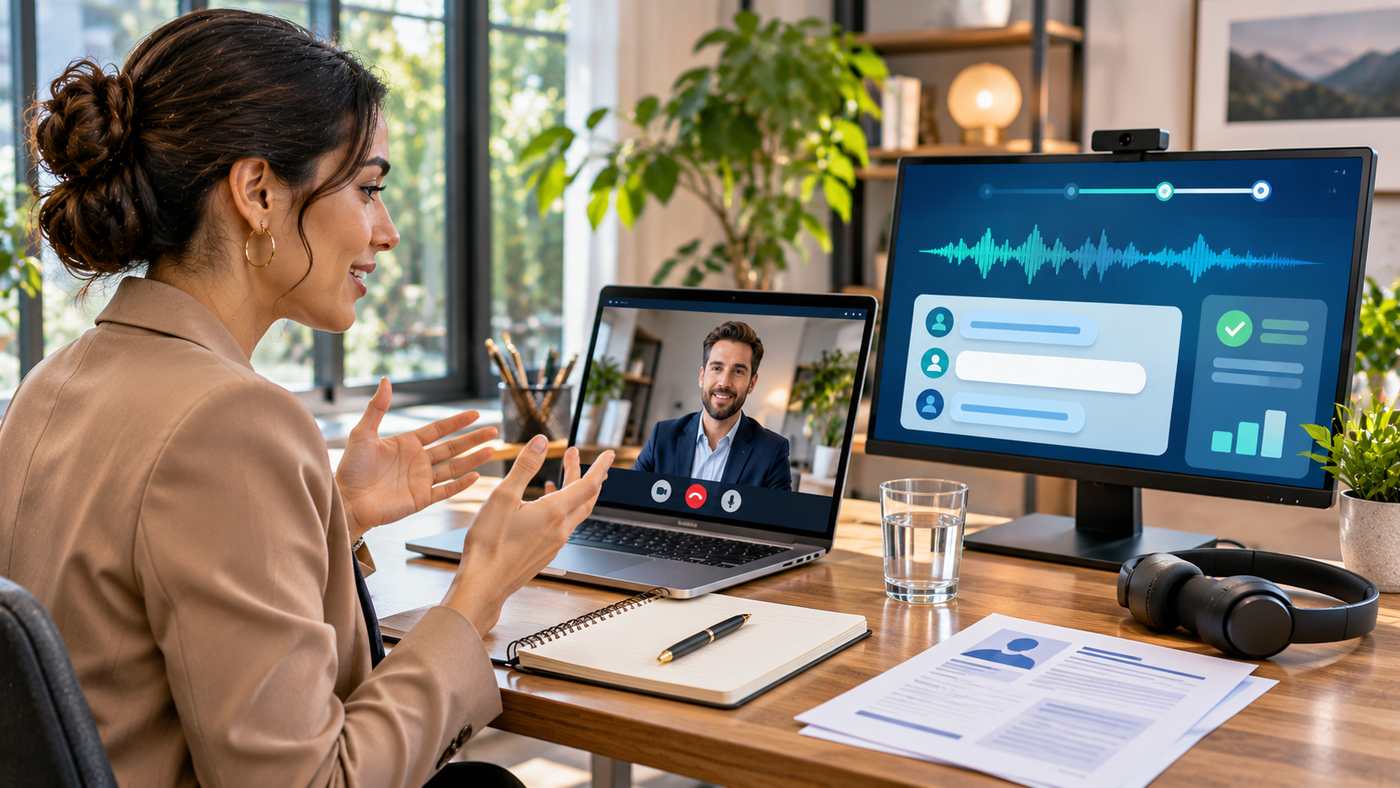
Preparing for a job interview can be challenging, especially when candidates face unfamiliar questions, competitive hiring processes, or technical assessments. Even experienced professionals sometimes struggle to explain their achievements clearly under pressure. Traditional interview preparation often involves reading sample questions, researching companies, and practicing answers with friends or career coaches. However, artificial intelligence is introducing more interactive ways to develop interview skills.
An AI Interview tool can help job seekers practice realistic conversations, organize their experience, identify weaknesses in their responses, and become more comfortable answering challenging questions.
Modern AI-powered platforms use technologies such as natural language processing, speech recognition, and generative AI to create simulated interviews and provide personalized suggestions.
For example, someone preparing for a software engineering position may practice technical explanations, while a marketing professional might rehearse questions about campaign performance, leadership, and business strategy.
These tools can make preparation more flexible because candidates do not necessarily need another person available to conduct every practice session.
However, effective interview preparation involves more than memorizing AI-generated answers. Employers want candidates who can explain their actual knowledge, demonstrate problem-solving skills, and communicate honestly about their experience.
AI assistance should strengthen those abilities rather than replace them.
This guide explains how AI interview technology works, seven practical ways to prepare more effectively, the features of modern interview platforms, and how to use these tools responsibly during the hiring process.
What Is an AI Interview?
An AI interview can refer to an interview-related process that uses artificial intelligence to support preparation, communication, assessment, or feedback.
The phrase covers several different applications.
Some platforms help candidates rehearse answers before meeting an employer.
Others assist recruiters with scheduling, screening, or analyzing interview information.
Certain tools provide live conversational support during permitted meetings, while automated assessment platforms may evaluate job-related responses according to their own processes.
Understanding the difference is important.
AI Interview Preparation Tools
Preparation tools help candidates practice before a real interview.
They may generate questions based on a job description, simulate an interviewer, record spoken responses, and suggest improvements.
For example, an AI system might ask a candidate to explain a difficult workplace decision.
After hearing the response, the system may suggest a clearer structure or identify information that was missing.
The objective is to help candidates practice communicating their existing skills.
AI Mock Interviews
A mock interview is a simulated conversation designed to resemble an actual interview.
AI mock interview tools may ask questions aloud and respond with follow-up questions.
This can provide a more interactive experience than reading a list of sample questions.
Candidates can use repeated sessions to become familiar with common interview formats.
Real-Time AI Interview Assistants
Some platforms provide suggestions during live conversations.
These systems may recognize spoken questions, retrieve information from uploaded documents, and generate possible responses.
However, live assistance during an employment interview is not always permitted.
Many employers require candidates to answer independently.
Applicants should obtain permission where necessary and comply with the employer’s assessment rules.
AI-Based Candidate Assessments
Employers may also use AI-supported assessment systems.
These can assist with reviewing structured responses or organizing hiring information.
However, candidates should not assume that every video interview is assessed through artificial intelligence.
Organizations remain responsible for using appropriate hiring methods and complying with relevant employment and privacy laws.
Why AI Interview Preparation Is Becoming Popular
Job seekers often face limited preparation time and uncertainty about the questions they will receive.
AI tools can provide convenient practice opportunities.
Flexible Practice Sessions
Traditional mock interviews usually require another person’s time.
AI tools can allow candidates to rehearse independently.
This can be useful for people preparing outside normal working hours.
Role-Specific Questions
Interview questions vary by profession.
A customer service candidate may need to demonstrate communication and conflict resolution.
A project manager may be asked about deadlines, stakeholders, and risk management.
AI tools can use job descriptions to generate more relevant practice questions.
Immediate Feedback
Some platforms review answers and suggest improvements.
For example, a response may lack a clear outcome or include unnecessary background information.
Feedback can help candidates identify these weaknesses.
However, automated assessments can be inaccurate or overly generic.
Human review remains valuable.
Reduced Preparation Anxiety
Repeated practice may help candidates become more familiar with interview situations.
A simulated conversation allows them to rehearse without the pressure of a real hiring decision.
Nevertheless, AI practice cannot guarantee confidence or a successful job offer.
Better Communication
Candidates may use AI tools to organize examples, shorten overly complicated explanations, and practice answering directly.
The best results come when the candidate retains ownership of the content.
7 Smart Ways to Use AI Interview Tools for Better Job Preparation
Artificial intelligence can support several stages of interview preparation.
The following seven methods focus on developing useful skills rather than depending on automated answers.
1. Practice Realistic Job Interview Questions
One of the most valuable applications of AI interview technology is generating questions relevant to a particular role.
Generic interview questions provide a starting point, but they may not reflect the responsibilities of a specific position.
Start With the Job Description
Review the responsibilities, qualifications, and skills mentioned in the job posting.
Identify the competencies the employer is likely to evaluate.
For example, a digital marketing position may involve search engine optimization, advertising campaigns, analytics, and client communication.
A suitable AI preparation tool can generate questions covering those areas.
Practice Behavioral Questions
Behavioral interview questions ask candidates to describe previous experiences.
Examples include:
- Tell me about a time you solved a difficult problem.
- Describe a situation where you worked under pressure.
- How did you handle disagreement with a colleague?
- Explain a project that did not achieve its original goals.
These questions provide opportunities to demonstrate real skills through past experiences.
Practice Technical Questions
Technical interviews may involve programming, data analysis, system design, engineering concepts, or other role-specific knowledge.
AI can help generate practice problems and discuss possible approaches.
However, candidates should independently verify technical explanations.
AI systems sometimes produce convincing but incorrect answers.
Use Follow-Up Questions
A realistic interviewer may ask for clarification.
For example, after hearing about a successful project, the interviewer might ask what the candidate personally contributed.
Practicing follow-up questions helps candidates explain their experience in greater depth.
2. Structure Answers With the STAR Method
Many candidates understand their professional experience but struggle to present it clearly.
The STAR method provides a practical framework for organizing behavioral interview responses.
STAR stands for Situation, Task, Action, and Result.
Situation
Describe the relevant background.
Keep the explanation focused on the circumstances necessary to understand the example.
Task
Explain your responsibility or the challenge you needed to address.
Action
Describe what you actually did.
This is often the most important part because it demonstrates your contribution.
Result
Explain what happened and what you learned.
Where available, use accurate measurements.
For example, a marketing professional may describe improving a campaign’s conversion rate.
However, candidates should never invent figures merely to make an answer sound stronger.
Example STAR Answer
Consider a hypothetical project manager asked to explain how they handled a missed deadline.
Situation: A client project encountered delays because an external supplier delivered important materials late.
Task: The project manager needed to revise the schedule while protecting critical deliverables.
Action: They identified affected tasks, coordinated with the team, and communicated revised milestones to the client.
Result: The team completed the most important deliverables under the revised plan and documented improvements for future supplier coordination.
This example demonstrates a clear sequence without unnecessarily complicated language.
How AI Can Help
A candidate can provide a genuine workplace experience and ask an AI tool to suggest a clearer STAR structure.
The tool should organize the story rather than invent achievements or responsibilities.
3. Build Confidence With AI Mock Interviews
Practicing aloud is different from silently reading prepared answers.
Candidates may discover that explanations become less clear when spoken under time pressure.
AI mock interviews can help address this problem.
Simulate a Real Conversation
A mock interview platform may ask questions using synthesized speech.
The candidate responds using a microphone.
The system may then ask relevant follow-up questions.
This creates a conversational learning experience.
Practice Different Interview Formats
Candidates can rehearse screening interviews, technical discussions, behavioral interviews, or role-specific scenarios.
For example, a sales candidate could practice describing how they handled a difficult customer negotiation.
Review Your Responses
Some tools provide transcripts after practice sessions.
Reading a transcript can reveal repeated phrases, incomplete explanations, or answers that wander away from the question.
Improve Through Repetition
Repeat difficult questions after reviewing feedback.
Compare whether the revised explanation is clearer and more accurate.
The goal is not to deliver a memorized script perfectly.
It is to become comfortable explaining real experience.
Practice Without Over-Relying on Suggestions
Candidates should gradually practice answering without looking at generated prompts.
This helps build independent recall and communication.
4. Research the Employer and Understand the Role
Preparation is more effective when candidates understand the organization they want to join.
AI can help organize research, but it should not replace reliable sources.
Review the Official Website
Start by understanding the company’s products, services, customers, and business model.
Read the role description carefully.
Explore Recent Company Developments
Depending on the position, relevant news may include product announcements, acquisitions, organizational changes, or industry developments.
Use reputable sources and verify important claims.
Identify Relevant Skills
Compare the role’s requirements with your experience.
Identify areas where you have strong examples.
Also note topics that require additional preparation.
Prepare Thoughtful Questions
Employers often give candidates an opportunity to ask questions.
Examples include asking about the team’s current priorities, how success is measured, or what challenges the successful candidate will address.
Thoughtful questions demonstrate genuine interest.
Avoid Generic Company Research
Simply memorizing the employer’s mission statement is rarely enough.
Try to understand how the business operates and how the proposed role contributes to its objectives.
5. Improve Communication and Answer Clarity
Professional interviews assess more than technical knowledge.
Candidates also need to explain their ideas clearly.
Answer the Question Directly
Begin with the main point.
Add supporting details after establishing the answer.
Long introductions can make it difficult for interviewers to follow the response.
Use Specific Examples
Claims such as “I am a strong leader” become more useful when supported by a genuine example.
Describe what you did and how you approached the situation.
Avoid Excessive Jargon
Technical terminology may be appropriate when discussing specialized work.
However, explanations should match the interviewer’s background.
A recruiter and a senior engineer may require different levels of detail.
Practice Appropriate Answer Length
Some questions require brief explanations.
Others need a detailed discussion.
AI practice can help candidates recognize when an answer is too short or unnecessarily lengthy.
Improve Speaking Pace
Speaking too quickly may reduce clarity.
Practice using a comfortable pace and taking brief pauses when necessary.
A thoughtful pause is better than responding immediately with an inaccurate answer.
Remain Authentic
Interview preparation should help candidates communicate naturally.
Overly polished scripts can make a conversation sound rehearsed.
The strongest answers generally reflect genuine understanding.
6. Use AI to Prepare for Technical and Role-Specific Interviews
Technical interviews require candidates to explain how they approach problems.
Memorizing a correct answer may be less useful than understanding the reasoning.
Software Engineering Interviews
Developers may practice algorithms, debugging, data structures, and system design.
AI can generate practice problems and explain alternative approaches.
Candidates should test code and verify technical accuracy.
Data Analytics Interviews
Data professionals may practice SQL questions, statistical concepts, dashboard interpretation, and business analysis scenarios.
AI can help structure practice activities.
Marketing Interviews
Digital marketing professionals may rehearse questions about SEO, paid advertising, analytics, conversion optimization, and campaign reporting.
For example, a candidate could practice explaining how they would investigate declining organic traffic.
Project Management Interviews
Project managers may be asked about scheduling, stakeholder communication, project risks, and resource allocation.
AI-generated scenarios can support preparation.
Customer Support Interviews
Customer service candidates may practice resolving complaints, explaining policies, and communicating with frustrated customers.
Role-playing can help candidates develop clearer responses.
Check the Accuracy of Technical Advice
Generative AI can make mistakes.
Important concepts should be verified through reliable documentation, professional references, and practical testing.
7. Review Feedback and Build a Personalized Improvement Plan
A single mock interview may reveal useful information, but improvement usually requires continued practice.
Identify Recurring Weaknesses
Review whether you frequently provide vague results, skip important details, or struggle with certain question types.
Prioritize High-Impact Skills
Focus on the problems most likely to affect your interview.
For example, someone with strong technical skills may benefit more from improving communication than from practicing additional basic coding questions.
Create a Practice Schedule
Set aside manageable periods for preparation.
A short focused session may be more effective than attempting to memorize dozens of answers in one sitting.
Record Progress
Keep notes about the questions practiced and improvements made.
For example, track whether your behavioral answers now include clearer descriptions of your responsibilities.
Seek Human Feedback
AI feedback can be useful, but career coaches, mentors, or experienced colleagues may recognize issues automated systems overlook.
Combining different sources of feedback can provide a more complete understanding.
How ParakeetAI Supports AI Interview Preparation
Job seekers interested in an AI Interview platform can explore ParakeetAI, a service offering mock interviews, resume tools, and real-time conversational assistance.
The platform is designed for interview preparation and selected professional conversations.
Its published features include spoken mock interviews, AI-generated response suggestions, transcript review, document-supported assistance, and technical question support.
AI Mock Interview Practice
ParakeetAI allows users to participate in simulated interviews with an AI interviewer.
The system can ask questions aloud and respond to the candidate’s answers.
Users can review their transcripts afterward.
According to the provider, the first mock interview is available free of charge.
Resume Preparation
ParakeetAI offers a resume maker that can help users organize their professional information for a particular role.
Candidates should verify that every qualification, achievement, and employment detail remains accurate.
Real-Time Conversational Assistance
The platform also advertises live question recognition and suggested responses during supported conversations.
It supports scenarios such as meetings and other professional discussions.
However, job candidates should not assume that using an AI assistant during a real employment interview is permitted.
ParakeetAI’s own terms require users to comply with applicable rules and prohibit deceptive or unauthorized assistance.
Coding Support
ParakeetAI describes features for discussing technical questions and coding problems.
These capabilities may be useful during permitted practice sessions.
Candidates should still develop the ability to explain solutions independently.
Document-Based Context
The platform allows users to provide resumes, instructions, and relevant documents.
This can help the AI generate responses connected to supplied information.
However, users should avoid uploading confidential employer documents or sensitive personal information without an appropriate basis.
Interview Transcripts and Notes
ParakeetAI can generate transcripts and notes from supported sessions.
Reviewing these materials can help users identify recurring weaknesses.
Users should understand the platform’s recording and data-handling policies before sharing conversation content.
Pricing and Availability
ParakeetAI advertises subscription plans and credit-based options.
Its pricing page lists separate arrangements for live sessions, mock interviews, and preparation tools.
Prices may vary by plan, currency, and promotional conditions.
Prospective users should review the current pricing page before purchasing.
Can You Use AI During a Real Job Interview?
This is one of the most important questions candidates should consider.
The answer depends on the employer’s instructions, the interview format, and applicable rules.
Preparation Is Generally Different From Live Assistance
Many employers allow candidates to use AI for research, practice, and resume review before interviews.
However, some employers prohibit AI-generated answers or external assistance during the actual assessment.
For example, Deloitte’s published recruiting guidance allows AI preparation but prohibits AI assistance during its interviews unless explicitly authorized.
LinkedIn’s hiring guidance similarly states that candidates should not use AI during live interviews unless the recruiting team has specifically permitted it.
Always Check the Employer’s Policy
If instructions prohibit outside assistance, do not use a live AI answer generator.
A tool’s ability to operate discreetly does not establish that its use is allowed.
Be Transparent When Required
If the employer allows certain AI tools, follow the permitted scope.
For example, a take-home exercise may allow AI-supported research while requiring candidates to explain their own work.
Different employers use different rules.
Protect Interview Integrity
Hiring assessments are intended to help employers understand candidates’ actual capabilities.
Presenting generated answers as independent work when prohibited can undermine that purpose.
Candidates are better served by using AI to develop genuine skills before the interview.
Privacy and Security Considerations for AI Interview Tools
AI interview preparation may involve uploading resumes, recording speech, and processing personal information.
Before selecting a platform, users should review its privacy practices.
Understand What Information Is Collected
A resume may contain contact information, employment history, education, and other personal details.
Interview recordings may also reveal professional experiences or sensitive information.
Review Third-Party Processing
Some AI services rely on external providers for speech recognition, model processing, or document retrieval.
ParakeetAI’s privacy policy describes such processing arrangements for different features.
Users should understand which information may be transmitted to service providers.
Avoid Sharing Confidential Documents
Do not upload proprietary code, confidential client records, or documents covered by nondisclosure agreements without appropriate authorization.
Check Recording Consent
Recording a conversation may require notice or consent depending on the location and participants.
The fact that an AI tool supports recording does not automatically make every recording lawful.
Understand Data Retention
Review whether transcripts can be deleted, how long information may be stored, and what privacy controls are available.
Security and privacy should be part of the evaluation process.
AI Interview Preparation vs. Traditional Mock Interviews
AI practice and traditional mock interviews offer different benefits.
Advantages of AI Practice
AI tools can provide flexible scheduling, repeated questions, and automated suggestions.
They may be useful for rehearsing frequently asked questions.
Advantages of Human Mock Interviews
A career coach or experienced professional may provide more nuanced feedback about communication, industry expectations, and interpersonal dynamics.
Human reviewers can also challenge assumptions based on real experience.
Why Combining Both Can Help
A candidate might use AI for repeated daily practice and schedule one or two human mock interviews before the actual assessment.
This combines convenience with more contextual feedback.
The most appropriate approach depends on the role and available resources.
A Practical Seven-Day AI Interview Preparation Plan
Candidates can organize their preparation over one week.
Day 1: Review the Job Description
Identify required skills, responsibilities, and important qualifications.
Create a list of relevant experiences.
Day 2: Prepare Behavioral Examples
Select several genuine workplace situations.
Organize them using the STAR method.
Day 3: Practice Common Questions
Complete an AI mock interview covering introductory and behavioral questions.
Review the transcript afterward.
Day 4: Focus on Technical Skills
Practice questions relevant to the target position.
Verify technical explanations independently.
Day 5: Improve Weak Answers
Return to the questions that caused difficulty.
Work on clarity, structure, and specific examples.
Day 6: Complete a Full Mock Interview
Rehearse a realistic conversation with limited interruptions.
Practice answering naturally without depending on displayed suggestions.
Day 7: Review and Rest
Summarize important achievements, prepare questions for the employer, and check practical interview arrangements.
Avoid excessive last-minute memorization.
Common AI Interview Preparation Mistakes to Avoid
AI can help candidates prepare, but certain habits may reduce its value.
Memorizing Generated Answers
Generic responses may sound polished without reflecting real experience.
Use actual examples.
Inventing Achievements
AI-generated numbers and accomplishments should never be presented as personal facts.
All claims should be truthful.
Ignoring Technical Errors
AI may provide inaccurate code or explanations.
Verify important information.
Depending on Live Prompts Without Permission
Using unauthorized AI assistance during an assessment can violate employer policies.
Prepare independently instead.
Uploading Sensitive Information
Avoid sharing confidential material or unnecessary personal data.
Practicing Without Reviewing Feedback
Repeating the same mistakes provides limited value.
Identify specific improvements.
Expecting Guaranteed Hiring Results
No interview tool can guarantee a job offer.
Hiring decisions depend on qualifications, performance, competition, and employer requirements.
How to Choose the Right AI Interview Platform
Before subscribing to a platform, evaluate its suitability.
Relevant Interview Formats
Does the tool support the kinds of questions you expect?
Interactive Mock Interviews
Can it conduct spoken conversations and ask follow-up questions?
Useful Feedback
Does it provide specific, understandable suggestions rather than generic encouragement?
Technical Practice
Does it support the relevant professional knowledge and question types?
Privacy Controls
Can users review data processing terms and manage stored information?
Pricing
Are free trials, credits, renewal arrangements, and cancellation terms clearly explained?
Responsible Use
Does the provider explain how to use the software in accordance with employer rules?
The most useful tool is one that improves your independent abilities rather than simply supplying impressive-looking answers.
The Future of AI Interview Technology
AI interview technology is likely to continue evolving as speech recognition, language models, and workplace software improve.
More Conversational Practice
Future systems may provide increasingly natural follow-up questions and interactive interview scenarios.
Improved Role Personalization
Tools may better adapt practice material to job descriptions and relevant skills.
Expanded Technical Coaching
Candidates may receive more detailed explanations of programming, data analysis, and other specialized topics.
Greater Attention to Privacy
As interview tools process personal and conversational data, transparency and responsible handling remain important.
Clearer Employer Rules
Organizations are publishing more explicit guidance concerning AI use during recruitment.
Candidates will need to distinguish permitted preparation from prohibited assistance.
Continued Importance of Human Skills
Communication, professional judgment, honesty, and relevant experience remain central to successful interviews.
Technology can support preparation, but candidates must ultimately demonstrate their own capabilities.
Frequently Asked Questions
1. What is an AI Interview tool?
An AI Interview tool uses artificial intelligence to support interview preparation, simulate questions, provide feedback, or assist with certain conversations where permitted.
2. Can AI help me prepare for a job interview?
Yes. AI can generate practice questions, conduct mock interviews, organize real experiences, and suggest improvements to answers. Important information should still be verified.
3. Does ParakeetAI offer mock interviews?
Yes. ParakeetAI provides spoken AI mock interviews, follow-up questions, and transcripts. It also offers resume tools and other conversational assistance features.
4. Is using AI during a live job interview allowed?
It depends on the employer’s rules. Some organizations prohibit live AI assistance. Candidates should check the instructions and use such tools only when explicitly permitted.
Conclusion
AI Interview technology can make job preparation more interactive, flexible, and focused. Mock interviews, role-specific questions, transcript analysis, and structured feedback can help candidates explain their experience more effectively.
However, AI should strengthen genuine communication skills rather than replace independent thinking. By practicing honestly, verifying information, protecting privacy, and respecting employer rules, job seekers can use AI preparation tools to approach interviews with greater confidence.
