
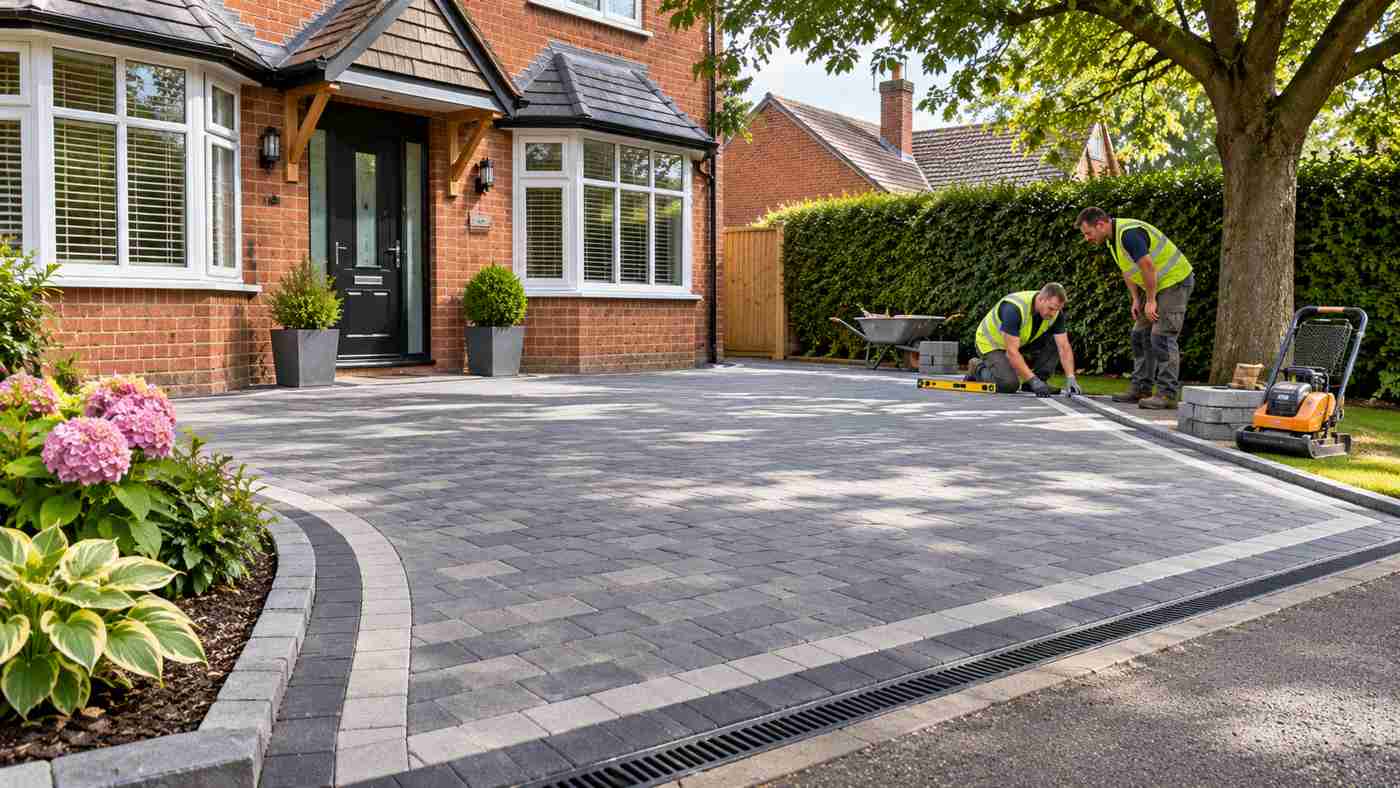
A well-designed driveway does more than provide somewhere to park a vehicle. It improves the appearance of a property, creates a practical entrance, and can contribute to the overall impression visitors and potential buyers have of a home.
For homeowners considering an outdoor renovation, choosing the right driveway material and installation contractor is an important decision. A professionally constructed driveway should provide a stable surface, suitable drainage, and a finish that complements the property.
However, not every driveway installation delivers the same results. Poor ground preparation, unsuitable materials, and inadequate drainage can lead to sinking surfaces, standing water, cracking, and unnecessary maintenance expenses.
This is why finding a reliable Whitchurch Driveway Company matters.
Whether you are replacing an aging driveway, improving an existing entrance, or creating additional parking space, an experienced contractor can help you understand the available materials and installation requirements.
This guide explores popular driveway surfaces, installation methods, maintenance considerations, and seven practical tips for choosing a professional driveway contractor in Whitchurch.
Why Choose a Professional Whitchurch Driveway Company?
Installing a driveway requires more than laying paving blocks or spreading a decorative surface.
A successful project involves evaluating the existing ground, preparing a suitable foundation, installing appropriate drainage, and selecting materials capable of handling the expected vehicle loads.
Professional driveway contractors understand how these elements work together.
For example, a driveway with attractive block paving may still develop uneven areas if the underlying sub-base is not adequately prepared.
Similarly, a smooth tarmac driveway can experience surface water problems when drainage has not been properly considered.
An experienced contractor can assess the property’s requirements and recommend a suitable construction approach.
Homeowners researching a Whitchurch Driveway Company can explore Keble Heath’s local service information when considering professional driveway installation and surfacing options.
The important consideration is selecting a contractor whose skills, proposed materials, and installation methods match the actual project.
Understanding Local Driveway Requirements
Properties in Whitchurch may have different driveway requirements depending on their age, entrance layout, ground conditions, and available parking space.
Older properties may benefit from traditional paving designs that complement their architecture.
Modern homes may suit contemporary resin bound or neatly bordered block paving surfaces.
However, appearance should not be the only consideration.
Ground stability, drainage, access, and expected vehicle usage are equally important.
Popular Driveway Types for Homes in Whitchurch
Different driveway surfaces offer different advantages.
Understanding their characteristics can help homeowners make an informed choice.
1. Block Paving Driveways
Block paving is a popular option for residential driveways because it provides design flexibility and a structured appearance.
Individual paving blocks can be arranged in different patterns, including herringbone and other decorative layouts.
Homeowners can choose from various colours, textures, and border styles.
Benefits of Block Paving
Block paving offers several practical advantages.
Individual damaged blocks can often be lifted and replaced without removing the entire driveway.
The surface also allows homeowners to create decorative patterns that complement their property.
However, standard block paving should not automatically be considered permeable.
A properly designed permeable block paving system uses appropriate blocks, joints, bedding, and sub-base construction.
2. Resin Bound Driveways
Resin bound surfacing combines selected aggregates with a resin binder to create a decorative surface.
It is commonly chosen for its relatively smooth appearance and range of available aggregate colours.
A correctly specified permeable resin bound system can allow rainwater to pass through the surface.
However, drainage performance depends on the complete construction, including the supporting base.
Why Homeowners Choose Resin Bound Surfacing
Resin bound driveways can create a contemporary finish suitable for many residential properties.
Their smooth appearance may work well with modern landscaping.
They can also offer practical everyday maintenance benefits.
Installation quality is important because unsuitable weather conditions, incorrect mixing, or poor substrate preparation can affect the finished surface.
3. Tarmac Driveways
Tarmac is a practical option for homeowners seeking a relatively simple and durable driveway surface.
It is frequently used for residential entrances, parking areas, and access roads.
A properly installed asphalt-based surface can withstand regular vehicle movement when supported by a suitable foundation.
Advantages of Tarmac
Tarmac provides a continuous surface that can be suitable for larger driveways.
It also works well with decorative block borders.
However, conventional tarmac is generally impermeable.
Appropriate drainage must therefore be included when required.
4. Gravel Driveways
Gravel is a traditional driveway material that can complement rural and period properties.
It offers a natural appearance and is available in different colours and aggregate sizes.
Depending on the construction and underlying ground conditions, gravel can support rainwater infiltration.
Important Gravel Driveway Considerations
Gravel surfaces require appropriate edging and a stable foundation.
Loose aggregate may move under vehicle tyres, particularly on sloping driveways.
Some installations benefit from gravel stabilization grids.
Regular maintenance may include redistributing aggregate, controlling weeds, and topping up material where necessary.
5. Pattern Imprinted Concrete
Pattern imprinted concrete is created by adding colour and texture to a concrete surface.
It can be designed to resemble stone, paving, or other decorative materials.
This type of driveway provides a continuous hard surface with a range of visual finishes.
However, conventional concrete does not provide natural permeability.
Surface drainage, expansion considerations, and maintenance requirements should be assessed before installation.
7 Smart Tips for Choosing a Whitchurch Driveway Company
Choosing the right contractor can make a significant difference to the quality and longevity of a driveway.
The following tips can help homeowners compare professional services.
1. Check Previous Driveway Installation Experience
Experience is an important factor when selecting a contractor.
Different driveway materials require different equipment, installation techniques, and preparation methods.
For example, block paving involves careful sub-base preparation, bedding, alignment, and jointing.
Resin bound surfacing requires appropriate material mixing and installation conditions.
Ask potential contractors whether they regularly complete projects using your preferred surface.
Review Previous Projects
Request photographs of completed installations.
Pay attention to paving alignment, edging, surface consistency, and drainage details.
Where possible, ask whether references from previous customers are available.
A professional portfolio can help demonstrate relevant experience, although it should not replace other checks.
2. Request a Detailed Written Quotation
A written quotation helps homeowners understand what they are paying for.
Rather than accepting a single price without explanation, ask for an itemised description of the proposed work.
The quotation should clarify the driveway area, materials, excavation requirements, sub-base preparation, drainage arrangements, and finishing details.
Compare More Than the Total Price
A lower quotation may exclude important work.
For example, one contractor might include removal of the existing driveway, while another assumes the existing foundation can remain.
These proposals are not directly comparable.
Review the construction details before deciding which option offers better value.
3. Understand Ground Preparation Requirements
A driveway is only as reliable as the foundation supporting it.
The preparation stage may involve removing existing materials, excavating unsuitable ground, and installing a compacted sub-base.
The required construction depth depends on soil conditions, surface type, and expected loads.
Why the Sub-Base Matters
A properly prepared sub-base distributes vehicle loads and supports the finished driveway.
Insufficient preparation can contribute to sinking, deformation, and uneven paving.
Ask the contractor how the existing ground will be assessed and which foundation materials will be used.
The design should be appropriate for the chosen surface and expected vehicle use.
4. Prioritise Proper Driveway Drainage
Drainage is one of the most important parts of driveway construction.
Rainwater needs a suitable route away from buildings and areas where standing water could create problems.
Poor drainage can contribute to puddles, surface damage, and water entering unwanted locations.
Consider Permeable Driveway Solutions
Permeable surfaces allow water to pass through the surface into an appropriately designed drainage system.
Options may include permeable block paving, suitable resin bound systems, gravel, and porous asphalt.
However, a surface being described as permeable does not guarantee that the complete driveway meets drainage requirements.
Ground conditions, sub-base design, and the destination of collected water must also be considered.
5. Check Materials and Installation Standards
Quality materials are important, but correct installation is equally essential.
Ask contractors about the materials they intend to use and whether the products are suitable for the proposed application.
For block paving, consider block specifications, laying patterns, and edge restraints.
For resin bound surfaces, confirm the proposed aggregate, resin system, substrate, and installation conditions.
For tarmac, ask about the proposed surface construction and suitability for residential vehicle use.
Request Clear Product Information
Professional contractors should be able to explain why they recommend a particular material.
They should also discuss maintenance requirements and any relevant product limitations.
Avoid selecting materials solely because they are advertised as maintenance-free.
All driveway surfaces require some level of care.
6. Verify Insurance and Workmanship Arrangements
Before hiring a contractor, ask about relevant insurance coverage.
Public liability insurance is especially important where construction work could cause damage or injury.
Homeowners should also understand who will perform the work and whether subcontractors are involved.
Understand Guarantees
Some contractors offer workmanship guarantees or manufacturer-backed product warranties.
However, terms and coverage can vary.
Ask which defects are covered, how long the protection lasts, and whether exclusions apply.
Obtain relevant warranty information in writing.
A guarantee is useful only when its terms are clear and the responsible business can be contacted if an issue arises.
7. Choose a Contractor Who Communicates Clearly
Good communication helps prevent misunderstandings throughout the project.
A contractor should explain the proposed work, likely disruption, installation sequence, and expected completion arrangements.
Unexpected problems can occur during excavation, particularly when existing ground conditions are unknown.
A professional contractor should explain how additional work or costs will be discussed and approved.
Clear communication supports a more predictable renovation experience.
What Happens During Professional Driveway Installation?
Although the details vary by surface type, most driveway projects follow a similar process.
Initial Site Assessment
The contractor examines the existing driveway and surrounding property.
This may include measuring the installation area, checking access, assessing ground conditions, and identifying potential drainage issues.
Design and Material Selection
The homeowner and contractor discuss available finishes, colours, edging, and practical requirements.
The proposed design should complement the property while supporting safe vehicle access.
Excavation and Ground Preparation
Existing surfacing may be removed where necessary.
The ground is then prepared for the selected foundation system.
Suitable sub-base materials are installed and compacted according to the design.
Edging and Drainage Installation
Edge restraints help support certain driveway surfaces.
Drainage channels, permeable construction layers, or other drainage measures may also be installed.
The precise requirements depend on the project.
Surface Installation
The chosen driveway material is installed using the appropriate construction method.
For block paving, this involves laying and finishing individual blocks.
For resin bound systems, prepared aggregate and resin are applied under suitable conditions.
Tarmac and concrete require different processes.
Final Inspection and Handover
The completed surface should be inspected for visible defects, finishing quality, and drainage arrangements.
The contractor should explain any curing or waiting period before vehicles can use the driveway.
Maintenance recommendations should also be provided.
How Much Does a New Driveway Cost in Whitchurch?
Driveway installation costs depend on several factors.
These include the size of the area, chosen materials, existing ground conditions, access restrictions, drainage requirements, and necessary excavation.
For example, installing a new driveway over an unsuitable existing foundation may require more preparation than replacing a surface where the underlying construction remains serviceable.
Decorative borders, steps, retaining structures, and additional landscaping may also affect the total price.
Factors That Influence Driveway Pricing
The main cost considerations include:
- Total driveway area
- Selected surface material
- Existing surface removal
- Excavation and waste disposal
- Sub-base construction
- Drainage design
- Decorative edging
- Accessibility and equipment requirements
- Labour and finishing work
Homeowners should request written quotations based on a site assessment rather than relying solely on general online price estimates.
A properly specified installation is often a better investment than a cheaper proposal that omits essential preparation.
Do You Need Planning Permission for a Driveway in Whitchurch?
Planning requirements are an important consideration when replacing or installing a driveway in England.
For many houses, a new or replacement front driveway using permeable surfacing does not require planning permission solely because of the surfacing.
A driveway can also qualify where rainwater from an impermeable surface is directed to a suitable lawn or border to drain naturally.
However, if more than five square metres of front garden are covered with traditional impermeable surfacing and the runoff is not directed to a permeable area, planning permission will generally be required.
Other restrictions may apply.
For example, listed buildings, conservation considerations, planning conditions, and changes to highway access can create additional requirements.
If the project involves creating or altering a vehicle crossing over a public footway, separate highway permission may be necessary.
Homeowners should confirm requirements with the relevant local planning and highways authorities before starting work.
How to Maintain Your New Driveway
Regular maintenance can help preserve the appearance and performance of a driveway.
Block Paving Maintenance
Sweep away leaves and debris.
Remove weeds when necessary and inspect joints for loss of material.
Individual damaged blocks may be repairable.
Resin Bound Driveway Maintenance
Keep the surface free from leaves and accumulated dirt.
Follow the manufacturer’s cleaning recommendations and avoid unsuitable chemicals or aggressive cleaning methods.
Tarmac Driveway Maintenance
Inspect the surface for cracks, depressions, and drainage problems.
Addressing damage early may help prevent more extensive repairs.
Gravel Driveway Maintenance
Redistribute loose aggregate when required.
Maintain edges and remove unwanted vegetation.
Additional gravel may occasionally be necessary.
Drainage Maintenance
Keep surface drainage channels clear.
Permeable surfaces should be maintained in a way that prevents sediment from blocking the drainage system.
Avoid allowing excessive soil or garden debris to collect on permeable paving.
Signs Your Existing Driveway Needs Repair or Replacement
An aging driveway may develop several problems.
Visible cracking, loose paving blocks, potholes, and sinking areas can indicate deterioration.
Standing water may reveal drainage or surface-level issues.
Some problems can be addressed through repairs.
For example, a small damaged section of block paving may be replaced without reconstructing the entire driveway.
However, widespread settlement or repeated surface failure may indicate problems with the underlying foundation.
A qualified contractor can assess whether targeted repairs or full replacement would be more appropriate.
How a New Driveway Can Improve Property Appearance
The entrance to a property plays an important role in its overall presentation.
A worn or uneven driveway can make an otherwise attractive home appear neglected.
Replacing the surface can create a cleaner and more coordinated exterior.
For traditional properties, carefully chosen paving colours may complement existing brickwork or stone features.
Modern homes may benefit from simple patterns, subtle borders, and contemporary finishes.
Landscaping can also improve the result.
Planting beds, suitable lighting, and well-designed edging help integrate the driveway with the surrounding garden.
However, homeowners should balance visual design with practicality.
A driveway should provide comfortable vehicle access and sufficient space for everyday use.
Common Driveway Installation Mistakes to Avoid
Several mistakes can reduce the long-term performance of a driveway.
One is choosing a surface based entirely on appearance.
Materials should also be suitable for vehicle loads, ground conditions, and maintenance expectations.
Another mistake is overlooking drainage.
Standing water can create ongoing problems and may require expensive corrections.
Poor sub-base preparation is also a common concern.
Even high-quality paving materials can fail when installed on an inadequate foundation.
Homeowners should also avoid accepting unclear quotations or making substantial payments without understanding the agreed terms.
Finally, changing the design during installation without discussing additional costs can lead to disagreements.
Clear planning before construction helps reduce these risks.
Frequently Asked Questions
1. How do I choose a reliable Whitchurch Driveway Company?
Check relevant experience, previous projects, insurance, written quotations, drainage knowledge, and workmanship terms. Choose a contractor who explains the construction process clearly.
2. Which driveway material is best for a UK home?
The best material depends on budget, appearance, ground conditions, drainage needs, and expected vehicle use. Block paving, resin bound, tarmac, and gravel all offer different advantages.
3. How long does a new driveway take to install?
Installation time varies according to driveway size, ground preparation, surface type, weather conditions, and curing requirements. Ask the contractor for a project-specific schedule.
4. Do I need planning permission for a driveway in Whitchurch?
Not always. Permeable front driveways, or appropriately drained impermeable surfaces, may qualify as permitted development for houses. Additional restrictions and highway permissions can apply.
Conclusion
Choosing a reliable Whitchurch Driveway Company is an important step towards creating an attractive, practical, and durable driveway.
From block paving and resin bound surfacing to tarmac and gravel, the right material depends on your property’s appearance, drainage requirements, and everyday use.
By comparing experienced contractors, reviewing detailed quotations, and prioritising proper ground preparation, homeowners can make more informed decisions and invest in driveway improvements designed for long-term performance.
