
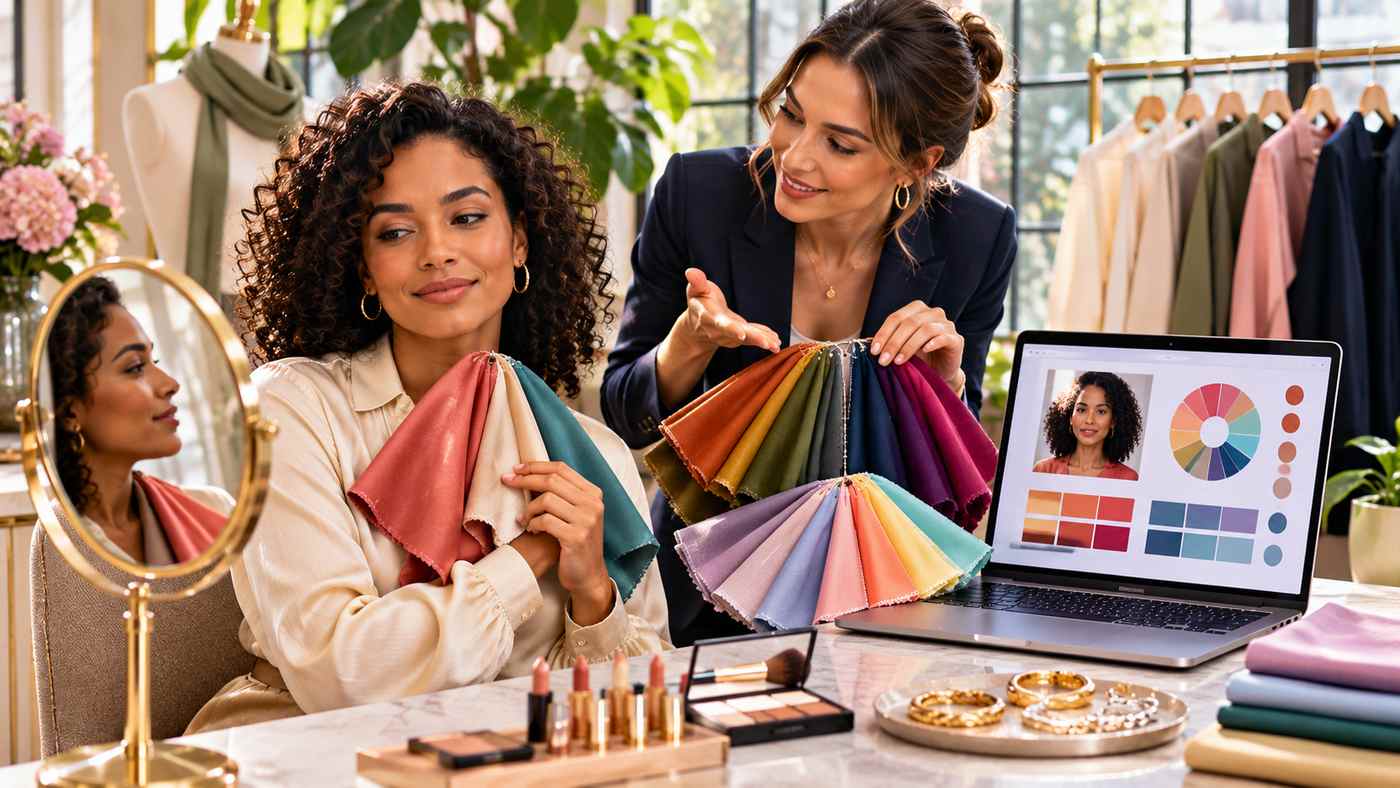
Choosing the right clothing colors can make getting dressed feel easier and help create a more coordinated personal style. However, with so many shades, fashion trends, and makeup products available, determining which colors work well together can sometimes feel confusing.
AI Color Analysis offers a modern approach to personal styling by using artificial intelligence to evaluate photographs and suggest color palettes based on visible characteristics such as skin appearance, hair color, eye color, and facial contrast.
Instead of relying entirely on trial and error, users can explore suggested seasonal palettes and visualize how different shades may look with their existing features.
Modern AI styling platforms also offer virtual makeup testing, hair color simulations, outfit recommendations, and downloadable color guides.
However, AI-based color analysis is not a perfect measurement of personal appearance. Lighting, camera processing, makeup, and individual preferences can influence the results.
This guide explains how AI color analysis works, what the AIColorAnalysis.ai platform offers, seven practical ways to improve results, and how to use seasonal color recommendations without limiting your personal style.
What Is AI Color Analysis?
AI color analysis is a digital styling technique that uses artificial intelligence to examine visual characteristics in a photograph and recommend complementary color combinations.
The software may evaluate the apparent warmth or coolness of skin, the contrast between facial features, and the overall lightness or depth of someone’s coloring.
It then uses a color-classification framework to suggest clothing, makeup, and accessory shades.
For example, someone whose photograph appears to have warm coloring and relatively soft contrast may receive suggestions involving earthy greens, muted peach, warm beige, or similar tones.
Another person may receive recommendations involving deeper jewel tones or cooler shades.
These suggestions are based on the model’s visual interpretation and the color system used by the service.
They are best understood as styling guidance rather than objective rules about what someone must wear.
How Does AI Personal Color Analysis Work?
The process generally begins with a facial photograph.
The software examines visible color relationships and estimates characteristics such as undertone, value, and contrast.
It then assigns the image to a seasonal color category or subtype.
The resulting report may include a selection of suggested colors, makeup recommendations, hair color ideas, and shades to experiment with less frequently.
Some platforms also create simulated previews showing different clothing or makeup colors on the uploaded photograph.
However, the quality of the input image strongly affects the analysis.
A face photographed under yellow indoor lighting may appear warmer than it does in neutral daylight.
This is one reason results should be treated as a starting point for experimentation.
Understanding the Four Seasonal Color Families
Seasonal color analysis traditionally organizes color combinations into four broad categories: Spring, Summer, Autumn, and Winter.
These categories use different combinations of warmth, brightness, softness, and depth.
They are styling conventions rather than medical or biological classifications.
Spring Color Palette
Spring palettes are commonly associated with warm, fresh, and relatively bright shades.
Typical examples include peach, coral, warm yellow, light turquoise, and fresh green.
These colors are often combined with warm neutrals such as ivory and light beige.
Spring-inspired styling can create a lively appearance without requiring dark or heavily muted colors.
Summer Color Palette
Summer palettes generally emphasize cooler, softer shades.
Common examples include dusty rose, lavender, powder blue, muted teal, and cool gray.
These combinations often create a gentle, understated visual effect.
People who enjoy soft pastels and muted clothing may find summer palettes useful for creating coordinated outfits.
Autumn Color Palette
Autumn palettes are commonly associated with warm, earthy colors.
Examples include olive green, terracotta, rust, camel, mustard, and chocolate brown.
These shades can work together to create rich, natural-looking combinations.
Autumn-inspired wardrobes often incorporate textured fabrics and warm neutral accessories.
Winter Color Palette
Winter palettes typically emphasize cooler, clearer, or more contrasting shades.
Examples include cobalt blue, emerald green, vivid red, black, bright white, and selected jewel tones.
These combinations can create strong visual contrast.
However, the season labels should not restrict someone from wearing a color they enjoy.
Personal style remains a matter of choice.
What Is 16-Season Color Analysis?
Some modern styling systems go beyond the traditional four seasons by dividing them into smaller categories.
The AIColorAnalysis.ai website publishes guidance based on a 16-season framework.
This model considers three broad visual dimensions.
Undertone
Undertone refers to the perceived warmth, coolness, or neutrality of someone’s underlying skin coloring.
It is different from the skin’s overall lightness or darkness.
A person with deep skin can have warm, cool, or neutral undertones, just as someone with lighter skin can.
Value
Value refers to how light or dark a color appears.
In personal styling, the concept may be used to compare the appearance of skin, hair, and eyes.
Chroma
Chroma describes color intensity or saturation.
A bright cobalt blue has different chromatic characteristics from a muted blue-gray.
Color analysis systems use these differences to suggest palettes.
Why Are Subtypes Useful?
A subtype provides more specific styling suggestions than a broad seasonal category.
For example, Light Spring and Bright Spring may share certain warm characteristics but differ in preferred color intensity.
However, systems vary in how they define and name these categories.
A 12-season model and a 16-season model may classify the same person differently.
No universal scientific measurement establishes one definitive fashion season for every individual.
Exploring the AIColorAnalysis.ai Platform
Users interested in AI Color Analysis can explore an online platform that offers photo-based color recommendations and AI-powered styling features.
According to its official website, AIColorAnalysis.ai provides seasonal color reports, personal palettes, makeup and hair suggestions, and virtual styling tools.
The platform also offers paid reports and credit-based access to additional creative features.
Personal Seasonal Color Reports
The website describes reports that identify a seasonal category and subtype.
They include an assessment of visible undertones and contrast, followed by suggested color combinations.
The service presents these results as personalized styling recommendations.
Essential Color Palette
Its Essential Report includes a 20-color palette.
The report also describes recommended and less-favored shades, jewelry ideas, makeup suggestions, and outfit guidance.
Advanced Color Report
The Advanced Report expands the palette to 36 colors and includes additional visual presentation.
The company advertises a downloadable PDF guide intended for future shopping and outfit planning.
Virtual Makeup Try-On
The platform offers tools for experimenting with different lipstick, blush, and related makeup looks.
These previews may help users compare colors before purchasing cosmetics.
However, simulated makeup results do not always reproduce how a physical product will appear under real lighting.
Hair Color Simulator
Users can explore different hair colors and styles through AI-generated previews.
This may be helpful when comparing warm brown, copper, blonde, ash, or other shades.
A virtual preview should not be mistaken for a guarantee of the result achievable through professional hair coloring.
Outfit and Accessories Styling
The website also advertises outfit-color visualization and virtual glasses try-on.
These features allow users to experiment with different combinations without immediately purchasing new items.
Actual availability depends on the selected plan or credit balance.
7 Powerful Tips to Get Better Results From AI Color Analysis
Getting a useful personal color report depends on both the photograph and how thoughtfully the recommendations are interpreted.
1. Use Natural, Neutral Lighting
Lighting is one of the most important factors in photo-based color assessment.
Warm indoor lighting can make skin appear more golden or orange.
Cool lighting can create a blue or gray cast.
Strong sunlight can produce harsh shadows and bright highlights.
For a clearer photograph, stand near a window with soft daylight.
Face the light source without allowing direct sunlight to wash out your features.
Avoid heavily colored walls or curtains that reflect strong colors onto your face.
Neutral lighting helps provide a more consistent visual starting point.
2. Upload a Clear, Front-Facing Photograph
Choose an image where your face is visible without major obstructions.
Avoid sunglasses, dramatic camera angles, heavy filters, and excessive shadows.
Your photograph does not need to look like a professional fashion portrait.
A straightforward selfie may provide more useful information than a heavily edited image.
For photo-based AI color analysis, the goal is to preserve the appearance of your natural coloring rather than create a dramatic photographic effect.
3. Avoid Heavy Makeup and Beauty Filters
Foundation, contour products, colored lenses, and beauty filters can change how facial features appear.
A warm-toned foundation may cause a model to interpret the skin differently.
Similarly, a digital filter may modify color saturation or perceived contrast.
If possible, use minimal makeup for the initial analysis.
People who regularly wear makeup can experiment with a separate styled photograph afterward.
This may help distinguish suggestions based on an unfiltered reference from recommendations intended for a particular look.
4. Compare Results With Real Fabric Swatches
Do not rely entirely on the digital report.
Once you receive a seasonal color suggestion, try holding fabrics or clothing near your face in consistent lighting.
Compare several colors within the suggested palette and some alternatives outside it.
Observe which combinations you personally prefer.
For example, you might compare a warm coral blouse with a cooler pink one.
Look at the overall harmony of the outfit rather than treating one choice as objectively correct.
In-person testing is particularly useful because camera white balance and screen settings can alter digital colors.
5. Experiment With Makeup and Jewelry
A seasonal palette can provide inspiration for coordinating makeup and accessories.
You might test different lipstick undertones, blush shades, or jewelry metals.
However, recommendations are not universal rules.
A person categorized as warm-toned may still enjoy silver jewelry, while someone labeled cool-toned may prefer gold.
Try both options.
Lighting, clothing colors, finish, and personal taste influence the final appearance.
Use AI styling recommendations to discover possibilities, not eliminate choices.
6. Build a Practical Wardrobe Color Palette
Once you identify several shades you enjoy, use them to coordinate clothing.
Start with a small group of neutrals that work well together.
Then add a few accent colors.
For example, a wardrobe might combine cream, navy, muted green, and burgundy.
Another could focus on charcoal, light gray, blue, and cool pink.
The goal is to make it easier to create outfits from existing pieces.
You do not need to replace your wardrobe after receiving an AI-generated palette.
Consider using the results when an item genuinely needs replacing.
7. Treat Your Results as Flexible Recommendations
This is one of the most important principles of personal color analysis.
A model may produce different results when given photographs captured under different conditions.
Professional color consultants can also disagree about seasonal classifications.
If you receive a result that does not match your preferences, do not assume you have been dressing incorrectly.
Use the suggested palette as one possible direction.
Personal identity, cultural clothing traditions, fashion trends, and individual taste are all legitimate influences on what someone chooses to wear.
How to Use AI Color Analysis for Everyday Fashion
A personal color guide can be useful when planning outfits for different occasions.
Casual Clothing
Start with comfortable basics in colors you already enjoy.
You might combine neutral trousers with a shirt or sweater in one of your suggested accent shades.
Choose shoes and accessories that work across several outfits.
Professional Outfits
Workwear often benefits from consistent color combinations.
A blazer, shirt, trousers, or dress can be coordinated using a limited palette.
For example, a cool-toned wardrobe might include navy, gray, white, and burgundy.
A warm-toned wardrobe could use camel, cream, olive, and terracotta.
However, workplace dress codes and practical requirements remain more important than seasonal labels.
Formal Events
Special events offer opportunities to experiment with stronger colors.
A person who usually wears neutrals may try a jewel-toned outfit or a complementary accessory.
A digital styling preview can provide inspiration before purchasing.
Check the garment’s actual appearance in person when possible.
Everyday Accessories
Scarves, bags, jewelry, and shoes provide ways to incorporate different shades without buying an entirely new wardrobe.
These smaller additions can help create visual consistency while maintaining personal flexibility.
AI Color Analysis for Hair and Makeup
Color coordination is not limited to clothing.
Choosing Hair Colors
Hair color simulators can make it easier to compare possible styles.
Someone might explore soft caramel, chestnut brown, copper, ash brown, or cool blonde options.
However, the final salon result depends on natural hair color, previous treatments, hair condition, and the coloring process.
Professional advice is valuable when considering significant chemical treatments.
Selecting Lipstick and Blush
Makeup shades can be compared according to their warmth, brightness, and depth.
A user may experiment with peach, coral, berry, rose, or neutral tones.
The best option depends on the desired look.
A soft everyday style may call for different makeup from a dramatic evening appearance.
Coordinating Jewelry
Jewelry can be used to complement or contrast with an outfit.
Gold, silver, rose gold, and mixed-metal accessories all create different visual effects.
Use the suggested seasonal palette as inspiration while keeping personal preference central.
Is AI Color Analysis Accurate?
AI color analysis can produce useful styling ideas, but the accuracy of a seasonal classification is difficult to define objectively.
The software interprets information from photographs.
Digital images may differ from real-life appearance because of lighting, exposure, camera processing, compression, and screen calibration.
In addition, seasonal fashion systems are based on aesthetic judgments rather than a single universally accepted measurement.
Why Results Can Change
A photograph taken in morning daylight may produce different apparent colors from one taken under warm evening lighting.
Makeup and hair dye may also change the visible contrast between facial features.
Even the same image can be interpreted differently by systems using different prompts or classification methods.
Limitations Across Skin Tones
Digital appearance analysis should be evaluated carefully across varied skin tones.
Research into automated facial analysis has identified challenges involving skin tone measurement, lighting consistency, and image-processing reliability.
These findings do not directly establish the accuracy of any particular seasonal color tool.
They do reinforce the importance of cautious interpretation and representative testing.
Users with any skin tone should be able to explore colors without being limited by stereotypes or assumptions about appearance.
Is Seasonal Color Analysis Scientific?
Color theory and digital image processing involve measurable properties such as hue, brightness, and saturation.
However, the claim that every individual has one objectively correct seasonal wardrobe category is not established in the same way as a standardized scientific measurement.
The service’s output is best treated as personalized aesthetic guidance.
It should not be used to assess skin health, diagnose medical conditions, or make claims about personal attractiveness.
How Much Does AIColorAnalysis.ai Cost?
According to the official pricing page reviewed in November 2026, the platform offers one-time reports, prepaid credits, and subscriptions.
| Plan | Advertised Price | Main Features |
|---|---|---|
| Essential Report | $9.99 one-time | 20-color palette and PDF report |
| Advanced Report | $39.90 one-time | 36-color visual palette and styling guide |
| Starter Credits | $5.90 | 20 credits |
| Standard Subscription | $4.90/month, billed yearly | 100 monthly credits |
| Pro Subscription | $11.90/month, billed yearly | 400 monthly credits |
| Unlimited Subscription | $19.90/month, billed yearly | Advertised unlimited usage |
Prices are shown in US dollars and may change.
Is AI Color Analysis Free?
The website advertises a free quiz or introductory analysis experience.
However, its detailed personalized reports and various styling tools are paid products.
Users should check what is actually included before submitting payment information.
What About Subscription Renewals?
The pricing page states that subscriptions renew automatically unless canceled.
It also explains that unused monthly subscription credits expire at the end of the billing cycle.
Purchased pay-as-you-go credits are advertised as non-expiring.
Refunds are generally restricted after paid digital content has been accessed or credits used.
Review the full checkout terms before purchasing.
Photo Privacy and Data Security
An AI color analysis service needs to process a facial photograph to produce personalized recommendations.
Before uploading, understand how that image is handled.
What Does the Website Say About Photo Storage?
AIColorAnalysis.ai’s privacy policy, updated January 8, 2026, describes an ephemeral processing approach.
The provider states that original uploaded photos are processed temporarily and are not normally retained in persistent storage.
Images are described as being deleted or overwritten after analysis unless the user explicitly chooses features involving saved history.
These are the company’s published practices, not independently verified guarantees.
Does the Platform Use Third-Party AI Providers?
Yes. Its privacy policy describes sharing data with service providers, potentially including cloud and AI inference providers, for processing.
The policy also discusses account details, usage logs, analytics, and payment processing.
Users should review these disclosures before uploading sensitive photographs.
How Can Users Reduce Privacy Risks?
Upload only photographs you have permission to use.
Avoid images containing unnecessary identifying documents or sensitive background details.
Read the privacy policy and consider whether you want to save analysis history.
Do not upload another person’s image without appropriate consent.
AI Color Analysis vs. Professional Color Consultation
Both approaches offer different advantages.
| Feature | AI Color Analysis | In-Person Color Consultation |
|---|---|---|
| How it works | Interprets photographs | Uses direct observation and fabric comparisons |
| Convenience | Available online | Requires an appointment |
| Cost | Often lower entry price | Varies by consultant and location |
| Physical fabric testing | Not directly | Usually possible |
| Virtual styling previews | May be included | Depends on the consultant |
| Personal discussion | Limited by platform features | Direct consultation |
| Main limitations | Photo quality and model interpretation | Consultant judgment and lighting conditions |
An AI service may be a convenient option for exploring new palettes.
A professional stylist may be valuable when someone wants hands-on guidance and fabric comparisons.
Neither approach should be treated as a source of mandatory fashion rules.
Common AI Color Analysis Mistakes to Avoid
One common mistake is uploading photographs taken under strong colored lighting.
Another is using filtered images that alter skin or hair appearance.
Users may also assume that a seasonal classification is permanent and scientifically exact.
Digital color results can change with photographic conditions.
Avoid purchasing an entirely new wardrobe based on one report.
Instead, test suggested combinations with clothing you already own.
Finally, remember that a personalized color palette should help you express your style rather than create unnecessary pressure to look a particular way.
Frequently Asked Questions
1. What is AI Color Analysis?
AI Color Analysis uses artificial intelligence to examine photographs and recommend clothing, makeup, hair, and accessory colors based on visible features and seasonal styling systems.
2. Can AI Color Analysis identify my exact skin undertone?
It can estimate apparent undertones from a photograph, but lighting, camera settings, makeup, and image processing may influence the results. It is not a definitive physical measurement.
3. Is AIColorAnalysis.ai free to use?
The website advertises introductory quiz functionality, but detailed reports and styling features require payment. Its current Essential Report is listed at $9.99 and Advanced Report at $39.90.
4. Can AI Color Analysis help with makeup and hair colors?
Yes. The platform offers suggestions and virtual previews for makeup, hairstyles, and hair colors. These are creative visualizations rather than guarantees of how physical products will appear.
Conclusion
AI Color Analysis provides a convenient way to explore seasonal palettes, coordinate outfits, and experiment with makeup and hair colors.
The strongest results come from clear photographs, neutral lighting, thoughtful comparison, and realistic expectations about AI-generated recommendations.
Platforms such as AIColorAnalysis.ai offer useful creative tools, but pricing, photo privacy, and accuracy limitations should be reviewed before purchasing.
Ultimately, the best colors are the ones that help you create a wardrobe you enjoy wearing, regardless of seasonal classifications.
