
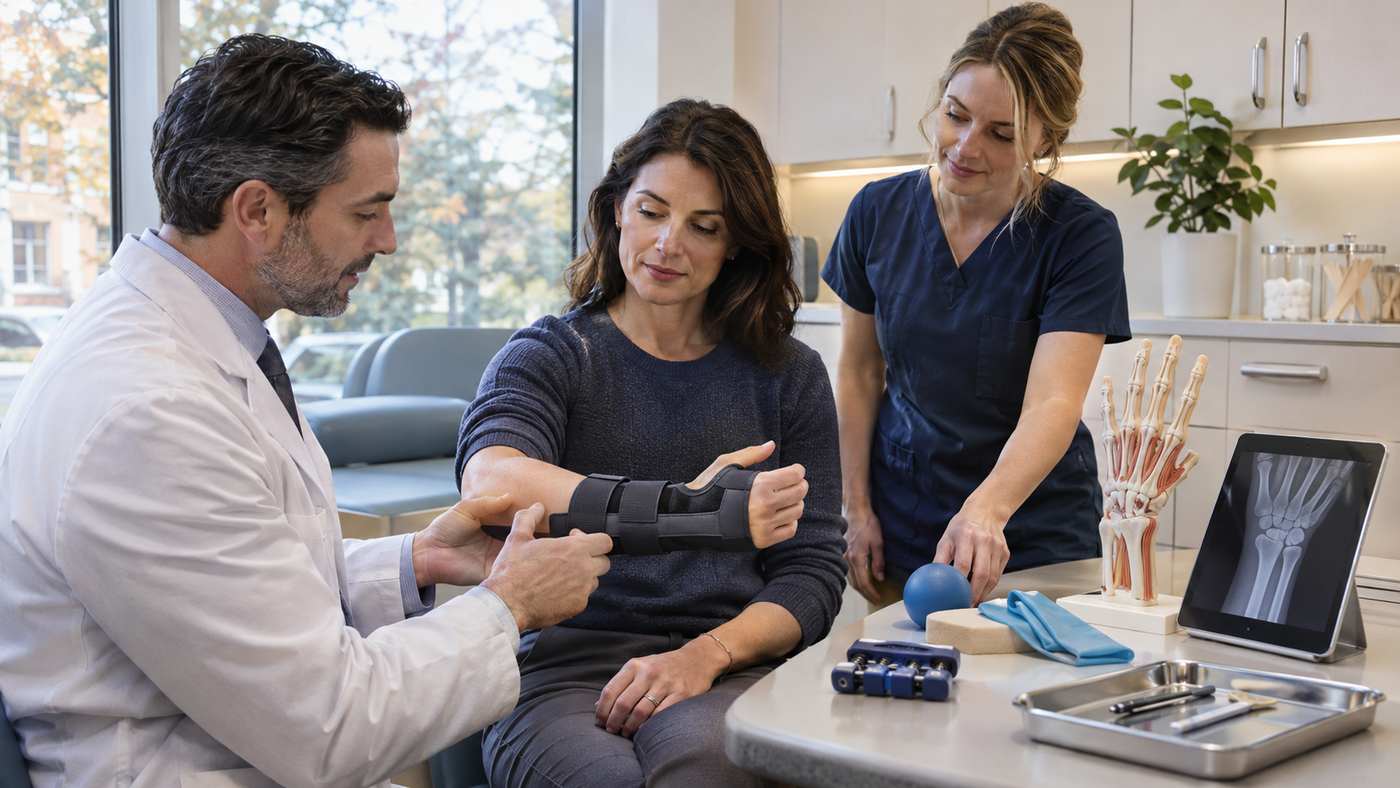
Persistent hand pain, wrist discomfort, numbness, or reduced grip strength can make everyday activities frustrating. Simple tasks such as typing, opening containers, driving, or carrying groceries may become difficult when the bones, joints, nerves, or tendons are affected. Choosing qualified Orthopaedic Hand & Wrist Doctors in NJ can help patients understand the cause of their symptoms, explore appropriate treatment options, and develop a personalized recovery plan.
The hand and wrist contain a complex network of small bones, ligaments, tendons, muscles, nerves, and blood vessels. These structures work together to provide precise movement, strength, and sensation. Even a minor injury can interfere with normal function when it affects an important tendon, nerve, or joint.
Not every hand condition requires surgery. Many patients improve through splinting, activity modification, medication, and specialized hand therapy. Others may need surgical treatment to address severe nerve compression, unstable fractures, or damaged tendons.
Understanding specialist qualifications, available treatments, and the healthcare options across New Jersey can help patients make informed decisions about their care.
What Do Orthopaedic Hand & Wrist Doctors in NJ Treat?
Orthopaedic hand and wrist specialists diagnose and treat injuries, degenerative conditions, nerve disorders, and other problems affecting the upper extremities.
Their expertise commonly includes the fingers, thumb, hand, wrist, and sometimes the forearm and elbow.
These physicians evaluate how different anatomical structures work together and determine which problems require rehabilitation, medical management, or surgery.
Understanding Orthopaedic Hand Surgery Specialists
An orthopaedic hand surgeon typically completes medical school, residency training in orthopaedic surgery, and may pursue additional fellowship training in hand and upper extremity surgery.
Hand surgeons can also come from plastic surgery or general surgery backgrounds.
Some specialists hold additional subspecialty certification in surgery of the hand.
When searching for Orthopaedic Hand & Wrist Doctors in NJ, patients should review training, clinical experience, and relevant qualifications rather than assuming all physicians have identical expertise.
When Should You Visit a Hand Specialist?
A specialist consultation may be appropriate when symptoms persist, worsen, or interfere with everyday activities.
Common reasons include:
- Persistent wrist or finger pain
- Numbness or tingling in the hand
- Reduced grip strength
- Difficulty bending or straightening fingers
- Pain after a fall or sports injury
- Swelling around a joint
- Recurrent locking or clicking of a finger
- Limited wrist movement
- Suspected tendon or ligament damage
Severe injuries, circulation changes, or sudden loss of function may require urgent medical assessment instead of a routine appointment.
Common Conditions Treated by Hand and Wrist Specialists
Understanding common hand conditions helps patients recognize when specialized evaluation may be valuable.
Carpal Tunnel Syndrome
Carpal tunnel syndrome develops when the median nerve becomes compressed while passing through the wrist.
Symptoms often include numbness, tingling, burning sensations, and discomfort affecting the thumb, index finger, middle finger, and part of the ring finger.
Some patients experience symptoms at night or during prolonged wrist activities.
Treatment may include wrist splinting, activity modification, selected injections, or surgical decompression.
Trigger Finger and Trigger Thumb
Trigger finger occurs when a flexor tendon has difficulty moving smoothly through its surrounding pulley.
Patients may notice clicking, stiffness, catching, or locking during finger movement.
Symptoms can become more troublesome when gripping objects.
Treatment options include splinting, activity changes, corticosteroid injections, and surgical release when appropriate.
Hand and Wrist Arthritis
Arthritis can cause joint pain, stiffness, swelling, and reduced mobility.
Osteoarthritis may affect the finger joints, wrist, or base of the thumb.
Patients with thumb arthritis often experience discomfort when opening jars, turning keys, or pinching objects.
Orthopaedic Hand & Wrist Doctors in NJ may recommend braces, hand therapy, medication, injections, or selected reconstructive procedures depending on the affected joint and disease severity.
Wrist Fractures and Sports Injuries
Falls and sports activities can damage wrist bones, ligaments, and surrounding tissues.
Common injuries include distal radius fractures, scaphoid fractures, and ligament sprains.
Some fractures require immobilization, while unstable or displaced injuries may need surgery.
Prompt diagnosis is important because certain injuries can cause long term problems if treatment is delayed.
De Quervain’s Tenosynovitis
De Quervain’s tenosynovitis affects tendons near the thumb side of the wrist.
Pain commonly increases when gripping, lifting, or moving the thumb.
A clinician may recommend a thumb support splint, activity changes, or a corticosteroid injection.
Surgery may be considered when appropriate nonsurgical treatment does not adequately relieve symptoms.
Ganglion Cysts and Tendon Problems
Ganglion cysts are fluid filled swellings commonly found around the wrist or hand.
Some cause no discomfort, while others affect movement or create pain.
Tendon injuries may occur after cuts, sudden force, or repetitive strain.
Significant tendon damage can limit finger movement and may require prompt specialist treatment.
15 Smart Moves for Choosing Orthopaedic Hand & Wrist Doctors in NJ
Selecting the right physician involves more than choosing a nearby clinic.
The following steps can help patients evaluate qualifications, treatment options, accessibility, and long term support.
1. Verify New Jersey Medical Licensing
Start by checking whether the physician holds an appropriate active medical license.
New Jersey’s State Board of Medical Examiners maintains professional licensing information that can help patients verify a doctor’s credentials.
Licensing establishes that the physician meets applicable professional requirements, but it does not independently measure treatment outcomes.
2. Review Board Certification and Fellowship Training
When comparing Orthopaedic Hand & Wrist Doctors in NJ, examine the physician’s educational background and specialized training.
Additional hand surgery fellowship training may be particularly relevant for complex fractures, nerve injuries, or tendon reconstruction.
Subspecialty certification in surgery of the hand can provide another useful qualification to consider.
Why Specialty Training Matters
Hand surgery requires an understanding of small anatomical structures and their relationship to movement and sensation.
Relevant training can help specialists evaluate complicated injuries and determine suitable surgical or nonsurgical approaches.
However, qualifications should be considered alongside experience, patient communication, and the individual clinical problem.
3. Choose a Specialist Experienced With Your Condition
Different physicians may have different areas of clinical focus.
Some frequently treat arthritis and nerve compression, while others manage sports injuries, traumatic fractures, or complex reconstructive cases.
Ask whether the specialist regularly evaluates patients with symptoms similar to yours.
Experience with the relevant condition matters more than a general description of expertise.
4. Evaluate the Initial Consultation Process
A thorough consultation usually includes a discussion of symptoms, medical history, daily activities, and previous treatment.
The physician may examine joint movement, sensation, strength, tenderness, and swelling.
The goal is to identify the likely source of the problem rather than immediately recommend a procedure.
5. Look for a Balanced Approach to Treatment
Not all hand problems require an operation.
A responsible specialist should explain appropriate conservative treatments when they are suitable.
Orthopaedic Hand & Wrist Doctors in NJ may discuss splinting, rehabilitation, medication, or injections before considering surgery.
The best approach depends on the diagnosis, severity, and functional limitations.
6. Confirm Experience With Relevant Procedures
If surgery is being considered, ask how frequently the physician performs the recommended procedure.
For example, carpal tunnel release differs considerably from complex wrist fracture reconstruction.
Understanding the surgeon’s relevant experience, expected results, and potential complications helps support informed decision making.
7. Check Hospital and Surgical Facility Affiliations
Some hand procedures take place in outpatient surgical centers, while others require hospital facilities.
Ask where treatment would occur and whether the facility is appropriate for your procedure and medical needs.
Also confirm arrangements for postoperative concerns and unexpected complications.
8. Review Health Insurance Participation
Insurance coverage can influence the total cost of consultations, tests, treatment, and rehabilitation.
Before booking Orthopaedic Hand & Wrist Doctors in NJ, check whether the physician participates in your insurance network.
Some plans require referrals or prior authorization for particular services.
Verify coverage directly with the insurer when necessary.
9. Consider Location and Appointment Accessibility
Patients may search for specialists in Newark, Jersey City, Edison, Princeton, Morristown, Cherry Hill, or surrounding New Jersey communities.
Convenient access can be especially important when multiple appointments or therapy sessions are required.
However, suitable expertise should remain an important consideration when choosing a provider.
10. Ask About Diagnostic Testing
Some hand and wrist problems can be diagnosed primarily through clinical evaluation.
Others require X-rays, MRI, ultrasound, or nerve studies.
Ask why a particular test is recommended and how its results may influence treatment.
Unnecessary testing can add expense without improving care.
11. Understand Rehabilitation Options
Recovery may require specialized occupational or physical therapy.
Certified hand therapists have additional training and experience in upper extremity rehabilitation.
Ask whether the specialist works with appropriate rehabilitation professionals and how therapy appointments are coordinated.
12. Evaluate Communication and Patient Education
Good communication helps patients understand their diagnosis and treatment choices.
The physician should explain important findings, alternatives, limitations, and potential risks in understandable language.
Patients should feel comfortable asking questions without being rushed into decisions.
13. Consider a Second Opinion for Major Surgery
A second opinion may be valuable when a complex operation is proposed or when the patient is uncertain about available alternatives.
Another qualified specialist can review the diagnosis, imaging, and treatment options.
This can help patients understand the reasoning behind the recommended approach.
14. Review Follow-Up and Postoperative Care
Before agreeing to treatment, ask how follow-up appointments will be arranged.
Orthopaedic Hand & Wrist Doctors in NJ should explain when reassessment is needed, which symptoms require attention, and what rehabilitation may involve.
A clear recovery plan supports better coordination between the patient, physician, and therapist.
15. Prioritize Individualized Care Over Promotional Claims
Avoid choosing a physician solely because of advertising language or unsupported success claims.
Treatment outcomes depend on the diagnosis, patient health, injury severity, and other factors.
A credible specialist should provide realistic expectations and explain both the potential benefits and limitations of care.
How Hand and Wrist Conditions Are Diagnosed
Accurate diagnosis is an important foundation for effective treatment.
Orthopaedic specialists combine clinical examination with diagnostic testing when necessary.
Medical History and Physical Examination
The doctor may ask when symptoms began, whether an injury occurred, and which activities increase discomfort.
The examination often includes joint movement, grip strength, sensation, tenderness, swelling, and tendon function.
Existing medical conditions can also affect diagnosis and treatment planning.
X-Rays and Advanced Imaging
X-rays are commonly used to assess fractures, arthritis, and bone alignment.
MRI may help examine selected ligament injuries, tendons, and other soft tissues.
Ultrasound can provide information about certain tendon and nerve conditions.
CT scans may be useful when detailed bone imaging is required.
Nerve Conduction Studies
Patients experiencing persistent numbness or weakness may need electrodiagnostic testing.
Nerve conduction studies and electromyography can help evaluate certain nerve disorders.
However, these tests are not necessary for every patient with hand pain or suspected carpal tunnel syndrome.
Why Accurate Diagnosis Matters
Different conditions can produce similar symptoms.
A patient with wrist discomfort may have arthritis, a ligament injury, or tendon inflammation.
Orthopaedic Hand & Wrist Doctors in NJ use the findings from appropriate examinations and tests to develop treatment plans that address the underlying problem.
Nonsurgical Treatment Options for Hand and Wrist Pain
Many patients benefit from conservative care before surgery becomes necessary.
The appropriate treatment depends on the affected structure, symptom severity, and individual needs.
Splinting and Bracing
Braces may stabilize injured structures, reduce painful movement, or support joints.
A wrist splint may help selected cases of carpal tunnel syndrome.
Thumb braces can support certain tendon disorders and arthritic joints.
The correct brace and wearing schedule should follow professional guidance.
Physical and Occupational Hand Therapy
Hand therapy focuses on improving movement, strength, coordination, and everyday function.
Programs may include controlled exercises, appropriate splinting, swelling management, and functional activity training.
For patients receiving treatment from Orthopaedic Hand & Wrist Doctors in NJ, therapy may be an important part of both nonsurgical treatment and postoperative recovery.
Medication and Pain Management
Some conditions improve with appropriate pain relief or anti-inflammatory medication.
However, these medicines can have side effects and may be unsuitable for certain patients.
People with kidney disease, gastrointestinal problems, cardiovascular conditions, or relevant medication interactions should seek individualized advice.
Corticosteroid Injections
Corticosteroid injections may be considered for selected inflammatory or tendon conditions.
They can provide symptom relief in some patients but do not guarantee a permanent solution.
Potential risks and limitations should be discussed before treatment.
Activity Modification
Reducing aggravating activities may help manage symptoms.
For example, adjusting repetitive gripping tasks or improving workstation comfort can reduce strain.
Activity modification should support recovery without causing unnecessary loss of movement.
When Is Hand or Wrist Surgery Recommended?
Surgery may be appropriate when an injury requires structural repair, nerve function is at risk, or symptoms remain disabling despite suitable nonsurgical treatment.
The decision depends on the diagnosis rather than the presence of pain alone.
Common Hand and Wrist Procedures
Specialists may perform procedures such as:
- Carpal tunnel release
- Trigger finger release
- Wrist fracture fixation
- Tendon repair
- Ligament reconstruction
- Ganglion cyst removal
- Selected arthritis procedures
- Peripheral nerve repair
Each operation has different indications and recovery requirements.
Understanding Surgical Risks
Potential complications include infection, bleeding, stiffness, nerve injury, scar discomfort, persistent symptoms, or the need for further treatment.
The nature of these risks varies according to the procedure and the individual patient.
Patients should discuss realistic expectations with their surgeon before providing consent.
Is Minimally Invasive Surgery Always Better?
Not necessarily.
Some procedures can be performed through smaller incisions or using specialized instruments.
However, the most appropriate approach depends on the anatomy, condition, and surgeon’s assessment.
The choice should focus on safety and clinical suitability rather than incision size alone.
Recovery and Rehabilitation After Hand or Wrist Treatment
Recovery is an important consideration when choosing Orthopaedic Hand & Wrist Doctors in NJ.
The timeline depends on the diagnosis, treatment method, tissue healing, and individual health.
Recovery After Nonsurgical Treatment
Improvement may occur gradually with appropriate splinting, therapy, or activity changes.
Some conditions respond relatively quickly, while others require longer management.
Patients should follow prescribed instructions and report worsening symptoms.
Recovery Following Surgery
Surgical rehabilitation may involve temporary immobilization, wound care, controlled exercises, and activity restrictions.
Tendon repairs and certain fractures require carefully managed movement during healing.
Patients should not resume heavy lifting or intensive exercise before receiving appropriate clearance.
Returning to Work and Daily Activities
A person performing computer work may have different functional requirements from someone whose job involves heavy manual labor.
Return to work should reflect the procedure, healing progress, workplace demands, and medical advice.
Importance of Follow-Up Appointments
Regular follow-up allows the treating team to assess healing, movement, and any emerging complications.
Patients should report increasing pain, new numbness, unusual swelling, or other concerning changes.
Rehabilitation instructions may be adjusted as recovery progresses.
Insurance and Cost Considerations in New Jersey
Healthcare costs vary between providers, insurance plans, facilities, and treatment types.
Before scheduling Orthopaedic Hand & Wrist Doctors in NJ, patients should understand the financial arrangements associated with their care.
Specialist Consultation Costs
The amount a patient pays may depend on insurance network participation, deductibles, copayments, and plan requirements.
New patient visits and follow-up appointments may have different billing arrangements.
Diagnostic Testing Expenses
Imaging and electrodiagnostic tests may generate separate charges.
Ask whether the recommended facility participates in your insurance network and whether authorization is required.
Surgical and Rehabilitation Expenses
Surgery may involve physician fees, facility charges, anesthesia, and postoperative treatment.
Rehabilitation can also involve multiple appointments.
Request available estimates and confirm insurance responsibilities before proceeding with planned care.
Preparing for Your First Appointment With a Hand and Wrist Specialist
Preparation can make a consultation more productive.
Patients should provide clear information about symptoms, previous injuries, and functional limitations.
Information to Bring
Consider preparing:
- Medical history and current medications
- Previous imaging reports
- Details about injuries or symptom onset
- Previous treatments
- Relevant insurance information
- Questions about daily activities
- Any referral documents required by the practice
Questions to Ask Your Doctor
When visiting Orthopaedic Hand & Wrist Doctors in NJ, consider asking:
- What is causing my symptoms?
- Do I need imaging or additional tests?
- Can my condition improve without surgery?
- What treatment alternatives are available?
- What risks are associated with the recommended treatment?
- How long might recovery take?
- Will hand therapy be necessary?
- When can I return to normal activities?
Clear answers can help patients evaluate treatment decisions with greater confidence.
When Hand and Wrist Symptoms Require Urgent Care
Some conditions should not wait for a routine appointment.
Seek emergency medical assessment for major injuries, severe deformity, uncontrolled bleeding, or sudden circulation problems.
A hand or finger that becomes unusually cold, pale, or blue may indicate compromised blood flow.
Deep cuts accompanied by loss of finger movement or sensation also require prompt evaluation.
A rapidly worsening hot, swollen joint with fever may indicate a serious infection.
For persistent but nonemergency pain, numbness, or stiffness, schedule an appropriate medical assessment.
How to Maintain Better Hand and Wrist Health
While not every hand injury can be prevented, sensible habits may help reduce avoidable strain.
Improve Everyday Ergonomics
Use comfortable working positions and take appropriate breaks during repetitive tasks.
Adjust tools and workstation arrangements to match the activity.
Use Protective Equipment
Sports and occupations involving impact, sharp tools, or heavy equipment may require appropriate hand protection.
Follow safety procedures relevant to the activity.
Avoid Ignoring Persistent Pain
Recurring numbness, weakness, or loss of movement should not be dismissed indefinitely.
Early assessment can be important for certain nerve disorders and structural injuries.
Follow Individual Treatment Advice
Exercises and activity recommendations should reflect the actual condition.
Generic strengthening routines may be inappropriate for recently injured or surgically repaired structures.
Frequently Asked Questions
1. What conditions do Orthopaedic Hand & Wrist Doctors in NJ treat?
Orthopaedic Hand & Wrist Doctors in NJ treat carpal tunnel syndrome, arthritis, fractures, tendon injuries, trigger finger, ligament problems, and other hand or wrist disorders.
2. How can I find a qualified orthopaedic hand specialist in New Jersey?
Review medical licensing, board certification, fellowship training, experience with your condition, insurance participation, and access to rehabilitation services.
3. Can hand and wrist pain be treated without surgery?
Yes. Depending on the diagnosis, treatment may involve splinting, therapy, medication, activity modification, or selected injections.
4. When should I see a hand surgeon for wrist pain?
Consult a specialist if pain persists, symptoms worsen, numbness develops, or normal movement becomes difficult. Serious injuries require urgent evaluation.
5. How long does recovery take after hand or wrist surgery?
Recovery varies by procedure, injury severity, and individual health. Some patients recover over several weeks, while complex repairs may require months of rehabilitation.
6. Do Orthopaedic Hand & Wrist Doctors in NJ accept health insurance?
Many practices accept insurance, but participation varies. Confirm your physician’s network status, referral requirements, and coverage before scheduling.
Conclusion
Choosing qualified Orthopaedic Hand & Wrist Doctors in NJ is an important step toward understanding persistent hand pain, wrist injuries, nerve disorders, and movement limitations. A reliable specialist combines appropriate qualifications, careful diagnosis, personalized treatment planning, and realistic recovery expectations. Many conditions can improve through conservative treatment, while complex injuries and advanced disorders may require surgery and specialized rehabilitation. By evaluating credentials, insurance coverage, treatment options, and follow-up support, patients can make informed decisions that protect hand function and support long-term well-being.
