
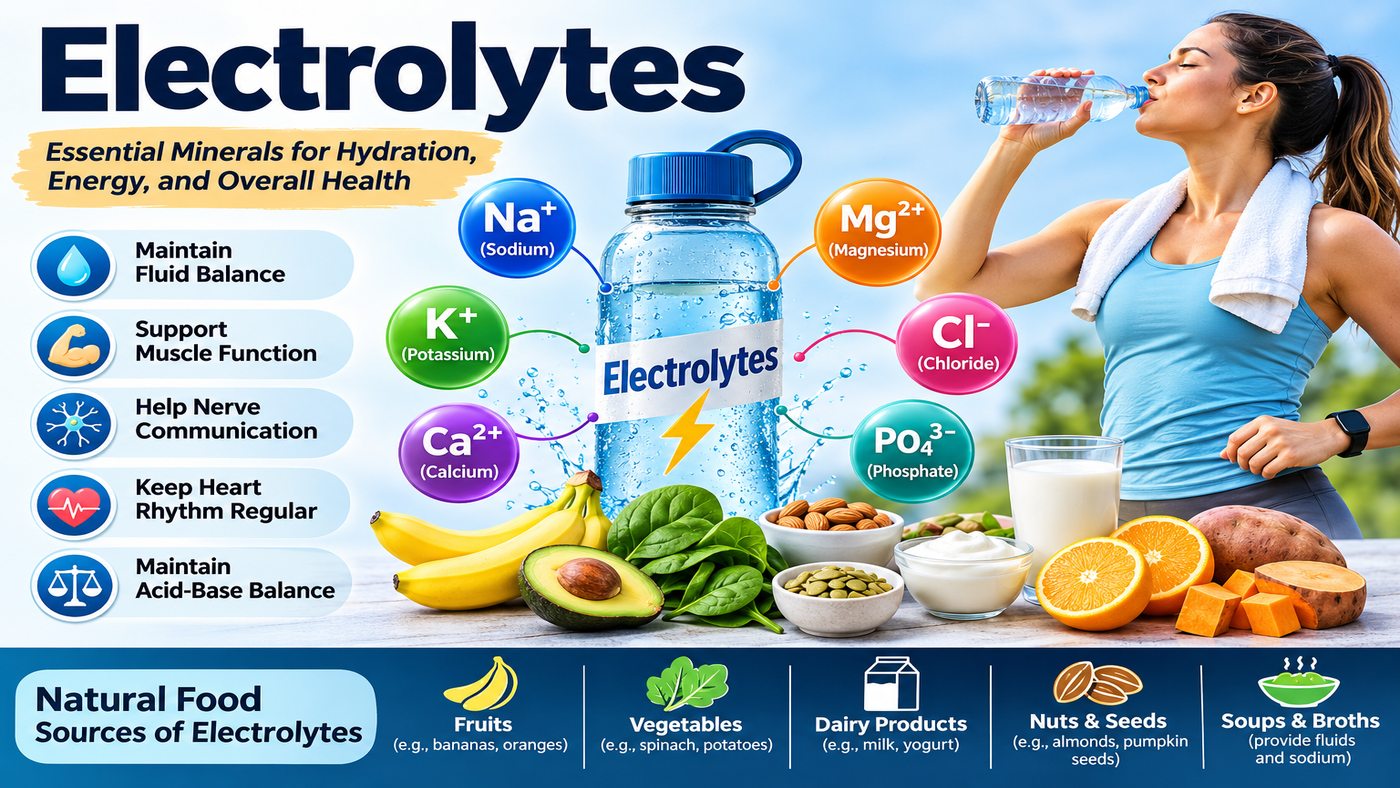
Staying hydrated is about more than simply drinking enough water. Your body depends on essential minerals to regulate fluid levels, support muscle contractions, transmit nerve signals, and maintain normal cellular activities. These minerals are crucial for everyday health, from supporting physical movement to helping your heart function properly.
Understanding how Electrolytes work can help you make informed decisions about hydration, nutrition, exercise, and overall wellness. Although these minerals occur naturally in many foods and beverages, certain health conditions, medications, and physical activities can affect their balance.
This comprehensive guide explains what electrolytes are, why they matter, which foods contain them, and how to maintain healthy levels.
What Are Electrolytes and Why Are They Important?
Electrolytes are minerals that carry an electrical charge when dissolved in blood and other body fluids. These charged particles help cells communicate, maintain proper fluid concentrations, and perform essential biological functions.
The human body carefully regulates electrolyte concentrations through interconnected systems, particularly the kidneys, hormones, and digestive tract.
Electrolytes perform several important functions:
- Regulate water movement between cells and surrounding tissues.
- Support electrical signals responsible for nerve communication.
- Enable normal muscle contractions, including those of the heart.
- Help maintain the body’s acid-base balance.
- Support cellular metabolism and other biological processes.
Maintaining appropriate electrolyte levels is essential because both excessive and insufficient concentrations can interfere with normal bodily functions.
Major Types of Electrolytes in the Human Body
Several essential minerals contribute to electrolyte balance. Each serves a different purpose, although they frequently work together.
1. Sodium
Sodium is one of the primary electrolytes found in fluid outside the body’s cells. It regulates fluid distribution, supports nerve signaling, and contributes to muscle function.
Common dietary sources include table salt, bread, cheese, soups, and other sodium-containing foods.
However, many processed foods already contain substantial sodium, so additional intake is not always beneficial.
2. Potassium
Potassium supports normal electrical activity within cells. It helps regulate muscle movement, nerve communication, and heartbeat.
Foods rich in potassium include bananas, potatoes, beans, lentils, avocados, and leafy vegetables.
The kidneys regulate potassium levels, making proper kidney function important for maintaining a healthy balance.
3. Calcium
Calcium is widely recognized for supporting healthy bones and teeth, but it also plays an important role in muscle contractions, nerve transmission, and blood clotting.
Dairy products, fortified foods, calcium-set tofu, and certain leafy vegetables provide dietary calcium.
Abnormal calcium levels can affect muscle function, neurological activity, and cardiovascular health.
4. Magnesium
Magnesium participates in hundreds of enzyme-related reactions and helps support normal muscle function, nerve activity, energy production, and heart rhythm.
Common sources include nuts, seeds, legumes, whole grains, and green leafy vegetables.
Insufficient magnesium can sometimes contribute to muscle symptoms and other electrolyte abnormalities.
5. Chloride
Chloride works closely with sodium to maintain fluid balance and contributes to acid-base regulation.
It also forms part of hydrochloric acid in the stomach, which helps with digestion.
6. Phosphate
Phosphate supports bone health, energy storage, cellular structures, and numerous metabolic reactions.
It occurs naturally in meat, dairy products, legumes, nuts, and various other foods.
7. Bicarbonate
Bicarbonate helps regulate the body’s acid-base balance.
Unlike many dietary minerals, bicarbonate is primarily controlled through internal processes involving the kidneys and lungs.
How Electrolytes Support Proper Hydration
Water is essential for nearly every biological process, but proper hydration involves how the body absorbs, distributes, and eliminates fluids.
Sodium and other electrolytes influence fluid movement across cell membranes. The kidneys continuously regulate water and mineral excretion to maintain an appropriate balance.
When someone sweats heavily, experiences vomiting, or develops diarrhea, they may lose both water and electrolytes.
For most healthy individuals performing ordinary daily activities, drinking water and eating a balanced diet provide sufficient hydration and electrolyte intake.
However, prolonged physical activity in hot environments or significant gastrointestinal fluid loss may require additional electrolyte replacement.
Common Causes of Electrolyte Imbalance
An electrolyte imbalance occurs when the concentration of one or more electrolytes becomes abnormally high or low.
These imbalances can develop for several reasons.
Excessive Sweating
Heavy sweating during prolonged exercise or exposure to extreme heat can cause significant fluid and sodium losses.
The amount lost depends on sweat rate, individual physiology, environmental conditions, and activity duration.
Vomiting and Diarrhea
Persistent vomiting or diarrhea can cause the body to lose water and essential minerals.
Severe cases may require medically supervised fluid replacement.
Kidney Disorders
The kidneys regulate sodium, potassium, calcium, phosphate, and other substances.
Reduced kidney function can interfere with this process, potentially causing dangerous electrolyte abnormalities.
Certain Medications
Diuretics, some blood pressure medications, laxatives, and other treatments may affect electrolyte concentrations.
People taking prescription medications should consult healthcare professionals before starting mineral supplements.
Hormonal and Medical Conditions
Endocrine disorders, uncontrolled diabetes, and certain serious illnesses can influence how the body processes water and minerals.
Excessive Water Consumption
Drinking large amounts of water faster than the kidneys can eliminate it may dilute blood sodium levels.
This condition, known as hyponatremia, can become life-threatening.
Signs and Symptoms of Electrolyte Imbalance
Symptoms vary depending on which electrolyte is affected, how severe the abnormality is, and how quickly it develops.
Common symptoms may include:
- Muscle weakness or unusual fatigue
- Muscle cramps or twitching
- Nausea and vomiting
- Headaches
- Dizziness or lightheadedness
- Unusual thirst
- Tingling or numbness
- Changes in heartbeat
- Difficulty concentrating or confusion
These symptoms can have many causes and do not necessarily indicate an electrolyte disorder.
Severe confusion, seizures, fainting, chest pain, or significant heart rhythm disturbances require urgent medical attention.
Best Natural Food Sources of Electrolytes
A balanced diet can provide many of the minerals needed for normal electrolyte function.
Whole foods also supply vitamins, fiber, and other beneficial nutrients.
Fruits
Bananas, oranges, avocados, and other fruits contain potassium and additional nutrients.
Their water content may also contribute to daily hydration.
Vegetables
Spinach, potatoes, sweet potatoes, and other vegetables provide potassium, magnesium, and calcium in varying amounts.
Dairy Products and Fortified Alternatives
Milk and yogurt supply calcium and potassium.
Some fortified plant-based alternatives provide similar nutrients, although their nutritional profiles may differ.
Nuts, Seeds, and Legumes
Almonds, pumpkin seeds, beans, and lentils are useful dietary sources of magnesium and other minerals.
Soups and Broths
Broths can provide fluid and sodium, depending on their ingredients.
However, sodium levels vary considerably, and some products may be unsuitable for people following sodium-restricted diets.
Electrolyte Drinks vs. Plain Water: Which Is Better?
Both plain water and electrolyte-containing beverages have appropriate uses.
The best option depends on activity level, environmental conditions, health status, and the amount of fluid or minerals lost.
When Plain Water Is Usually Enough
Water is generally suitable for routine hydration, everyday activities, and many shorter exercise sessions.
Healthy individuals eating normal meals typically obtain sufficient electrolytes from food.
When Electrolyte Replacement May Help
Electrolyte-containing beverages may be useful during prolonged strenuous exercise, especially when sweating is substantial.
For dehydration caused by diarrhea, properly formulated oral rehydration solutions are generally preferable to ordinary sports drinks.
These solutions contain specific proportions of glucose and electrolytes designed to support fluid absorption.
Understanding Sports Drinks
Sports drinks commonly contain water, carbohydrates, and sodium.
However, formulations differ, and some products contain substantial added sugar.
Not every sports drink provides meaningful amounts of potassium, magnesium, or calcium.
Checking nutritional labels helps consumers understand what a product actually contains.
Why Electrolytes Matter During Exercise
Physical activity increases metabolic demands and often causes sweating.
During prolonged or intense workouts, athletes may lose substantial amounts of water and sodium.
Maintaining appropriate hydration supports temperature regulation and normal physiological functioning.
However, consuming more electrolytes does not automatically improve athletic performance.
Supplementation should reflect individual requirements rather than general marketing claims.
Useful hydration practices include:
- Drinking according to individual hydration needs.
- Avoiding excessive water consumption.
- Considering exercise duration and intensity.
- Accounting for heat exposure and sweat loss.
- Seeking personalized advice for endurance activities.
Athletes participating in prolonged exercise may benefit from individualized fluid and sodium replacement strategies developed with qualified professionals.
How Doctors Diagnose Electrolyte Problems
Healthcare professionals investigate suspected electrolyte disorders using medical history, physical examinations, and laboratory testing.
A basic metabolic panel commonly measures sodium, potassium, chloride, bicarbonate, glucose, calcium, and indicators of kidney function.
Additional blood or urine tests may be necessary to evaluate magnesium, phosphate, or specific causes of abnormal results.
Doctors interpret these findings alongside symptoms, medications, and existing medical conditions.
Treatment depends on the underlying cause and may involve dietary adjustments, medication changes, oral replacement, intravenous fluids, or other medical interventions.
Practical Ways to Maintain Healthy Electrolyte Balance
Maintaining healthy electrolyte levels generally requires consistent daily habits rather than frequent supplementation.
Eat a balanced diet: Include fruits, vegetables, legumes, whole grains, and other nutrient-rich foods.
Drink fluids regularly: Adjust fluid intake according to thirst, physical activity, weather, and individual medical needs.
Account for heavy sweating: Consider appropriate fluid and sodium replacement during extended exercise in hot conditions.
Avoid unnecessary supplements: Excessive mineral intake may cause health problems, particularly for individuals with kidney conditions.
Manage existing medical conditions: Follow professional guidance for kidney disease, heart failure, endocrine conditions, and other relevant disorders.
Review medications: Ask healthcare professionals whether prescribed treatments affect electrolyte concentrations.
Recognize persistent symptoms: Ongoing weakness, vomiting, unusual thirst, or muscle symptoms may require medical assessment.
People with medical conditions requiring restrictions on fluid, sodium, or potassium should follow individualized care plans instead of general hydration recommendations.
Common Myths About Electrolytes
Myth 1: Everyone Needs Electrolyte Supplements Daily
Most healthy people can meet their regular electrolyte requirements through balanced nutrition and appropriate fluid intake.
Daily supplements are not necessary for everyone.
Myth 2: More Electrolytes Always Mean Better Hydration
Excessive mineral intake can create health risks, particularly for people with kidney disorders or those taking certain medications.
Hydration requires appropriate balance rather than simply consuming more minerals.
Myth 3: Muscle Cramps Always Indicate Low Electrolytes
Muscle cramps can occur for multiple reasons, including muscle fatigue and neuromuscular factors.
Electrolyte deficiency is only one possible explanation.
Myth 4: Sports Drinks Are Always Better Than Water
Plain water is sufficient for many everyday activities.
Sports drinks are more useful in specific circumstances, particularly prolonged physical activity involving substantial sweat loss.
Frequently Asked Questions About Electrolytes
1. What are the most important electrolytes in the body?
Sodium, potassium, calcium, magnesium, chloride, phosphate, and bicarbonate all support essential biological functions. Each contributes to processes such as fluid regulation, nerve communication, and muscle activity.
2. Can you get enough electrolytes from food alone?
Most healthy individuals can obtain sufficient electrolytes through a balanced diet. Additional replacement may be necessary during certain illnesses or prolonged physical activity.
3. What happens when electrolyte levels become too low?
Low electrolyte concentrations may cause weakness, muscle problems, nausea, or confusion. Severe abnormalities can affect heart rhythm and neurological function, requiring urgent medical treatment.
4. Is it safe to drink electrolyte beverages every day?
Safety depends on the ingredients, quantity, and individual health needs. Some beverages contain added sugar or substantial sodium, while certain mineral supplements may be inappropriate for people with kidney or heart conditions.
Conclusion
Electrolytes are essential for hydration, nerve communication, muscle function, and overall physiological balance. A nutritious diet and appropriate fluid intake generally support healthy electrolyte levels. Understanding the causes and symptoms of electrolyte imbalances can help people recognize when additional care is necessary. For persistent symptoms or existing medical conditions, professional medical guidance remains important.
