
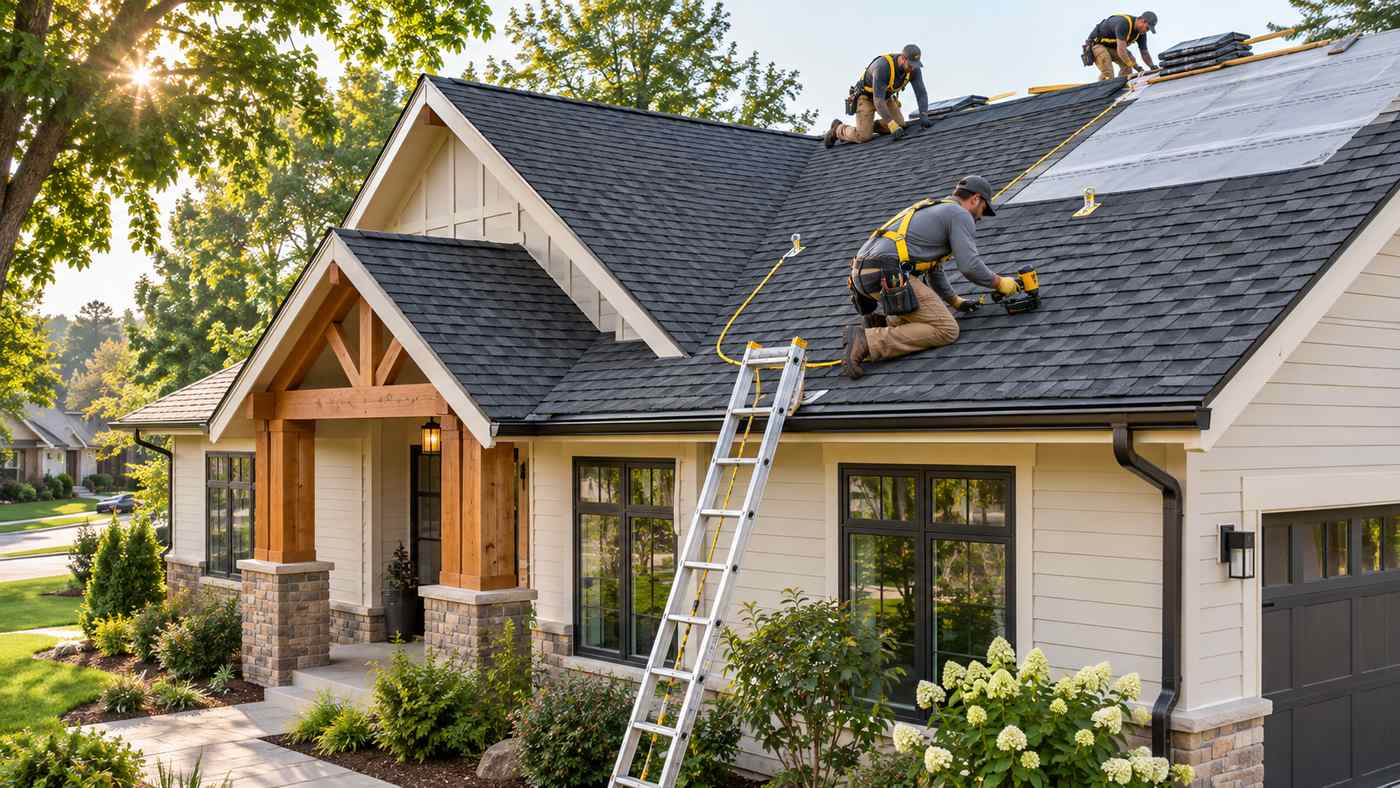
Planning a residential roof replacement means making decisions that affect the home’s protection, appearance, and maintenance costs for years. An effective project begins with a condition-based inspection, not a sales pitch or a guess about roof age. The right contractor should explain what is damaged, whether repair is still practical, how the full roofing system will be installed, and which costs and responsibilities belong in the contract.
A roof is more than the shingles visible from the street. Decking, underlayment, flashing, edge details, ventilation, drainage, and the connections around chimneys and vents all influence how it performs. Replacing worn shingles without addressing defective flashing or damp decking can leave homeowners facing new leaks despite a recent investment.
This guide explains how to recognize when a new roof is necessary, compare materials, understand pricing, evaluate contractors, and inspect the finished work. The advice applies broadly to houses with pitched roofs, although permits, weather requirements, and suitable products differ by location.
What Is Residential Roof Replacement?
Residential roof replacement is the removal or renewal of an existing roof covering and the installation of a new roofing system suited to a home’s structure, roof slope, climate, and applicable building requirements. A complete tear-off commonly allows installers to inspect the roof deck, repair deteriorated areas, and install appropriate underlayment, flashing, and the new covering.
Not every roofing project requires the same scope. Some jurisdictions and roof assemblies allow an overlay under particular conditions; others require removal of existing layers. An overlay can hide defects and complicate future work, so homeowners should ask why it is appropriate before agreeing.
How Replacement Differs From Roof Repair
Repair targets a defined issue such as a small flashing leak, limited storm damage, or a few displaced shingles. Replacement addresses a roofing system that is too deteriorated, extensively damaged, or otherwise unsuitable for reliable localized repairs. A qualified inspection should explain the evidence supporting either recommendation.
How Long Does a New Roof Last?
Service life depends on the material, installation quality, climate, ventilation, roof slope, and maintenance. Warranty length does not equal a guaranteed lifespan. A contractor should discuss the selected manufacturer’s published conditions and the local exposures affecting the home rather than promise a universal number of years.
Signs It May Be Time for Residential Roof Replacement
A roof does not need to leak throughout the house before a new covering becomes worth considering. Repeated repairs, widespread missing or brittle shingles, extensive granule loss, persistent water entry, and deteriorating roof materials can justify a closer assessment. Storms may cause abrupt damage, while weathering and poor installation create more gradual problems.
Check for Visible Damage and Interior Warning Signs
From a safe ground-level position, look for damaged roof edges, loose materials, lifted shingles, or deteriorated flashing. Inside, investigate stains, damp attic insulation, musty smells, and recurring ceiling damage. Water can travel along building components before it becomes visible indoors, so the stain may not be directly beneath the roof defect.
Do Not Diagnose Hail Damage From Photos Alone
Impact marks, weathering, and surface blemishes can look similar. An experienced roofer should document individual findings and explain whether they affect the covering’s function. A storm passing through the neighborhood does not by itself establish that the entire roof needs replacement or that insurance will pay for it.
26 Smart Expert Insights for a Better Roof Replacement
1. Get an Inspection Before Requesting a Full Replacement Quote
Start by asking what is failing and whether the underlying deck is sound. A useful inspection reviews the visible covering, penetrations, flashing, valleys, and accessible attic conditions. For residential roof replacement, clear photographs and written findings help distinguish necessary work from optional upgrades. Avoid contractors who declare every older roof beyond repair without explaining why.
2. Decide Whether Repair Is Still Economical
A localized, repairable defect may not justify replacing a mostly serviceable roof. Compare the cost and reliability of a targeted repair with the likely future needs of the remaining roof. Repeated leaks and widespread deterioration can change that calculation. Ask the roofer to explain uncertainties, including the chance of concealed damage.
3. Measure Roof Area Rather Than Using Floor Area
Roof pricing is usually based on the area and complexity of the roof, not simply the home’s interior square footage. Pitched sections, dormers, valleys, waste allowance, and steep slopes change material and labor needs. Ask for an itemized measurement or plan so estimates for residential roof replacement can be compared on a similar basis.
4. Choose Materials That Suit Roof Pitch and Climate
Not every roofing product is appropriate for every slope. Standard asphalt shingles, standing-seam metal, tile, and low-slope membranes use different installation systems. Local wind, hail, snow, salt exposure, and sunshine also matter. A qualified installer should confirm manufacturer slope limitations and applicable code requirements before recommending a product.
5. Compare Architectural Asphalt Shingles Carefully
Architectural asphalt shingles are widely used because they offer various appearances and are often relatively economical. Compare the actual product specification, fastening requirements, wind classification, and warranty terms. A premium appearance does not guarantee performance if edges, penetrations, or underlayment are installed incorrectly. Ask for the exact model rather than a vague description such as high-grade shingles.
6. Evaluate Metal Roofing as a Complete System
Metal panels can provide a different appearance and may be appropriate for some homes, but coating, seams, fasteners, flashing, and thermal movement require careful detailing. Metal is not immune to dents or weather-related damage. For residential roof replacement with metal, compare system design, noise considerations, local installer experience, and the structure’s suitability instead of focusing only on the panel material.
7. Check Structural Capacity Before Selecting Heavy Coverings
Clay tile, concrete tile, and slate can be substantially heavier than some alternative roof coverings. The home’s structure may need review before changing to a heavier product. Do not assume a material can be installed simply because the color and profile suit the house. An appropriate professional should assess structural and code considerations.
8. Confirm the Underlayment and Water-Protection Details
Underlayment provides a secondary protective layer beneath the roof covering. Selection and installation depend on roof type, slope, exposure, and manufacturer instructions. In some climates or locations, additional protection near eaves and vulnerable areas may be needed. A residential roof replacement estimate should specify these materials rather than leaving them as an undefined allowance.
9. Give Flashing the Attention It Deserves
Flashing helps manage water at chimneys, roof-to-wall junctions, valleys, skylights, and vents. Those transitions can be more vulnerable than broad uninterrupted roof areas. Ask whether existing flashing will be reused or replaced and why. Installing new shingles around damaged or incompatible flashing can undermine an otherwise well-planned replacement.
10. Inspect Roof Decking After Tear-Off
Removing old roofing can reveal rot, soft areas, gaps, or other decking problems. Such issues are not always visible during an initial exterior survey. The contractor should photograph deterioration and seek approval for additional work before replacing damaged sections. Clarify how decking repairs are priced in the residential roof replacement agreement.
11. Check Attic Air Sealing and Ventilation
A roof’s performance is connected to the attic and ceiling below. Uncontrolled indoor air leakage can carry moisture into an attic; poorly planned ventilation may contribute to other issues. Do not assume that adding more vents always solves the problem. Ask a competent professional to assess the existing assembly, insulation, and ventilation strategy together.
12. Understand the Role of Ice and Water Protection
Cold-climate homes may require special attention to ice dams and water backup near eaves, valleys, and penetrations. Applicable codes and manufacturer instructions determine where protective membranes are needed. A membrane is not a substitute for addressing attic heat leakage or drainage problems. Regional requirements should shape the design rather than a generic checklist.
13. Review Wind-Resistance and Fastening Requirements
Wind performance involves the complete roofing system: the product, fastening pattern, edges, roof geometry, and installation details. A headline wind rating does not guarantee that a roof can withstand every storm. Ask how the chosen system will be fastened and whether special local wind requirements apply.
14. Consider Reflective Roofing Only When It Makes Sense
Reflective or cool-roof products can reduce solar heat absorption, particularly in hot and sunny climates. The actual benefit depends on climate, insulation, roof slope, and air-conditioning use. A cool roof may have different heating-season effects in colder regions. Compare product ratings and local code rules rather than assuming every reflective roof will save the same amount of energy.
15. Verify Permits Before Work Begins
Permit requirements vary by municipality and project scope. A residential roof replacement may require a building permit, inspections, and confirmation of approved materials. Ask the local building authority who may apply and whether separate requirements cover structural changes. Put responsibility for permits and final approvals into the written agreement.
16. Check Contractor Licensing and Insurance
Licensing rules differ by location, so verify the required credential with the relevant authority. Request current proof of liability insurance and appropriate worker coverage, then confirm it with the issuer where possible. Ask who will supervise the site and whether subcontractors are involved. A professional website or positive review alone does not establish proper standing.
17. Compare Written Estimates on an Equal Scope
Request quotations that identify the roof covering, removal work, decking allowances, underlayment, flashing, ventilation, disposal, labor, permits, and cleanup. The cheapest offer may omit work that a higher quote includes. For residential roof replacement, a detailed scope is more useful than a single total printed beside the word complete.
18. Clarify Payment Stages and Change Orders
The contract should explain deposits, progress payments, final payment, and approval of unexpected work. Avoid vague verbal promises about what happens if hidden damage appears. A proper change order describes the reason, added cost, and schedule impact. Keep copies of the signed documents and paid invoices.
19. Distinguish Product and Workmanship Warranties
A manufacturer warranty generally addresses specified product defects, while a contractor warranty deals with defined installation-related issues. Coverage periods, exclusions, transfer conditions, and claim procedures differ. Review both documents before purchasing. A residential roof replacement should end with written warranty information and clear contacts for future service.
20. Plan Delivery, Landscaping Protection, and Access
Roofing work can involve material deliveries, debris containers, noise, and temporary disruption. Ask where trucks and disposal equipment will be positioned and how the contractor will protect plants, driveways, siding, and entrances. Keep children and pets away from work areas. Clarify whether homeowners need to move vehicles or outdoor furniture before installation.
21. Discuss Weather Contingencies in Advance
Rain, ice, high winds, and extreme temperatures can affect safe working conditions and material installation. Reputable contractors should explain how they monitor forecasts, protect exposed decking, and respond to unavoidable delays. A promise to work through any weather is not a substitute for safe methods and manufacturer requirements.
22. Understand the Typical Tear-Off Process
Where a full tear-off is specified, workers remove existing roofing and assess exposed components before rebuilding the system. Ask about handling old layers, disposing of debris, and protecting the interior if unexpected rain occurs. Residential roof replacement is easier to supervise when the contractor explains the intended sequence before crews arrive.
23. Keep Storm Claims Separate From Sales Pressure
If an insured event may have damaged the roof, review your policy and contact the insurer according to its procedures. Document damage safely and arrange appropriate temporary protection. A contractor can describe observed damage and proposed repairs, but coverage decisions depend on policy terms and the insurer’s assessment. Be wary of guaranteed claim payouts or deductible-related promises that conflict with local law.
24. Request Progress Photos of Hidden Details
Most homeowners cannot safely inspect roof valleys, flashing layers, or decking from the ground. Ask for dated progress photographs showing significant stages, especially concealed work. This creates a useful maintenance record and makes it easier to discuss concerns before finishes cover the details. Photos support verification but do not replace required inspections.
25. Check Cleanup and Final Documentation
At completion, confirm that visible debris and loose fasteners have been collected and that gutters and nearby property were addressed as agreed. Obtain the final invoice, product information, warranties, inspection records, and any relevant permit sign-off. Ask the contractor to document outstanding corrections. Never climb onto the roof to perform your own final inspection.
26. Schedule Maintenance Instead of Assuming the Roof Is Set Forever
A new roof still needs reasonable observation and maintenance. Keep gutters clear, investigate interior moisture promptly, and arrange inspections following concerning storms or visible damage. Maintain records of repairs and product details. Ongoing care helps homeowners make better decisions if a future residential roof replacement or localized repair becomes necessary.
Residential Roofing Material Comparison
The most suitable covering depends on roof slope, climate, structure, maintenance expectations, and budget. Product categories describe broad characteristics; final performance depends on the specific system and quality of installation.
| Material | Typical appeal | Important considerations |
|---|---|---|
| Architectural asphalt shingles | Familiar appearance and broad availability | Weather exposure, fastening, and product specification |
| Standing-seam metal | Distinctive design and various finish options | Detailing, installer experience, and possible denting |
| Clay or concrete tile | Traditional texture and appearance | Weight, structural suitability, and underlayment |
| Slate | Natural appearance and long-term durability potential | High weight, specialist work, and cost |
| Low-slope membranes | Intended for appropriate low-slope assemblies | Drainage, seams, penetrations, and product compatibility |
Which Material Offers the Best Value?
Value cannot be judged by material price alone. Consider the installed system, upkeep, local weather, appearance, repairability, and warranty conditions. For many residential roof replacement projects, a correctly specified and installed mainstream product may provide more practical value than a premium material paired with poor detailing.
How Much Does Residential Roof Replacement Cost?
Residential roof replacement costs depend on roof area, pitch, number of valleys, labor rates, selected covering, removal and disposal, decking condition, accessibility, and regional building requirements. There is no accurate universal price for every home. Online averages may exclude roofing complexity and unknown repairs, so detailed local estimates are the best planning tool.
What Should a Quote Include?
Ask for separately identifiable costs or clear descriptions covering materials, tear-off, underlayment, flashing, decking allowances, ventilation changes, permits, labor, disposal, and cleanup. Confirm whether taxes and delivery are included. If the builder offers an upgraded material or extended warranty, ask what changes and how much it adds.
Repair, Overlay, or Complete Tear-Off?
The lowest upfront price does not always produce the lowest long-term cost. An overlay may be inappropriate where existing layers are damaged, codes prohibit it, or a product warranty requires other methods. A complete tear-off may reveal hidden defects and permit a more thorough rebuild. The correct choice is specific to the existing roof, not simply the contractor’s preferred sales package.
Budget for Hidden Damage Without Accepting Unlimited Charges
Include a contingency for possible decking or flashing repairs, but require photographs and a written approval process before extra work begins. This balances financial planning with accountability. When comparing residential roof replacement proposals, an honest allowance is preferable to a suspiciously low quote that overlooks likely work.
The Residential Roof Replacement Process Step by Step
A typical project begins with an inspection and scope agreement. The contractor then verifies measurements, selects approved materials, arranges required permits, and schedules deliveries. Site preparation may include moving vehicles, protecting landscaping, and identifying areas that must remain clear for safe access.
Removal and Deck Inspection
For a complete tear-off, crews remove the old covering using suitable safety and debris-control methods. The exposed decking is examined, and necessary repairs are documented. The roof should not be left vulnerable to unexpected weather without an appropriate protection plan.
Underlayment, Flashing, and Roof Covering
Installers fit the required protective layers and related details, then secure the selected roof covering in accordance with its design and manufacturer instructions. Special care is needed around valleys, walls, edges, chimneys, skylights, and plumbing vents. The exact sequence differs for shingles, metal, tile, and membrane systems.
Final Checks and Homeowner Handover
After installation, the contractor completes the required inspections, checks visible detailing, removes waste, and resolves any agreed punch-list items. Homeowners should obtain the roof product name, installation record, warranties, and future maintenance guidance. A completed residential roof replacement should leave a clear paper trail as well as a tidy property.
Choosing a Trustworthy Residential Roofing Contractor
An experienced contractor should explain what work is necessary and why, without insisting that every concern requires immediate replacement. Look for relevant jobs completed under similar conditions, verifiable licensing where required, current insurance, documented materials, and a detailed written agreement. Ask who will manage the job and how problems will be handled after handover.
Warning Signs to Take Seriously
Pressure to sign immediately, refusal to provide itemized terms, claims that permits do not matter, and promises of guaranteed insurance coverage should prompt caution. A contractor who will not document flashing or decking work may also leave important scope gaps. For residential roof replacement, transparent answers and a consistent inspection process are stronger signs than dramatic sales promises.
How to Maintain a New Residential Roof
Inspect visible conditions from the ground after major weather, clear gutter blockages safely, and investigate unusual attic moisture or ceiling staining. Use trained professionals for work requiring roof access. Keep overhanging branches and drainage concerns under review, and follow the manufacturer’s care instructions for the specific covering.
A residential roof replacement is a substantial investment, but the roof remains exposed to weather every day. Routine attention cannot prevent every storm event, yet it can help identify small issues before they cause extensive interior damage.
Frequently Asked Questions
1. When should I choose residential roof replacement instead of repair?
Consider replacement when damage is widespread, materials are severely deteriorated, or repeated repairs are no longer reliable. A professional inspection should explain the reasons and any practical repair alternatives.
2. How much does residential roof replacement cost?
The cost varies with roof size, slope, materials, labor, tear-off, and hidden damage. Compare detailed local estimates based on the same scope rather than relying on a single advertised price.
3. How long does a residential roof replacement take?
The schedule depends on roof complexity, material, weather, crew availability, inspections, and unexpected deck repairs. Ask the contractor for a project-specific timetable and contingency plan.
4. Do I need a permit to replace my home’s roof?
Permit rules vary by local jurisdiction. Check with the building authority and confirm in writing who will obtain permits and arrange required inspections before work starts.
5. Are metal roofs always better than asphalt shingles?
No. Each product has advantages and tradeoffs involving cost, appearance, weather response, installation, and maintenance. The best option is the one appropriate for the house and properly installed.
6. What warranties should I receive after roof replacement?
Ask for applicable manufacturer product warranties and the contractor’s workmanship warranty. Check coverage, exclusions, transfer rules, and how to make a claim before making final payment.
Conclusion
Residential roof replacement is most successful when decisions are based on documented roof condition, suitable materials, proper installation, and a clear contract. Comparing detailed quotes and understanding permits, flashing, decking, and warranty responsibilities helps prevent expensive surprises. After the project, retain inspection records and follow reasonable maintenance practices instead of assuming the new roof needs no attention. A well-managed replacement can strengthen home protection and make future roofing decisions easier.
