
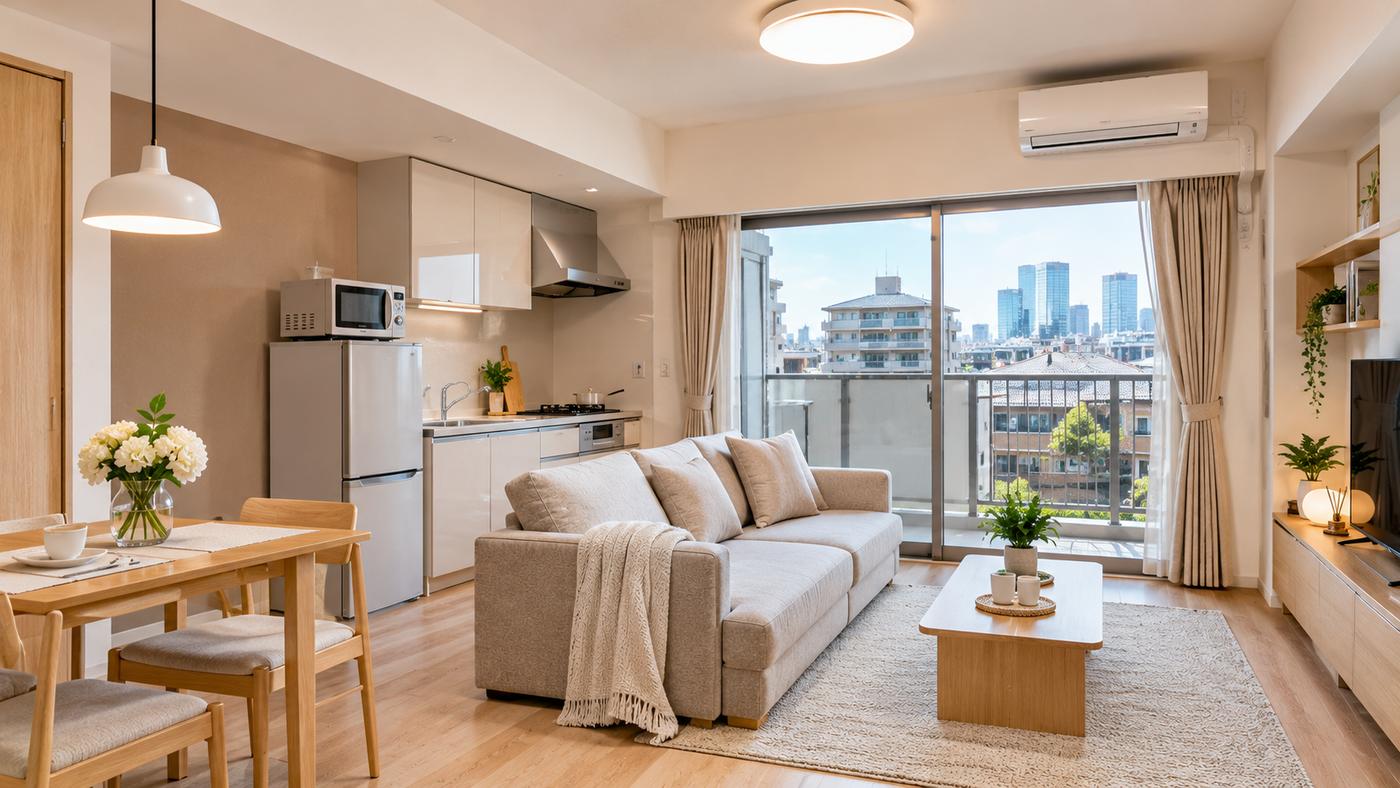
Finding a comfortable home in Japan’s capital can be exciting, but the rental process may feel unfamiliar, particularly for international residents. Searching for tokyo apartments for rent involves comparing more than attractive photographs and monthly prices. Renters must understand neighborhood differences, apartment layouts, initial payments, guarantor requirements, transportation, and Japanese lease agreements before making a commitment.
Tokyo offers a wide variety of rental housing, from compact studio apartments near railway stations to spacious family homes, furnished monthly residences, and modern high-rise condominiums. The right apartment depends on your budget, preferred commute, household size, and expected length of stay.
Although Tokyo has a reputation for expensive housing, rental prices vary considerably across its 23 special wards and surrounding municipalities. Living farther from central business districts or choosing a smaller property can make a meaningful difference. However, cheaper monthly rent does not always mean lower overall housing costs when transportation, management fees, and move-in expenses are considered.
This guide explains current rental price indicators, popular residential neighborhoods, Japanese apartment terminology, upfront costs, application procedures, and practical strategies for choosing a suitable home in Tokyo.
What Should You Know Before Renting an Apartment in Tokyo?
Tokyo’s rental market includes privately owned apartments, managed residential buildings, shared accommodation, and furnished short-term housing.
Many standard residential leases are arranged through real estate agencies that communicate with the landlord or property management company.
The process commonly involves finding a property, viewing it, submitting an application, completing tenant screening, reviewing the contract, paying the required fees, and receiving the keys.
Some international renters can complete parts of this process in English, although documentation and communication requirements differ by provider.
Why Tokyo Apartment Hunting Requires Preparation
A rental listing may show a monthly price without including building management charges, utilities, or upfront fees.
Some apartments are unfurnished, and appliances that renters expect elsewhere may not be included.
Additional restrictions can concern pets, smoking, musical instruments, extra occupants, and use of the property for business activities.
Understanding these conditions before applying helps prevent unexpected expenses.
How Long Does the Rental Process Take?
The timeline varies with property availability, application screening, documentation, and the desired move-in date.
Some furnished monthly apartments can be arranged relatively quickly.
Standard residential leases may involve additional checks and contract procedures.
Tokyo Metropolitan Government guidance notes that some properties may not be available for occupancy for one or two months, so renters should confirm the earliest move-in date before applying.
How Much Do Tokyo Apartments for Rent Cost in 2026?
Monthly rent depends on location, property size, building age, distance from the nearest station, amenities, and apartment type.
Central districts with convenient access to major business and entertainment areas often command higher rents than less central residential neighborhoods.
A November 2026 rental-listing snapshot published by Tokyo Expat provides the following indicative median asking rents for selected wards.
| Tokyo ward | 1K apartment | 1LDK apartment |
|---|---|---|
| Edogawa | ¥75,000 | ¥126,000 |
| Nerima | ¥86,000 | ¥135,000 |
| Nakano | ¥93,000 | ¥170,500 |
| Setagaya | ¥90,000 | ¥170,000 |
| Shinjuku | ¥125,000 | ¥200,000 |
| Shibuya | ¥126,000 | ¥232,000 |
| Minato | ¥142,000 | ¥265,000 |
These figures represent one publisher’s November 2026 listing-data snapshot, not official government rent controls or guaranteed available units. They should be used for initial budgeting; actual listings may differ substantially by station, property condition, and included features.
What Is a Reasonable Budget for a Single Renter?
A compact apartment in a less central neighborhood may be considerably cheaper than a similarly sized unit in Minato or Shinjuku.
However, renters should consider the total monthly housing cost, including building management fees, utilities, internet, and transportation.
A lower rent may not be worthwhile if the commute becomes unusually long or expensive.
What Affects Apartment Prices Most?
Several factors influence the amount advertised for tokyo apartments for rent.
Apartments closer to desirable train stations often command higher prices. Newer buildings, larger living areas, high floors, and features such as security entrances or parcel lockers may also increase rent.
A property with a longer station walk or an older interior may offer better value for someone with flexible requirements.
Is Tokyo Rent More Expensive Than Other Japanese Cities?
Many central Tokyo neighborhoods have relatively high rental prices compared with numerous other Japanese locations.
However, costs vary within every city.
A useful comparison should examine equivalent apartment sizes, locations, transportation, and included charges rather than assuming every home in Tokyo is expensive.
Understanding Japanese Apartment Layouts
Japanese rental advertisements commonly describe properties using abbreviations such as 1R, 1K, 1DK, and 1LDK.
These labels indicate the number and general function of rooms.
Knowing them can make searches for tokyo apartments for rent much easier.
| Layout | General meaning | Often suitable for |
|---|---|---|
| 1R | One-room layout, generally without a separate kitchen room | Single renters prioritizing compact space |
| 1K | One main room with a separate kitchen area | Students and individual professionals |
| 1DK | One main room plus a dining-kitchen area | Single renters seeking more separation |
| 1LDK | One bedroom plus living, dining, and kitchen space | Individuals or couples wanting additional space |
| 2LDK | Two bedrooms plus living, dining, and kitchen space | Couples, small families, or people needing a home office |
| 3LDK | Three bedrooms plus shared living space | Larger households |
What Does 1K Mean in Tokyo?
A 1K apartment usually has one main living or sleeping room and a separate kitchen area.
The kitchen is often compact.
This layout is common among people living alone.
Actual space varies, so examine the floor area and floor plan rather than relying solely on the abbreviation.
What Is the Difference Between 1DK and 1LDK?
A 1DK includes a dining-kitchen area, while a 1LDK includes a larger combined living, dining, and kitchen space.
The precise classification follows applicable real estate advertising conventions and room sizes.
A 1LDK may be preferable for remote workers or renters who regularly host guests.
Apartment Versus Mansion in Japan
Japanese rental advertisements sometimes distinguish between apaato and manshon.
An apaato commonly refers to a smaller, often low-rise residential building.
A manshon generally refers to a larger apartment or condominium-style building, frequently built using reinforced concrete or similar construction.
The terminology does not guarantee soundproofing, age, or construction quality.
Inspect the actual building before making assumptions.
Best Tokyo Neighborhoods for Apartment Renters
Choosing the right neighborhood is often more important than choosing the most fashionable address.
Public transport access, local amenities, noise, shopping facilities, and neighborhood character all affect daily life.
Shinjuku: Excellent Transport Connections
Shinjuku is one of Tokyo’s major transportation and commercial centers.
It offers access to numerous railway and subway services, offices, shopping facilities, and entertainment.
For professionals commuting across different parts of Tokyo, transport connectivity can be a major advantage.
However, properties near its busiest areas may be expensive, and some streets have substantial evening activity.
When researching tokyo apartments for rent in Shinjuku, compare quieter residential streets with properties close to entertainment districts.
Shibuya: Fashion, Business, and Urban Living
Shibuya attracts residents interested in contemporary urban life, shopping, restaurants, and access to business districts.
It can suit people who want to live near major commercial and cultural destinations.
Apartment prices often reflect this convenience.
Renters seeking more space may find better value by looking along connected railway lines rather than concentrating exclusively on the area around Shibuya Station.
Nakano and Koenji: Convenient Residential Alternatives
Nakano and Koenji offer residential neighborhoods with shops, restaurants, and established local character.
They are frequently considered by renters who want access to central Tokyo without living in its busiest commercial districts.
Housing costs vary by station proximity and apartment quality.
When comparing tokyo apartments for rent in these areas, consider the actual door-to-door commute and whether the surrounding streets suit your preferred lifestyle.
Setagaya: Residential Variety and Neighborhood Amenities
Setagaya contains a wide range of residential environments, including quieter streets and lively station-centered neighborhoods.
It can appeal to people who prefer local shopping, parks, and a more residential atmosphere.
However, Setagaya is a large ward.
Travel convenience varies depending on the exact station and railway line.
Do not evaluate the entire ward as if every property has the same commute or rental price.
Nerima: A Potential Option for Budget-Conscious Renters
Nerima may offer more affordable apartment options than several central wards.
It has residential neighborhoods and connections toward important business and entertainment areas.
The tradeoff can be a longer commute for some workplaces.
For renters prioritizing monthly affordability, the area is worth examining alongside the cost and duration of regular travel.
Edogawa: Another Area to Compare for Lower Rent
Edogawa appears among the lower-priced wards in the cited 2026 1K rental snapshot.
It includes established residential neighborhoods with access to local shopping and transport services.
The best location depends on the railway station and destination.
A comparatively low asking rent should not replace checks on apartment condition, flood-related location information, and commuting needs.
Minato: Premium Central Tokyo Living
Minato includes neighborhoods associated with offices, international businesses, restaurants, and high-end residences.
Renters may find modern towers, serviced apartments, and larger premium properties.
The area is often considerably more expensive than outer residential districts.
For tokyo apartments for rent in Minato, carefully compare management charges, parking, furnished options, and lease conditions alongside the advertised rent.
17 Proven Ways to Find Better Tokyo Apartments for Rent
1. Set Your Total Housing Budget First
Begin with the amount you can comfortably spend every month.
Include base rent, management fees, expected utilities, internet, and transportation.
Then calculate how much cash you can provide upfront.
Tokyo’s initial lease payments can be significantly higher than one month’s rent.
Creating both monthly and move-in budgets prevents wasted time on apartments that are technically affordable but financially difficult to secure.
2. Search by Train Station Instead of Ward Alone
A ward contains many neighborhoods with different transport connections.
Choose stations that provide a practical journey to work, university, or other important destinations.
Compare several stations along the same railway line.
Searching for tokyo apartments for rent near specific stations often produces more useful results than limiting the search to a prestigious district name.
3. Calculate Your Actual Commute
A property advertised as ten minutes from a station may still require a lengthy journey to your workplace.
Consider walking time, train frequency, transfers, rush-hour conditions, and the distance from the destination station.
A slightly more expensive apartment with a simpler commute may provide better everyday value.
Where possible, test the journey at the time you normally travel.
4. Compare Different Apartment Layouts
Do not choose solely by the number of rooms.
An efficiently designed 1K apartment may feel more useful than a poorly arranged larger unit.
Review storage, kitchen separation, space for furniture, and the position of doors.
For remote workers, a 1LDK or another layout with a distinct working area may be worth the additional cost.
5. Consider Older Buildings Carefully
Older properties sometimes offer lower rents or larger rooms.
However, age alone does not determine quality.
Check building maintenance, ventilation, visible damage, insulation, water pressure, and available information about seismic design or upgrades.
Avoid declaring a building safe or unsafe based only on the year shown in a listing.
Ask the agent for available technical records when necessary.
6. Ask About Deposit and Key Money
A low monthly rent can become less attractive when substantial upfront charges apply.
Ask about shikikin, the security deposit, and reikin, commonly called key money.
Some apartments require one or more months of each.
Other listings offer reduced or zero key money.
When comparing tokyo apartments for rent, calculate the complete move-in cost rather than concentrating only on monthly rent.
7. Understand Guarantor Requirements
Many Japanese landlords use a guarantor or rent guarantee company as part of tenant screening.
A guarantee company may charge an initial fee and sometimes ongoing or renewal fees.
The amount and approval requirements differ by provider.
Ask whether a personal guarantor is accepted, whether a guarantee company is compulsory, and what obligations remain after moving in.
8. Look for Apartments With Lower Initial Fees
Some landlords advertise properties without key money or with reduced deposits.
Urban Renaissance Agency (UR) rental housing also provides a different fee structure for qualifying applicants.
UR’s official information states that its standard rental arrangements do not require key money, brokerage fees, renewal fees, or a personal guarantor.
It generally requires a deposit of two months’ rent and relevant prorated rent and common charges.
Applicants must still satisfy its eligibility requirements.
9. Decide Whether You Need a Furnished Apartment
Traditional Japanese rental apartments are frequently offered unfurnished.
A furnished property may be easier for someone arriving from overseas or staying for a limited period.
However, furnished accommodation can cost more each month.
Compare the total cost over your expected stay, including furniture purchases, delivery, appliance setup, and eventual disposal.
A furnished monthly rental may provide better convenience for short stays without automatically being the cheapest option.
10. Verify Whether International Applicants Are Accepted
Some agencies offer multilingual assistance and work regularly with international tenants.
Others may have documentation or application procedures that are difficult to complete without Japanese-language support.
Ask about the specific property rather than assuming every apartment follows the same screening process.
Japan’s Ministry of Land, Infrastructure, Transport and Tourism provides a multilingual apartment-search guide to help foreign residents understand rental procedures.
11. Prepare Documents Before Applying
Depending on the property, an applicant may need identification, residence-status information, proof of employment, income documentation, and emergency contact details.
Students may need enrollment or financial support documents.
Some applications require additional information from the guarantor company.
Preparing these materials early can reduce delays when a suitable apartment becomes available.
Never send sensitive personal documents to an unverified contact.
12. Inspect the Apartment in Person When Possible
Property photographs do not always communicate noise, odors, daylight, building condition, or the layout’s practical limitations.
During a viewing, test the space using the furniture dimensions you expect to need.
Observe window positions, air-conditioning equipment, storage, bathrooms, and the surrounding environment.
If renting remotely, request a live video walkthrough and a verified written inventory.
13. Check Noise, Ventilation, and Building Rules
Tokyo housing varies in building materials, window construction, and sound transmission.
Listen for traffic, nearby railway activity, and noise from shared corridors.
Check whether ventilation works adequately and whether condensation or visible moisture problems exist.
Also ask about rules relating to pets, musical instruments, smoking, balconies, and household occupants.
These conditions can matter more than decorative finishes.
14. Read the Lease Before Paying
Review the lease duration, deposit deductions, prohibited activities, renewal provisions, and early termination requirements.
A standard contract may last two years, but terms differ.
Some agreements are fixed-term leases with different renewal arrangements.
When searching for tokyo apartments for rent, obtain an understandable explanation of the important contract conditions before signing or making non-refundable payments.
15. Compare Agencies and Verify Listings
The same or similar properties may appear across different real estate platforms.
Check whether the listing is current and whether the agent has authority to arrange the property viewing or application.
Avoid sending deposits to personal accounts without verifiable documentation.
A legitimate agency should be able to identify the property, explain the application process, and provide written payment instructions.
16. Record the Apartment’s Condition at Move-In
Photograph existing marks, scratches, stains, damaged fittings, and other visible issues before moving furniture inside.
Share the record with the landlord or management company using the agreed process.
Japan’s National Consumer Affairs Center emphasizes documenting a rental property’s condition at move-in to reduce later disputes over restoration charges.
This simple step can protect both tenants and property owners.
17. Plan for Your First Month in Tokyo
Budget for furniture, household items, utilities, internet installation, transportation, and administrative tasks.
Confirm how to register your new address, collect keys, and arrange any required services.
Residents subject to Japan’s resident-registration requirements generally need to notify their local municipality within 14 days after establishing their address.
A practical moving checklist can make the transition smoother after you secure a suitable apartment.
Upfront Costs When Renting an Apartment in Tokyo
Understanding Japanese rental fees is essential because the amount payable before moving in can be substantially higher than the advertised monthly rent.
Tokyo Metropolitan Government guidance explains that a typical rental agreement may involve deposits, key money, brokerage fees, insurance, and guarantor arrangements.
Shikikin: Security Deposit
Shikikin is a deposit held against relevant rental obligations and potential costs at the end of the tenancy.
After eligible deductions, the remaining amount is generally returned.
The precise terms depend on the contract and applicable legal rules.
Reikin: Key Money
Reikin is an upfront payment sometimes required by a landlord.
Unlike a refundable security deposit, key money is generally non-refundable.
Some properties do not require it.
Brokerage Fee
A real estate agency may charge a fee for arranging the lease.
The amount and applicable tax treatment should be explained before payment.
Guarantor Company Fee
When a guarantee company is involved, applicants may need to pay an initial fee.
Some arrangements also include periodic charges.
Check the written terms.
Management and Common-Service Fees
Building management fees are often listed separately from the base rent.
They may cover maintenance or services for shared areas.
Check whether the quoted monthly amount includes these charges.
Fire or Tenant Insurance
Tenants may need suitable insurance under the rental agreement.
Review what the policy covers and whether a particular provider is required.
Renewal and Exit Charges
Some standard private rental agreements include renewal fees.
Cleaning or restoration expenses may also become payable under the contract and applicable rules.
Ask about these before committing.
Example: How Much Cash Do You Need to Move In?
Consider a hypothetical apartment with a base rent of ¥100,000 per month and a common-area fee of ¥5,000.
The initial budget might look like this:
| Expense | Illustrative amount |
|---|---|
| First month’s base rent | ¥100,000 |
| First month’s common fee | ¥5,000 |
| Security deposit | ¥100,000 |
| Key money | ¥100,000 |
| Brokerage fee | ¥100,000 |
| Guarantor company fee | ¥50,000 |
| Insurance | ¥20,000 |
| Illustrative total | ¥475,000 |
This example is hypothetical, not a quotation. Brokerage tax, prorated charges, additional advance rent, lock changes, cleaning arrangements, or other permitted expenses may change the final amount.
For some tokyo apartments for rent, lower-fee arrangements may substantially reduce the initial payment. Other properties can require more.
Always request a complete written cost statement before transferring money.
Tokyo Apartments for Rent for Foreigners
International residents can encounter additional administrative steps when renting in Japan.
Documentation, screening, language availability, and payment methods differ between agencies and landlords.
Can Foreigners Rent Apartments in Tokyo?
Yes. International residents can rent housing in Tokyo, subject to the requirements of the particular property and applicable law.
Many agencies serve non-Japanese applicants.
The government provides guidance specifically intended to support foreign nationals seeking private rental housing.
However, approval is not automatic, and applicants should confirm the requirements for each listing.
Do You Need a Japanese Guarantor?
Not every property requires a personal guarantor.
Some landlords accept a guarantee company instead.
Certain housing options, including eligible UR rentals, have different arrangements.
Ask about all guarantor-related expenses and screening requirements before applying.
Can You Rent Without Speaking Japanese?
Some agencies and housing platforms offer English-language assistance.
Multilingual services can make viewings, document submission, and contract explanation easier.
If the contract is only available in Japanese, consider obtaining help from a competent translator or adviser before signing.
What If You Have Just Arrived in Japan?
New arrivals may have limited local financial or employment documents.
Ask agencies which forms of income evidence and identification they accept.
Temporary furnished accommodation or a share house may be worth considering while arranging longer-term housing, depending on eligibility and the intended stay.
Furnished vs. Unfurnished Tokyo Apartments
Different rental models are suited to different lengths of stay.
| Housing option | Main advantage | Main consideration |
|---|---|---|
| Standard unfurnished apartment | More control over furnishings and potentially better long-stay value | Higher setup effort and often upfront lease fees |
| Furnished monthly apartment | Convenient for temporary stays | Monthly price and included services vary |
| Share house | Shared facilities may reduce some costs | Less privacy and shared-house rules |
| Serviced apartment | Furnishings and additional services | Often priced above basic long-term housing |
| UR rental housing | No key money, brokerage fee, or renewal fee under standard arrangements | Eligibility requirements and available inventory |
When Is a Furnished Apartment Worth It?
Furnished housing may suit someone staying for a few months, relocating temporarily for work, or still deciding which neighborhood to choose.
It can reduce the immediate need to purchase appliances and furniture.
However, assess what is actually included, such as bedding, kitchen equipment, internet, utilities, and cleaning.
When Is an Unfurnished Apartment Better?
An unfurnished property may offer greater flexibility for someone planning a longer stay.
It allows the tenant to choose furniture and organize the space according to personal needs.
The tradeoff is the cost and logistics of furnishing and eventually moving out.
How to Apply for Tokyo Apartments for Rent
The standard application process often follows a recognizable sequence.
Step 1: Set Your Requirements
Choose a realistic monthly budget, desired layout, preferred train lines, and target move-in date.
Identify requirements that are essential versus optional.
Step 2: Find Suitable Listings
Search established real estate websites or contact a reputable agency.
Check whether the information is current and whether the property accepts applications matching your circumstances.
Step 3: Arrange a Viewing
Inspect the apartment and surrounding building.
Ask about noise, storage, appliances, internet availability, and building rules.
Step 4: Submit an Application
Provide the required information accurately through the agency’s approved process.
The landlord or guarantor company may conduct screening.
Step 5: Review Important Contract Information
Japanese real estate transactions involve an explanation of important matters before the relevant contract is concluded.
Ask for clarification of any terms you do not understand.
Step 6: Complete the Lease and Payments
Confirm the legal parties, rental amount, payment details, contract term, and move-in date.
Make payments only through verified instructions.
Step 7: Receive Keys and Document the Property
Inspect the accommodation and record its initial condition.
Keep copies of the contract, inventory, photographs, receipts, and emergency contact details.
Important Things to Check Before Signing a Japanese Lease
Reading a lease carefully can prevent expensive misunderstandings.
Contract Duration
Many standard residential leases run for two years, but some are fixed-term.
Ask how the agreement ends and what happens if you want to stay longer.
Early Termination
Some agreements require advance notice or impose charges for ending the tenancy early.
The applicable conditions should be stated in the contract.
Renewal Fees
Renewal payments may apply to certain private rentals.
Confirm the amount and timing before signing.
Cleaning and Restoration Costs
Normal wear and damage beyond ordinary use are not necessarily treated the same way.
Japan’s consumer guidance explains that restoring a rental property does not automatically mean returning every surface to a brand-new condition.
Read the contract’s restoration provisions and preserve evidence of the initial condition.
When Should You Ask for Professional Advice?
Seek qualified assistance if the contract contains unusual fees, unclear restrictions, disputed property conditions, or terms that you cannot confidently understand.
A real estate professional or suitable legal adviser can clarify significant obligations before you sign.
How to Avoid Apartment Rental Scams in Tokyo
Rental scams can involve misleading advertisements, impersonated agents, false payment instructions, or properties that are not genuinely available.
A low advertised price should not override basic verification.
Verify the Agency
Check its business information, contact details, and role in the transaction.
Confirm that payment instructions match the documented rental agreement.
Avoid Unexplained Advance Payments
Do not send money merely to reserve an apartment through an unverified person.
Ask for a clear explanation of what the payment covers and whether it is refundable.
Request Accurate Property Information
Check the address, floor plan, size, building details, and availability.
If a remote viewing is necessary, request a live walkthrough where possible.
Keep All Rental Communications
Save messages, quotations, payment confirmations, and contract documents.
These records can help resolve disagreements.
Moving Into Your Tokyo Apartment
Finding tokyo apartments for rent is only the first part of the relocation process.
After signing the lease, renters need to prepare the home for everyday use.
Arrange Utilities
Depending on the building and contract, electricity, gas, and water may require separate registration.
Some apartments use all-electric systems.
Confirm the arrangements before the move-in date.
Set Up Internet Access
Check whether the building has an existing internet service and what connection types are available.
Installation or activation may require advance scheduling.
Understand Garbage Disposal Rules
Tokyo municipalities have local waste-sorting and collection requirements.
Residents should follow the instructions provided by their ward, city, or property management company.
Register Your Address When Required
Foreign residents subject to resident registration generally need to complete the applicable municipal procedure within 14 days after establishing a residence.
Check the current instructions from the local office for your status and circumstances.
Save Emergency and Management Contacts
Keep the landlord’s or management company’s contact information easily accessible.
Know how to report maintenance problems, water leaks, or building emergencies.
Common Mistakes When Renting in Tokyo
One of the biggest mistakes is selecting an apartment based solely on advertised rent.
Management fees, commuting expenses, and substantial initial payments can change the real cost.
Another mistake is assuming that every apartment comes with furniture or appliances.
Check the inventory carefully.
Renters may also overlook building restrictions, noise exposure, renewal fees, or the actual walking distance to the station.
Finally, failing to document existing damage at move-in can complicate deposit discussions later.
When comparing tokyo apartments for rent, consider the entire tenancy experience rather than only the property photographs.
Frequently Asked Questions
1. How much do tokyo apartments for rent cost per month?
Prices depend on neighborhood, layout, and building condition. A November 2026 listing snapshot showed median 1K asking rents ranging from approximately ¥75,000 in Edogawa to ¥142,000 in Minato. Individual listings may be higher or lower.
2. Can foreigners rent apartments in Tokyo?
Yes. International residents can rent apartments in Tokyo, although individual properties may have specific screening and documentation requirements. Multilingual agencies and government guidance can help explain the process.
3. What is the cheapest area to rent an apartment in Tokyo?
Lower-cost options can be found in several less central wards. In the cited 2026 1K rent snapshot, Edogawa, Adachi, Katsushika, and Nerima were among the relatively affordable areas.
4. How much deposit do I need to rent an apartment in Tokyo?
A private rental may require one or two months’ rent as a deposit, although requirements vary. Other payments can include key money, brokerage fees, insurance, guarantor fees, and advance rent.
5. Can I find Tokyo apartments for rent without key money?
Yes. Some private rental listings advertise no key money. Eligible UR rental housing also generally does not charge key money, brokerage fees, or renewal fees, subject to its requirements.
6. Is it better to rent a furnished apartment in Tokyo?
Furnished apartments can be convenient for temporary stays or new arrivals. Unfurnished properties may offer better flexibility for longer stays. Compare total costs, lease terms, utilities, and included items.
Conclusion
Finding the right tokyo apartments for rent requires careful planning around monthly costs, upfront fees, neighborhood convenience, and lease conditions. Compare real listings, calculate the complete moving budget, and verify apartment details before submitting an application. International renters should also review guarantor requirements, documentation, and available language support. With a clear budget and thorough research, finding a comfortable rental home in Tokyo becomes more manageable.
