
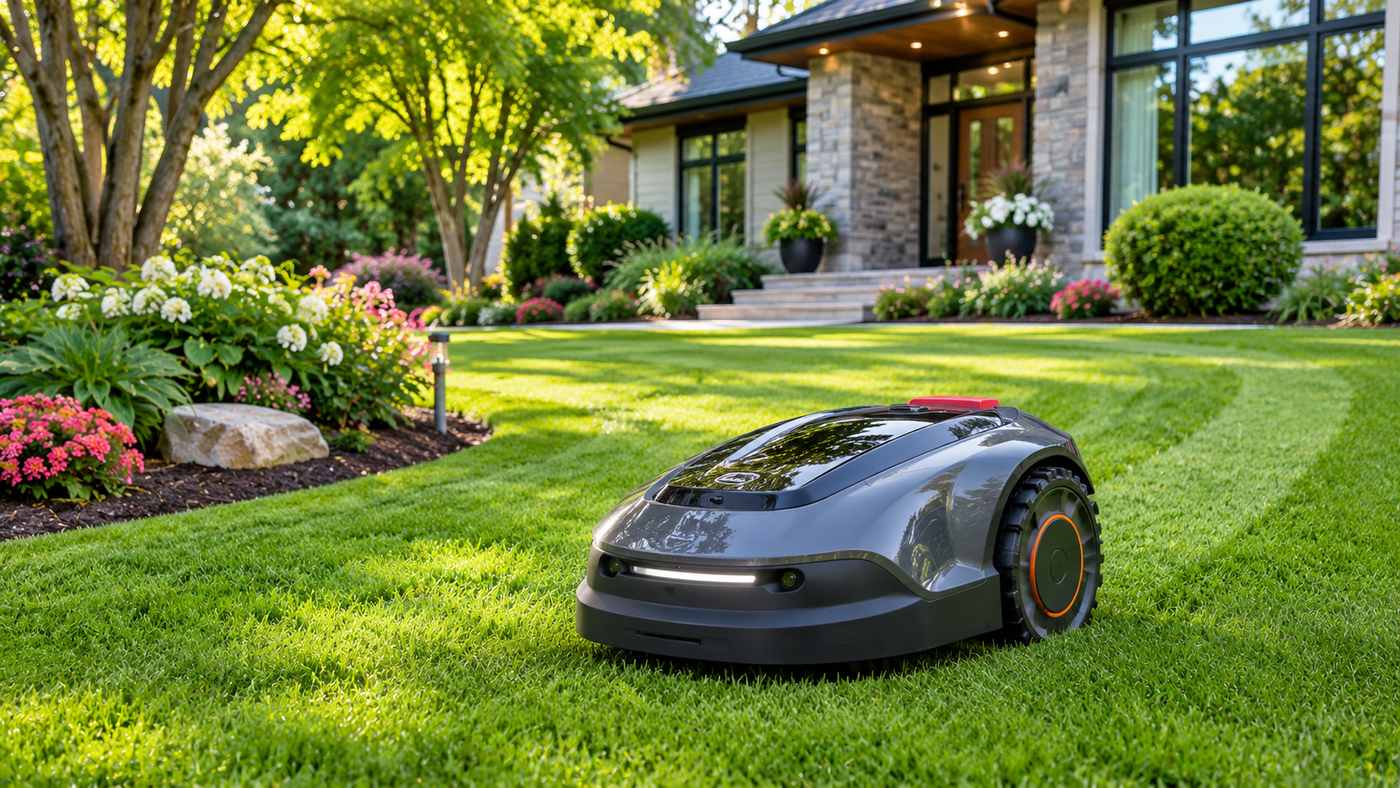
A robot lawn mower can make routine grass cutting easier, but a good result depends on more than buying a machine and pressing start. Lawn size, slopes, grass species, trees, garden borders and the presence of children or pets all influence which mower is suitable. Modern machines may use physical guide wires, satellite navigation or camera based mapping, yet no navigation system removes the need for sensible preparation and supervision around hazards. This guide explains how automated mowing works and offers practical steps for selecting, installing and maintaining a system that suits your property. The goal is a consistently cared for lawn, realistic running costs and safe operation rather than the promise of effortless perfection.
How Does an Automated Lawn Mower Work?
A robot lawn mower is a battery powered machine that cuts small amounts of grass during programmed sessions. When charging is needed, many models return to a docking station and resume work according to their schedules. Cutting patterns and navigation differ. Traditional machines often move within a perimeter defined by wire, while newer systems can map virtual zones using satellite positioning, cameras or other sensors.
These machines are intended for regular maintenance cutting, not for clearing heavily overgrown vegetation. Frequent trimming produces relatively small clippings that can settle into the turf. How well the approach works depends on the cutting height, grass growth, weather and the mower’s capacity. Even an advanced robot lawn mower still needs attention to edging, fallen branches, restricted areas and seasonal lawn health.
1. Measure the Grass Area Before Choosing a Model
A robot lawn mower manufacturer’s advertised area rating is a useful starting point, not a guarantee for every garden. Measure the actual turf that requires mowing rather than the total property area. Subtract buildings, paved patios, large beds and other surfaces that the machine will not cut. Then consider how the remaining lawn is arranged.
A single open rectangle is simpler to maintain than several small lawns joined by narrow passages. Tight corners, separated zones and slopes can reduce productive mowing time because the machine must travel or turn more frequently. A robot lawn mower with a nominal rating close to the measured area may struggle if the landscape is especially complex or growing conditions are demanding.
Allow for Difficult Layouts
Sketch where lawns connect, where gates open and which passages are narrow. Check whether the manufacturer provides minimum passage widths and supports multiple zones. Do not assume a model can cross gravel paths, steps or raised edging simply because its advertised coverage is large.
Plan Around Future Changes
If you expect to add a flower bed, playground or path, choose a mapping system you can reasonably modify. Ease of adjusting zones can matter more than a small difference in stated maximum coverage.
2. Choose Navigation That Matches Your Garden
Boundary wire models use a physical cable to define where the mower may travel. Installation takes planning and may involve securing or burying a perimeter wire. The benefit is a defined working area that does not depend on clear satellite reception. Repairs may be necessary if landscaping work damages the cable.
Wireless models use different technologies. Some rely on high precision satellite positioning, often described as RTK or GNSS, while others use cameras, lidar or combinations of sensors. A robot lawn mower using virtual boundaries can be convenient when the garden changes frequently, but reliable navigation may depend on suitable signal conditions, adequate lighting or correctly positioned reference equipment.
Check Trees, Walls and Weak Signals
Tall buildings, dense tree cover and enclosed courtyards may obstruct satellite signals. Camera based features can also have limitations in darkness or difficult visibility. Ask the manufacturer how the particular system handles your garden’s worst conditions, not just its ideal demonstration environment.
Compare Setup Requirements
Check whether the mower needs a reference station, WiFi coverage, a mobile application or paid connectivity. Find out what happens if the connection fails and whether mowing can continue safely without the phone nearby.
3. Read Slope Ratings and Ground Clearance Carefully
Slopes are a common reason a mower performs well in one yard and poorly in another. Manufacturers may express climbing ability as a percentage or an angle, and they may give separate limits for slopes near boundaries. Read those measurements precisely because the two units are not interchangeable.
A robot lawn mower should be selected using the steepest relevant section, not the average gradient. Wet soil, exposed roots and uneven ground can reduce traction even within a listed incline rating. Small wheels may also struggle with deep ruts, loose gravel and abrupt transitions between grass and paving.
Inspect the Lawn After Rain
Walk the property and identify areas where water pools or the ground becomes soft. A machine that sinks, slides or spins its wheels may damage the turf and become stranded. Consider drainage, smoothing dangerous ruts or excluding persistently difficult sections before relying on automation.
Leave a Safety Margin
Avoid treating a maximum slope rating as a target. Check the owner’s manual for restrictions around banks, retaining walls, ponds and drop offs. Physical barriers may be needed where a navigation error could have serious consequences.
4. Match Cutting Height to the Grass Species
Getting the most from a robot lawn mower begins with turf biology, not with how short a lawn looks in photographs. Different grasses have different preferred cutting heights, which can also vary with season, shade and use. Choose a machine whose adjustable height range includes an appropriate setting for your lawn.
Research and extension guidance commonly recommend removing no more than approximately one third of the grass blade in a single cut. A robot lawn mower is well suited to that principle when it runs often enough to remove small increments rather than large amounts at once. However, frequent cutting does not compensate for an unsuitable height or poor growing conditions.
Avoid Scalping and Excessive Stress
Starting at the lowest setting can expose crowns, weaken turf and increase vulnerability during heat or drought. Begin at a suitable height for the species and adjust gradually. If the lawn has become overgrown, a conventional mower may be needed for the initial reduction before automated maintenance begins.
Keep Clippings in Perspective
Fine clippings generally break down and return nutrients when the lawn is cut appropriately. They are not a substitute for assessing soil conditions, irrigation, pests and fertiliser needs. Excessively long or wet clippings can clump and should be handled separately.
5. Make Safety the Foundation of Your Schedule
Despite protective sensors, a robot lawn mower uses moving blades and must be treated as cutting equipment. Collision detection, lift sensors and emergency stops can reduce particular risks, but no feature makes it safe for children or animals to play nearby. Follow the manufacturer’s operating instructions and keep people and pets outside the work area while it is running.
Check the lawn for toys, hoses, stones, sticks and loose objects before every session. These objects can become obstacles or cause blade damage. Establish a routine to disable the mower before entering the area for gardening, maintenance or play, rather than assuming it will always detect someone in time.
Consider Wildlife as Well as Household Pets
Small animals can be especially difficult for autonomous equipment to detect. Avoid running the machine at night or around dawn and dusk when wildlife may be active. Daytime operation after a visual inspection provides more opportunities to notice animals before mowing begins.
Never Reach Under an Active Mower
Stop and disable the machine according to the manual before lifting it, clearing blockages or touching the cutting assembly. Wear appropriate protective gloves for blade work and keep the machine disconnected from unintended starts during servicing.
6. Install the Charging Station in a Practical Location
The charging station affects how easily a robot lawn mower begins and ends each session. Select a location that meets the manufacturer’s requirements for level ground, access routes, power supply and clearance. A sheltered position may help, but any cover must not obstruct navigation, ventilation or the dock’s required space.
A robot lawn mower cannot provide reliable coverage if it frequently fails to reach its charger. Test approaches from different parts of the garden, including narrow passages and turns near landscaping. For a wire based system, follow the specified cable distances from edges and obstacles rather than guessing from appearance.
Protect the Electrical Installation
Use only the approved power supply and installation method, respecting local electrical rules and outdoor socket requirements. Keep connections away from standing water, and seek a qualified electrician where a safe supply is not already available. Never improvise an extension lead arrangement that conflicts with the manual.
Test Each Exclusion Zone
Map flower beds, ponds, vegetable patches and fragile objects as restricted areas where necessary. Walk the entire perimeter during initial trials. Small setup errors are easier to correct before regular unattended scheduling begins.
7. Create a Sensible Daytime Mowing Schedule
Automated cutting works best when the schedule follows grass growth instead of an arbitrary daily target. During vigorous growth, more frequent sessions may be required. During drought, extreme heat or dormancy, less mowing can be appropriate. The aim is to avoid removing too much leaf in a single session while allowing the lawn to recover.
Schedule the robot lawn mower for times when the garden is free of children, visitors and pets. Prefer daylight so that obstacles and wildlife are easier to spot. Keep play periods, outdoor meals and maintenance activities outside the mowing window.
Adjust for Rain and Ground Conditions
Some machines are designed to tolerate rain, but water resistance does not mean that mowing wet grass is always desirable. Wet clippings can stick to equipment, traction can decline and soft soils may be damaged. Pause during storms, frost, standing water and conditions excluded by the manual.
Review the First Few Weeks
Look for strips of uncut grass, repeated wheel marks and areas visited too often. Adjust zones or operating time using observed results. The first schedule should be treated as a trial, not a permanent setting.
8. Understand Batteries and Real Running Costs
Battery capacity alone does not determine how many square metres a robot lawn mower can maintain. Runtime varies with grass density, slope, cutting height, temperature and navigation efficiency. Charging time also reduces the time available for mowing, especially on larger lawns.
When comparing a robot lawn mower, examine practical mowing capacity alongside the battery specifications. Look for published operating conditions and ask about the availability and price of replacement batteries. Battery replacement is a foreseeable ownership expense, but the timing depends on usage, climate and the cell system.
Calculate the Full Cost of Ownership
Include the purchase price, installation materials or professional setup, replacement blades, electricity, possible connectivity subscriptions, servicing and repairs. A model with a higher upfront price may offer features that save time, but those benefits depend on how much manual mowing it actually replaces.
Be Careful With Environmental Claims
Electric mowing avoids exhaust from an onboard petrol engine during operation, but that does not establish a universally lower lifetime environmental impact. Electricity generation, battery production, durability and repairability also matter. Evaluate specific evidence instead of accepting broad marketing claims.
9. Maintain Blades, Sensors and Wheels
A robot lawn mower needs regular inspection despite its automated operation. Small blades dull or become damaged, wheels collect mud and sensors may become obscured. Neglected maintenance can affect cutting quality and navigation, so follow the manufacturer’s recommended intervals and replacement procedures.
After disabling the machine, remove accumulated grass with an approved brush or cleaning tool. Check for worn blades, loose fasteners, cracked housings and damaged charging contacts. Replace cutting components with compatible parts and the correct hardware. Do not clean blades while the machine is capable of restarting.
Use the Correct Cleaning Method
Some models can be rinsed in particular ways, whereas others must never be sprayed. Check the product’s water resistance instructions. Avoid pressure washing, solvents or soaking electrical components unless the manual explicitly permits the method.
Keep Software and Records Current
Where supported, install appropriate firmware updates and retain service records. Updates may improve function or address faults, but they do not replace physical inspection or safe operating habits. Record recurring errors so that support staff can identify a pattern.
10. Prepare for Seasonal Changes and Storage
Grass growth changes across the year, and a robot lawn mower schedule rarely suits every month without adjustment. Reduce mowing when the lawn slows down and avoid cutting frozen or waterlogged turf. In climates with a winter dormancy period, the mower may need to be cleaned and stored until active growth returns.
A robot lawn mower should be stored according to its specific battery and charging instructions. Manufacturers differ: some recommend a particular partial charge before storage, while others prescribe a fuller charge or periodic recharging. Follow the correct manual rather than applying a generic battery percentage to every product.
Inspect Before Starting a New Season
Before the first session, examine blades, wheels, cables, sensors, connectors and the charging area. Clear fallen branches and make sure garden alterations have not changed the intended boundary. Perform a supervised test to confirm that docking and safety features work as expected.
Account for Seasonal Lawn Health
Automation cannot solve problems caused by insufficient light, poor soil, weeds or improper irrigation. Adjust your broader lawn care plan to the grass species and climate. Mowing is one part of turf management, not the whole solution.
11. Check Repairs, Support and Long Term Suitability
A robot lawn mower purchase decision should include what happens when the machine needs attention in several years. Check whether batteries, blades, wheels and navigation components are replaceable. Confirm the terms of the warranty, available repair channels and whether installation help is offered in your location.
Buying a robot lawn mower from a supplier with clear documentation and reliable parts access may be more valuable than choosing a feature rich model with uncertain support. Ask how the company handles boundary wire faults, failed docking, sensor errors and software issues. Also check whether essential operation relies on a subscription or cloud service that could change over time.
Test the Product Against Real Use Cases
Before making a final selection, consider three scenarios: a normal dry mowing day, a rainy week and a period when the garden is busy with visitors. The model should have clear procedures for pausing, resuming and restricting operation in each situation.
Know When Manual Mowing Is Still Necessary
Sharp edges, very narrow corners, steep banks and heavily overgrown patches may require separate tools. A robot lawn mower can reduce routine mowing labour, but it rarely eliminates every aspect of lawn maintenance. Realistic expectations help owners judge whether automation is worthwhile.
Frequently Asked Questions
How does a robot lawn mower know where to cut?
It follows a physical boundary wire or uses a supported navigation system such as satellite positioning, cameras or lidar. The exact mapping and obstacle detection features depend on the model.
Does a robot lawn mower need WiFi to work?
Not always. Some machines can run stored schedules without an active internet connection, while setup, remote control or certain navigation functions may need connectivity. Check the specific manufacturer’s requirements.
Can a robot lawn mower cut wet grass?
Some models are designed to operate in rain, but wet clippings and soft ground can cause problems. Follow the manual and pause mowing when traction or turf conditions are poor.
Is a robot lawn mower safe around pets and children?
It has safety features, but moving blades still pose risks. Keep children, pets and other animals away from the operating area, and avoid mowing during wildlife activity periods.
How often should I replace robotic mower blades?
Replacement intervals depend on blade design, cutting hours and lawn conditions. Inspect them regularly and follow the manufacturer’s schedule, replacing damaged blades promptly.
Will a robot lawn mower replace every other garden tool?
Usually not. You may still need a trimmer for edges, a conventional mower for overgrown patches and ordinary tools for debris removal and seasonal turf care.
Conclusion
A robot lawn mower can make regular lawn care more manageable when it is matched to the yard and operated with realistic expectations. Measure the mowing area, compare navigation and slope capabilities, and build a safe daytime schedule around your household and local wildlife. Proper cutting height, routine inspection and manufacturer approved storage practices support consistent performance over time. The best choice is not the machine with the longest feature list, but the one that fits your lawn, safety needs and maintenance budget.
