
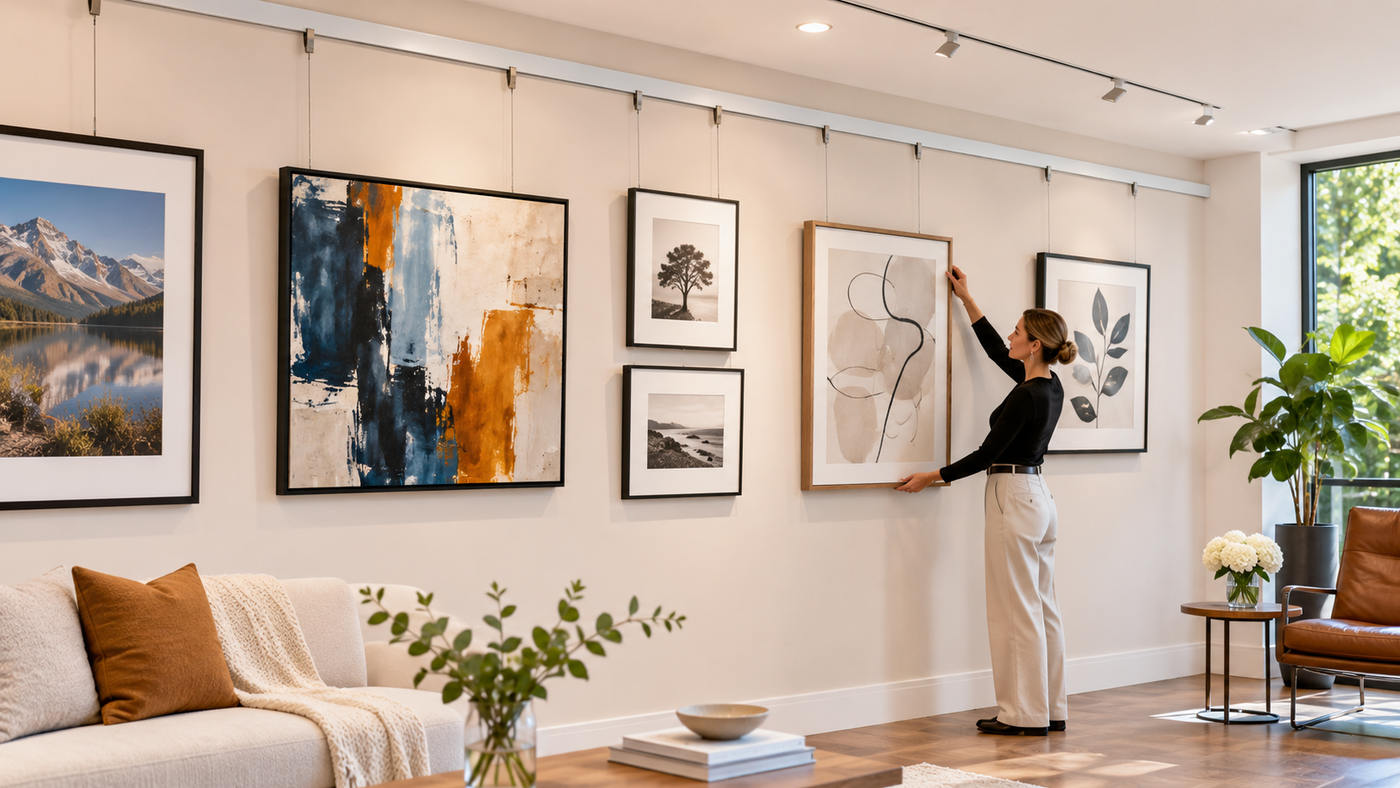
A thoughtfully arranged wall can make a home feel personal, turn an office into a welcoming space, or help a gallery tell a visual story. picture rail systems offer a practical way to display framed artwork using a rail, hanging cords or cables, and adjustable hooks. After the rail has been installed, many pictures can be moved without drilling a fresh hole for each arrangement. The result can be flexible and visually calm, provided the components are compatible, the rail is properly fixed, and the total load stays within the manufacturer’s limits.
The weight of the artwork, wall construction, security needs, and frequency of changes all shape the right choice. This guide explains the hardware, seven key decisions, and practical ways to protect artwork and walls.
What Are Picture Rail Systems?
Picture rail systems are modular art hanging arrangements that typically comprise a horizontal rail attached near the ceiling or at another suitable height, suspended cords or cables, adjustable picture hooks, and appropriate fixings on the backs of frames. The rail carries the hanging assembly, while the hook sets the display height. Compatible hangers can often slide along the track, letting users adjust horizontal positions without changing the wall fixings.
Modern picture rail systems are common in homes, offices, galleries, schools, and exhibition spaces because artwork changes can be made with relatively little disruption. They are especially useful for collections that grow or for rooms used for rotating displays.
How a Rail Based Hanging System Works
First, an appropriate track is secured to a sound wall or ceiling using the manufacturer’s specified fixing method. A compatible cable or cord connects to that track, and an adjustable hook supports the frame from approved hanging hardware. The frame’s position can then be changed vertically or horizontally within the permitted system design.
Traditional wooden picture moulding offers a related approach. Shaped hooks rest over a suitable moulding and support cords below it. However, an ordinary decorative trim is not automatically structural. Its fixing method and condition must be checked before it is used to carry artwork.
What Makes the Full Assembly Safe?
The safe capacity depends on the lowest rated relevant component, including rail, fasteners, cord, hook, frame hardware, and the surface holding the installation. A high capacity cable cannot compensate for weak plaster or inadequate screws. The total load across each length of rail must also stay within the manufacturer’s stated limit.
Why Choose a Rail Instead of Individual Picture Hooks?
For one permanent lightweight frame, conventional hanging hardware may be simpler. Picture rail systems are especially useful for changing collections, grouped displays, and exhibition spaces.
They reduce repeated holes below the rail, although the initial installation commonly requires drilling. Rented or heritage properties may require permission.
7 Smart Ways to Choose and Use Picture Rail Systems
1. Match the Rail Type to the Room
There are several approaches to wall art hanging, and each serves a different setting. Slim surface mounted rails offer a restrained appearance near a ceiling. More substantial tracks may suit heavier displays or frequent exhibition changes. Ceiling mounted products can be useful when wall fixings are impractical, but only where the supporting ceiling structure and system specification allow them.
Picture rail systems also include options intended for traditional moulding and specialist tracks used in galleries. A heritage interior may suit visible moulding hooks, while a contemporary living room may benefit from a discreet white aluminium rail. Neither choice should be made on appearance alone.
Decide whether the rail will continue around corners, stop at doorways, or sit beneath a cornice. Confirm compatible connectors and end caps before ordering.
Decide Whether the Rail Should Be Seen
A rail painted to coordinate with the wall can recede visually. A contrasting metal finish can become an intentional architectural detail. Verify that the manufacturer permits painting and follow its preparation instructions so paint does not interfere with the track’s moving parts.
2. Calculate Artwork Weight Before Selecting Hardware
Measure or weigh the heaviest completed frame, including glazing, backing, and mounting components. A canvas may be relatively light, while a framed mirror or large glass covered print can be substantially heavier. Do not estimate weight solely from visible dimensions.
Before ordering picture rail systems, compare the rated limits of the rail per unit of length with those of the selected cables, hooks, connectors, and frame hangers. Some manufacturers publish markedly different capacities for light residential tracks and professional gallery equipment. Their numbers are not interchangeable.
For wide pictures, two separate hanging points may improve stability and reduce unwanted rotation. However, using two hooks does not automatically make an installation safe for twice the load. The rail’s total limit, fixing pattern, load distribution, and specified hardware still apply.
Consider Unusual Artwork Separately
Heavy mirrors, sculptural objects, suspended glass, and framed items above seating areas deserve additional caution. Ask for specific installation advice rather than adapting a light picture system beyond its intended use. Keep artwork from obstructing doors, stairs, and emergency routes.
3. Choose Cables and Hooks That Belong Together
Transparent polymer cords, often marketed as perlon, offer a discreet appearance against many walls. Steel cables provide a different visual finish and can be used for some heavier installations when the product rating allows. The correct choice depends on weight, appearance, handling conditions, and compatibility with the rail.
With picture rail systems, the end of the cable matters as much as the cable itself. Some tracks accept a slide in fitting, while others use a hook, loop, or manufacturer specific connector. Adjustable hooks must match the cord’s type and diameter. Mixing components from unrelated systems can defeat the intended locking mechanism.
Check how hooks are adjusted and whether optional security features are available. Public galleries and private homes may prioritize these features differently.
Check the Frame Hardware Too
The cord hook must connect to a suitable hanger, ring, or other approved fixture attached to the artwork. Examine the strength of the frame and how the hanger is fastened. A strong track will not protect artwork if the frame’s fixing pulls out.
4. Mount the Rail Into a Suitable Supporting Surface
Correct mounting is the most important stage of a reliable installation. Timber studs, sound masonry, concrete, plasterboard, and older plaster can require different fixing approaches. Some walls conceal electrical cables or plumbing, which must be considered before drilling.
Manufacturers of picture rail systems specify mounting clips or fixing intervals for their products. Follow those instructions rather than copying a spacing recommendation from another brand. Where the wall material is uncertain, seek advice from a qualified installer. Heavy artwork may need anchorage to structural elements rather than relying on an unsuitable cavity fixing.
Ceiling mounted tracks bring separate challenges because a suspended ceiling panel is not necessarily a structural support. Use only ceiling systems designed for the particular building arrangement, with fixings made to the required supporting structure.
Historic Plaster Needs Special Care
Older plaster can be brittle or detached from its substrate. If conserving period finishes is a priority, a specialist should assess whether an existing picture moulding is secure and whether additional drilling is appropriate. Preserving walls means understanding the original fabric, not simply hiding new holes near the ceiling.
5. Plan Art Height, Spacing, and Visual Balance
Good display design starts with the people using the room. Art placed at a comfortable viewing height in a hallway may need a different arrangement from work above a sofa or a child’s display. Consider furniture height, the size of each piece, and where viewers normally stand or sit.
Picture rail systems allow users to adjust hanging height without shifting the whole track. Arrange several frames on the floor or mark approximate positions with paper before attaching cables. Look for consistent spacing or a deliberate rhythm in a mixed collection. A gallery wall does not need identical frames, but it usually benefits from some organizing principle.
Give a focal work breathing room, and align selected edges or centrelines in a cluster. Adapt the composition to surrounding architecture.
Prevent Tilting and Visual Clutter
Two properly spaced hangers often keep a wide frame steadier than one central point. Neatly manage excess cable according to the product instructions so loose ends do not distract from the artwork. Review how the layout looks from the room’s main entrance as well as from close range.
6. Think About Future Exhibitions and Daily Use
A display can change over time. Family photographs grow, office awards are replaced, and community galleries may rearrange exhibitions frequently. Picture rail systems are especially useful when this flexibility is a primary requirement rather than a minor convenience.
Look for compatible cords that can be added without extensive disassembly. Using one rail family across several walls can simplify later changes.
In public areas, consider secure hooks or hanging rods where the artwork and access conditions justify them. Ordinary hooks are not necessarily theft resistant.
Plan for Maintenance and Replacement Parts
Keep product names, load ratings, installation instructions, and a few compatible spare hooks together. If components need replacement later, exact identification helps avoid unsafe mixing and unnecessary purchases.
7. Compare Complete System Cost, Not Just Rail Price
A rail is only one part of the purchase. Budget for mounting hardware, corner pieces, end caps, cords, hooks, and suitable frame fittings. Professional installation, wall repairs, or special access equipment may add to the total cost.
When comparing picture rail systems, calculate how many pieces you intend to hang now and how many might be added. A low priced rail with expensive proprietary accessories may not be the best value for a growing collection. Conversely, a professional system can be unnecessary for a few lightweight prints in a private room.
Review warranties, spare part availability, and mounting instructions. Choose a system that meets the intended load and use rather than paying for unused features.
How to Install Picture Rail Systems Correctly
Installation steps vary by manufacturer, but the planning sequence is broadly consistent. Measure the intended wall run and decide where the rail will begin and end. Check the surface, identify concealed services, and confirm the fixing method. Mark a level reference line, locate the approved mounting positions, then secure the clips or track according to the relevant installation manual.
After the rail has been fitted, attach compatible hanging cords and hooks. Test the movement and locking mechanisms before introducing valuable artwork. Confirm the condition of each frame hanger and gradually load the installation within its published limits. Keep a record of the system’s type and intended capacity.
Should You Install the Rail Yourself?
A competent home improvement enthusiast may be able to install straightforward picture rail systems on suitable surfaces when the manufacturer provides clear instructions. Complex substrates, high mounting positions, valuable artwork, or heavy loads are good reasons to employ a professional. Use appropriate safety equipment and do not drill where concealed electrical services may be present.
How Much Damage Does Installation Cause?
Most tracks require a limited number of permanent attachment points. Afterward, relocating pictures usually does not require new holes in the display wall. Removing the rail itself may still leave fixing holes or affected paint, so landlords and occupants should agree on permitted changes before installation.
Picture Rail Systems for Homes, Offices, and Galleries
Different environments place different demands on hanging hardware. Homes may prioritize appearance, offices easy changes, and exhibitions controlled access.
Residential Gallery Walls
Picture rail systems work well in living rooms, stair landings, home offices, and hallways when the installation is compatible with the wall and the frames. Mixed frame sizes can be rearranged without repeated holes below the rail.
Avoid using ordinary display rails as a substitute for purpose designed safety fixings in locations where a falling object would create a substantial hazard. The chosen hardware and placement should suit the people using the space.
Offices and Shared Buildings
In offices, picture rail systems can display staff artwork, photographs, awards, or informational pieces, provided the objects are appropriate for the hardware. Facilities teams should manage display changes and protect access and emergency routes.
Museums and Public Exhibitions
Professional galleries may require stronger tracks, lockable hooks, carefully controlled loads, and a documented changeover process. The Canadian Conservation Institute recognizes top of wall hanging tracks as an alternative that allows flexible positioning and avoids repeatedly patching display walls. For valuable collections, conservation advice should guide framing, hanging materials, security, and environmental conditions.
Design Ideas That Make Art Displays Feel Intentional
A good rail should support the artwork rather than dominate it. For a minimalist room, select a low profile finish compatible with the ceiling line and use discreet cords. In a character home, an existing sound picture moulding may contribute to the interior’s original design language. Visible metal tracks can also complement contemporary spaces.
When using picture rail systems for a rotating collection, establish one visual rule for each display. You might align the centres of photographs, use equal gaps between frames, or build a balanced arrangement around a larger artwork. Leave enough space to view the works comfortably and avoid overwhelming a narrow passage.
Lighting and Artwork Protection
Directional lighting can improve viewing, and some track families offer compatible illumination accessories. Check electrical requirements and heat exposure before adding lights. Light sensitive photographs, paper works, and textiles may require limits on illumination and exposure duration. A beautiful display should not accelerate deterioration of the collection.
Common Mistakes to Avoid
The first mistake is treating every rail, cable, and hook as interchangeable. Another is focusing on the rail’s advertised weight capacity while ignoring the wall fixing or a weaker hook. Some installers use decorative moulding without confirming that it was built or anchored to support suspended objects.
Picture rail systems also require reasonable load distribution. Placing several heavy pieces onto a short section may overload it despite an adequate total length elsewhere. Check the manufacturer’s stated loading method and make sure nobody adds objects beyond the approved limit later.
Check for loose frames, worn connectors, bent hooks, and damaged wall areas after display changes. Remove suspect pieces until the cause is resolved.
Frequently Asked Questions
1. What are picture rail systems used for?
They suspend framed pictures and other approved objects from a rail using compatible cords or cables and adjustable hooks, allowing changes without drilling new holes for every position.
2. Do picture rail systems damage walls?
Most require initial screws or other approved fixings, so installation can leave holes. Once fitted, relocating artwork normally avoids repeated drilling below the rail.
3. Can picture rail systems hold heavy paintings?
Some professional systems can, but capacity depends on the complete assembly and supporting structure. Check the rated limits for the rail, anchors, cables, hooks, and frame fittings.
4. Are picture hanging rails suitable for plasterboard?
They can be when the product and fixings are approved for the particular wall construction and load. Weak or uncertain substrates need specialist assessment.
5. Is a steel cable better than a transparent cord?
Neither is universally better. Steel may suit certain higher load systems, while clear cord creates a subtler appearance. Compatibility and published ratings determine suitability.
6. Can I use an existing wooden picture rail?
Potentially, if it is a genuine load bearing picture moulding in sound condition, with compatible hooks and secure attachment. Ordinary decorative trim should not be assumed suitable.
Conclusion
Understanding picture rail systems helps homeowners and exhibition planners create adaptable displays without repeatedly damaging finished walls. A successful installation begins with the right track, verified fixing strength, compatible hooks and cords, and careful attention to artwork weight. Thoughtful spacing, access, and maintenance then turn a functional hanging method into a confident design choice. When selected and installed responsibly, a rail system can support changing collections while keeping the surrounding space orderly and attractive.
