
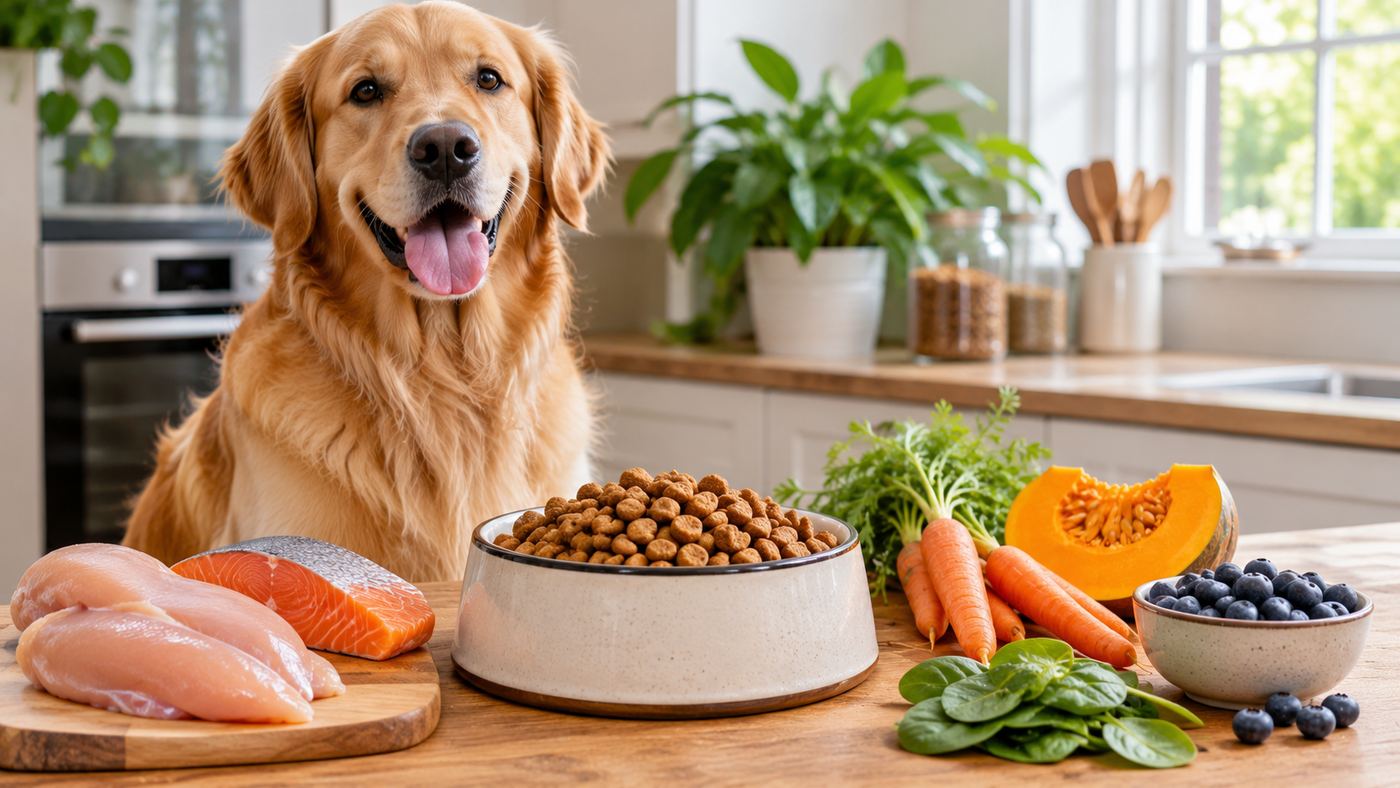
Choosing a daily diet involves more than finding appealing meat ingredients or an attractive feeding philosophy. 80-20 dog food usually describes a commercial recipe marketed as containing approximately 80 percent animal ingredients and 20 percent other ingredients, often vegetables, fruits, and added nutrients. However, manufacturers may calculate that proportion differently, and it does not establish the finished food’s protein content or nutritional completeness. A responsible choice begins with the food’s suitability for your dog’s life stage, calorie needs, medical history, and the manufacturer’s formulation standards.
The ratio has become a recognizable label in premium pet food, but an ingredient percentage is not the same as a veterinary nutrition assessment. This guide explains what the claim may mean, how to read a product label, seven useful purchasing decisions, and how to introduce a new food while monitoring your dog’s response.
What Does 80-20 Dog Food Actually Mean?
In many commercial dry food ranges, 80-20 dog food refers to a recipe formulated using roughly 80 percent meat, fish, or other animal derived ingredients and 20 percent plant ingredients or additional components. The precise definition depends on the company. An animal ingredient total may include fresh meat, dehydrated meat, fish, animal fats, stock, or organ ingredients. The remaining portion may include plant foods, vitamin and mineral premixes, and other recipe components.
It is important to read the product’s own explanation of its percentage. An 80 percent animal ingredient declaration is not a claim that the bag contains 80 percent pure protein. Nor does it necessarily mean 80 percent fresh muscle meat in the finished kibble.
Why Ingredient Weight Can Be Misleading
Fresh meat contains considerable water. During processing, much of that moisture is removed, reducing the weight of the original ingredient. Dehydrated meat starts with far less water, so equal starting weights do not contribute the same dry matter. Manufacturers may describe the proportion used before cooking or follow a particular recipe calculation. Without that detail, comparing two percentages can lead to incorrect conclusions.
Is the 80/20 Ratio the Same as Raw Feeding?
No. Some raw feeding discussions describe a different ratio based on muscle meat, edible bone, and organ meat, commonly called 80/10/10. That model is not equivalent to the animal and plant ingredient ratio marketed for many cooked commercial foods. Neither numerical formula alone guarantees the necessary vitamins, minerals, essential fatty acids, or suitable calcium and phosphorus balance.
What the Ratio Cannot Tell You
A headline percentage does not reveal digestibility, feeding trial results, actual nutrient levels, food safety controls, or how well a recipe suits an individual dog. Those qualities require separate evidence.
7 Essential Tips for Choosing 80-20 Dog Food
1. Check for Complete and Balanced Nutrition First
The strongest starting point for evaluating 80-20 dog food is the nutritional adequacy statement. In the United States, a complete and balanced claim identifies whether a diet meets an applicable Association of American Feed Control Officials nutrient profile or is supported by feeding trials conducted under recognized procedures. The statement also identifies the intended life stage.
In European markets, look for a complete pet food declaration and formulations aligned with applicable FEDIAF nutritional guidance. Terminology and legal requirements differ between regions, so review the label for the country where the product is sold.
A recipe described as complementary, supplemental, or intended for occasional feeding should not automatically become the dog’s only daily food. A high meat ratio does not correct deficiencies in calcium, iodine, vitamin D, or other essential nutrients.
Why the Life Stage Statement Matters
Growing puppies, pregnant or nursing dogs, and healthy adults have different nutrient requirements. For large breed puppies, the suitability of a growth formula and appropriate mineral balance are especially important. Choose 80-20 dog food only when the nutritional adequacy information matches the animal being fed, and seek veterinary advice for special health needs.
2. Read the Full Ingredient List Without Overinterpreting It
Ingredient lists identify what a manufacturer uses, but they do not independently grade quality or prove biological performance. In jurisdictions using weight ordered declarations, ingredients appear according to their weight when added, which can favor water rich fresh ingredients over dry ones in the list.
When examining 80-20 dog food, look for clearly described animal sources and a transparent explanation of the recipe percentage. Chicken, salmon, liver, and rendered or dehydrated animal meals have different compositions, but the name alone does not determine whether the finished diet is adequate.
Vegetables and plant ingredients are not inherently undesirable. Dogs can digest and use nutrients from appropriately processed plant sources, and some provide fiber or other useful components. What matters is how the whole formula delivers required nutrients.
Questions to Ask the Manufacturer
Ask whether the quoted ratio refers to ingredients before processing or to a different measurement, how product consistency is checked, and whether a typical nutrient analysis is available. Clear answers are more helpful than broad claims about natural ingredients.
3. Compare Protein, Fat, Calories, and Digestibility
An animal rich recipe may contain substantial protein and fat, but 80-20 dog food products do not all have identical nutrient profiles. Check the guaranteed or declared analysis for protein, fat, fiber, moisture, and other available nutrient information. The manufacturer may provide a detailed typical analysis with additional essential nutrient values.
Comparisons between wet and dry food should account for water content. A canned diet containing more moisture can appear to have a lower protein percentage despite providing a different result on a dry matter basis. Energy density is equally important because a modest serving of calorie dense kibble may supply more energy than expected.
High Protein Does Not Automatically Mean Better Health
Protein supports tissue maintenance and normal physiological functions, but more is not always more beneficial. Dogs with certain medical conditions may need a veterinarian selected diet with specific nutrient restrictions. Fat levels also require attention for animals prone to weight gain or with medical conditions that affect fat tolerance. Evaluate the dog’s needs rather than assuming a high percentage is universally ideal.
4. Match the Formula to Age, Activity, and Body Condition
The appropriate amount and type of food depend on more than breed or size. Age, neuter status, exercise, body condition, health, and environmental conditions all influence calorie needs. An active working dog may need a different energy intake from a sedentary pet of the same body weight.
Choose 80-20 dog food using a suitable life stage statement, then start with the feeding guidance on the package. Adjust portions gradually using regular body weight and body condition checks, ideally with input from a veterinary professional. Ribs should generally be palpable under a light fat covering, while an obvious waist can be assessed according to breed and body shape.
For dogs with allergies or chronic illness, a retail high meat recipe is not an automatic treatment. Veterinary elimination diets and therapeutic foods are formulated for particular diagnostic or medical purposes; changing ingredients without a plan can interfere with care.
Keep Treats in the Calorie Budget
Treats and extras can displace essential nutrients when they make up too much of the daily intake. For most healthy dogs, veterinary nutrition guidance commonly limits treats to no more than about 10 percent of daily calories. A carefully selected complete diet should supply the majority of nutrition.
5. Do Not Assume Grain Free Is Automatically Superior
Many 80-20 dog food recipes are marketed without grains, but an absence of wheat, rice, or oats does not by itself make a diet safer, more digestible, or healthier. Most dogs can consume appropriately formulated grain containing foods unless a specific dietary issue has been established.
The United States Food and Drug Administration has investigated reports of nonhereditary canine dilated cardiomyopathy involving certain diets, including many grain free formulas rich in peas, lentils, or other pulses. These reports do not establish that every grain free food causes heart disease, and a single ingredient should not be presented as a proven cause.
For 80-20 dog food, the sensible response is to focus on complete formulation, the manufacturer’s expertise, quality control, and the dog’s health instead of assuming grain free automatically means premium. Discuss a diet change with a veterinarian if a dog has heart disease, a relevant family history, or concerning symptoms.
Be Careful With Ingredient Marketing
Terms such as ancestral, holistic, and superfood can communicate a brand’s positioning without establishing nutritional superiority. Demand evidence for health promises and avoid selecting food based only on a marketing slogan.
6. Distinguish Cooked Commercial Food From Raw Products
The phrase 80-20 dog food can appear on kibble, cold pressed products, wet food, or raw feeding ranges. Processing methods differ considerably. A dry food containing animal ingredients is not automatically raw, even when its marketing mentions natural feeding patterns.
Raw animal ingredients can carry disease causing organisms, including Salmonella and Listeria. Public health authorities caution that raw pet foods can expose both animals and people to infection, and dogs may shed pathogens without appearing ill. Raw bones also carry risks including broken teeth, choking, and intestinal injury.
For households with young children, older adults, pregnant people, or individuals with weakened immunity, these concerns deserve particular attention. Choosing an appropriately formulated, safely handled cooked commercial product avoids some hazards associated with uncooked animal proteins.
Food Safety Still Matters After Processing
Store products according to the package, keep bags dry and sealed, wash hands after handling pet food, and clean bowls regularly. Follow use by dates and refrigeration instructions for opened wet products. Even cooked food requires appropriate handling and recall awareness.
7. Introduce the New Diet Gradually and Monitor Results
A new recipe can differ in protein sources, fiber content, fat level, and calories. Changing suddenly may cause digestive upset in some dogs. When moving to 80-20 dog food, a gradual transition is often sensible for an otherwise healthy dog, unless the veterinarian recommends a different approach.
One practical method is to begin with a small amount of the new food mixed into the existing diet, then increase the proportion over approximately a week or longer according to tolerance. Dogs with digestive disorders or prescribed diets need individualized advice. Do not make a routine transition the priority if a veterinarian has directed an urgent therapeutic change.
Monitor stool consistency, appetite, vomiting, scratching, energy, and body weight. Mild adjustment is possible, but persistent diarrhea, repeated vomiting, weakness, blood in the stool, or refusal to eat warrants prompt veterinary assessment.
Avoid Judging the Food After One Meal
Observe the dog across an appropriate adjustment period while controlling portions and treats. Good nutrition is assessed through clinical health, body condition, and long term suitability, not a single stool or an especially enthusiastic first feeding.
Potential Benefits and Limitations of Animal Rich Dog Food
Commercial 80-20 dog food may appeal to owners who prefer a clearly stated proportion of animal derived ingredients. Some recipes are formulated with substantial protein and can offer convenient portioning compared with preparing meals at home. When a product is complete, balanced, safely manufactured, and appropriate for the dog, it can function as a primary diet.
Yet the percentage does not predict superior digestibility, muscle growth, coat appearance, or life expectancy. The quality of the entire formulation and its match to the individual animal determine whether it is appropriate. Claims that 80-20 dog food necessarily reproduces the diet of wild canines oversimplify the long history of domestic dogs and their ability to use varied foods.
Can It Support an Active Dog?
Potentially, if the formula supplies appropriate energy and essential nutrients. Active dogs need enough calories and may have different feeding schedules, but not all high protein diets are high calorie, and not every active dog needs an unusually rich product.
Does It Help Dogs With Sensitive Digestion?
Not predictably. A dog may respond to a particular recipe because of its ingredient selection, fiber, fat level, or overall digestibility rather than its percentage of animal ingredients. Recurrent gastrointestinal signs should be evaluated professionally rather than repeatedly changing foods in search of a marketing category.
How to Compare 80-20 Dog Food With Standard Kibble
Begin with two products that both meet the dog’s nutritional requirements. Compare their calorie content, life stage claims, typical nutrient analyses, quality assurance information, price per feeding day, and availability. A higher declared meat percentage does not necessarily mean a product is more affordable or suitable.
If one food has more moisture than another, compare nutrients on a dry matter or energy basis with veterinary guidance. If the animal is on a prescribed diet, do not substitute a regular formula without the prescribing veterinarian’s agreement. A specialty percentage is not a clinical indication.
What Should a Trustworthy Brand Disclose?
Manufacturers should be able to explain who develops the formulas, whether suitably qualified nutrition experts are involved, where the product is made, and how finished batches are tested. Veterinary nutrition organizations recommend asking about quality control, nutritional adequacy, research, and accessible customer service.
For 80-20 dog food, detailed answers help establish whether the product’s claims reflect a controlled recipe or merely persuasive packaging. Avoid interpreting an impressive ingredient panel as a substitute for evidence of nutritional adequacy.
Creating a Sensible Feeding Plan at Home
A practical feeding plan begins with a measured daily ration. Use the manufacturer’s calorie information and a veterinarian’s advice where necessary. Divide the amount into meals that suit the dog’s needs and household schedule, provide fresh drinking water, and account for treats and training rewards.
If choosing 80-20 dog food, measure portions with a kitchen scale when possible, because scoops can vary with kibble size and packing. Track body weight at consistent intervals and adjust intake based on body condition rather than relying permanently on the initial feeding chart.
When to Ask for Veterinary Nutrition Advice
Puppies, pregnant or lactating dogs, seniors with health conditions, and animals with kidney, pancreatic, gastrointestinal, or cardiac disorders may require specific nutritional management. Seek advice before replacing a clinically indicated diet with a retail high meat recipe. An individualized recommendation may be more valuable than pursuing a fixed ingredient ratio.
Common Shopping Mistakes
Buyers often mistake 80 percent animal ingredients for 80 percent dietary protein, assume raw and cooked products are equivalent, or overlook feeding calories. Another mistake is treating the ingredient list as more informative than a complete nutrition statement. Evaluate the actual product instead of a single attractive number.
Frequently Asked Questions
1. What does 80-20 dog food mean?
It commonly means a commercial recipe marketed with approximately 80 percent animal ingredients and 20 percent other ingredients. The calculation varies by brand, so check the manufacturer’s explanation.
2. Is 80-20 dog food complete and balanced?
It can be, but the ratio alone does not prove it. Look for an appropriate nutritional adequacy or complete pet food statement matching your dog’s life stage.
3. Does an 80/20 formula contain 80 percent protein?
No. Ingredient percentages are not the same as crude protein percentages. Read the guaranteed analysis and consider moisture and energy content when comparing foods.
4. Is 80-20 dog food suitable for puppies?
Only when the specific product is formulated and labeled for growth or an appropriate all life stages category. Large breed puppies may have additional formulation considerations.
5. Is 80/20 dog food the same as an 80/10/10 raw diet?
No. Commercial 80/20 generally describes animal and other ingredients, while 80/10/10 describes a meat, bone, and organ ratio. Neither formula guarantees complete nutrition.
6. How should I switch my dog to an 80/20 recipe?
For many healthy dogs, increase the new food gradually over about a week while monitoring tolerance. Ask a veterinarian for a tailored plan when illness or digestive sensitivity is present.
Conclusion
Choosing 80-20 dog food should begin with nutritional completeness, appropriate life stage labeling, and a clear understanding of what the ingredient ratio means. A high animal ingredient percentage can describe a recipe style, but it does not replace evidence of formulation quality, food safety, or suitability for a particular dog. Compare calories, nutrient information, manufacturing practices, and feeding guidance before changing diets. A measured transition and veterinary support when needed provide a more reliable foundation for long term canine health.
