
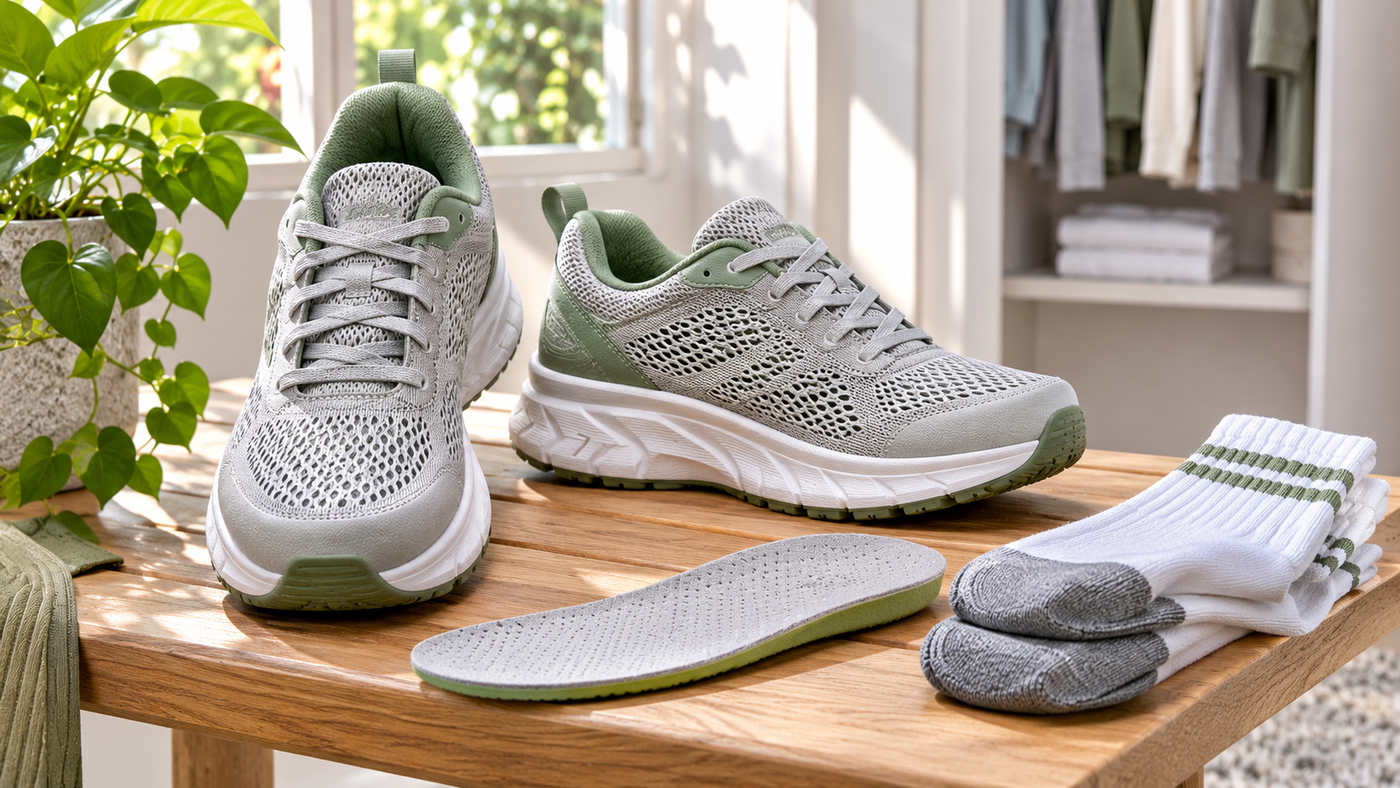
Choosing footwear can be frustrating when your socks feel damp before the day is over. A breathable shoe for sweaty feet can improve comfort by allowing moisture and heat to escape more readily, but ventilation alone does not stop the body from producing sweat. The material, fit, socks, insole, activity and drying routine all influence how the shoe feels after several hours. A pair that works for a short walk may behave differently during a long shift or an intense workout. This guide explains seven practical buying and care decisions, including how to assess mesh and leather, select moisture managing socks, avoid irritating fits and recognise when excessive sweating needs professional attention. The goal is comfortable, appropriate footwear supported by realistic expectations rather than promises of permanently dry feet.
Why Do Feet Sweat Inside Shoes?
Sweating is a normal way for the body to regulate temperature. Feet also have numerous sweat glands, so warmth, physical activity and enclosed footwear can leave them damp. Some people experience plantar hyperhidrosis, a condition involving excessive sweating of the soles that may occur even when the weather is mild. Shoes do not cure that condition, but choosing a breathable shoe for sweaty feet can form part of a sensible management routine.
Sweat itself is not the only reason for unpleasant odour. Bacteria on the skin can break down components in perspiration, while a persistently moist environment may encourage fungal problems such as athlete’s foot. Poorly dried footwear can also develop smells of its own. These issues have different causes and should not be treated as though they all need the same spray or deodorant.
Understand the Difference Between Airflow and Absorption
Airflow lets heat and moisture vapour move away from the foot. Absorption describes how a material takes up moisture, while wicking moves liquid sweat away from the skin toward areas where it can evaporate. An effective shoe and sock combination should address both ventilation and moisture handling.
No Shoe Can Guarantee Zero Sweat
A breathable shoe for sweaty feet may feel less stuffy, but perspiration is still possible during exercise, humid weather or prolonged standing. Judge a product by fit and actual comfort rather than claims that it eliminates sweating entirely.
1. Look for Uppers That Allow Air to Move
The upper is the part of a shoe that surrounds the top and sides of the foot. When comparing a breathable shoe for sweaty feet, inspect this material before focusing on colour or branding. Open knitted fabric, engineered mesh and selected perforated designs may allow more ventilation than a continuous, nonporous coating. But not every shoe with a mesh appearance performs identically. Dense backing, thick overlays and internal waterproof membranes can change how easily moisture escapes.
Engineered Mesh and Knitted Fabrics
Many everyday trainers use textile uppers with open sections that promote airflow. A lightweight, flexible design may suit walking and casual wear, provided its construction supports the foot appropriately. If the upper is lined with a dense fabric or reinforced over most of its surface, the ventilation benefit may be smaller than it looks in photographs.
Leather and Other Natural Materials
Suitable leather shoes can also allow moisture vapour to pass through, especially when designed with breathable linings or ventilation details. They may suit an office where athletic mesh looks too informal. Leather performance depends on finish, thickness and construction, so avoid assuming every leather shoe breathes equally well.
Waterproofing Is a Tradeoff
A waterproof membrane can protect against rain but may feel warmer or slower to release moisture in some conditions. If your main need is a breathable shoe for sweaty feet in dry weather, weigh waterproof protection against air movement instead of assuming the most weather resistant shoe is automatically the most comfortable.
2. Select Socks That Move Moisture Away From Skin
Even a breathable shoe for sweaty feet can feel clammy when paired with socks that retain moisture against the foot. Socks are the layer touching the skin, so fabric choice matters. Products labelled moisture wicking are designed to transport sweat away from that surface. Some synthetic athletic blends and suitable wool blends perform this function, but a fibre name alone is not proof of effective wicking.
Cotton can absorb sweat and may feel pleasant at first. During sustained activity, however, a saturated cotton sock may remain damp against the skin. This is why podiatry guidance often favours well designed wicking socks for people whose feet sweat heavily. The best option also depends on cushioning, seams, fit and personal sensitivity.
Match Sock Thickness to the Shoe
Thick socks can create unwanted pressure in a fitted trainer, while extremely thin socks may offer insufficient cushioning for long walks. Try a breathable shoe for sweaty feet while wearing the socks you actually plan to use. The shoe should remain secure without squeezing the toes or rubbing at the heel.
3. Prioritise Fit, Support and Room for Movement
A shoe that ventilates well can still cause problems if it is too tight. Pressure and friction may contribute to discomfort, hot spots or blisters, particularly when socks are damp. When shopping for a breathable shoe for sweaty feet, fit should be evaluated alongside the upper. Have both feet measured where possible, and fit the larger foot if there is a difference.
Try footwear later in the day if your feet tend to swell. Stand and walk in both shoes, checking the toes, heel and widest part of the forefoot. The toes should have comfortable space to move without the foot sliding excessively. Avoid choosing a tight size on the assumption that the material will eventually stretch enough.
Check the Heel and Midfoot
A secure heel reduces unnecessary movement, while an adjustable closure helps fine tune the fit. The midfoot should feel supported without harsh pressure. For running or prolonged walking, choose a shoe built for the activity and surface rather than selecting a soft casual shoe only because it has visible ventilation holes.
Check Insoles and Interior Seams
A removable insole is convenient because it may be easier to inspect and air out separately. Check that the footbed feels comfortable, the lining is smooth and seams do not rub. If you use prescribed orthotics, test them in the candidate pair and ensure they do not make the fit too shallow.
4. Choose a Design That Matches Your Daily Activity
There is no universal best breathable shoe for sweaty feet because the requirements of a runner, office worker and delivery driver differ. The shoe must be appropriate for the job as well as comfortable in warm conditions. Consider how long it will be worn, the surfaces underfoot, weather exposure and any workplace rules before choosing.
For Running and Fitness
Exercise increases heat and moisture. Look for sports footwear designed for the relevant activity, then compare upper ventilation, secure fit and appropriate cushioning. A breathable shoe for sweaty feet should also work with the socks you use during training. Test it gradually before relying on it for a long workout.
For Offices, Schools and Long Shifts
Perforated leather styles or selected breathable textile shoes may offer a more formal appearance. People who stand for hours should also assess underfoot support and the surface they work on. Where protective footwear is required, select certified safety shoes that meet the workplace hazard requirements. Ventilation never replaces protection against impacts, punctures or slipping.
Sandals Have Limits
Open sandals may provide excellent airflow, but they are not suitable for every workplace, terrain or medical need. Protect your feet from hot ground, sharp objects and unsafe environments. A breathable shoe for sweaty feet is only helpful when it also suits the situation.
5. Assess Insoles, Linings and Odour Control Claims
The inside of the shoe influences moisture management as much as the visible exterior. Some insoles absorb perspiration; others use fabrics designed to wick it away. A removable footbed can make cleaning and drying simpler. When evaluating a breathable shoe for sweaty feet, check whether replacement insoles are available and whether the maker permits removing them after wear.
Be Careful With Powders and Sprays
Some foot powders can help manage wetness, and suitable antiperspirants may reduce sweating. Follow the label and ask a pharmacist or clinician about persistent problems, irritation or the correct use of stronger products. Avoid mixing multiple treatments inside a breathable shoe for sweaty feet without checking their compatibility.
6. Rotate Shoes and Give Each Pair Time to Dry
Daily care often makes as much difference as the purchase itself. After wearing a breathable shoe for sweaty feet, remove it from a closed gym bag or locker and allow it to air out in a clean, dry, ventilated space. If the manufacturer recommends it, remove the insole so moisture can escape from both sides. Do not assume a surface that feels dry means the lining and footbed are fully dry.
Alternating between two suitable pairs can give each one more time to dry before the next use. Dermatology and podiatry organisations recommend this habit for people managing excessive perspiration or recurring foot odour. It is especially valuable when work or exercise makes footwear damp almost every day.
Clean According to the Manufacturer’s Instructions
Brush away dirt and spot clean as directed. Not all footwear can be machine washed, and high heat may deform adhesives, foam or synthetic components. Dry shoes at room temperature with sufficient airflow rather than putting them against a radiator or using an unapproved heated dryer.
Keep Storage Areas Dry
A dark, damp cupboard can delay drying even when the shoes were worn only briefly. Avoid storing used footwear in sealed plastic bags. If a shoe develops a musty smell or visible contamination, review its cleaning instructions and whether it is still suitable for use.
Do Not Share Footwear When Infection Is Suspected
A breathable shoe for sweaty feet does not prevent infections on its own. Keep shoes and towels personal when athlete’s foot is present, and follow appropriate treatment advice.
7. Know When Sweating Needs More Than Better Footwear
A breathable shoe for sweaty feet can improve day to day comfort, but ongoing excessive sweating may have a medical explanation. Plantar hyperhidrosis refers to sweating of the soles beyond what is needed for temperature regulation. It can interfere with work, cause slipping inside shoes or contribute to repeated irritation. Assessment is worthwhile when the problem persists despite reasonable changes to hygiene, socks and footwear.
Recognise Possible Athlete’s Foot
Itching, scaling, peeling or cracking between the toes can suggest a fungal infection. These signs are not enough to establish a diagnosis by themselves, and similar symptoms may occur with dermatitis or other conditions. A pharmacist or clinician can advise on appropriate treatment. Seek help if symptoms worsen, spread or fail to improve as expected.
Ask About Evidence Based Sweat Treatments
Depending on the person, a clinician may discuss suitable antiperspirants, iontophoresis or other options for hyperhidrosis. Treatment choices depend on symptoms, medical history and potential side effects. Avoid assuming that replacing a breathable shoe for sweaty feet will solve a persistent medical condition.
Take Extra Care With High Risk Feet
People with diabetes, reduced sensation, poor circulation or a history of foot ulcers should seek appropriate footwear and foot care guidance. Open designs, rubbing seams and damp skin may carry additional risks in these circumstances. New wounds, redness, swelling or suspected infection deserve prompt medical attention.
How to Compare Breathable Shoes Before Buying
A dependable shopping decision begins with real requirements rather than claims such as maximum airflow or guaranteed freshness. Use the same socks for each fitting, check comfort while walking, and ask how the shoes should be cleaned. If buying online, review the return policy and precise size chart. A breathable shoe for sweaty feet should be evaluated in the context of your routine rather than one feature listed in an advertisement.
A Practical Buying Checklist
- Look for genuine ventilation in the upper and lining, not just printed mesh patterns.
- Check width, toe room, heel stability and comfort with your normal socks.
- Verify that the footwear suits your activity, weather and any safety requirements.
- Consider removable insoles and whether the interior can dry between uses.
- Read cleaning instructions, warranty conditions and the return policy.
- Avoid unsupported claims about eliminating sweat, odour or fungal infections.
Understand the Difference Between Value and Price
A more expensive shoe may offer useful fit options, durable materials or replaceable parts, but price is not proof of superior breathability. Think about the cost per period of comfortable use, the ability to rotate footwear and how easily the shoes can be maintained. A breathable shoe for sweaty feet that stays comfortable and dries properly may provide more value than one purchased for its branding alone.
Daily Foot Care Habits That Support Breathable Footwear
A consistent routine improves the benefits of a breathable shoe for sweaty feet. Wash your feet regularly with a suitable cleanser and dry thoroughly, including between the toes. Wear clean socks and change them after exercise or when they become damp. Examine the skin periodically for irritation, blisters or changes that need attention.
Plan for Workdays and Travel
Carry spare socks in a clean pouch, and pack a separate bag for worn socks. After commuting or exercise, remove damp footwear when you can do so safely. Give your breathable shoe for sweaty feet a chance to dry before wearing it again. If travel makes rotation impossible, place extra emphasis on breathable socks and regular cleaning.
Frequently Asked Questions
What is the best breathable shoe for sweaty feet?
There is no single best model for everyone. Look for suitable mesh or breathable leather, a comfortable fit, appropriate support and an insole that can dry between uses.
Are mesh shoes better than leather for sweaty feet?
Open mesh may provide more direct airflow, while well designed leather shoes can also breathe. Lining, construction, activity and fit affect the result.
Can breathable shoes completely stop foot sweating?
No. They can help manage heat and moisture but do not stop sweat glands working. Persistent excessive sweating may require assessment for hyperhidrosis.
Which socks work well with a breathable shoe for sweaty feet?
Moisture wicking athletic blends and some wool blends can move sweat away from the skin. Change socks when damp and ensure they fit comfortably.
How often should I change or rotate my shoes?
Rotate pairs when possible and allow each shoe to dry fully before the next use. Replace worn footwear when fit, cushioning or hygiene can no longer be maintained.
When should I seek help for sweaty or smelly feet?
Seek professional advice if sweating disrupts daily life, odour persists despite routine care, or you notice itching, peeling, painful cracks or signs of infection.
Conclusion
Choosing a breathable shoe for sweaty feet starts with honest attention to ventilation, fit, sock fabric and the demands of your day. The most comfortable result usually comes from combining suitable footwear with regular washing, clean moisture managing socks and enough drying time between wears. Avoid promises of completely sweat free feet, and take recurring irritation or severe sweating seriously. Practical care and an informed fit can make daily walking and working more comfortable without relying on exaggerated product claims.
