
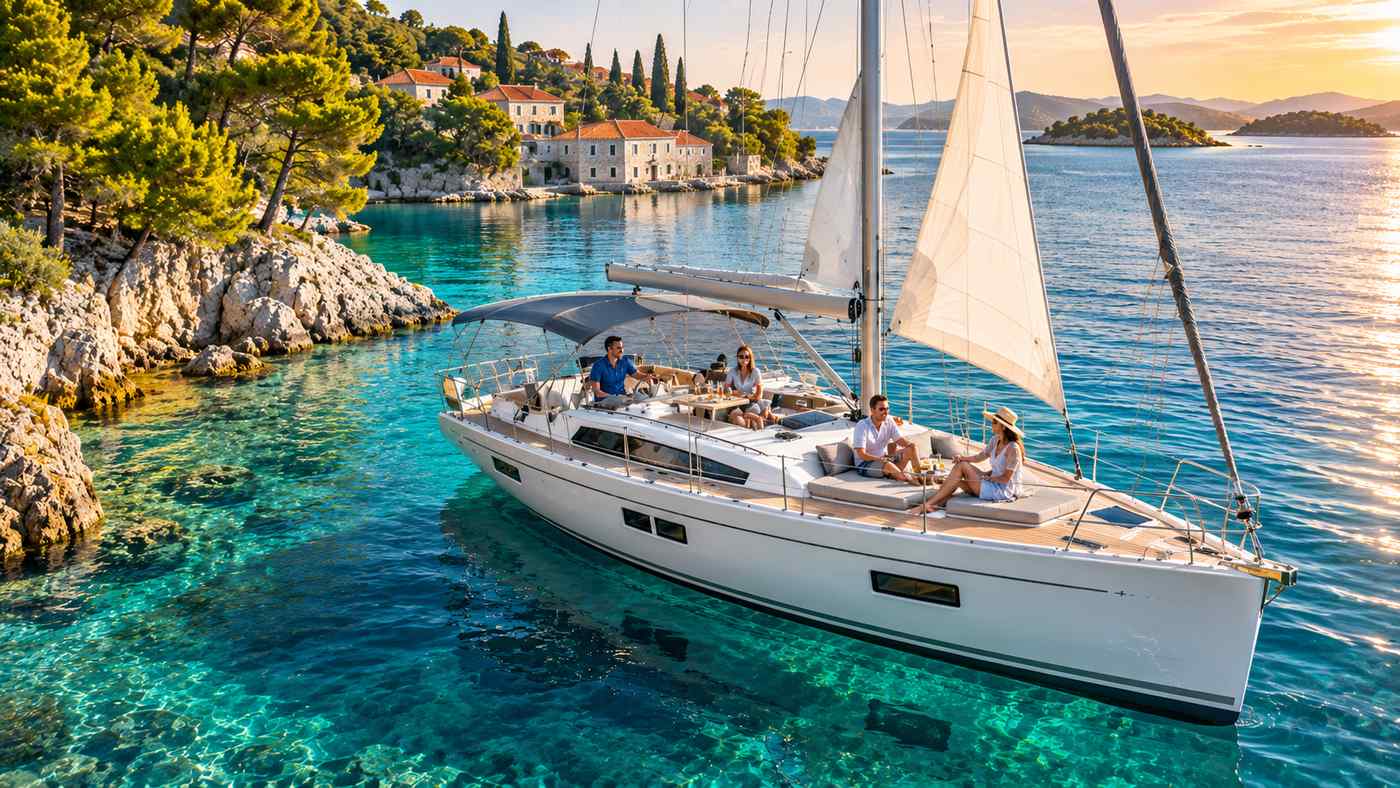
Croatia’s coastline rewards travellers who want to combine island landscapes, historic towns, quiet swimming stops, and memorable meals. Booking a Croatia yacht charter can make those experiences part of one flexible holiday, with the route shaped around the people on board rather than a fixed ferry timetable. Yet the freedom of a yacht comes with practical responsibilities: choosing the right boat, understanding who will operate it, allowing for changing weather, and budgeting beyond the advertised weekly rate. A well-planned charter balances scenic ambitions with safe passages, comfortable accommodation, and enough time to enjoy each place without rushing.
Croatia’s Adriatic islands offer very different settings within the same country. Central Dalmatia is popular for its combination of towns and bays, the Šibenik area provides access to the Kornati archipelago, and southern routes can feature Mljet and the Elaphiti Islands. The right Croatia yacht charter itinerary depends on the departure marina, vessel, season, crew experience, and real conditions on the water.
What Is a Croatia Yacht Charter?
A Croatia yacht charter is the rental of a sailing yacht, catamaran, or motor yacht for an agreed period in Croatian waters. Some holidays are bareboat arrangements, where a properly qualified customer takes command. Others include a professional skipper or a larger crew responsible for navigation, guest service, and other agreed tasks. Charter packages differ in what they include, and the contract should identify the exact vessel or a clearly defined substitution arrangement.
The appeal is flexibility. Guests may swim in a sheltered cove in the morning, visit an island town in the afternoon, and dine ashore later. That flexibility is not unlimited: berth availability, park rules, fuel range, daylight, weather, and the vessel’s approved operating area can restrict the day’s options.
Bareboat, Skippered, and Fully Crewed Options
A bareboat holiday suits sailors with the required recognised qualifications and sufficient recent experience for the specific vessel. A skippered charter places a professional in charge, which can help groups who want to relax or are unfamiliar with local conditions. Fully crewed yachts may provide a captain, additional deck support, and hospitality services depending on the contract.
A Croatia yacht charter with a skipper does not always include food, the skipper’s meals, or a private cabin for that person within the advertised price. Confirm the sleeping arrangements and expenses before booking.
Why the Type of Charter Matters
Do not select a bareboat booking merely to reduce the quote if no qualified person can legally and safely operate the yacht. The correct service level should reflect experience, expected daily distances, and the group’s comfort with life on board.
Why Croatia Is Popular for Yacht Holidays
Croatia has a long coastline and numerous inhabited and uninhabited islands. Distances between some destinations allow varied routes that combine cultural sightseeing with time at sea. Towns such as Split, Hvar, Korčula, and Dubrovnik have distinctive historical settings, while quieter areas provide opportunities for swimming, walking, and enjoying the coastal environment.
For a Croatia yacht charter, the departure base is especially important. An itinerary starting near Split will not have the same realistic day-by-day options as one beginning near Dubrovnik or Zadar. Avoid promotional routes that combine every famous island in one week without allowing for travel time and weather.
7 Essential Tips for Planning the Best Croatia Yacht Charter
1. Choose the Right Departure Region
The most useful first decision is geographical. Split and nearby Trogir are common starting points for central Dalmatian sailing, with access to Brač, Šolta, Hvar, and Vis. The Zadar and Šibenik regions offer routes among smaller islands and toward Kornati National Park. Dubrovnik provides a convenient southern base for the Elaphiti Islands, Mljet, and suitable portions of the southern Dalmatian coast. Northern bases in Istria and Kvarner offer different landscapes and island combinations.
When researching a Croatia yacht charter, identify the actual check-in marina, not merely the name of the nearest large city. A base may sit outside the centre and require a transfer from an airport or station. Confirm when the vessel can be boarded, whether a technical briefing occurs before departure, and when it must be returned.
Consider how much time the group wants ashore. First-time visitors may enjoy fewer destinations with longer stops, while experienced sailors might welcome additional passages. Build the route around experiences rather than trying to collect place names.
Match Geography to Your Priorities
Choose central Dalmatia for a mix of lively towns and island stops, Kornati-area routes for a stronger focus on nature, or the southern coast for a combination of historic ports and quieter waterways. Weather and berth availability can alter each plan.
2. Confirm Skipper Qualifications and Crew Arrangements
Operating a charter boat requires the appropriate recognised certificates for the vessel and operating area. Croatian authorities publish lists of accepted foreign qualifications, with conditions depending on certificate, vessel size, and other details. Appropriate radio qualifications may also be required when using marine VHF equipment. Charter companies commonly check documents before approving a bareboat booking.
A Croatia yacht charter guest should never assume a recreational certificate from another country is automatically recognised. Ask the operator to check the exact qualification against the current Croatian list before paying a nonrefundable deposit. An experienced sailor may still need a professional skipper if their paperwork does not meet the applicable rules.
For skippered holidays, ask about the captain’s language, local knowledge, responsibilities, and experience with the yacht type. Clarify who makes final safety decisions, how the itinerary will be agreed, and what hospitality is included. The skipper must retain the ability to change plans for safety reasons.
Check the Charter Agreement, Not Just the Advertisement
Confirm whether crew fees, meals, gratuities, and accommodation are included. A listed skipper rate can be separate from the yacht rental, and those additional obligations affect both the budget and the cabin available to guests.
3. Select a Yacht That Fits the Group
Sailing monohulls, catamarans, and motor yachts suit different priorities. A monohull offers a traditional sailing experience and may appeal to travellers who enjoy the act of sailing. Catamarans often provide more separated living areas and a broad deck arrangement, although berth pricing and availability may differ. Motor yachts can cover distance differently but usually involve more significant fuel considerations.
Before selecting a Croatia yacht charter, review the usable cabin layout rather than only the number of advertised berths. Check whether anyone must sleep in a converted saloon, whether bathrooms are shared, and how luggage can be stored. For families, ask about safe movement on deck, shade, swimming access, and appropriate safety equipment for children.
Compare equipment lists carefully. Air conditioning, a generator, a watermaker, a tender, and water-sports equipment are not guaranteed on every boat. Even where installed, their operation may depend on fuel, battery capacity, marina electricity, or the contract terms.
Comfort Requires More Than Length
A longer yacht is not necessarily better for every group. Ease of boarding, ventilation, headroom, cabin privacy, and the skipper’s working space can matter more than an impressive dimension in the listing.
4. Build a Flexible Island-Hopping Itinerary
A memorable Croatia yacht charter balances famous stops with unhurried time in sheltered bays. Central Dalmatia might include Brač, Hvar, Vis, and Šolta, but the exact order should reflect the starting marina, forecast, anchorage conditions, and availability of suitable berths. A southern route might explore the Elaphiti Islands and Mljet, with Korčula included only if the distances and weather are appropriate.
Avoid treating every island name as a compulsory destination. A forecast may make an exposed passage unsuitable, or a popular harbour may have limited space. A skipper can choose a more protected alternative without diminishing the holiday. Some of the most enjoyable moments happen during a quiet afternoon rather than a long transit.
For routes including Kornati National Park, verify the current vessel ticket and designated anchoring locations. For Mljet National Park, visitor vessels require the relevant permission and park ticket, and anchoring is restricted to specified zones. Protected-area rules should be checked independently of the charter operator’s suggested route.
Allow Time for Shore Visits
A short stop may not be enough to explore historic streets, visit a museum, or enjoy a meal. Factor in tender transfers, walking, shopping for provisions, and the time needed to secure the vessel before leaving it unattended.
5. Calculate the Real Cost Beyond the Weekly Rate
The advertised price of a Croatia yacht charter may cover use of the vessel for a set period, but not all the expenses of the trip. Depending on the booking, additional items can include skipper or crew fees, fuel, marina berths, mooring buoys, park entries, tourist tax, final cleaning, linen, equipment rentals, and transfers. A refundable security deposit or an insurance-related alternative may also be required.
A luxury crewed Croatia yacht charter may use an advance provisioning allowance or a similar arrangement to cover certain variable operating expenses. The terms differ, so ask for a written explanation of how costs are estimated, approved, documented, and reconciled at the end of the voyage.
For a Croatia yacht charter budget, request an itemised quotation with the currency, payment schedule, cancellation conditions, and costs for changing dates. Confirm whether taxes are included and whether a one-way trip attracts repositioning charges. Avoid relying on last season’s marina or park prices, which can change with the year, boat length, and season.
Treat Deposits and Insurance Separately
Understand what the security deposit covers, the policy excess, exclusions for negligence or equipment damage, and the process for disputes after checkout. A deposit-reduction product is not automatically comprehensive insurance.
6. Plan Around Weather and Navigation Safety
The Adriatic is often associated with bright summer sailing, but winds and sea conditions can change rapidly. The bora is a north-easterly wind that can produce strong gusts, while the jugo generally refers to a south-easterly wind that can bring uncomfortable seas. Local summer breezes and thunderstorms also require attention. Conditions differ by location and time, so general seasonal descriptions are not adequate for navigation decisions.
Any Croatia yacht charter itinerary should use current official marine forecasts, suitable charts, and local notices. Croatia’s meteorological service issues dedicated marine reports, while the national nautical information service provides information relevant to ports and navigation. A qualified skipper decides whether a passage is appropriate for the boat and crew.
Discuss expected daily sailing hours, passenger seasickness, safe swimming practices, and what happens during a weather delay. If the forecast requires spending an extra night in a protected harbour, the charter contract and available budget should accommodate that possibility.
Keep Safety Equipment and Briefings Practical
Before departure, identify lifejackets, emergency communications, first-aid supplies, fire equipment, and the location of essential controls. The charter operator should explain how to report problems and whom to contact in an emergency.
7. Respect Marine Parks and Coastal Communities
A beautiful Croatia yacht charter depends on healthy coastal ecosystems. Anchoring can damage sensitive seabed habitats, including Posidonia seagrass meadows, when the anchor and chain drag through them. Use designated buoys or permitted anchoring areas where available, and follow park-specific rules. Do not assume a sheltered-looking bay is automatically open for anchoring.
The official Croatian nautical guidance distinguishes concessioned anchorages and public-port facilities from some non-concession areas, but charted restrictions and protected-area rules still apply. Marinas, mooring buoys, and park visits may carry different charges. Ask for a receipt where payment is required and clarify what service the charge covers.
Minimise waste, use appropriate shore facilities for disposal, and avoid releasing sewage or oily water into the sea. Respect swim zones, quiet coastal communities, and speed limits. When entering a protected park, follow its ticketing and navigation instructions rather than assuming general coastal rules are sufficient.
Responsible Travel Improves the Experience
Choose operators who explain environmental obligations clearly and treat local residents and waterfront businesses respectfully. Enjoying a place responsibly helps preserve what makes it special.
When Is the Best Time for a Croatia Yacht Charter?
The best season depends on preferred temperatures, crowds, travel flexibility, and the type of yacht. July and August are generally popular for warm-weather holidays, but busy marinas and anchorages may reduce spontaneity. Late spring and early autumn can appeal to travellers who favour a different balance of visitor numbers and conditions. Water temperatures, daylight, business opening hours, and available services vary.
For a Croatia yacht charter, May, June, and September are worth comparing alongside peak summer dates rather than assuming the most expensive week will be the most enjoyable. October may suit some experienced travellers, but unsettled conditions and reduced seasonal services can affect the trip. Never treat a month as a guarantee of safe sailing weather.
What About Booking Early?
Booking earlier may improve the choice of cabins, vessel models, and departure bases for popular weeks. However, cancellation flexibility matters if flights or group arrangements are uncertain. Compare the actual contract terms and check what is paid at reservation, before departure, and at checkout.
A Realistic Seven-Day Croatian Sailing Outline
An example week beginning near Split can introduce central Dalmatia without pretending that every passage is guaranteed. On the first day, complete the yacht handover, buy provisions, and discuss a weather-dependent route with the skipper. The next days can include suitable stops around Šolta and Brač, followed by Hvar or Vis when conditions and practical distances support them. Reserve time for a quiet bay and an overnight stop with reliable shelter before returning to the home marina.
This is an illustrative framework, not a navigational plan. A real Croatia yacht charter should be adapted to vessel performance, safe passage times, forecast conditions, available moorings, and charter check-in requirements. Popular towns and protected areas can require advance arrangements, particularly in summer.
Southern and Northern Alternatives
A Dubrovnik-based week might focus on the Elaphiti Islands, sheltered sections near Mljet, and appropriate stops toward Korčula. An itinerary from Zadar or Šibenik can emphasise island passages and the Kornati area. Istria and Kvarner offer another character, including coastal towns and islands such as Cres and Lošinj. Choose a coherent region rather than trying to cover the whole coastline in one trip.
What Should a Good Charter Booking Include?
A credible Croatia yacht charter offer identifies the actual vessel model and year, berth configuration, handover marina, charter dates, equipment, and condition-check process. It should also make clear what happens if mechanical issues prevent the original boat from being supplied. The written terms should cover payment, security deposits, cancellation, insurance, damage reporting, and responsibilities for fuel and cleaning.
Ask About Check-In and Check-Out Procedures
Inspect the boat with a representative and record existing damage, equipment status, and fuel levels. Confirm how the holding tank, batteries, and onboard systems work. On return, allow time for inspection and any required refuelling. Document disagreements before leaving the marina.
Avoid Overlooking Practical Details
Before a Croatia yacht charter, ask about baggage size, drinking water and provisions, marina electricity, bedding, towels, mobile connectivity, and access to laundry or showers ashore. Practical amenities can influence comfort more than an additional sightseeing stop.
Common Mistakes to Avoid
Some travellers book a Croatia yacht charter based only on a dramatic photograph or a low weekly price. Others choose an itinerary involving too many ports, overlook skipper credential checks, or assume marine-park access is included in every package. Comparing complete quotes, verifying vessel details, and respecting weather limits reduce these avoidable problems.
Another mistake is expecting a skipper to follow a fixed sightseeing schedule regardless of risk. The captain’s safety judgement takes priority. Discuss your preferences in advance but keep time for alternative routes, unexpected maintenance, and rest.
Frequently Asked Questions
1. What is the best region for a Croatia yacht charter?
Split and nearby bases suit many first-time island-hopping holidays. Zadar, Šibenik, Dubrovnik, and northern Croatia offer different routes, scenery, and levels of activity.
2. Do I need a sailing licence to charter a yacht in Croatia?
For bareboat operation, the skipper must hold qualifications recognised for the vessel and waters concerned, with applicable radio requirements. A professional skipper is an option when suitable.
3. Is a catamaran better than a monohull?
It depends on cabin space, sailing preference, group needs, berth availability, and budget. Compare actual layouts and total operating costs rather than selecting by appearance.
4. When is the best month to sail in Croatia?
Many visitors compare June and September with July and August. Conditions, crowds, and services vary, and daily marine forecasts remain essential in every season.
5. Are fuel and mooring fees included in yacht charter prices?
Not always. Fuel, marina berths, buoys, park tickets, crew expenses, and other items may be charged separately. Ask for a complete written cost breakdown.
6. Can a Croatia yacht charter visit Kornati or Mljet National Park?
Yes, subject to current park permissions, vessel tickets, navigation and anchoring restrictions, and weather. Confirm the rules before entering protected waters.
Conclusion
A Croatia yacht charter can combine remarkable Adriatic scenery with the freedom to explore islands at a comfortable pace. The strongest plans start with a suitable departure region, a properly qualified skipper, the right yacht, and a realistic full budget. Weather, protected-area rules, and thoughtful scheduling should guide the itinerary rather than a rigid list of landmarks. With careful planning and respect for coastal environments, the journey can be as rewarding as the destinations themselves.
