
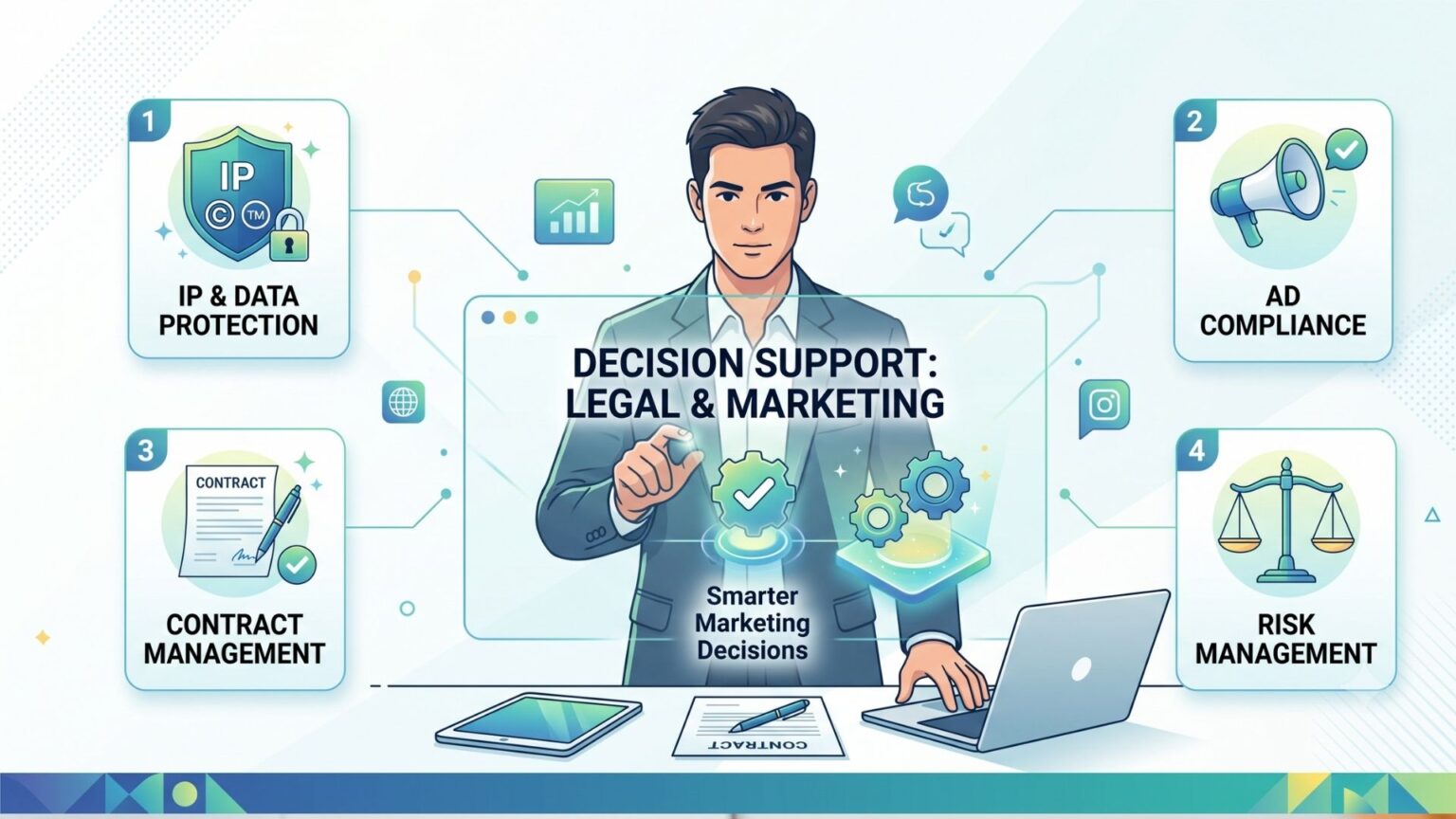
What’s the one part of running an online business where a small legal misstep can undo months of careful marketing work in a single complaint? Advertising and promotion, more often than most business owners expect. A campaign that took weeks to plan and launch can trigger a regulatory inquiry, a platform penalty, or a costly dispute almost overnight if it crosses a line the marketing team never saw coming.
An ecommerce lawyer’s role in marketing decisions isn’t about slowing campaigns down with excessive caution, it’s about catching these risks before they become expensive problems that are far harder to unwind after the fact. Here are seven specific ways that legal input actually shapes smarter, safer marketing decisions, well before a campaign ever goes live.
1. Reviewing Advertising Claims Before They Go Live
Marketing copy often makes bold claims about a product’s benefits, performance, or results, and not every claim that sounds compelling is actually one a business can legally support. A lawyer reviews these claims against consumer protection standards before a campaign launches, catching language that could be considered misleading or unsubstantiated.
According to the Australian Competition and Consumer Commission’s own review of online business practices, an examination of 137 businesses found 37 percent had engaged in concerning conduct around fake or misleading online reviews, while a separate sweep found 81 percent of the 118 social media influencers reviewed were making posts that raised concerns under Australian Consumer Law.
This kind of review matters because regulators increasingly scrutinize digital advertising specifically, and a claim that seemed like reasonable marketing language can carry real legal exposure once it’s live and being seen by thousands of potential customers. Catching this at the drafting stage is considerably cheaper than defending it after a complaint.
2. Structuring Trade Promotions and Competitions Legally
Running a giveaway, contest, or trade promotion involves specific legal requirements that vary depending on where entrants are located and what’s actually being offered as a prize. Missing these requirements can turn what was meant to be a marketing win into a genuine compliance problem.
A lawyer familiar with these rules helps structure a promotion correctly from the outset, covering entry conditions, prize disclosure, and any required permits, rather than leaving a marketing team to discover the requirements only after launch. This upfront structuring is one of the more overlooked ways legal input directly protects a campaign’s success.
3. Advising on Data Collection Built Into Marketing Campaigns
Modern marketing campaigns often collect customer data directly, email sign-ups, quiz results, personalized recommendations, and this data collection carries its own set of legal obligations around consent, storage, and use. A lawyer reviews how a campaign collects and handles this data before it launches, not after a customer raises a concern.
This matters increasingly as privacy regulations tighten and customers become more aware of how their information is used. A marketing team focused on conversion rates isn’t always positioned to catch a privacy compliance gap, which is exactly where legal review adds a layer of protection that marketing expertise alone doesn’t cover.
4. Reviewing Influencer and Affiliate Agreements
Partnering with influencers or affiliates to promote a product introduces legal considerations around disclosure requirements, content ownership, and what happens if a partner makes a claim the business itself wouldn’t legally make. A poorly worded influencer agreement can leave a business exposed to liability for content it didn’t directly create but is still associated with.
A lawyer reviews these agreements to ensure proper disclosure requirements are built in and that the business has some protection if a partner’s content creates legal exposure. This is an area many growing ecommerce businesses overlook entirely until a partnership goes wrong.
5. Protecting Against Misleading Advertising Claims
Beyond individual ad copy, broader marketing strategies, comparison claims, “was/now” pricing, limited-time offers, all carry specific legal requirements to ensure they reflect genuine, honest representations rather than manufactured urgency or inflated comparisons. A lawyer helps a marketing team understand exactly where these lines sit before a campaign goes live.
This guidance matters considerably given how closely regulators are watching digital advertising practices right now, and getting this right proactively avoids the kind of enforcement action that can follow a strategy built around technically misleading claims, even unintentional ones.
6. Guiding Pricing and Discount Representations
Discount and pricing claims are one of the most heavily scrutinized areas of marketing compliance, since a “was” price has to reflect a genuine prior selling price, not an inflated figure used purely to make a discount look larger. A lawyer helps ensure pricing claims across a marketing campaign are structured to reflect actual, defensible pricing history.
Getting this wrong isn’t just a minor technicality, it’s one of the most commonly enforced categories of marketing violation, which makes proactive legal review considerably more valuable than assuming a pricing strategy is fine because a competitor does something similar.
7. Advising on Email Marketing and Consent Requirements
Email marketing campaigns depend on proper consent, and the rules governing what counts as valid consent, how opt-outs must be handled, and what information a marketing email must include vary depending on where recipients are located. A lawyer helps ensure a campaign’s email marketing practices meet these requirements before a single email goes out.
This matters because email marketing violations tend to be systemic rather than isolated, a single non-compliant template can affect every email sent through a campaign, multiplying a small oversight into a much larger compliance issue very quickly.
Why Marketing and Legal Teams Should Work Together
Marketing and legal teams are sometimes treated as separate functions with competing priorities, one focused on creativity and speed, the other on caution and compliance. In reality, the strongest marketing campaigns come from these two functions working together from the earliest planning stages, not from legal simply signing off at the end.
When legal input happens early, it shapes a campaign’s direction rather than restricting it after the creative work is already done. This collaborative approach tends to produce marketing that’s both compelling and considerably less likely to trigger a costly compliance issue later. For businesses looking to build this kind of collaboration into their marketing process, working with an Ecommerce Lawyer who understands both legal requirements and marketing goals makes this partnership considerably easier to establish.
Industry consultants often point to integrated legal support as an effective way to balance compliance and creativity, and Prosper Law applies this approach through fixed-fee legal services designed to work alongside marketing teams and their existing workflows rather than slowing campaign development.
Turning Legal Compliance Into a Competitive Advantage
Businesses that treat legal compliance as a genuine part of their marketing strategy, rather than a limitation on it, often end up building more trust with customers than competitors who cut corners. Clear, honest advertising and transparent pricing practices increasingly stand out precisely because so many businesses still get these details wrong.
This trust compounds over time, since customers who feel confident they’re being told the truth are more likely to return and recommend a business to others. In a market where regulatory scrutiny is only increasing, the businesses that treat compliance as a strength, not a burden, are the ones most likely to build lasting customer relationships.
Final Thoughts
Smarter marketing decisions for an online business come from catching legal risk before a campaign launches, not from responding to a complaint after it’s already live. From ad claims to trade promotions to email consent, an ecommerce lawyer’s involvement across these seven areas is what allows a marketing team to move quickly and confidently, rather than second-guessing every campaign out of uncertainty. Building this kind of review into the process from the start is what keeps good marketing ideas from turning into unexpected legal problems.
