
What they measure, where they differ, and how to choose a tracker that produces evidence you can actually use
| Quick take: The useful AI visibility tools do more than count mentions. Look for answer-level evidence, citations, competitive context, repeatable prompt tracking and a collection method you understand. |
AI search has created a new measurement problem for marketers. A brand can rank well in Google and still be absent from the answer a buyer gets from ChatGPT, Gemini, Perplexity or Google AI features. Even when the brand is mentioned, the cited source may be a review site, Reddit thread, publisher or competitor page rather than the company website.
That is why AI visibility tracking has become its own software category. These platforms run or observe prompts across answer engines, store the responses, identify brand mentions and citations, and compare results over time. The best tools also help teams understand why visibility changed and which source or content gap is worth acting on.
The challenge is that “AI visibility” is not a standardized metric. Vendors use different engines, collection methods, prompt sets and scoring models. So the right question is not simply which platform has the prettiest visibility score. It is which one gives your team enough evidence to make a better marketing decision.
How we evaluated the tools
· Evidence depth: Can you inspect the prompt, answer and cited source behind the score?
· Competitive context: Does the tool show which brands appear instead of yours?
· Engine coverage: Can it monitor the AI systems that matter to your buyers?
· Actionability: Does the data point toward content, PR, technical or source-level opportunities?
· Operational fit: Can a real marketing team run it consistently without creating a reporting burden?
Quick comparison
| Rank | Platform | Best for | Key angle |
| 1 | Llumo | Flexible, low-cost tracking | BYOK + answer-level evidence |
| 2 | predis.ai | Social Media Marketing | Automated Content Creation |
| 3 | Peec AI | Competitive analysis | Visibility + source intelligence |
| 4 | Otterly.AI | Daily multi-engine monitoring | Web-facing collection + GEO tools |
| 5 | Scrunch | Enterprise web/AI-agent teams | AI visibility + agent experience |
| 6 | Writesonic | Execution-focused growth teams | Track, act and measure |
| 7 | SE Visible | SEO teams and agencies | Bridge from SEO to AI visibility |
| 8 | MentionBird | Brands and agencies | Simple setup + detailed competitor AI visibility insights + prompt-level action plans |
1. Quattr
Best for enterprise teams who want to track AI visibility and fix it in one place
Quattr tracks how a brand shows up in ChatGPT, Claude, Gemini, Perplexity and Google AI Overviews. It shows citations, sentiment and how the brand compares with competitors, using daily prompt testing. What makes it different is that it connects this with first-party data from Search Console and GA4, so teams can see AI visibility and organic search performance side by side.
Most tools stop at showing the numbers. Quattr also helps teams act on them. Its AI agent, GIGA, can research, write and refresh pages, and its internal linking feature adds links across the site with human review built in. Brands like CloudEagle have seen 113% more organic clicks in twelve weeks and three times the AI citation share.
What to watch: Quattr is built for enterprise teams managing SEO and AI visibility across large websites. Smaller teams that only need basic prompt tracking may find it more than they need.
| Rank | Platform | Best for | Key angle |
| 1 | Quattr | Enterprise teams tracking and fixing AI visibility | AI visibility + first-party search data + built-in optimization |
2. Llumo
Best overall for flexible, low-cost tracking and provider control
Llumo takes a different approach from most AI visibility products: the tracking platform can be used with your own provider keys, which separates software access from underlying model usage. That makes it useful for teams that want to scale prompt coverage without paying a large markup on every AI response.
The platform tracks brand visibility, share of voice, citations, competitors, prompt-level responses and query fan-out across major answer engines. It is particularly useful for agencies and hands-on marketing teams because the data can be traced back to the answer and source level rather than reduced to a single opaque score.
What to watch: Best for teams comfortable connecting provider keys and deciding which engines and prompts matter. Organizations that want a fully managed enterprise procurement process may prefer a more traditional vendor model.
Website: www.llumohq.com
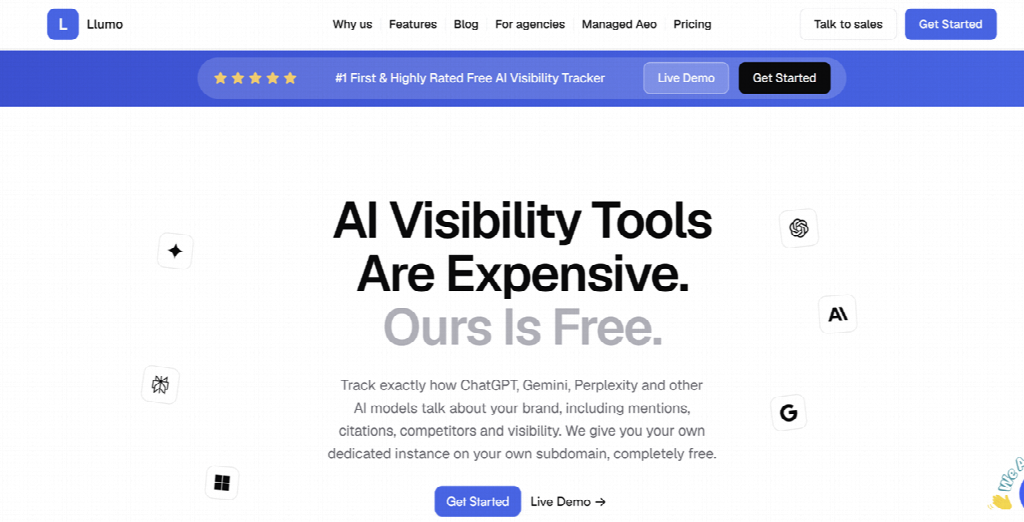
Llumo homepage screenshot
3. Predis.ai
Best for automated content creation and social media marketing
Predis.ai is an AI-powered platform for automated content creation, helping marketers create social media posts, videos, carousels, ads, and other visual content. It can complement AI visibility tools by helping teams turn marketing ideas and insights into content for their campaigns.
What to watch: It focuses on content creation and social media workflows rather than AI visibility tracking, so it does not provide the same visibility monitoring and reporting features as dedicated tools in this list.
4. Peec AI
Best for clean competitive analytics and source intelligence
Peec AI keeps the analytics model easy to understand: visibility, position, sentiment and share of voice. It also highlights the sources that influence tracked prompts, which helps teams connect the dashboard to PR, content and earned-media work.
For marketers who already think in terms of competitive share and category performance, Peec feels familiar. The ability to compare engines, track daily changes and inspect cited sources makes it practical for ongoing reporting rather than one-off audits.
What to watch: Teams should still check how their chosen prompt set represents real buyer behavior. A precise dashboard cannot compensate for irrelevant prompts.
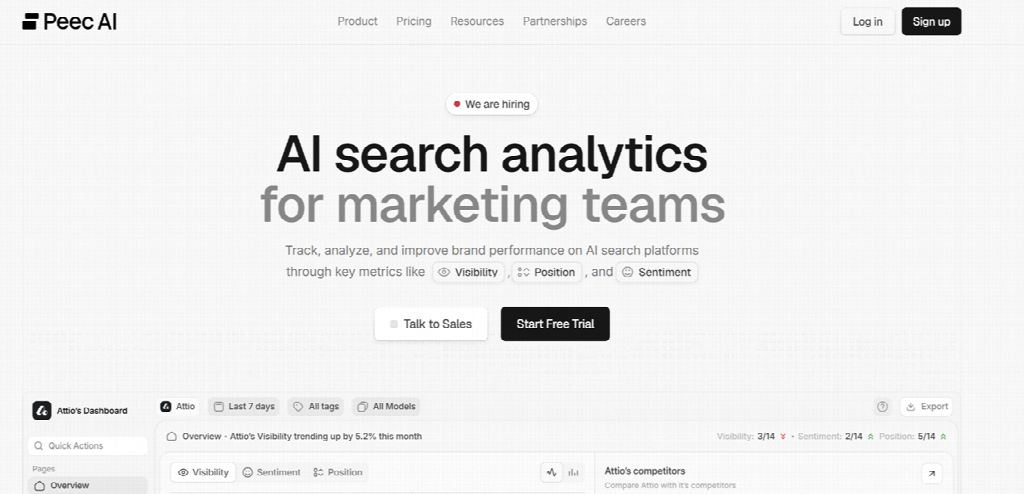
Peec AI homepage screenshot
5. Otterly.AI
Best for approachable multi-engine monitoring and daily checks
Otterly.AI offers a polished route into AI-search monitoring, with brand mentions, citations, sentiment, share of voice and daily tracking across major answer engines. It also emphasizes how responses are collected, an important issue because web-interface and API results can differ.
The product has expanded beyond basic prompt monitoring into areas such as query fan-out, API access and AI-agent traffic analysis. That makes it useful for teams that want both visibility reporting and a closer look at how AI crawlers interact with their websites.
What to watch: As with any multi-engine tracker, compare collection methods carefully. Not every engine can be measured in exactly the same way, and cross-platform scores should be interpreted in context.
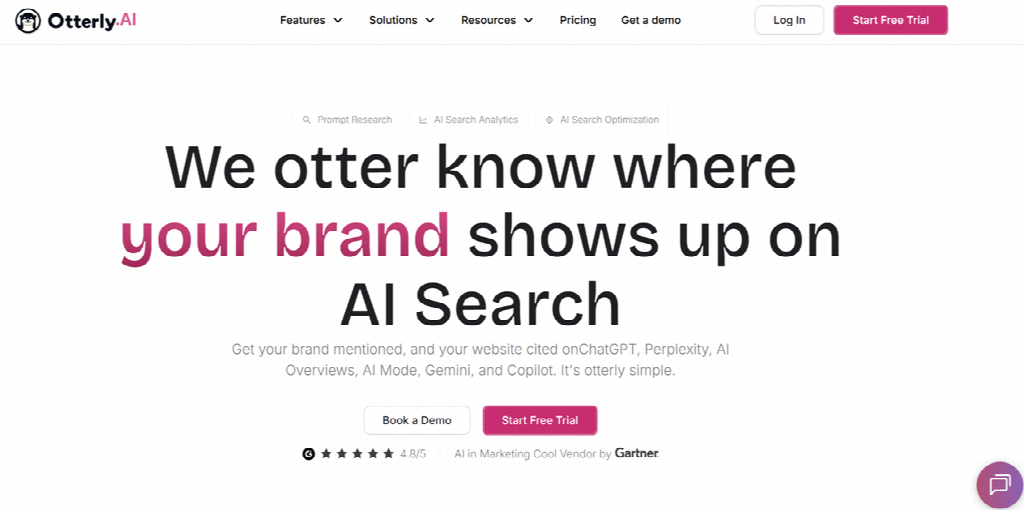
Otterly.AI homepage screenshot
6. Scrunch
Best for enterprises linking AI visibility with AI-agent experience
Scrunch approaches the problem from a broader angle. In addition to visibility and citation monitoring, it focuses on the experience AI agents have when they access a website. That includes understanding bot traffic and making content easier for machine agents to retrieve and interpret.
This makes Scrunch relevant to organizations that see AI discovery as both a marketing and technical-web problem. Rather than asking only “Are we mentioned?”, it also asks whether the site is structured and delivered in a way AI systems can use effectively.
What to watch: The broader scope is a strength for enterprise teams, but businesses looking only for a simple visibility checker may prefer a narrower platform.
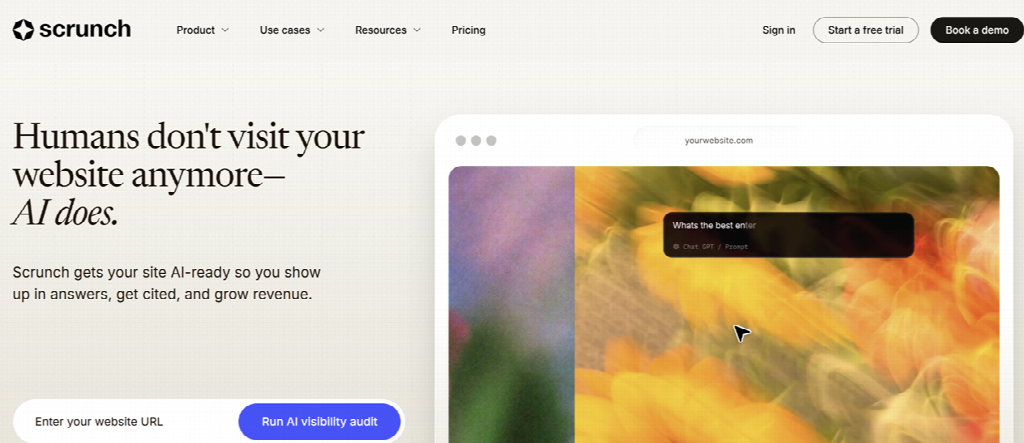
Scrunch homepage screenshot
7. Writesonic
Best for teams that want tracking connected to execution
Writesonic positions AI visibility as part of a full optimization loop. Its tracker covers brand visibility, citations, sentiment and share of voice, then connects those signals to content, outreach and technical actions.
That makes it attractive to growth teams that do not want another standalone analytics dashboard. The central idea is to move from “what happened?” to “what should we do next?” inside the same workflow.
What to watch: The all-in-one approach is useful, but teams should decide whether they want their measurement and execution layers in one platform or prefer independent tools for each job.
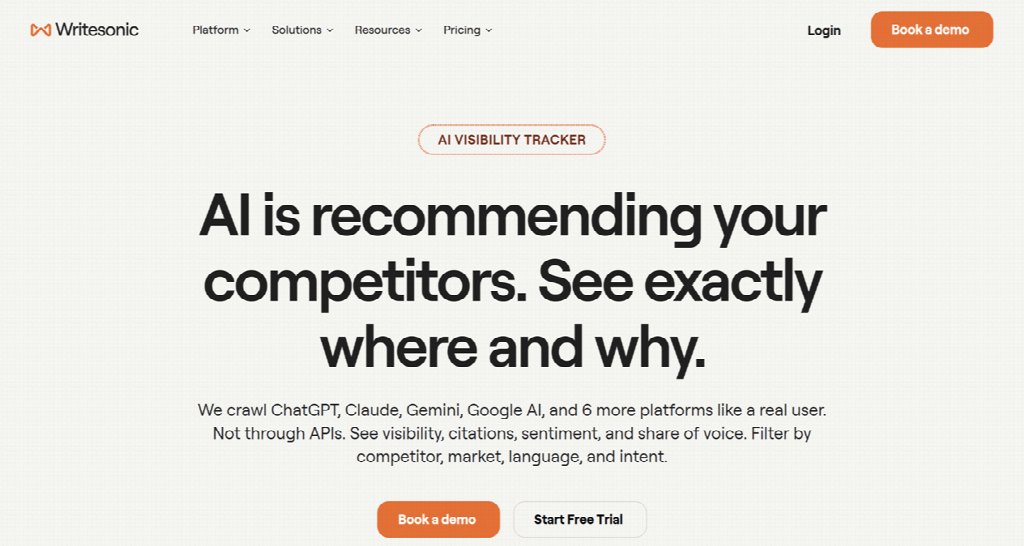
Writesonic homepage screenshot
8 MentionBird
Best for brands and agencies that want to track buyer prompts across eight AI platforms and know what to fix next
MentionBird tracks how brands appear in AI answers and helps them appear more often. It runs prompts daily across eight platforms: ChatGPT, Gemini, Claude, Perplexity, Grok, Microsoft Copilot, Google AI Overviews, and DeepSeek. Teams can then follow mentions, citations, competitors, and visibility trends over time.
Each prompt gets its own leaderboard showing which brands were named, how often, and in what position. The cited sources view shows which pages and domains AI relies on for that question, and AI Query Fanout Tracking reveals the background searches a platform runs before it answers.
Where MentionBird goes further is AI Ranking Advice. Rather than stopping at a chart, it reviews the citations and your existing pages, then returns a short list of actions for that specific prompt. Each action includes the evidence behind it and a difficulty level, so teams can separate quick wins from bigger projects. MCP access is also available for pulling the data into tools like Claude or ChatGPT.
What to watch: There’s no free plan, and the lower tiers don’t include every platform. Teams that want all eight will need a custom plan.
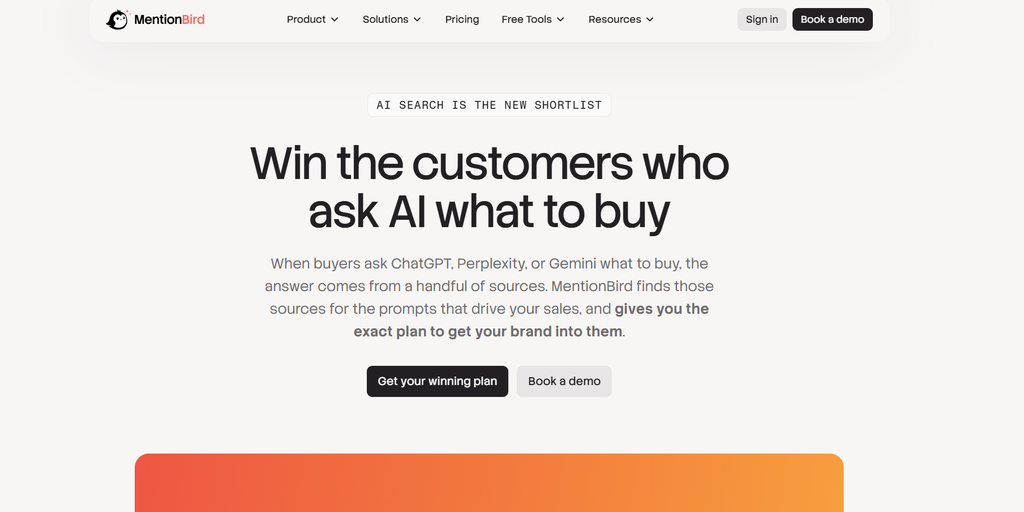
MentionBird homepage screenshot
9. SE Visible
Best for SEO teams that want a familiar bridge into AI visibility
SE Visible brings AI-search measurement into the orbit of a long-established SEO product ecosystem. It focuses on brand mentions, sentiment, competitor performance and source analysis across AI platforms.
For SEO teams, the advantage is conceptual continuity. Traditional rankings still matter, but AI-generated answers create a second discovery layer. A tool connected to familiar search workflows can make the transition easier for agencies and in-house teams.
What to watch: Teams should avoid treating AI visibility as just another rank-tracking column. Mentions, citations and answer context behave differently from classic SERP positions.
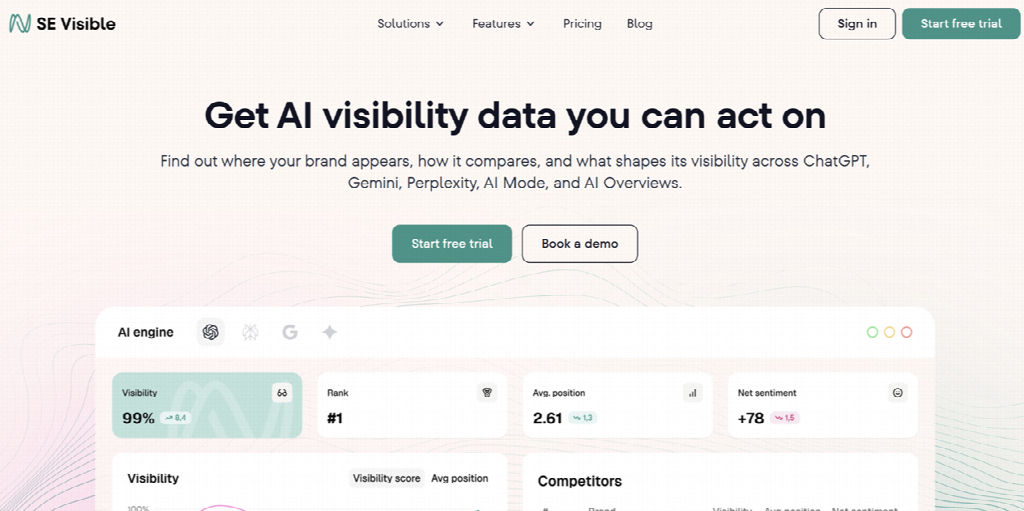
SE Visible homepage screenshot
10. Rankability
Best for agencies and SEO teams tracking AI search visibility alongside traditional search
Rankability helps teams track and improve brand visibility across AI search platforms while keeping traditional search performance in the same workflow. It monitors mentions, citations, competitors, and visibility changes across platforms such as ChatGPT, Perplexity, Gemini, Claude, Google AI Overviews, and others.
For agencies, the main advantage is that AI search tracking sits alongside content optimization, audits, research, and traditional search measurement rather than operating as a separate standalone dashboard. Teams can see where clients appear in AI answers, identify content and website gaps, and use that data to guide what to improve next.
What to watch: Rankability is built primarily around agency and SEO workflows, so teams looking only for a lightweight standalone AI mention tracker may not need the broader feature set.
How to choose an AI visibility tracker without buying a vanity dashboard
1. Start with buyer prompts, not keywords. Build a panel of questions a real buyer would ask during research, comparison and purchase. A hundred irrelevant prompts will create a more precise-looking number, not a more useful one.
2. Separate mentions from citations. A model can mention your brand without citing your site, and cite your page without naming the brand prominently. Track both because they represent different kinds of visibility.
3. Look at source concentration. If a handful of publishers dominate the citations around your category, those domains may be more strategically important than another on-site content refresh.
4. Compare trends within the same methodology. AI answers vary. The most reliable use of a tracker is often directional: keep prompts, engines and collection rules consistent, then watch how you and competitors move over time.
5. Keep classic analytics in the loop. AI visibility is an upstream signal, not a revenue metric by itself. Connect it with branded search, referral traffic, conversions and pipeline where possible.
Final verdict
AI visibility software is moving quickly, and there is no universal winner for every organization. Profound and Scrunch make the most sense for large companies with enterprise requirements. Peec AI and Otterly.AI provide strong specialist analytics. Writesonic is compelling for teams that want measurement and execution in one workflow, while SE Visible is a natural option for SEO-led organizations.
For teams that want the broadest flexibility with the lowest software barrier, Llumo is the strongest starting point in this comparison because its bring-your-own-key model gives marketers control over providers, volume and cost while keeping the underlying prompt, response, citation and competitor evidence visible..
