
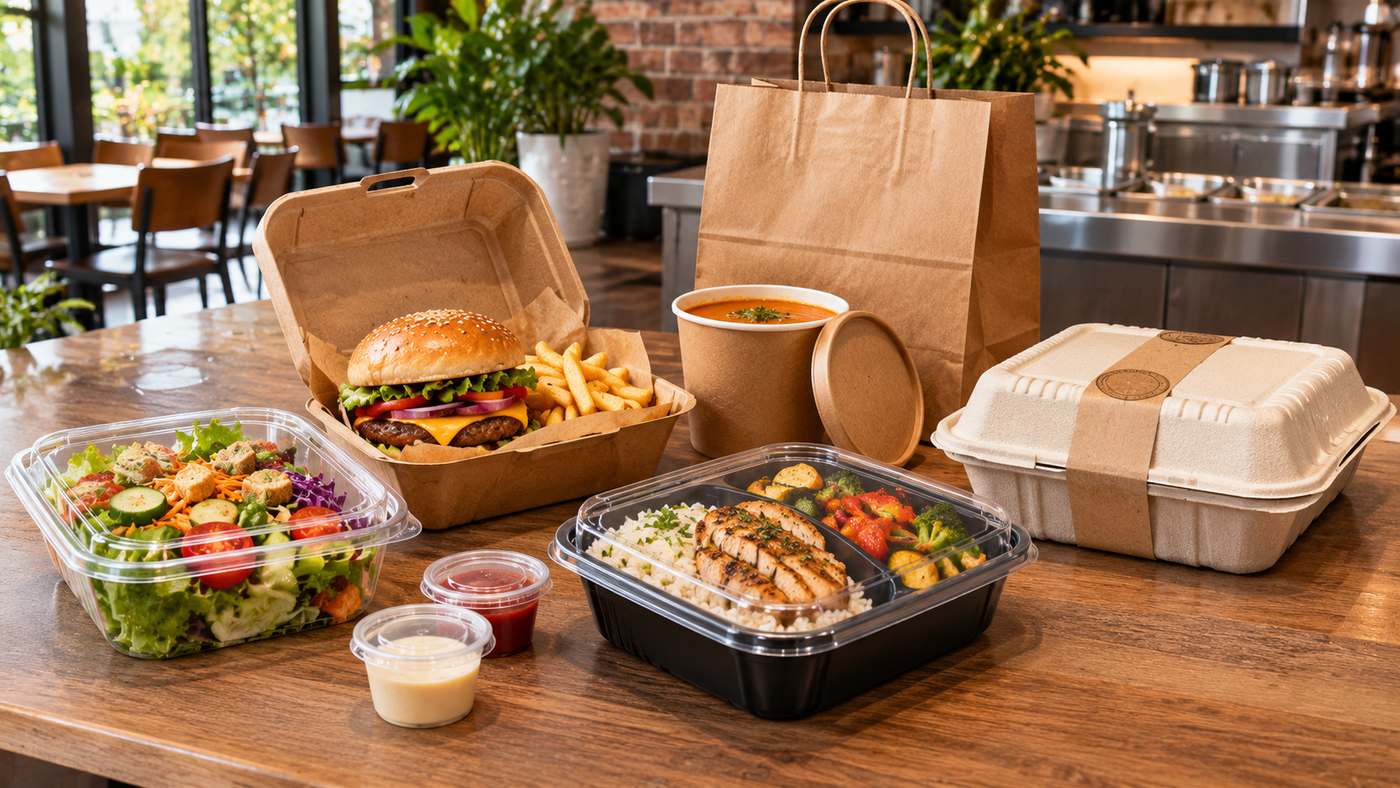
A takeaway order may taste excellent when it leaves the kitchen, but the customer’s experience also depends on what happens during collection, transport, and unpacking. Choosing food containers from MrTakeOutBags gives restaurant operators, caterers, and food trucks access to several packaging formats, including paper clamshells, plastic deli containers, soup cups, meal prep boxes, and selected compostable products. The challenge is knowing which one actually suits a particular dish. Container dimensions, lid fit, heat tolerance, moisture control, and storage costs matter more than attractive product photographs alone. A deliberate packaging plan can improve presentation and reduce preventable messes without making unrealistic promises about freshness or sustainability.
This guide explains seven buying decisions and how to test packaging before placing a wholesale order. It distinguishes features shown in the supplier’s current catalogue from product specific claims that must be checked individually. The goal is to help food businesses purchase containers that suit their menus, service methods, and budgets.
What Food Containers Does MrTakeOutBags Offer?
The published selection of food containers from MrTakeOutBags includes takeout boxes, paper soup cups, plastic bowls with lids, round deli containers, meal prep packaging, clamshells, trays, and packaging for catering and food trucks. It also lists custom printed boxes and other branded materials. Some ranges are intended for hot foods, others for cold display, and some products are described as suitable for reheating. These features are not universal across the catalogue.
Businesses exploring food containers from MrTakeOutBags can browse by packaging type or intended use. This helps narrow a broad range, but the product page is still the place to confirm dimensions, capacity, materials, lid requirements, case quantity, and any temperature limitations. A restaurant packing soup has different needs from a bakery displaying a pastry or a meal preparation company refrigerating several portions.
The Difference Between Boxes, Bowls, and Trays
Clamshell boxes are useful for many sandwiches, burgers, and complete meals. Round bowls can accommodate soups, noodles, salads, and side dishes when the chosen lid is compatible. Open trays suit immediate service better than delivery involving movement and tipping. Compartment containers may separate foods with different textures, though they still need a suitable overall seal.
Match Features to Intended Use
When selecting food containers from MrTakeOutBags, each item should be chosen for what it will hold, how long it will travel, and whether customers are expected to refrigerate or reheat it. A product described as leak resistant should not automatically be treated as spillproof in every orientation.
Start With Your Actual Menu
Choose a few representative dishes before building a larger packaging inventory. Testing the hardest items first can reveal which features are essential and which add cost without improving service.
7 Essential Tips for Choosing the Right Takeout Food Containers
1. Match the Container to Food Temperature and Moisture
A packaging selection begins with the food itself. Fresh salads, rich soups, fried items, pasta dishes, and chilled desserts behave differently after being packed. Steam can soften crisp food, liquid can find gaps around poorly fitting lids, and heavy sauces can challenge paper materials that were not designed for that type of contact. For food containers from MrTakeOutBags, identify whether the particular SKU is specified for hot filling, cold holding, greasy food, or another intended application.
The company offers paper soup cups and insulated ripple style soup containers, as well as plastic deli containers and multiple clamshell styles. An insulated exterior can make a hot container more comfortable to handle, but insulation does not remove the need to maintain safe food temperatures. Likewise, a vented lid may help release steam yet permit some liquid escape when tilted. Product design involves practical tradeoffs rather than a single perfect choice.
When choosing food containers from MrTakeOutBags for fried meals, evaluate ventilation and absorbent liners where appropriate, because trapping steam can make a crisp coating lose its texture. For pasta or sauced rice, prioritise a base that supports the portion and a lid that closes securely. For salads, consider transparent lids or bowls when product visibility is valuable, but do not assume every clear material is suitable for high heat.
Test a Real Packed Meal
Fill a sample container with the ordinary menu portion, close it using the normal staff procedure, and observe it after a realistic delivery interval. Inspect the lid, base, food appearance, and any moisture. Test the whole package, including the carry bag, instead of judging the empty container in isolation.
2. Compare Paperboard, Plastic, and Plant Fiber Materials
Material is not merely an environmental choice. It affects stiffness, weight, food visibility, grease resistance, and the handling conditions the container can tolerate. MrTakeOutBags lists kraft and coated paperboard boxes, corrugated clamshells, plastic deli containers, and selected sugar cane fiber products. Each category includes different constructions, so material names alone do not establish performance.
When comparing food containers from MrTakeOutBags, check the liner or coating as well as the visible outer layer. A paper container may have a barrier that improves resistance to oil or liquid, but that barrier can affect disposal options. Plastic packaging may provide a clear view of the product and secure closures, but heat suitability and recyclability depend on the specific resin, design, and local collection system.
The selection of food containers from MrTakeOutBags also includes compostable clamshells and soup containers. Plant fiber can be a useful alternative for some meals, but it should be assessed for stiffness under moisture, lid compatibility, and the conditions under which compostability has been substantiated. Do not assume that every brown or plant based container is free of all coatings or can be composted at home.
Ask for a Product Specification
Identify the material, approved food contact uses, temperature guidance, and any credible environmental certification. Keep the information linked to the exact product code, because specifications from one range do not automatically apply to another.
3. Prioritise Lid Fit, Seals, and Delivery Handling
A dependable lid may matter more than the appearance of the base. Delivery bags are picked up, carried through doors, placed in cars, and opened at unfamiliar angles. A loose lid can create damage even when the container itself is strong. Food containers from MrTakeOutBags include products with matching lids, but some catalogue items list lids separately. Confirm what arrives in the case and whether lids must be purchased in a matching quantity.
The catalogue also includes tamper evident takeout boxes, certain plastic clamshells with visible opening features, paper delivery bags, and labels intended to indicate whether a package has been opened. Tamper evidence can help a customer notice interference, but it is not a substitute for hygienic preparation, controlled handoffs, or adequate transport temperatures. Labels may adhere differently to smooth plastic, coated paper, and moist surfaces, so test the complete closure.
For liquids, fill the bowl with an appropriate test volume and try ordinary transport movements while maintaining safe handling. A label that looks secure on an empty box may not remain attached to a warm, damp package. When evaluating food containers from MrTakeOutBags, choose a lid system that kitchen staff can close consistently during the busiest service period.
Create a Standard Packing Check
Before an order leaves, confirm the lid is fully seated, sauces are contained, the right utensils are included, and the outer bag is secure. A brief repeatable process reduces avoidable inconsistency.
4. Choose Portion Sizes and Shapes That Work in Practice
Capacity labels help shortlist options but do not describe usable dimensions. Two containers with the same stated volume may have different depth, width, and lid clearance. A tall bowl could work for soup but be unsuitable for an arranged salad, while a shallow rectangular box may display a meal attractively but allow toppings to touch its lid. Measure the actual plated portion rather than purchasing by fluid ounces alone.
When shopping for food containers from MrTakeOutBags, read both capacity and external dimensions. The supplier lists various round deli containers, rectangular meal prep containers, portion cups, and multi compartment options. Use the product codes and stated case quantities to build an accurate comparison. If separate lids are needed, verify the compatible size or series rather than ordering on appearance.
With food containers from MrTakeOutBags, consider shelf storage, refrigeration, and the size of the delivery bag. Containers that nest before use and stack safely after packing can improve workspace organization. However, stacking hot containers may affect airflow, and a tower that looks stable in a kitchen may shift during transport. Test the stacking height under the actual carrying conditions.
Reduce Unnecessary Size Variations
A restaurant can often standardize a few formats across several menu items. This may simplify training and reduce the risk of pairing the wrong lid with a container. Keep specialty formats only where they solve a clear product need.
5. Verify Food Contact and Reheating Instructions
Safe packaging depends on the particular food and conditions of contact. The United States Food and Drug Administration regulates food contact substances for intended uses, and its framework distinguishes food types and temperatures. A container suitable for refrigerated salads is not automatically appropriate for freshly boiled soup or microwave reheating. Claims about food safety should be checked for the specific product and conditions, not applied to an entire supplier catalogue.
Some food containers from MrTakeOutBags are explicitly described as microwavable, including selected deli containers and paper soup cups. That does not mean every lid, window, coating, or insert in the catalogue should go into a microwave. Check the manufacturer instructions for both the base and lid. Remove components that are not approved for reheating and provide customers with clear guidance where practical.
Packaging also cannot replace safe food handling. Perishable takeout should be refrigerated promptly. United States food safety guidance generally advises refrigeration within two hours, or one hour when exposed to temperatures above 90 degrees Fahrenheit. Reheated leftovers should reach a safe internal temperature, generally 165 degrees Fahrenheit. Businesses must also follow applicable local food codes for hot holding, cold holding, and delivery.
Keep Heating Claims Specific
For food containers from MrTakeOutBags, avoid telling customers that a package is microwave safe simply because it feels sturdy. Ask for documented guidance that covers the actual container configuration and intended time and temperature conditions.
6. Evaluate Compostable and Recyclable Claims Carefully
Environmental considerations are useful, but the disposal route matters as much as the material. The MrTakeOutBags catalogue includes selected compostable paper and fiber options, along with products described as recyclable or made with recycled materials. Those terms are not interchangeable. Recyclability depends on local collection and processing, while some compostable foodservice packaging requires a commercial facility that accepts the exact material.
Before selecting food containers from MrTakeOutBags for sustainability goals, identify whether your customers or waste contractor can actually use the intended disposal system. The U.S. Environmental Protection Agency advises choosing commercially compostable foodservice products only where a suitable collection and processing programme accepts them. A package being labelled compostable does not guarantee that it will break down in a landfill or home garden.
The Federal Trade Commission’s Green Guides also caution against broad, unsupported environmental claims. A restaurant should avoid presenting all paper packaging as environmentally superior or promising that an item is recyclable everywhere. A coating, plastic window, greasy food residue, or incompatible lid may change what a local waste service accepts.
Consider the Whole Package
For food containers from MrTakeOutBags, look at the base, lid, label, liner, and outer bag together. If these components need different disposal routes, explain that simply. A credible limited claim is more useful than a dramatic promise that cannot be verified.
7. Calculate Wholesale Cost, Stock Needs, and Custom Branding
Buying in cases can make sense for an established food business, but the lowest unit price is not the whole cost. Consider the price of matching lids, delivery fees, storage space, discarded stock, packing time, and damaged orders. A slightly more expensive package may be worthwhile if it fits the food better and creates fewer problems. The benefit should be evaluated through actual experience rather than assumed from marketing language.
For food containers from MrTakeOutBags, check the live listing for case quantity, pricing tiers, availability, and shipping conditions. The supplier displays wholesale pricing for many items and offers custom packaging categories such as takeout boxes, food containers, bags, cups, and labels. Custom printing can support consistent presentation, but may require extra lead time, artwork approval, and minimum quantities. Ask for a written quotation before building a menu price around a promotional offer.
Calculate effective packaging cost per order rather than per empty container. A meal may require a main box, a sauce cup, a matching lid, a carrying bag, and a seal. Divide the combined cost by the number of complete usable orders, accounting for any realistic damage or wastage. When comparing food containers from MrTakeOutBags, this approach prevents a low base price from concealing expensive accessories.
Pilot Before Committing to Custom Print
Before branding food containers from MrTakeOutBags, use a small set of plain packaging to confirm dimensions and kitchen workflow. Finalize the artwork only after staff can pack meals reliably. Branding should complement a functional package, not compensate for poor fit.
Which Packaging Formats Suit Common Food Businesses?
Different foodservice operations need different combinations. A café serving soup and sandwiches may prioritize paper soup cups with compatible lids and small clamshells. A salad shop may value clear bowls and portion cups. A meal preparation service may require containers suitable for chilled storage and the intended reheating process. Caterers may need boxes that remain organized when several meals travel together.
Restaurants and Takeout Kitchens
For restaurants comparing food containers from MrTakeOutBags, the best starting point is the five most frequently ordered takeaway dishes. Test whether each dish can share a standard format without losing quality. Include condiments, utensils, and delivery bags in the assessment rather than selecting the container alone.
Food Trucks and Market Stalls
For food trucks evaluating food containers from MrTakeOutBags, the package must be quick to open, easy to fill, and practical in limited storage. Trays may suit immediate consumption, while enclosed boxes are more appropriate for customers travelling away from the stall. Test how packaging holds up when the customer is standing or walking.
Bakeries, Delis, and Caterers
Display visibility, protection against crushing, and compartment layout may be more important for pastries and arranged meals than extreme heat tolerance. For food containers from MrTakeOutBags used in catering, confirm whether filled packages can be stacked and moved in the available carriers without shifting.
How to Test Food Containers Before Ordering in Bulk
A simple trial of food containers from MrTakeOutBags can reveal issues that are hard to see online. Pick representative dishes, record their portions and serving temperatures, then pack each one using the normal procedure. Allow for the expected delivery period and inspect the presentation, lid fit, moisture, and ease of customer opening. Test both the busiest and quietest kitchen conditions when possible.
Use a Repeatable Evaluation Checklist
When reviewing food containers from MrTakeOutBags, record whether the container is easy to fill, closes consistently, fits the delivery bag, and suits the intended food contact conditions. Note any extra components needed and the time required for staff to assemble it. A useful test documents weaknesses rather than merely asking whether the sample looks attractive.
Check Inventory and Reordering
Assess storage footprint, shelf organization, the number of cases needed, and how much stock should be kept for unexpected demand. Keep supplier product codes and lid references together in the inventory system. Verify availability and freight terms again when reordering because product assortments and pricing can change.
Train Staff on the Approved Combination
Create a brief packing guide showing which container, lid, and insert belong with each menu item. This reduces errors when new employees join or a popular dish generates a rush of orders.
Common Packaging Mistakes to Avoid
A frequent error is choosing a clear container for visual appeal without checking heat compatibility. Another is buying a case of bases while forgetting the lids. Operators may also use tightly sealed packaging for crisp foods that need some steam release or rely on a compostable claim without checking local disposal facilities. These mistakes often emerge only after the package is in real service.
Businesses selecting food containers from MrTakeOutBags should avoid assuming that all containers are leakproof, microwave safe, or suitable for freezing. Read the exact product specifications and test complete orders. Be especially careful when an attractive alternative changes the menu portion, delivery method, or required food holding conditions.
Frequently Asked Questions
1. What types of food containers from MrTakeOutBags are available?
The catalogue includes paper clamshell boxes, soup cups, plastic deli containers, meal prep packaging, bowls, trays, and selected compostable formats. Stock and specifications vary by product.
2. Are the containers suitable for hot soup and cold meals?
Some ranges are designed for hot soup and others for refrigerated foods. Check the individual listing for food contact conditions, temperature limits, and compatible lids.
3. Can these takeout containers go in the microwave?
Certain products are described as microwavable, but that claim does not cover the entire catalogue. Confirm the base, lid, and other components before reheating.
4. Does MrTakeOutBags offer compostable food packaging?
Yes, it lists selected compostable soup containers and clamshells. Check product certification and whether local commercial composting services accept the complete package.
5. Can restaurants order custom printed packaging?
The supplier advertises customization for boxes, bags, cups, labels, and some food containers. Confirm minimum quantities, artwork requirements, pricing, and lead times directly.
6. How can I compare wholesale takeout container prices?
Calculate the cost of one complete packed order, including base, lid, inserts, seals, freight, and expected waste. Compare like for like products under realistic kitchen conditions.
Conclusion
Choosing food containers from MrTakeOutBags should begin with the menu, food contact conditions, and the way each order is handled after preparation. Reviewing materials, matching lids, checking environmental claims, and testing filled samples can prevent expensive mistakes. A complete cost calculation also helps restaurants buy useful packaging instead of simply chasing the lowest listed unit price. The strongest choice is a container that works consistently for the food, staff, customer, and available disposal system.
