
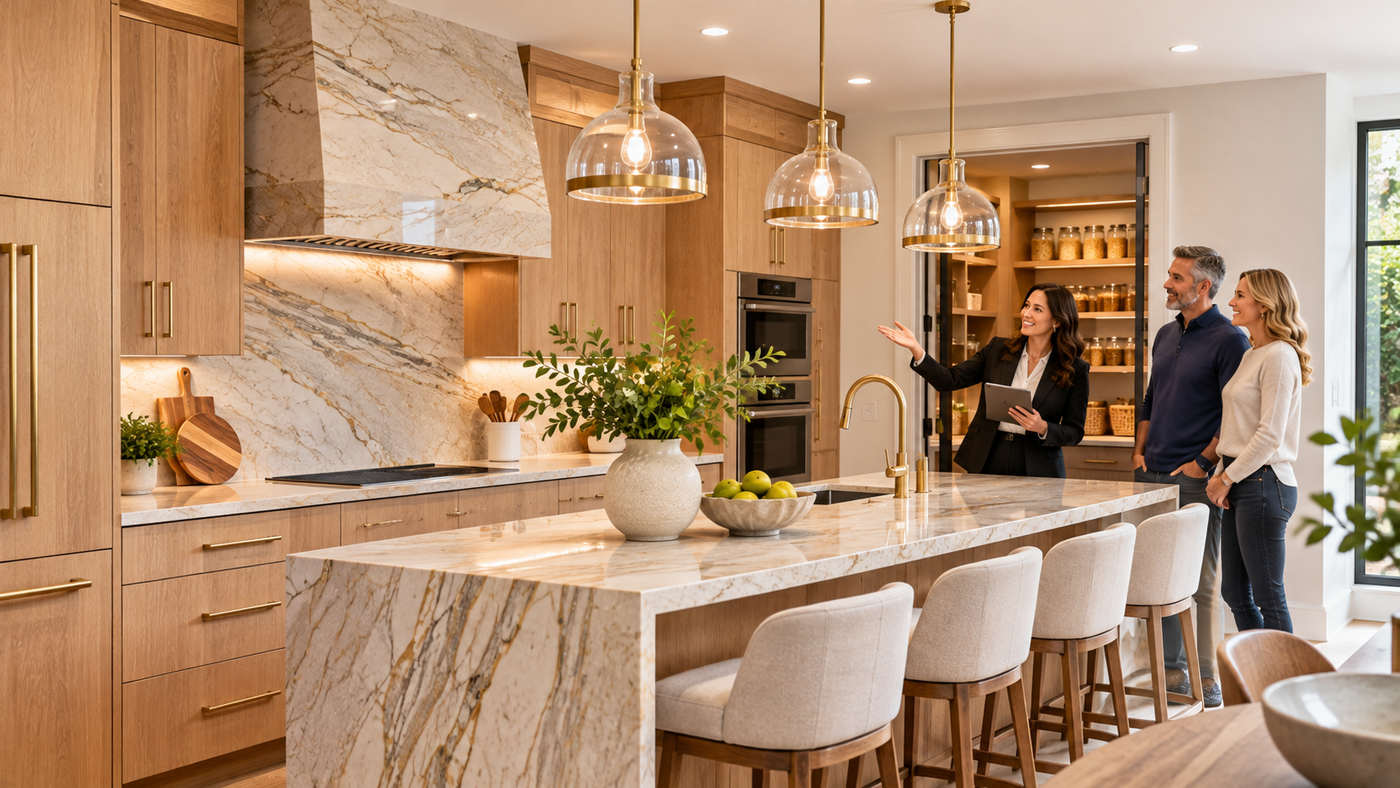
A spectacular kitchen should do more than photograph well. luxury kitchen remodeling brings together thoughtful layouts, durable finishes, custom craftsmanship, and appliances that suit the way a household actually cooks. An impressive island can become a daily obstacle if walkways are narrow, while an expensive countertop may disappoint if its maintenance needs were never explained. The strongest projects begin with practical priorities and then use design to make everyday tasks more enjoyable. This guide explains seven important renovation decisions, what to discuss with a designer and contractor, and how to protect a substantial investment without assuming that the most expensive selection is automatically the best.
What Makes a Kitchen Remodel Truly Luxurious?
Luxury is not defined by one brand, material, or minimum price. It comes from a balanced combination of accurate planning, excellent installation, tactile materials, useful storage, comfortable light, and details that remain attractive after years of use. A custom cabinet that opens easily every day may contribute more value than a decorative feature that looks dramatic but interferes with cooking. During luxury kitchen remodeling, consider how spaces feel when several people prepare food, unload groceries, entertain guests, or clean up at the end of the evening.
The National Kitchen and Bath Association’s 2027 design outlook highlights growing interest in defined activity zones, natural materials, concealed storage, and features that improve household wellbeing. These are forecasts based on professional surveys, not requirements or proof that every home should follow the same fashion. A timeless kitchen is one whose layout and material choices fit its occupants.
High End Appearance Versus Everyday Performance
Bookmatched stone, integrated refrigerators, specialty hardware, and bespoke joinery can create a refined appearance. Yet their practical value depends on installation quality, service access, durability, and compatibility with the rest of the kitchen. A visually seamless design still needs safe appliance clearances and sufficient ventilation.
Begin With a Functional Brief
List the meals you cook, the number of people using the space, preferred storage, and any mobility needs. Rank these requirements before reviewing inspiration photographs or ordering finishes.
7 Essential Decisions for Luxury Kitchen Remodeling
1. Design the Layout Around Real Daily Routines
The layout is the foundation of luxury kitchen remodeling because moving plumbing, electrical services, or structural elements after installation can be expensive. Consider where groceries enter, how food moves from refrigeration to preparation, and whether more than one person cooks at the same time. Rather than treating the traditional work triangle as an absolute rule, map the activities that actually happen in your home.
Large kitchens can benefit from separate zones for preparation, cooking, cleaning, beverages, and serving. An island can provide an additional work surface or seating, but it should not force people to squeeze around open appliance doors. The National Kitchen and Bath Association’s planning guidance recommends at least 42 inches of work aisle for one cook and 48 inches for multiple cooks. These are design recommendations, while local building and accessibility requirements may differ.
For luxury kitchen remodeling in an older home, determine whether a wall can be opened safely before designing an ambitious new layout. Load bearing alterations require appropriate structural expertise and permits where applicable. Keeping the sink or range near existing services can sometimes preserve budget for better quality cabinetry and finishes.
Test the Floor Plan at Full Scale
Mark proposed island edges and appliance door swings on the floor. Walk through the space with another person and imagine carrying a tray or opening the dishwasher. A few minutes of testing can expose problems that are hard to see in a rendering.
2. Invest in Cabinetry That Delivers Precise Storage
Custom cabinets are often central to luxury kitchen remodeling, but their value is not simply that they reach the ceiling. Good cabinetry maximizes accessible storage, follows the room’s dimensions, and supports hardware that operates smoothly. Ask a designer to show where pots, plates, pantry supplies, small appliances, and cleaning products will live. Drawers and carefully planned pullouts can make lower storage easier to reach than deep shelves.
Compare cabinet box materials, joinery, door construction, finish durability, and the availability of replacement hinges or drawer slides. Solid wood, veneered panels, plywood, and engineered boards can all have appropriate uses when properly specified. A claim that every cabinet must be solid hardwood to be high quality is misleading; stable construction and moisture appropriate finishes often matter more than a simplistic label.
Current professional design surveys show substantial interest in natural wood finishes, concealed appliances, and pantry extensions. During luxury kitchen remodeling, use these ideas selectively. A walk in pantry may improve organization in a large house but consume too much space in a compact floor plan. A beverage station can be useful for frequent entertaining, yet it is less valuable if it interrupts the primary preparation area.
Inspect the Cabinet Details
Ask for samples showing door edges, drawer slides, interior finishes, handles, and hinges. Confirm what is custom built, what comes from a standard cabinet line, and how any damaged component can be replaced years later.
3. Choose Countertops and Backsplashes for Their Actual Properties
The materials selected for luxury kitchen remodeling should complement the household’s tolerance for upkeep. Natural marble offers distinctive veining but can etch when exposed to acidic substances. Quartzite is a natural stone that varies by slab and may need sealing depending on its characteristics. Engineered quartz can provide consistency, but it also has manufacturer specific heat and care restrictions. Porcelain and other sintered surfaces have their own fabrication and edge detail considerations.
Request physical samples and, for natural stone, inspect the actual slab whenever possible. Lighting in a showroom can change how the colour and pattern appear. Ask how seams will be positioned, whether support is required under an overhang, and what edge profiles are practical for the chosen material. A large waterfall island may look stunning while adding fabrication cost and increasing the importance of accurate templating.
A full height slab backsplash can reduce grout lines and create visual continuity, but it should be coordinated with outlets, ventilation, and cabinets before fabrication. For luxury kitchen remodeling projects involving natural stone, ask for a written maintenance plan and make sure installers understand the handling and cutting requirements. Silica containing materials can produce hazardous dust when fabricated, so suitable professional controls are essential.
Prioritize Honest Material Comparisons
No countertop is universally stainproof, scratchproof, and heatproof. Ask how the specific finish responds to heat, acids, sharp objects, and cleaning products rather than relying on a broad marketing promise.
4. Specify Appliances for Cooking Habits and Service Needs
Premium appliances are a major part of some luxury kitchen remodeling budgets. Options may include induction cooktops, convection or steam ovens, integrated refrigeration, quiet dishwashers, warming drawers, and dedicated beverage equipment. The best selection is not the largest possible appliance collection. It is a set that supports actual cooking habits and fits the electrical, ventilation, water, and space provisions of the project.
Induction cooking can provide responsive heat control with compatible cookware, while gas and other electric options involve different installation and ventilation needs. Check circuit capacity and applicable local codes before choosing equipment. Refrigerators require specified clearances, and panel ready appliances need accurate cabinet dimensions. A high end integrated unit can be difficult or costly to replace if its installation space is unusually restrictive.
For luxury kitchen remodeling, compare standardized energy labels as well as features. ENERGY STAR provides certified product information for refrigerators and dishwashers, but not every appliance in a showroom carries the same type of certification. Consider cycle performance, operating noise, service access, warranty conditions, and parts availability. A rarely used specialized appliance can occupy valuable cabinetry while adding maintenance obligations.
Confirm Appliance Models Early
Give the design team exact model numbers and installation specifications before cabinets and stone are ordered. Changes late in the project can affect ventilation ducts, outlets, cutouts, cabinet panels, and delivery arrangements.
5. Create Layered Lighting and Effective Ventilation
Lighting shapes both appearance and practical safety. Successful luxury kitchen remodeling combines general illumination, focused task lighting, and carefully chosen decorative fixtures. Under cabinet lights can illuminate chopping and cleaning areas, while pendants help define an island. Dimmable ambient lighting can make the room comfortable for conversation without leaving preparation surfaces in shadow.
Consider natural daylight and the colour appearance of finishes under both daytime and evening conditions. Position lights to avoid casting the cook’s shadow across the worktop. Ensure switches are convenient from the main entrances and that controls do not make routine operation unnecessarily complicated. A sophisticated system is only useful if household members can operate it reliably.
Ventilation deserves the same planning attention as appearance. The U.S. Environmental Protection Agency advises using a properly sized range hood that captures cooking pollutants and exhausts outdoors. A recirculating hood may handle some grease and odours but does not provide equivalent outdoor exhaust. Duct length, layout, fan noise, makeup air, and local code requirements all affect performance.
During luxury kitchen remodeling, avoid treating a concealed or minimalist hood as successful solely because it is visually discreet. Ask how it captures cooking emissions from the chosen cooktop and whether it can be cleaned and serviced conveniently.
Protect the Whole Indoor Environment
A powerful exhaust fan can require coordinated replacement air to avoid creating pressure problems in certain homes. Have qualified designers address the implications rather than adding the largest available fan without assessment.
6. Build a Budget Around the Entire Scope
Luxury kitchen remodeling costs depend on region, kitchen size, structural changes, custom cabinetry, appliances, material selection, and the amount of specialist labor involved. No single national average describes a particular project accurately. Moving a wall or relocating utilities can change the budget more significantly than upgrading decorative hardware, so define the essential construction scope first.
Ask contractors for detailed estimates covering demolition, disposal, permits, structural work, plumbing, electrical service, ventilation, floors, cabinets, counters, backsplashes, appliances, lighting, painting, and final cleanup. Clarify who purchases each item and who takes responsibility for delivery damage or measurement mistakes. Compare quotes against identical drawings and specifications wherever possible.
Include a contingency for concealed conditions, especially in older properties. The amount should reflect the building, the investigation completed, and the risk of changes rather than an arbitrary guarantee. During luxury kitchen remodeling, also plan how the household will cook while water, electricity, or cabinet access is temporarily unavailable. Temporary meal arrangements and storage can create real costs that do not appear in a builder’s quote.
Value Is Not Identical to Resale Return
A custom remodel can improve daily life, but a buyer may not value every personalized finish at its original cost. If resale matters, evaluate local market expectations without claiming a guaranteed return on investment.
7. Hire the Right Team and Control the Construction Process
A successful luxury kitchen remodeling project may involve an interior designer, kitchen specialist, general contractor, cabinetmaker, stone fabricator, electrician, and plumber. The exact team depends on complexity. Confirm who coordinates trades, who owns the drawings, and who signs off on changes. Attractive renderings cannot substitute for buildable documents and a realistic construction sequence.
Check applicable licenses, insurance, references from comparable projects, and experience with the selected materials and appliances. Request a written contract describing the scope, drawings, allowance amounts, payment stages, expected scheduling, and change order procedure. Clarify how concealed damage, delayed products, and defective work will be addressed. Never assume that a verbal promise will be reflected automatically in the final result.
For luxury kitchen remodeling in the United States, older homes deserve specific attention to renovation hazards. The EPA’s Renovation, Repair and Painting Rule generally applies to covered paid work disturbing painted surfaces in housing built before 1978, subject to relevant exceptions. Use appropriately certified firms when required, and ask about safe dust containment. Other locations have their own safety and permitting rules.
Agree on inspection checkpoints before cabinets are installed, after rough plumbing and electrical work, and at final completion where appropriate. Review photos of concealed work, keep written approvals, and make a punch list before final signoff.
Protect the Handover
Collect warranties, appliance manuals, product codes, paint information, permit records, and instructions for stone or cabinet care. Confirm how follow up service requests will be handled and who is responsible for unresolved defects.
The Most Important Design Trends for 2026 and Beyond
Recent professional surveys suggest that luxury kitchen remodeling is becoming more focused on deliberate zones, organized storage, natural wood, sophisticated surfaces, and flexible household use. The NKBA’s October 2026 outlook for 2027 reported interest in defined preparation areas, concealed appliances, beverage spaces, and layered lighting. These findings reflect designer expectations, not guarantees that a feature will retain value or remain fashionable.
Warm Natural Materials and Quiet Cabinet Fronts
Light and medium wood tones, understated hardware, and simple cabinet doors can create a calm appearance. Consider combining different textures rather than using the same material on every surface. A kitchen should still relate to adjoining rooms, particularly when the living and dining spaces are visually connected.
Dedicated Zones Instead of Endless Open Space
A secondary preparation area or pantry can keep active work away from guests, but adding walls or partitions only makes sense when the space remains usable. In luxury kitchen remodeling, the most successful layout is the one that supports household movement, not a particular trend label.
Well Chosen Technology
Connected lighting, appliance monitoring, and leak detection may offer convenience when they are reliable and easy to maintain. Ask about manual controls, software support, privacy, and replacement options before incorporating technology into fixed cabinetry.
How Long Does a Premium Kitchen Renovation Take?
There is no universal timeline. Design decisions, permitting, custom cabinetry fabrication, stone availability, specialist trades, and inspection schedules can all affect the duration. A cosmetic renovation that preserves existing service locations may be simpler than a project that moves walls, changes the floor plan, and installs extensive bespoke joinery.
A luxury kitchen remodeling timeline should include design approval, detailed measurements, product ordering, demolition, any structural work, rough services, inspections, cabinet installation, countertop templating, finishing, appliance commissioning, and final corrections. Some activities can overlap, but a delay in one material can affect several trades. Ask the project manager which choices must be final before procurement and which can be made later without disrupting work.
Plan for a Temporary Kitchen
Set up a safe alternative area for simple meals if possible. Consider food refrigeration, drinking water, washing up, and access for workers. Keep children and pets away from construction zones and discuss how dust will be contained.
Common Mistakes to Avoid
The most expensive mistakes in luxury kitchen remodeling often begin before construction: approving a beautiful island without measuring aisles, choosing appliances after cabinets have been built, or ordering stone before the exact slab and seam layout are agreed. Other problems include weak ventilation, poor lighting at work surfaces, inadequate accessible storage, and assuming premium materials are maintenance free.
Avoid spending the entire allowance on visible finishes while neglecting electrical capacity, structural conditions, or dependable installation. Do not let a contractor substitute materials without written approval. A successful design should look refined when photographed and function comfortably when several people use it on a busy evening.
Frequently Asked Questions
1. What is included in luxury kitchen remodeling?
It can include layout redesign, custom cabinetry, premium worktops, upgraded appliances, lighting, ventilation, storage, and specialist installation. The exact scope depends on the home and budget.
2. How much does a luxury kitchen remodel cost?
Costs vary by location, size, structural work, materials, and labor. Request itemized local estimates and allow for concealed conditions rather than relying on a universal figure.
3. Which countertops are best for a high end kitchen?
Quartzite, marble, engineered quartz, porcelain, and other surfaces offer different appearances and care needs. Choose based on actual performance requirements and documented maintenance guidance.
4. Are custom cabinets worth the investment?
They can provide tailored dimensions, useful storage, and specific finishes. Value depends on build quality, hardware, installation, and how effectively the design supports daily activities.
5. Should a luxury kitchen have an oversized island?
Only when the room has sufficient circulation, appliance clearances, and a practical purpose for the surface. A smaller island can work better than an oversized one.
6. How do I choose a luxury kitchen remodeling contractor?
Check relevant licensing, insurance, comparable work, detailed proposals, written change procedures, and service support. Confirm who coordinates the trades and inspections.
Conclusion
A successful luxury kitchen remodeling project combines precise planning, useful storage, durable materials, balanced lighting, and suitable appliances. Invest in layout and installation quality before selecting dramatic finishes, and compare complete written proposals rather than headline prices. Check ventilation, safety, maintenance, and future service access so the kitchen remains practical long after the renovation. The best result feels personal and refined because every design decision has a clear purpose.
