
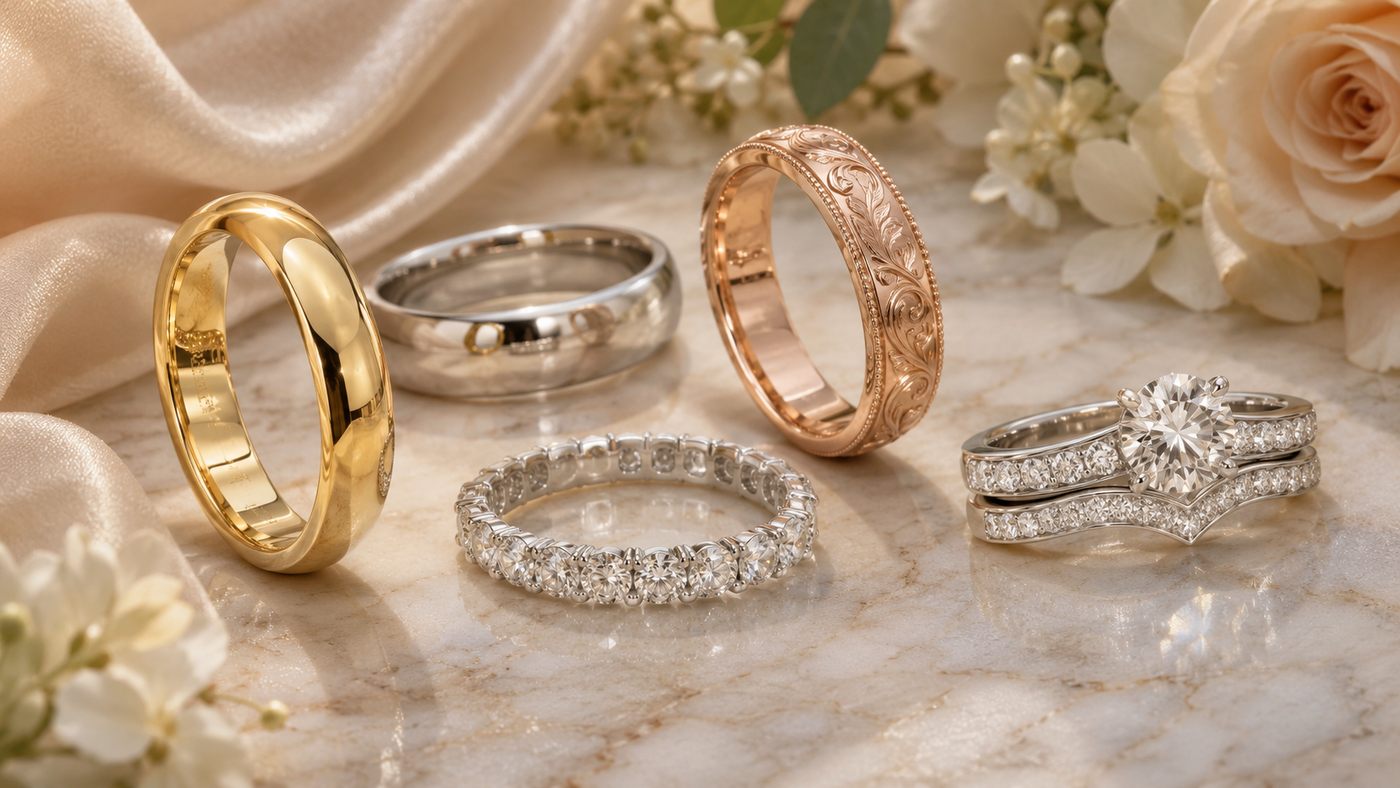
The ring exchanged during a wedding may be small, but it often becomes one of the most frequently worn pieces of jewelry a person owns. Choosing wedding bands therefore involves more than finding a design that looks beautiful in a display case. Metal composition, fit, daily activities, gemstone settings, maintenance, and future size changes can all influence whether a ring remains comfortable and practical. Some couples want matching gold bands, while others prefer individual styles that reflect different personalities. This guide explains seven decisions that help shoppers compare wedding rings thoughtfully, ask informed questions, and avoid purchasing problems.
What Makes a Wedding Band Different From an Engagement Ring?
A wedding band is traditionally exchanged during the marriage ceremony to symbolize commitment. It is often simpler than an engagement ring, which may feature a prominent center gemstone, but there are no universal design rules. Modern wedding bands can be plain, engraved, textured, diamond set, or shaped to sit alongside another ring.
Personal Meaning Matters More Than Matching Expectations
Matching sets are a choice, not a requirement. Two partners can select different metals or widths and still create a meaningful connection through engraving, a shared motif, or a similar finish.
Begin With Three Priorities
Before visiting a jeweler, identify your preferred appearance, comfortable price range, and tolerance for upkeep.
1. Select the Right Metal for Daily Wear
The material is one of the most important choices in wedding bands because it affects color, weight, repair possibilities, and how surfaces age. Gold and platinum remain familiar precious metal options, while titanium and tungsten carbide appeal to some shoppers seeking different weights or finishes. None is completely immune to wear, and descriptions such as scratchproof or maintenance free should be examined carefully.
Compare 14K and 18K Gold
Gold jewelry is typically alloyed with other metals to make it more suitable for daily use. According to the Federal Trade Commission, 14 karat gold contains 14 parts gold out of 24, or about 58.3 percent, while 18 karat contains 75 percent. Alloy composition, construction, and planned use also matter. Yellow gold has a classic appearance, rose gold obtains its color from particular alloy mixtures, and white gold often uses a rhodium finish that can require renewal with wear.
Evaluate Platinum and Alternative Metals
Platinum is naturally white, dense, and commonly chosen for jewelry intended to last. It can develop a soft patina and may be polished when desired. For wedding bands, its higher weight can feel substantial, while resizing and specialized repairs may be expensive. Titanium is considerably lighter, but resizing options are limited. Tungsten carbide can resist everyday scratching, yet it may crack under a severe impact and generally cannot be resized.
Consider Metal Sensitivity
Some gold alloys contain nickel or other metals that may cause contact reactions in sensitive wearers. Request the actual alloy composition instead of assuming a metal is suitable solely because of its color. A dermatologist can advise someone with persistent jewelry related irritation.
2. Get Ring Size, Width, and Comfort Right
Wedding bands are worn in situations that change throughout the day. Hands may swell in warm weather or after physical activity, and fingers can temporarily become smaller in the cold. An accurate fit is especially important for designs that are difficult to resize after purchase.
Have the Finger Measured Professionally
The Gemological Institute of America recommends using professional ring sizing gauges rather than depending on improvised string or paper measurements. A jeweler can check the knuckle, the base of the finger, and the intended band width. If you are buying wedding bands online, follow the seller’s sizing method and confirm whether the size is expressed in US, UK, European, or another measurement system.
Understand Band Width and Profile
A narrow ring and a wide ring can feel different at the same nominal size. Wider styles contact more of the finger and may require a different fit. A comfort fit profile has a rounded interior that some wearers find easier to slide on and off. Try real samples rather than judging only from enlarged product photographs.
Check Whether Resizing Will Be Possible
Plain gold bands are often comparatively straightforward to resize, depending on design and condition. Rings with stones across much of the circumference, intricate patterns, or certain alternative metals can be difficult or impossible to alter. Before ordering wedding bands, ask for the written resizing policy, including any fees, limits, and effect on engraving or surface finishes.
Test Realistic Movement
Wear the sample briefly while opening and closing your hand. The ring should not cause pain, fall off easily, or dig into adjacent fingers. If a ring becomes stuck and circulation is affected, seek appropriate professional or emergency assistance rather than forcing it.
3. Pick a Style That Complements Your Everyday Look
The visual choices for wedding bands range from minimal polished metal to detailed patterns with gemstones. Classic plain bands are versatile and relatively easy to clean. Brushed, satin, hammered, or engraved finishes add texture, although wear may soften some decorative details. More intricate styles can look striking but may demand greater attention during maintenance.
Explore Traditional and Contemporary Designs
A simple yellow gold ring feels traditional, while a broad matte platinum band can appear contemporary. Two tone designs combine contrasting colors, and an engraved pattern can make a restrained band distinctive. Wedding bands do not need to follow fashion trends to remain meaningful. Think about whether the shape, finish, and proportions will still suit your preferences after the ceremony.
Pair a Band With an Engagement Ring
If the band will sit beside an engagement ring, try the two together. A high center setting may accommodate a straight band, while a low setting or protruding halo may require a curved or contoured shape. Check for gaps, rubbing, and pressure against prongs. Mixing metal colors can be intentional, but different surfaces may wear against each other. A jeweler can explain whether a spacer or custom contour would help.
Decide Whether Matching Rings Matter
Some couples select identical wedding bands; others match one element, such as the finish or engraving. Different widths can create a coordinated appearance while allowing each person to choose a comfortable fit.
Keep the Ring Practical for Work
People who regularly handle machinery, lift heavy objects, or work in certain healthcare or food preparation settings may need to remove metal rings when safety or hygiene requires it. Follow workplace policies and do not wear a ring where it presents a catching or electrical hazard.
4. Understand Diamonds and Gemstone Settings
Gemstone wedding bands offer additional sparkle, color, and symbolism. Diamond eternity rings place stones around the full circumference, while half eternity or anniversary styles concentrate them on part of the band. The number and arrangement of stones influence comfort, maintenance, and future sizing. A design with many tiny gems can need more attention than a plain metal band.
Compare Common Settings
Pavé settings create a field of small stones held by tiny metal elements. Channel settings place stones within protective walls of metal. Prong settings can expose more of each gemstone, while bezel settings surround the stone with a rim of metal. Ask the jeweler how stones are secured and which parts are most likely to need inspection or repair.
Understand Natural and Laboratory Grown Diamonds
Laboratory grown diamonds have essentially the same chemical, physical, and optical properties as mined diamonds, but their origin differs. The FTC expects sellers to clearly disclose laboratory origin rather than allowing consumers to mistake them for mined stones. For wedding bands containing diamonds, ask for the number of stones, combined carat weight, stated origin, and available quality information in writing. Total carat weight should not be mistaken for the weight of one individual diamond.
Think About Colored Gemstones
Sapphires and other colored gemstones can create distinctive rings, but durability and cleaning requirements differ by material and treatment. Ask for proper care instructions and any treatment disclosures before choosing a gemstone for frequent wear.
Consider Future Repairs
Full eternity wedding bands can be challenging to resize because the stones encircle the finger. A half eternity ring may provide more practical options, depending on its construction. If you expect size changes, discuss alternatives before committing to a permanent setting.
5. Set a Budget Based on Real Specifications
There is no universal amount couples must spend on wedding bands. Precious metal markets and retailer costs change, so a fixed price guideline can quickly become misleading.
Compare Metal Content and Construction
Two gold rings described as 14K can cost different amounts because they differ in weight, width, design, and workmanship. A hollow or plated piece is not equivalent to a solid gold alloy band. The FTC advises consumers to look for accurate precious metal quality marks and descriptions. A seller should clearly distinguish solid gold from gold plating, gold filled products, or other surface treatments.
Look Beyond the Price Tag
A complete quote for wedding bands should identify the metal and purity, size, width, gemstone details where applicable, engraving, applicable taxes, delivery, and any required resizing. Ask whether polishing, replating, inspections, and later repairs have additional charges. When comparing online offers, include shipping and return conditions rather than relying solely on promotional discounts.
Plan Custom Work Early
Custom designs may require extra design approval, production, and shipping time. Start early enough to review drawings or samples and correct any fit issues. Avoid assuming a custom or engraved ring can be returned under the same rules as an ordinary stock item. Confirm the policy before placing a nonrefundable order.
Prioritize What You Will Notice
If daily comfort is most important, spend attention on fit and profile. If visual detail matters, focus on the quality of engraving or settings. A clear priority list prevents expensive additions that provide little practical value.
6. Ask About Craftsmanship, Customization, and Responsible Sourcing
A ring’s appearance in a product image does not reveal everything about its workmanship. Poor finishing, uneven edges, weak stone settings, or inaccurate sizing can affect everyday wear. A reputable seller should be able to explain materials, manufacturing details, and the services available if a problem develops.
Inspect the Actual Finish
Look for consistent polishing, smooth edges, comfortable inner surfaces, and securely mounted stones. Check whether the design matches the agreed specification. If a ring is custom made, review the engraving spelling, orientation, and placement carefully before approving production.
Personalize Without Losing Practicality
Engraving a date, initials, or short phrase can make wedding bands distinctive without changing the external design. Deep surface patterns, special textures, or complex inlays may affect cleaning and repair options. Ask which changes can be reversed and whether future resizing will disturb the customization.
Evaluate Sourcing Claims With Evidence
Some retailers advertise recycled precious metals or responsibly sourced gemstones. They should not be accepted solely from a marketing slogan. Ask what the claim covers, whether it applies to the entire ring or only one component, and how the seller verifies it.
Confirm What You Will Receive
For wedding bands bought online or from a custom workshop, request an invoice with the agreed metal, gemstone details, ring size, and finish. If an independent appraisal is important for insurance, arrange one through a suitable professional.
7. Protect Your Rings With Sensible Long Term Care
Even beautifully made wedding bands experience wear. Daily contact with hard surfaces can create marks, and settings may loosen as time passes. White gold may need periodic rhodium replating, while polished platinum can develop a patina.
Use Gentle Cleaning Methods
For many simple gold or platinum rings, mild soap, warm water, and a soft cloth or suitable soft brush can help remove ordinary residue. However, cleaning should always match the particular metal, finish, gemstone, and any treatments. GIA warns that harsh abrasives and certain cleaning methods can damage jewelry or loosen stones. Ultrasonic and steam cleaning are best left to qualified professionals after they inspect the settings.
Remove Rings When Conditions Are Unsafe
Take off wedding bands when working around machinery or activities where a ring might become trapped. Consider removing them during heavy lifting, abrasive cleaning, or other work likely to damage the ring. Store them in a dedicated pouch or compartment rather than leaving them unsecured beside a sink, pool, or public changing area.
Arrange Professional Checks When Needed
A jeweler can inspect loose stones, thinning metal, damaged prongs, and worn finishes. Set an inspection schedule appropriate to the design and how frequently it is worn. Gemstone rings with delicate settings may need closer attention than plain bands. If a ring becomes misshapen, has a loose stone, or develops a sharp edge, stop wearing it until assessed.
Keep Proof of Purchase and Coverage
Retain receipts, grading documents, and appraisal records where relevant. Valuable rings may warrant appropriate jewelry insurance or confirmation of existing household policy coverage.
Common Mistakes Couples Make When Buying Wedding Rings
The most common errors are choosing a ring based only on a photograph, guessing the size, and overlooking maintenance. Other buyers choose a metal that cannot be resized without considering future changes, or assume every diamond set design is equally suitable for active daily wear. Some purchase wedding bands too close to the ceremony, leaving no time for engraving corrections or replacement of an unsuitable size.
A Practical Buying Checklist
- Decide whether you want plain, textured, engraved, or gemstone set rings.
- Compare gold purity, platinum alloys, and alternative metals accurately.
- Have each finger measured using the intended band width.
- Test the band beside an engagement ring if the two will be worn together.
- Confirm gemstone origin, setting details, and any relevant reports.
- Obtain written information about pricing, resizing, returns, and warranties.
- Plan safe cleaning, storage, inspections, and suitable insurance.
Frequently Asked Questions
What are the best wedding bands for everyday wear?
The best choice depends on activity level, comfort, and upkeep. Well made gold or platinum bands are versatile, while alternative metals have different weight and resizing limitations.
Is 14K or 18K gold better for wedding rings?
Both can suit daily wear. Fourteen karat gold contains less pure gold and more alloy material; compare the complete composition, design, color, and budget rather than purity alone.
Can tungsten wedding bands be resized?
Generally not. Tungsten carbide rings usually require replacement if the size changes, so confirm the correct fit and the seller’s exchange policy before buying.
Should wedding bands match engagement rings?
They do not have to match, but the rings should fit comfortably together. Check height, shape, gemstone settings, and possible metal contact before selecting a combination.
Are laboratory grown diamonds suitable for wedding bands?
Yes, when properly described and set. Laboratory grown diamonds have essentially the same properties as mined diamonds, but their origin should be clearly disclosed.
How often should wedding bands be cleaned?
Clean them gently when residue builds up and follow the metal and gemstone care instructions. Have intricate settings inspected periodically for wear or loose stones.
Conclusion
The best wedding bands bring together personal meaning, reliable craftsmanship, and a fit that stays comfortable in everyday life. Choosing the right metal, understanding gemstone settings, and comparing complete costs can prevent disappointment after the ceremony. Resizing policies, responsible sourcing information, and practical maintenance deserve attention before purchase. A thoughtfully chosen ring can remain comfortable and meaningful as life and personal style evolve.
