
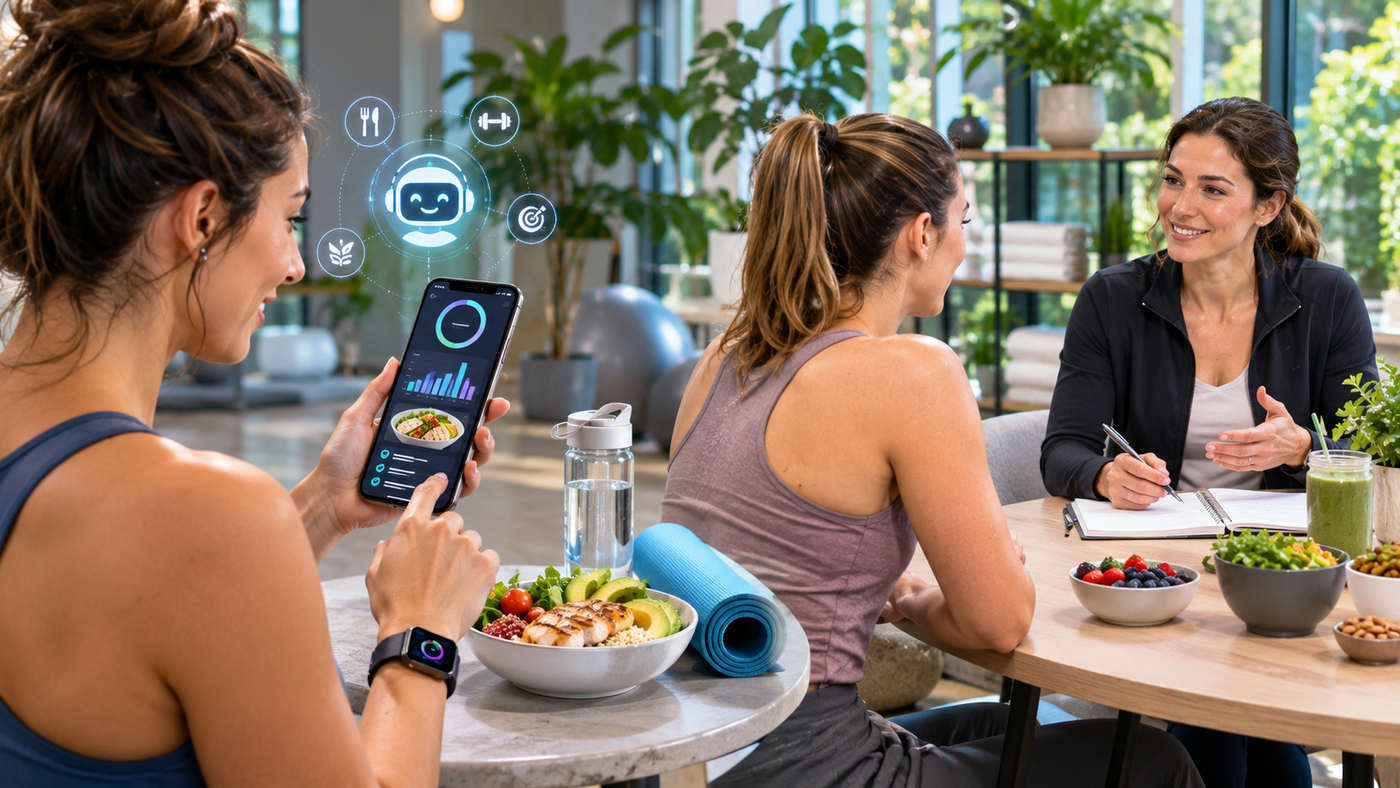
In 2026, a person trying to improve nutrition, build a workout routine, or follow through on a wellness goal no longer has to wait for a weekly appointment to receive feedback. The debate around AI coaching vs traditional coaching now includes applications that respond to meal logs, activity data, sleep patterns, and personal goals throughout the day. These systems can suggest a practical next step after a missed workout or help a user plan meals around a busy schedule. Yet constant availability does not automatically mean better advice or stronger long term results. Human professionals still offer context, trust, and judgment that software may not reproduce. Choosing well means understanding what each approach actually does, what evidence supports it, and when professional care is necessary.
What Is the Difference Between AI Coaching and Traditional Coaching?
AI coaching uses software to deliver goals, feedback, reminders, and recommendations based on information supplied by the user or collected through connected devices. Some tools rely on predefined rules or machine learning models; others add conversational generative AI. A wearable might record steps, while an app interprets patterns and offers a prompt to walk after dinner. The level of genuine personalization varies greatly between products.
Traditional coaching generally involves scheduled interaction with a human professional who discusses goals, identifies barriers, and helps a person adapt their plan. Sessions may happen in person, by video, or by phone. Some coaches provide messages between appointments, so the distinction is not simply digital versus offline. The more useful comparison in AI coaching vs traditional coaching is automated, frequent support versus support grounded in a relationship with a trained person.
What Counts as Real Time Coaching?
A system can deliver a message immediately without understanding every factor behind the user’s behavior. A reminder to drink water after exercise is timely; a recommendation that considers relevant preferences and recent activity may be more adaptive. Neither should be confused with an individualized clinical assessment. When comparing AI coaching vs traditional coaching, ask what information drives each recommendation and whether a qualified person reviews sensitive decisions.
What Does a Human Coach Add?
A capable human coach can notice uncertainty, ask follow up questions, help reconcile competing priorities, and recognize when a client needs another professional. The quality of that support depends on credentials, the coaching method, and the relationship. Not every traditional programme offers intensive personalized care, just as not every automated programme uses sophisticated AI. The quality of training and oversight matters in AI coaching vs traditional coaching as much as the delivery method.
7 Essential Differences Between AI Coaching and Traditional Coaching
1. Availability and Feedback Speed
The clearest advantage of AI coaching vs traditional coaching is often timing. A mobile app can provide reminders, explanations, and progress summaries outside ordinary business hours. Someone working rotating shifts can review a meal plan at midnight, while a busy parent can request a short home exercise idea during a free moment. Access does not depend on securing another appointment.
In traditional coaching, a scheduled session creates dedicated time to consider progress in depth. A skilled coach may also respond between sessions, but availability should be established in the service agreement rather than assumed. For a person who repeatedly needs small adjustments, asynchronous support can reduce friction. For someone who needs thoughtful discussion after a major setback, an appointment may offer a different kind of value.
A Fast Reply Is Not Always the Best Reply
The AI coaching vs traditional coaching question becomes important when a request is ambiguous. A confident instant answer may overlook medication use, injuries, allergies, financial constraints, or psychological stress. Automated systems should clearly state their limits, while users should avoid treating speed as evidence of expertise.
2. Adaptive Nutrition Guidance and Meal Planning
Nutrition is where the 2026 comparison feels particularly practical. Some AI applications can organize food logs, recognize meal patterns, suggest shopping lists, and adapt reminders around a user’s stated preferences. If someone frequently skips breakfast because mornings are rushed, a tool may offer convenient alternatives instead of simply repeating a generic target. These functions can support planning, but the accuracy of food recognition and nutrient estimates can vary.
For AI coaching vs traditional coaching in nutrition, distinguish everyday education from medical nutrition therapy. A registered dietitian or another appropriately qualified clinician can assess medical history, nutritional deficiencies, interactions with treatment, and other complexities within their professional scope. A general wellness chatbot should not diagnose deficiencies, prescribe restrictive diets, or change treatment. People managing diabetes medication, kidney disease, pregnancy related concerns, food allergies, or an eating disorder should seek appropriately qualified care.
A human nutrition coach can also help discover barriers that do not appear in a meal log, such as family food traditions, limited grocery access, or anxiety around tracking. Software may help translate an agreed strategy into shopping prompts and consistent reminders. The best approach is not necessarily to choose one permanently.
Personalization Needs Reliable Inputs
A plan that looks customized may be built from incomplete or mistaken records. In AI coaching vs traditional coaching, check whether users can correct logged meals, enter meaningful preferences, and opt out of unwanted calorie or weight tracking. More data does not guarantee better guidance if the underlying assumptions are wrong.
3. Behavior Change, Motivation, and Accountability
Sustainable health improvement depends on actions repeated over time. An AI assistant can turn a large goal into smaller steps, notice missed check ins, and send behavior based nudges when a person is likely to engage. For example, it could recommend a brief walk on a day when the planned workout no longer fits the schedule. Prompts work best when they are relevant, respectful, and adjustable rather than persistent or guilt inducing.
In the AI coaching vs traditional coaching comparison, a human coach contributes a different form of accountability. A conversation can explore why an activity feels difficult, whether a goal remains realistic, and how work or family stress changes priorities. Some people respond well to a trusted relationship; others find private app based reflection easier than discussing every setback with another person.
Traditional programmes may also provide group support. The US Centers for Disease Control and Prevention describes its recognized lifestyle change programme as a yearlong intervention that includes trained coaches, regular interaction, and social support. Those ingredients are not automatically reproduced by automated notifications. On the other hand, apps can support daily practice between human meetings.
Measure Actions, Not Notification Counts
When evaluating AI coaching vs traditional coaching, the number of reminders sent should not be mistaken for progress. More meaningful indicators include realistic consistency, physical activity, dietary quality, confidence, and how well a routine survives disrupted weeks. A user should be able to reduce or silence reminders that become distracting.
4. Evidence, Outcomes, and Long Term Effectiveness
The evidence in 2026 is promising but does not establish that all AI coaches outperform human professionals. A randomized clinical trial published in JAMA compared a fully automated AI driven diabetes prevention programme with a remotely delivered human coach programme in 368 adults with prediabetes and overweight or obesity. At 12 months, 31.7 percent of participants referred to AI and 31.9 percent referred to human coaching achieved the study’s combined primary outcome. The AI programme met the trial’s prespecified criterion for noninferiority, meaning it performed within a defined margin of the comparator on that specific measure.
That result adds useful evidence to AI coaching vs traditional coaching, but it is not proof that any chatbot can replace a dietitian or coach. The trial studied a particular behavioral intervention, population, and outcome. Its AI system used an adaptive algorithm rather than a general purpose large language model. The trial did not demonstrate that AI was clinically superior.
A 2026 follow up analysis of participant experience found that the AI group began sooner and engaged more evenly, whereas the human coaching group reported higher satisfaction. A separate 2026 systematic review of AI driven diabetes prevention studies concluded that evidence for broader effectiveness and generalizability remained limited. For readers considering AI coaching vs traditional coaching, these findings suggest that convenience, adherence, satisfaction, and health outcomes should be evaluated separately.
Ask Whether Claims Match the Research
A provider citing a successful study should identify whether its own product, target population, and outcome were actually investigated. An app showing more daily engagement is not necessarily delivering better health results. Look for independent evaluations, reasonable follow up periods, and clearly described limitations.
5. Costs, Access, and Practical Convenience
The financial comparison depends on the exact service. AI coaching platforms may offer a free tier, a subscription, or additional charges for devices and premium features. Human coaching can involve per session fees, packages, or specialist clinical services. Some health plans or employers support qualifying programmes, but eligibility varies. There is no responsible universal claim that all AI options are cheaper or that human coaching always costs more.
When budgeting for AI coaching vs traditional coaching, calculate the complete cost over several months. Include subscriptions, wearable devices, appointment travel, cancellation rules, and any professional assessments. A low monthly app fee may not be valuable if the user stops engaging after two weeks. A higher priced human service might be worthwhile if it addresses a recurring obstacle that automation has not resolved.
Accessibility extends beyond money. Apps can help people with irregular schedules or limited local provider access. Yet they also require appropriate devices, digital literacy, language support, and sometimes reliable internet access. Human programmes can be remote, and some provide group sessions that reduce individual costs.
Compare What Is Actually Included
With AI coaching vs traditional coaching, determine whether nutrition advice, exercise feedback, progress reviews, messaging, and escalation to a professional are included. Marketing phrases such as unlimited coaching can hide important differences in service depth.
6. Privacy, Trust, and Safety Boundaries
Wellness apps can collect sensitive information about eating habits, body measurements, location, activity, mood, and sleep. Some tools combine these records to tailor messages. That may be useful, but it makes privacy a central factor in AI coaching vs traditional coaching. Before connecting a wearable or uploading a food diary, review what data is collected, whether it is used for advertising or model development, who can access it, and how deletion works.
In the United States, not every consumer wellness app is covered by HIPAA. The Federal Trade Commission’s Health Breach Notification Rule applies to certain health apps and related businesses that handle covered personal health information. Rules differ by jurisdiction and business arrangement, so users should not assume a platform has medical grade protections because it offers health related features.
Human coaches also handle private information and should explain record storage, confidentiality, and professional boundaries. The World Health Organization has cautioned that generative AI systems can produce inaccurate, incomplete, or biased health information. This concern makes AI coaching vs traditional coaching more than a convenience comparison. Any system giving unsafe exercise instructions, extreme food restrictions, or confident medical claims should be treated cautiously.
Know When Automated Advice Must Stop
An AI wellness coach should not be the sole source of guidance for urgent symptoms, medication changes, suspected eating disorders, or complex medical conditions. Seek a qualified healthcare professional rather than attempting to troubleshoot a serious problem through prompts.
7. Human Connection and the Hybrid Coaching Model
A useful conclusion from AI coaching vs traditional coaching is that the two approaches are often complementary. A person might meet a human coach monthly to revisit goals, discuss barriers, and consider bigger adjustments while using an app for daily tracking, reminders, and simple reflection. The app handles repetitive tasks; the human handles nuance, relationship, and situations that require professional judgment.
Hybrid arrangements are not automatically better. They can become confusing when the coach and app issue conflicting recommendations, or when neither clearly owns responsibility for sensitive decisions. A coordinated system should define the role of each component, the data the human can see, and the process for resolving conflicting advice. Some users may prefer an app alone for uncomplicated habit tracking, while others may benefit from regular human contact without a constant stream of digital prompts.
Give Every Tool a Clear Role
In AI coaching vs traditional coaching, assign automated tools to tasks they handle reliably, such as reminders or progress summaries. Reserve clinical decisions, complicated personal circumstances, and significant plan changes for the appropriately qualified professional. This keeps convenience from becoming misplaced trust.
Which Coaching Approach Is Best for Different Goals?
There is no single winner in AI coaching vs traditional coaching because the best fit depends on the individual’s needs. Someone building a consistent walking habit may value quick prompts and progress tracking. A person preparing for a demanding sporting event may need qualified exercise programming and feedback on technique. Someone seeking support with a chronic condition may require care from a registered dietitian, clinician, or other professional rather than an ordinary wellness coach.
For Busy Professionals and Shift Workers
An asynchronous coaching tool can fit around unpredictable hours. Look for adaptable notification times, realistic meal planning, and flexible goals. If fatigue or workload is the main obstacle, a human coach may help with the larger conversation about priorities and expectations.
For Nutrition and Sustainable Weight Management
An AI tool may help organize meals, shopping, and consistent habits. A qualified professional is especially valuable when medical needs, difficult relationships with food, or repeated unsuccessful plans complicate the picture. Avoid services that encourage aggressive restrictions or imply that an algorithm knows the body’s needs from a single photograph.
For Beginners Who Need Confidence
A supportive human coach can demonstrate skills and correct misunderstandings. An app can offer reminders and simple plans between sessions. In AI coaching vs traditional coaching, beginners should prioritize safe, understandable guidance over an impressive list of technical features.
For People Who Prefer Privacy and Independence
Some users prefer self directed tracking and do not want frequent appointments. That preference is reasonable, provided the selected tool has credible limits, accessible privacy controls, and a clear route to human help if the situation becomes complicated.
How to Test an AI Coach or Human Coaching Programme
Before committing to a long subscription, define one or two meaningful goals. They might involve preparing more balanced lunches, keeping a regular activity schedule, or maintaining a consistent bedtime. Choose measures that reflect actions and wellbeing instead of tracking every possible number. A four week trial can reveal whether the approach fits daily life, although it cannot prove a long term health outcome.
Week One: Establish a Baseline
Record current habits without trying to perfect everything immediately. Review the provider’s credentials, data policies, and coaching scope. In AI coaching vs traditional coaching, establish how much support is available and what happens when the user has a question the service cannot safely answer.
Week Two: Test Personalization
Make a realistic change to the schedule and observe whether the plan adjusts sensibly. Does the app simply repeat its original instructions? Does the human coach ask what changed and offer practical alternatives? Appropriate flexibility is more valuable than a polished generic response.
Week Three: Test Accountability
Notice how the service responds when a goal is missed. Good coaching should support adjustment and learning rather than shame. In AI coaching vs traditional coaching, consider whether the feedback helps you resume the routine the next day instead of abandoning it.
Week Four: Review Fit and Next Steps
Assess consistency, confidence, time spent, cost, data comfort, and the quality of advice. Decide whether to continue, change platforms, seek professional support, or use a hybrid arrangement. Avoid interpreting a short term fluctuation in weight or wearable readings as definitive proof of success or failure.
Common Mistakes When Comparing Coaching Options
A common mistake is believing that an AI tool must be more personalized because it collects more data. Another is assuming that any human coach has clinical training or that weekly calls are essential for everyone. Credentials, actual services, engagement, and outcomes deserve separate consideration.
When examining AI coaching vs traditional coaching, avoid promises of guaranteed weight loss, perfect nutrition calculations, or automated medical oversight. Also avoid tools that make users feel obligated to check in constantly. The purpose of coaching is to support sustainable action, not create another source of pressure. A good programme should leave users more capable of making informed decisions without depending on every notification.
Frequently Asked Questions
1. What is the main difference between AI coaching vs traditional coaching?
AI coaching can deliver automated, frequent feedback based on available data, while traditional coaching offers direct human discussion, judgment, and a personal coaching relationship.
2. Can AI coaching replace weekly coaching calls in 2026?
For some straightforward wellness habits, an app can provide useful support between or instead of appointments. More complex needs may still benefit from trained human guidance.
3. Is AI nutrition coaching safe and accurate?
It can support general planning, but meal estimates and recommendations can be wrong. Medical nutrition concerns require advice from an appropriately qualified professional.
4. Is AI coaching more effective than a human coach?
Not universally. A randomized diabetes prevention trial found one automated programme noninferior on a specific outcome, but that result does not establish superiority across products or goals.
5. How much does AI coaching cost compared with human coaching?
Prices vary by app, devices, professional credentials, and session arrangements. Compare total costs and the support actually included before deciding.
6. Is hybrid coaching better for long term behavior change?
It can combine daily reminders with human context and accountability, but evidence is still developing. The best arrangement matches personal needs and defines each provider’s role.
Conclusion
The choice between AI coaching vs traditional coaching in 2026 is less about technology replacing people and more about matching support to the task. AI tools can make everyday feedback, nutrition planning, and habit reminders easier to access, while qualified human coaches offer deeper context and personal connection. Current research supports promise in selected programmes, not a universal winner, and privacy and safety still matter. For many people, a carefully designed hybrid approach offers a practical balance of convenience, judgment, and sustainable progress.
