
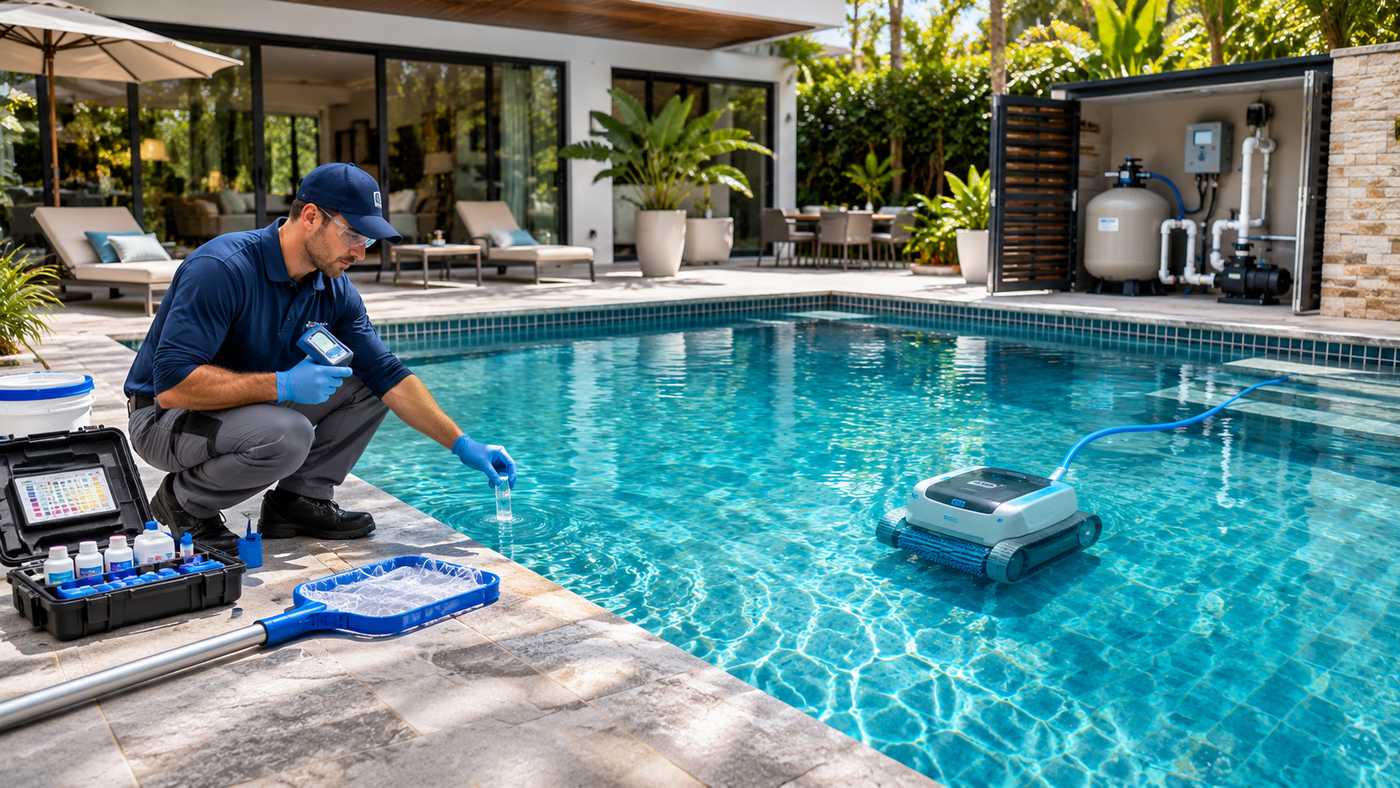
Keeping a backyard pool clean, safe, and inviting requires more than occasionally removing leaves or adding chlorine. Effective swimming pool maintenance combines proper water chemistry, consistent cleaning, reliable filtration, equipment inspections, and preventive care. Without a structured routine, pool owners may encounter cloudy water, algae growth, uncomfortable swimming conditions, damaged equipment, and unnecessary repair expenses. Fortunately, maintaining a residential swimming pool becomes more manageable when homeowners understand the essential tasks and perform them consistently. Whether you own an inground swimming pool, an above ground pool, or a saltwater system, this comprehensive guide explains seven proven strategies for maintaining water quality, improving equipment performance, reducing avoidable costs, and creating a more enjoyable swimming environment.
Why Regular Swimming Pool Maintenance Is Essential
A swimming pool is a continuously operating water treatment system. Its cleanliness depends on effective circulation, filtration, sanitation, and physical cleaning.
Unlike water that is regularly replaced, pool water is typically treated and reused over an extended period.
This makes proper maintenance particularly important.
Protecting Water Quality and Swimmer Health
Swimming pools can accumulate contaminants from swimmers, surrounding landscapes, rainwater, dust, and other environmental sources.
Body oils, perspiration, sunscreen, leaves, and organic debris can increase the demand for disinfectant.
Without sufficient sanitation, harmful microorganisms may survive and create health risks.
The Centers for Disease Control and Prevention explains that maintaining appropriate disinfectant concentration and pH is an essential defense against swimming related illnesses.
However, even properly treated water cannot eliminate every germ immediately.
Preventing Expensive Equipment Problems
Poor water balance can contribute to corrosion, scale accumulation, and premature deterioration of some pool components.
Blocked filters and inadequate circulation may also reduce system performance.
Consistent swimming pool maintenance helps identify developing problems before they require major repairs.
Improving the Ownership Experience
A clean, well maintained swimming pool is easier to enjoy and more pleasant to use.
Clear water, comfortable swimming conditions, and dependable equipment also make pool ownership less stressful.
Rather than waiting for problems to become visible, homeowners should establish a preventive maintenance routine.
1. Test and Balance Swimming Pool Water Regularly
Water chemistry is the foundation of effective swimming pool maintenance.
Even a pool that appears clean may have insufficient disinfectant or an unsuitable pH level.
Regular testing provides information about conditions that cannot be assessed reliably by appearance alone.
Understand the Importance of Pool Water pH
The pH level measures how acidic or alkaline the water is.
If the pH becomes too high, chlorine can become less effective at killing germs.
If it becomes too low, the water can become more corrosive and may contribute to damage involving certain pool materials.
The CDC recommends maintaining pool water pH between 7.0 and 7.8.
Why Balanced pH Matters
Appropriate pH supports several important goals:
- Effective disinfectant performance
- Reduced risk of corrosion and scale problems
- More comfortable swimming conditions
- Protection of compatible pool surfaces and equipment
- More consistent water treatment results
Pool owners should follow product instructions when making chemical adjustments.
Maintain Appropriate Chlorine Levels
Chlorine is a commonly used swimming pool disinfectant.
It helps control microorganisms and oxidize certain contaminants introduced into the water.
For residential swimming pools, the CDC recommends maintaining at least 1 part per million of free chlorine.
When cyanuric acid or chlorine products containing cyanuric acid are used, the CDC recommends at least 2 parts per million.
The appropriate operating level must also comply with product instructions and applicable local requirements.
Understand Free Chlorine and Combined Chlorine
Free chlorine is the portion available to disinfect pool water.
Combined chlorine refers to chlorine that has reacted with certain contaminants to form compounds such as chloramines.
Elevated combined chlorine can indicate a need to investigate water quality and sanitation conditions.
A properly selected test kit can help distinguish these measurements.
Check Other Water Balance Factors
Total alkalinity, calcium hardness, and cyanuric acid can also influence water balance and pool performance.
Total alkalinity helps buffer changes in pH.
Calcium hardness affects the water’s interaction with some surfaces and equipment.
Cyanuric acid helps protect chlorine from sunlight in outdoor pools but can reduce disinfection effectiveness when levels become excessive.
Recommended concentrations depend on the pool system, treatment products, surface materials, and relevant standards.
How Often Should Pool Water Be Tested?
The CDC recommends checking chlorine and pH at least twice daily, with more frequent testing when pools experience heavy use.
A reliable DPD test kit generally provides more accurate results than basic test strips.
Pool owners should also periodically check other water balance measurements according to manufacturer guidance.
Recording test results makes it easier to identify changes before they become serious problems.
2. Establish a Consistent Pool Cleaning Routine
Physical cleaning removes debris that filtration and chemical treatment cannot adequately address alone.
Leaves, insects, dust, and organic materials can collect on the water surface or settle on the pool floor.
Removing these contaminants helps maintain appearance and supports water treatment.
Skim the Pool Surface Frequently
A swimming pool skimmer net is useful for removing floating leaves, insects, and other debris.
Surface cleaning is especially important for pools surrounded by trees or landscaping.
Removing organic material before it sinks can reduce the amount of debris reaching the filtration system.
Focus on Common Debris Areas
Pay attention to waterline corners, steps, shallow areas, and locations where wind frequently pushes debris.
Inspect skimmer openings to confirm that water can flow freely.
Brush Pool Walls and Steps
Brushing helps remove deposits and disrupt early algae accumulation on pool surfaces.
Walls, steps, corners, and areas behind ladders often require particular attention.
A weekly brushing routine is a useful starting point, although additional cleaning may be necessary when visible buildup develops.
Choose brushes appropriate for the pool surface.
A brush suitable for one material may damage another.
Vacuum the Pool Floor
Pool vacuuming removes settled dirt, sand, and small debris.
Homeowners may use manual vacuum systems, automatic suction cleaners, pressure cleaners, or robotic pool cleaners.
Each option has different operating requirements.
Benefits of Robotic Pool Cleaners
Robotic cleaners can reduce manual work by collecting debris from the pool floor and, depending on the model, walls or waterline areas.
However, robotic cleaning does not replace water testing, sanitation, or filtration maintenance.
Follow manufacturer instructions regarding operation, charging, removal, and storage.
Keep the Pool Surroundings Clean
The area surrounding the swimming pool can introduce contaminants.
Sweeping patios, maintaining landscaping, and removing nearby organic debris may reduce the cleaning burden.
Encouraging swimmers to rinse before entering also helps limit the introduction of body oils, dirt, and other substances.
Consistent physical cleaning makes the overall swimming pool maintenance process more manageable.
3. Maintain the Pool Pump and Filtration System
A pool filtration system continuously circulates water through equipment designed to remove suspended particles.
The pump moves water through the plumbing, while the filter captures debris.
Together, these components play an essential role in maintaining water clarity.
Understand How Pool Circulation Works
Water normally travels from the swimming pool through skimmers or other suction outlets toward the pump.
The water then moves through the filtration system and returns to the pool through designated inlets.
Proper circulation helps distribute disinfectant and move suspended debris toward the filter.
Areas with inadequate circulation may accumulate contaminants more easily.
Inspect the Pump Regularly
Pool pumps should operate without unusual vibration, persistent leaks, or unexpected noises.
Check the equipment area for visible damage and changes in operating performance.
Also inspect accessible strainer baskets and remove accumulated debris according to the manufacturer’s instructions.
Recognize Possible Pump Problems
Warning signs may include:
- Reduced water flow
- Unusual equipment noise
- Repeated loss of pump prime
- Water leakage around equipment
- Unexpected pressure changes
- Frequent electrical shutdowns
Stop using equipment when a serious mechanical or electrical problem is suspected and contact a qualified technician.
Clean the Pool Filter Correctly
Different filters require different maintenance procedures.
Sand filters and some diatomaceous earth filters are designed for backwashing.
Cartridge filters generally require removal and cleaning according to the manufacturer’s instructions rather than backwashing.
A filter should not be cleaned simply because a fixed number of days has passed.
Monitor the pressure gauge and follow the manufacturer’s recommended cleaning threshold.
Avoid Unnecessary Backwashing
Backwashing removes accumulated debris by reversing water flow through compatible filtration systems.
However, unnecessary backwashing wastes water and may not improve filtration performance.
Examine the filter’s operating pressure and follow equipment instructions.
Improve Energy Efficiency
Pool pumps can represent a substantial portion of pool operating expenses.
ENERGY STAR explains that variable speed pool pumps can match water flow to different operating requirements.
Running a suitable pump at lower speeds during routine filtration may reduce electricity consumption compared with continuously operating an oversized single speed pump.
The appropriate schedule depends on pool size, equipment, water conditions, and applicable requirements.
A qualified pool professional can help determine suitable operating settings.
4. Prevent Algae Growth and Cloudy Pool Water
Algae can become a persistent maintenance problem when sanitation and circulation are inadequate.
Visible algae may appear as green, yellowish, or dark deposits on pool surfaces.
Its appearance can indicate that the existing maintenance routine requires attention.
What Causes Algae in Swimming Pools?
Algae growth can be encouraged by inadequate disinfectant, poor circulation, accumulated debris, and insufficient cleaning.
Warm weather and environmental contamination can increase the demands placed on a pool’s treatment system.
Algae should not be treated as a purely cosmetic issue.
Conditions that allow substantial biological growth may also indicate insufficient protection against other microorganisms.
How to Respond to Algae
If algae appears, suspend swimming until the water has been properly assessed and restored to safe operating conditions.
Test the disinfectant concentration, pH, and relevant water balance measurements.
Inspect the filtration system and identify any circulation problems.
Brush affected surfaces using appropriate tools.
Use Pool Treatment Products Carefully
Some algae problems require additional chemical treatment.
However, chemical selection and dosage depend on the particular product, water chemistry, and severity of contamination.
Do not assume that repeatedly adding large quantities of chlorine is always the correct solution.
Follow product labels or obtain professional advice when appropriate.
Understand Cloudy Pool Water
Cloudiness may result from suspended particles, water balance problems, filtration issues, or biological contamination.
Because several causes can produce similar symptoms, accurate diagnosis is important.
Start by testing water chemistry and checking whether the pump and filtration system are functioning correctly.
When Is Cloudy Water Unsafe?
If the pool floor or drains cannot be clearly seen, swimmers may be difficult to locate during an emergency.
Do not allow swimming when visibility is inadequate or when required water quality conditions are not met.
Restore appropriate clarity and sanitation before reopening the pool.
Preventing contamination is generally easier than correcting severe water quality problems.
5. Inspect Pool Equipment and Safety Features
Swimming pool maintenance includes protecting both water quality and the physical safety of the swimming environment.
Equipment that appears functional may still require inspection to identify wear or developing damage.
Inspect Pool Ladders and Steps
Check that ladders, handrails, and steps are stable and securely installed.
Inspect walking surfaces for damage or conditions that increase the likelihood of slipping.
Loose or damaged components should be repaired before the pool is used.
Examine Drain Covers and Suction Outlets
Pool drains and suction fittings require particular attention because damaged or missing covers can create entrapment hazards.
The United States Consumer Product Safety Commission advises that pools with loose, broken, or missing drain covers should not be used until appropriate repairs are completed.
Why Drain Safety Is Critical
Powerful suction can trap hair, clothing, limbs, or other parts of the body.
Never attempt to repair submerged suction fittings while the circulation system is operating.
Use a qualified pool professional to inspect and repair suspected problems.
Protect Children Around Residential Pools
A clean swimming pool is not automatically a safe swimming pool.
The CDC recommends protective measures including barriers that separate pools from homes and surrounding areas.
Four sided fencing with self closing and self latching gates can help reduce unsupervised access.
Children also require continuous, attentive supervision around water.
Inspect Electrical Equipment
Pool lighting, electrical controls, heaters, and pumps should be examined for visible damage.
Electrical problems in wet environments can create serious hazards.
Repairs involving electrical systems should be performed by appropriately qualified professionals.
Pool owners should also know how to safely shut down relevant equipment during emergencies.
Maintain Safe Chemical Storage
Pool chemicals must be stored securely and handled according to their labels.
The CDC warns that mixing incompatible products can produce dangerous reactions.
Never mix chlorine products with acids or combine different pool treatment chemicals.
Keep products in their original labelled containers, protected from moisture, heat, and unauthorized access.
6. Adapt Swimming Pool Maintenance to Seasonal Changes
Maintenance requirements vary throughout the year because environmental conditions influence water temperature, debris accumulation, chemical demand, and equipment operation.
A flexible routine is more effective than using identical treatment practices in every season.
Summer Pool Maintenance
Summer often brings frequent swimming, stronger sunlight, and warmer conditions.
These factors may increase disinfectant demand and require closer water quality monitoring.
Test water regularly and increase attention after heavy use.
Manage Evaporation and Water Levels
Hot weather can contribute to evaporation.
Check water levels according to the pool equipment manufacturer’s recommendations.
If water becomes too low, the pump may draw air or operate improperly.
If the level becomes too high, skimmer performance may be affected.
Maintain Pools During Rainy Weather
Heavy rainfall can introduce dirt, leaves, and other contaminants.
After significant storms, inspect the pool, remove debris, and test water chemistry.
Check that electrical equipment has not been damaged or submerged.
If floodwater has entered the pool, additional assessment and corrective treatment may be necessary.
Prepare for Cooler Seasons
In regions where pools remain open throughout the year, colder weather may reduce swimming activity but does not eliminate maintenance requirements.
Continue water testing, circulation, and equipment inspections as needed.
In colder climates, pool winterization may be necessary to protect pipes and equipment from freezing.
Winterization Requires Proper Planning
Winterization procedures depend on the pool design, local climate, and equipment.
Tasks may include lowering water to the appropriate level, protecting plumbing, preparing equipment, and installing a suitable winter cover.
Improper winterization can damage pipes and components.
Consider professional assistance when unfamiliar with the required procedures.
Reopen the Pool Carefully
When preparing a seasonal pool for use, inspect the cover, structure, equipment, water quality, and surrounding safety features.
Clean accumulated debris and restart the circulation system according to manufacturer instructions.
Confirm appropriate disinfectant concentration, pH, and water clarity before swimming.
7. Reduce Pool Maintenance Costs Through Preventive Care
A well maintained swimming pool can be more economical to operate than one that repeatedly experiences avoidable problems.
The goal is not simply to reduce chemical use or limit pump operation.
Instead, efficient maintenance balances operating expenses with safe water quality and reliable equipment performance.
Invest in Preventive Maintenance
Routine inspections can identify leaks, worn components, blocked filters, and water balance problems before they become more expensive.
Keeping a maintenance log can also make it easier to detect recurring issues.
Record chemical measurements, equipment servicing, cleaning activities, and major repairs.
Use an Appropriate Pool Cover
Pool covers can reduce evaporation and help keep leaves and other debris out of the water.
The Environmental Protection Agency reports that properly used pool covers can significantly reduce water loss caused by evaporation.
For heated pools, certain covers may also reduce heating requirements.
Understand Pool Cover Limitations
Not every cover is designed to prevent access to water.
A floating solar cover should not be treated as a substitute for an approved safety barrier.
Choose covers based on their intended purpose and follow installation instructions carefully.
Avoid Unnecessary Chemical Treatments
Adding chemicals without testing can waste money and make water balance more difficult to manage.
For example, repeatedly adding stabilised chlorine may increase cyanuric acid concentrations.
Excessive or poorly coordinated treatment may require additional corrective work.
Use reliable test measurements to guide adjustments.
Choose Suitable Equipment
The largest available pump or most expensive pool cleaner is not automatically the best choice.
Equipment should match the pool’s dimensions, hydraulic design, filtration requirements, and operating conditions.
When replacing major components, compare efficiency, compatibility, maintenance requirements, and expected ownership expenses.
Daily, Weekly, and Monthly Pool Maintenance Checklist
A structured schedule can simplify residential pool care.
The exact frequency should be adjusted according to pool usage, local regulations, weather, and manufacturer recommendations.
Daily Maintenance Tasks
- Test disinfectant concentration and pH at least twice daily, following CDC guidance
- Remove visible floating debris
- Check water clarity and circulation
- Observe equipment for leaks or unusual noises
- Confirm safety barriers and gates are functioning
- Inspect the water level
Weekly Maintenance Tasks
- Brush pool walls, steps, and corners
- Vacuum settled debris when needed
- Empty skimmer and pump baskets safely
- Examine filtration pressure
- Review water balance measurements
- Inspect accessible equipment and pool surroundings
Monthly Maintenance Tasks
- Assess pump and filter performance
- Inspect visible plumbing connections
- Review accumulated maintenance records
- Check the condition of cleaning equipment
- Evaluate additional water balance factors
- Arrange professional servicing when required
Adjust the Schedule Based on Conditions
A heavily used pool surrounded by trees may require more frequent cleaning than a lightly used covered pool.
After unusual weather, equipment failures, or contamination incidents, additional checks may be necessary.
A maintenance schedule should remain flexible enough to respond to actual water conditions.
Saltwater Pool Maintenance Versus Traditional Chlorine Pools
Saltwater pools are sometimes described as chlorine free, but this is misleading.
Most residential saltwater systems use a salt chlorine generator to produce chlorine from dissolved salt.
The resulting chlorine disinfects the water.
How Saltwater Systems Work
A salt chlorine generator uses an electrolytic cell to produce chlorine while water circulates through the system.
The equipment may reduce the need to manually add certain chlorine products, but it does not eliminate testing or maintenance.
Additional Saltwater Pool Requirements
Saltwater pool owners should monitor chlorine, pH, and the salt level specified by the equipment manufacturer.
The generator cell may also require inspection and cleaning when mineral deposits accumulate.
Which System Requires Less Maintenance?
Both traditional and saltwater pools require water chemistry monitoring, physical cleaning, circulation, and equipment care.
A saltwater system may simplify some aspects of chlorine production, but it introduces equipment that requires its own maintenance.
The better choice depends on equipment compatibility, operating costs, and personal preferences.
Common Swimming Pool Maintenance Mistakes to Avoid
Several mistakes can create unnecessary complications for pool owners.
Relying Only on Water Appearance
Clear water does not guarantee effective disinfection.
Use appropriate test equipment rather than relying on appearance or smell.
Ignoring Filtration Problems
Poor circulation can contribute to persistent debris, inadequate treatment distribution, and reduced water clarity.
Investigate repeated pressure changes or weak water flow.
Using Too Many Chemicals
Adding multiple treatment products without understanding their effects can create water balance problems and safety risks.
Never mix incompatible pool chemicals.
Neglecting Safety Inspections
Missing drain covers, damaged ladders, and unsecured gates require attention regardless of water cleanliness.
Skipping Routine Maintenance
Irregular cleaning and testing allow small problems to develop into larger ones.
A consistent preventive approach is generally easier to manage than repeated corrective treatment.
When Should You Hire a Professional Pool Maintenance Service?
Some homeowners prefer to perform routine swimming pool maintenance themselves.
Others benefit from professional assistance because of limited time, complicated equipment, or persistent water quality problems.
Situations That May Require Professional Support
Consider hiring a qualified pool technician when experiencing repeated algae outbreaks, unexplained chemical imbalances, equipment failures, significant leaks, or difficult filtration problems.
Professional support is also useful for seasonal opening, winterization, and major equipment replacement.
How to Choose a Pool Service Provider
Look for relevant training, experience, appropriate insurance, and clear service descriptions.
Ask what is included in the proposed maintenance plan.
Some companies focus on cleaning and chemical treatment, while others also provide equipment repairs and diagnostic services.
Request a Clear Service Agreement
A useful agreement should identify scheduled visits, water testing, cleaning activities, chemicals, equipment responsibilities, and additional charges.
Customers should understand how emergencies, repairs, and unexpected problems are handled.
Choosing a qualified provider can help maintain consistent care without creating unnecessary expenses.
Frequently Asked Questions
How often should swimming pool maintenance be performed?
Swimming pool maintenance requires regular attention. The CDC recommends testing chlorine and pH at least twice daily, while cleaning and equipment servicing should follow usage and manufacturer requirements.
What is the ideal pH level for a swimming pool?
The CDC recommends a pool water pH between 7.0 and 7.8. This range supports effective disinfection, equipment protection, and swimmer comfort.
How can I prevent algae in my swimming pool?
Maintain appropriate disinfectant levels, ensure adequate circulation, remove debris, and brush pool surfaces regularly. Investigate water quality problems promptly.
How often should a swimming pool filter be cleaned?
Filter cleaning frequency depends on filter type, pressure readings, usage, and manufacturer instructions. Clean or backwash only when appropriate for the installed system.
Do saltwater swimming pools need maintenance?
Yes. Saltwater pools still require chlorine and pH testing, regular cleaning, filtration maintenance, and inspection of the salt chlorine generator.
Is professional swimming pool maintenance worth the cost?
Professional services can be valuable for complex systems, recurring water quality problems, limited owner availability, and major repairs. The benefits depend on the pool’s needs and service agreement.
Conclusion
Effective swimming pool maintenance requires consistent water testing, regular cleaning, efficient filtration, preventive equipment care, and careful attention to safety. By following a structured maintenance routine, homeowners can reduce avoidable problems, protect expensive equipment, and maintain a cleaner swimming environment. Understanding water chemistry and responding promptly to changes helps make pool ownership more manageable throughout the year. Whether handling routine tasks independently or using professional services, preventive care is the foundation of a dependable, enjoyable, and well maintained swimming pool.
