
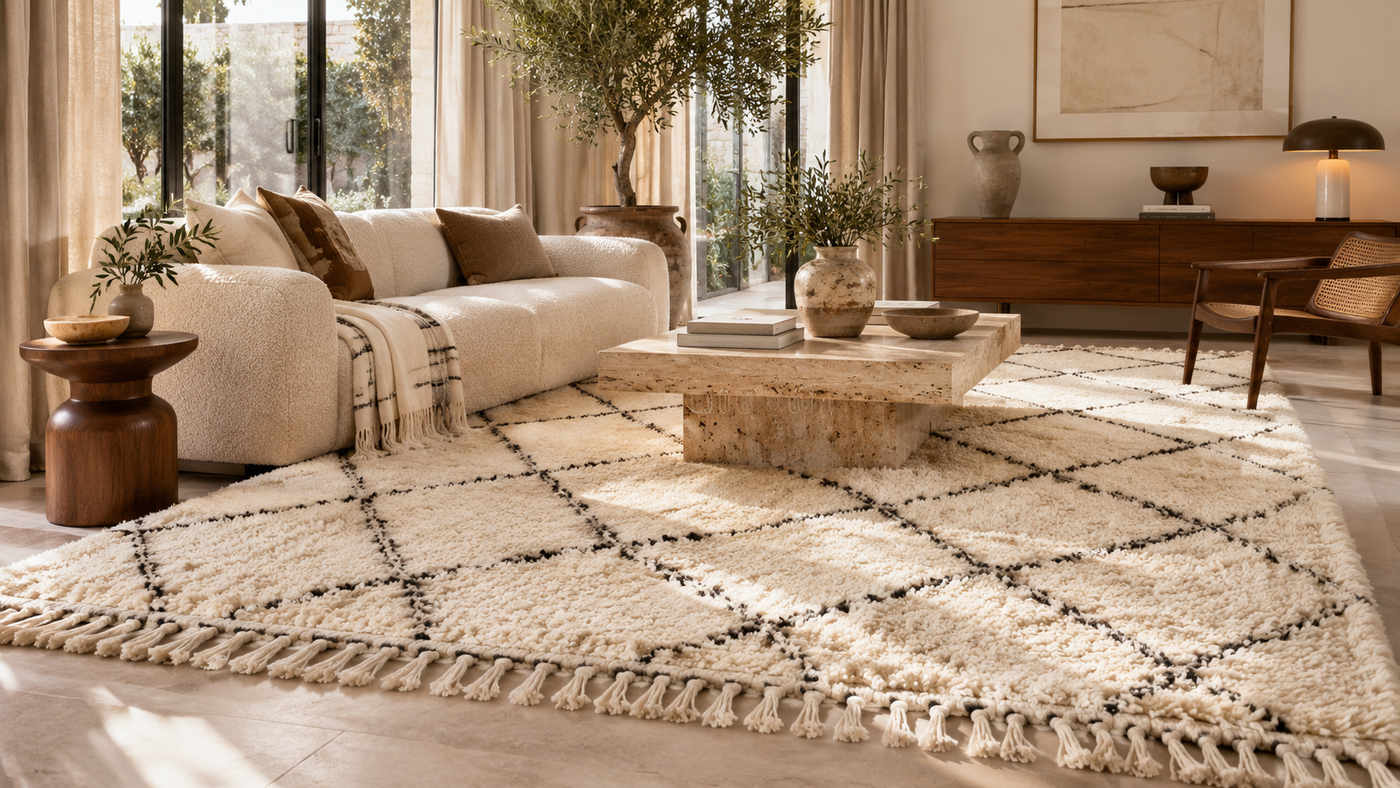
Luxury Berber rugs bring together traditional craftsmanship, rich textile textures, and distinctive designs that can transform an ordinary room into a sophisticated living space. Closely associated with the weaving traditions of Morocco’s Amazigh communities, these rugs are admired for their natural wool, expressive geometric patterns, and individual character. Whether decorating a modern apartment, a spacious family home, or an elegant interior, choosing the right rug involves more than selecting an attractive pattern. Understanding materials, craftsmanship, regional styles, dimensions, and maintenance requirements helps buyers identify authentic pieces that complement their homes and remain practical for everyday living.
What Makes Luxury Berber Rugs Special?
Berber rugs are commonly associated with traditional textiles produced by Amazigh communities across North Africa, particularly Morocco. The term Amazigh is widely used as a self designation, while Berber remains familiar in international rug retailing.
Moroccan weaving encompasses many regional traditions rather than one uniform carpet style. Different communities have developed distinctive approaches to color, pattern, texture, and construction.
Today, Luxury Berber rugs are appreciated for combining traditional artistic expression with contemporary interior design. Their organic shapes, tactile surfaces, and distinctive patterns make them suitable for minimalist, rustic, and sophisticated modern spaces.
The Difference Between Moroccan Berber Rugs and Berber Carpet
The word Berber is also used commercially to describe certain loop pile carpets, including machine manufactured products.
These carpets should not automatically be confused with handwoven Moroccan rugs rooted in Amazigh textile traditions.
When shopping, clarify whether the product is a handmade Moroccan area rug, a contemporary design inspired by Moroccan weaving, or a manufactured Berber style carpet.
This distinction is essential when evaluating craftsmanship, provenance, materials, and price.
1. Understand Traditional Moroccan Berber Rug Styles
One of the most effective ways to choose an exceptional rug is to understand the regional styles that influence its design.
Although individual pieces vary, several recognized Moroccan weaving traditions provide useful starting points.
Beni Ourain Rugs
Beni Ourain rugs are strongly associated with Amazigh weaving communities in Morocco’s Middle Atlas region.
They are internationally recognized for their natural looking ivory wool, contrasting dark geometric designs, and comfortable pile.
Traditional examples frequently feature diamond shapes or loosely arranged linear patterns.
Their relatively restrained appearance makes them particularly appealing for contemporary interiors.
Where Beni Ourain Designs Work Best
A cream colored Beni Ourain style rug can complement a neutral living room without competing with furniture or artwork.
The soft texture adds warmth to spaces featuring polished wood, stone, metal, or smooth upholstery.
However, not every modern rug advertised as Beni Ourain comes from the traditional weaving communities associated with that name.
Ask sellers about the actual place of production and whether the item is a regional original or a contemporary interpretation.
Azilal Rugs
Azilal rugs are associated with Morocco’s High Atlas region and are admired for expressive patterns and often colorful compositions.
Some feature striking combinations of abstract shapes, irregular lines, and contrasting tones.
They can be particularly effective in interiors that benefit from an artistic focal point.
Unlike restrained neutral designs, many Azilal rugs introduce stronger visual energy.
Boujad Rugs
Boujad rugs are commonly associated with the Boujad area of Morocco.
Their designs can feature warm pinks, reds, oranges, and other rich tones alongside abstract geometric forms.
Individual pieces vary considerably, which makes comparing actual photographs essential.
A Boujad rug can introduce warmth into a room dominated by pale walls, natural timber, or understated furnishings.
Boucherouite Rugs
Boucherouite rugs are often made using recycled fabric strips and other available textile materials.
Their expressive colors and varied surfaces offer a different aesthetic from traditional wool pile rugs.
They are worth considering for buyers who enjoy unconventional design and the creative use of reclaimed materials.
However, Boucherouite construction should not automatically be described as pure wool.
Buyers seeking Luxury Berber rugs made from natural sheep’s wool should verify the exact fiber composition before purchasing.
2. Evaluate Wool Quality and Material Composition
The material used to produce a rug directly affects its texture, appearance, maintenance requirements, and potential durability.
Natural wool is an important part of many traditional Moroccan weaving practices, but not every product sold as a Berber rug uses identical fibers.
Why Wool Is Popular for Moroccan Rugs
Wool provides a distinctive combination of softness, resilience, and warmth.
Its naturally crimped fibers can contribute to the springy texture that makes many wool pile rugs comfortable underfoot.
Wool also accepts dyes, allowing artisans to create a wide range of colors and visual effects.
However, performance varies with fiber quality, yarn construction, pile density, and usage conditions.
A premium label alone does not establish that the wool is superior.
Examine Fiber Texture
A high quality wool rug should be evaluated through its actual appearance and construction.
Look for reasonably consistent yarn strength, appropriate pile coverage, and a surface that suits the intended room.
Some handmade pieces have a dense, substantial feel, while others are intentionally lighter and more flexible.
Neither construction is automatically inferior.
Understand Natural Variation
Handspun wool can produce differences in yarn thickness and surface appearance.
These variations may contribute to the character of Luxury Berber rugs, but they do not prove authenticity by themselves.
A machine manufactured item can be designed to imitate irregularities, while an experienced artisan can produce remarkably consistent work.
The most reliable evaluation combines material details, construction quality, and credible sourcing information.
Natural Dyes Versus Synthetic Dyes
Some Moroccan textiles incorporate dyes derived from natural sources, while others use commercially manufactured colorants.
Both approaches can produce attractive results.
Do not assume that every handmade rug uses exclusively natural dyes or that natural dyes guarantee better performance.
If dye origin matters to you, request documented information from the seller.
Colorfastness is particularly important when purchasing brightly colored textiles that may require professional cleaning.
Check for Blended Fibers
Some contemporary rugs contain wool blended with cotton or manufactured fibers.
Others use cotton foundations with wool pile.
These constructions can be appropriate, but the composition should be clearly disclosed.
When comparing Luxury Berber rugs, request accurate information about pile fibers, foundation materials, and any synthetic components.
3. Recognize Authentic Craftsmanship and Construction
Handwoven Moroccan rugs require knowledge, time, and practical weaving skills.
The techniques used can vary by region, artisan, and rug type.
Understanding basic construction helps buyers assess value without relying exclusively on promotional descriptions.
Inspect the Back of the Rug
The reverse side can reveal useful information about the structure.
Depending on the technique, individual knots, weft rows, or other weaving features may be visible.
Ask the seller to provide detailed photographs of both sides of the rug.
Compare the visible construction with the seller’s description of how the piece was made.
A handmade rug may show small variations, but irregularities alone should not be treated as proof of authenticity.
Evaluate Knotting and Weave Structure
Different weaving traditions use different construction methods.
Some rugs are knotted with a raised pile, while others use flat weaving or mixed techniques.
The number of knots is only one possible quality indicator.
A dense weave can support detailed designs, but a looser traditional construction may be intentional and appropriate for a particular style.
Look Beyond Knot Density
When reviewing Luxury Berber rugs, consider the strength of the foundation, consistency of the weave, condition of the edges, and security of the pile.
A rug with excellent craftsmanship should be evaluated according to its intended technique rather than a single measurement.
Avoid comparing unrelated weaving traditions as though they follow identical manufacturing standards.
Understand Handmade Fringe Details
Fringe is often associated with the foundation threads that extend beyond the woven area.
Its appearance can provide clues about construction, but decorative fringe can also be attached separately.
Check for loose or damaged ends, excessive unraveling, and poorly executed repairs.
Some authentic rugs have minimal fringe, while others feature long tassels.
The absence of dramatic fringe does not make a rug less valuable.
Respect the Cultural Background
Amazigh weaving traditions reflect diverse local histories and artistic practices.
Geometric motifs may have personal, regional, or cultural associations, but identical shapes do not always carry one universal meaning.
Avoid accepting elaborate symbolic explanations unless they can be connected to credible information about the specific textile.
A thoughtful purchase acknowledges the artisan’s skill and heritage rather than treating every pattern as a decorative trend without context.
4. Choose the Correct Rug Size and Placement
Even a beautifully crafted rug can look out of place when its dimensions do not suit the room.
Proper sizing helps establish visual balance and makes furniture arrangements feel intentional.
Measure the Room Before Shopping
Start by measuring the usable floor area.
Record the dimensions of major furniture, walking routes, door clearances, and architectural features.
Use these measurements to decide how much of the floor should remain visible around the rug.
Because handmade rugs may not follow standard factory dimensions, compare the actual measurements of each piece.
Living Room Rug Placement
A living room rug should visually connect the main seating pieces.
In many arrangements, positioning the front legs of the sofa and nearby chairs on the rug creates a cohesive seating area.
Larger rooms may accommodate a rug that supports all the seating furniture.
Smaller spaces may benefit from a carefully proportioned piece that defines the central conversation area.
Consider Furniture Proportions
An oversized sofa paired with a very small rug may create an unbalanced appearance.
Conversely, a rug that extends too close to every wall can reduce the sense of definition within the room.
Luxury Berber rugs with bold geometric designs often look particularly effective when enough of the pattern remains visible around furniture.
Bedroom Styling
In bedrooms, a soft wool rug can add comfort beside or beneath the bed.
A larger rug placed under the lower portion of the bed can create a unified design.
Alternatively, smaller handmade rugs can provide texture on either side.
Consider walking space and the amount of rug visible when the bed is fully dressed.
Dining Room Considerations
Dining room rugs must accommodate chairs moving backward from the table.
Choose dimensions that allow chairs to remain supported when occupied and pulled out.
Thicker pile may make chair movement less convenient, so a lower profile construction can be preferable in some dining areas.
A dining room also introduces additional spill risks.
For this reason, buyers should consider cleaning requirements before selecting a delicate or especially valuable textile.
5. Match Colors and Patterns With Interior Design
One reason Luxury Berber rugs remain attractive to interior designers is their versatility.
They can provide visual texture without overwhelming the room or introduce expressive color where a neutral space needs additional personality.
Create a Sophisticated Neutral Interior
Ivory, cream, beige, and charcoal designs pair naturally with many contemporary materials.
A restrained geometric rug can complement oak flooring, walnut furniture, linen upholstery, and stone surfaces.
The contrast between soft wool and harder architectural materials can make a minimalist interior feel more inviting.
To avoid a flat appearance, combine different textures rather than relying on one neutral shade throughout the room.
Introduce Color Through a Statement Rug
A vibrant Azilal or Boujad style rug can become the visual centerpiece of a living area.
Coordinate selected rug colors with cushions, ceramics, artwork, or upholstery.
There is no need to match every accessory precisely.
A more natural result often comes from repeating a few complementary colors while allowing the textile to maintain its individuality.
Combine Traditional and Contemporary Furniture
Moroccan wool rugs can complement contemporary sofas, vintage cabinets, sculptural lighting, and handcrafted wooden furniture.
This combination works because the rug introduces an artisanal surface that contrasts with modern manufacturing finishes.
Let the Pattern Guide the Room
If the rug features large, expressive shapes, use relatively simple surrounding accessories.
A restrained rug can accommodate more detailed furniture, patterned curtains, or decorative artwork.
Luxury Berber rugs can serve either as a subtle foundation or a dominant focal point depending on their visual intensity.
Consider Natural and Artificial Lighting
Lighting affects how textile colors appear.
Ivory wool may look warmer under yellow lighting and cooler beside large windows.
Colorful fibers can also look different in direct daylight and artificial illumination.
Ask for photographs taken under neutral lighting and request close views of the actual item.
Remember that digital screens may not reproduce colors accurately.
6. Understand Pricing, Provenance, and Ethical Purchasing
Premium rug prices vary considerably.
A higher price may reflect substantial labor, desirable materials, large dimensions, documented provenance, or the reputation of a specialist dealer.
However, an expensive listing does not automatically guarantee superior craftsmanship.
What Influences the Price?
Several factors can affect the cost of Luxury Berber rugs:
- Rug dimensions and total weaving area
- Fiber quality and material composition
- Construction technique and production time
- Complexity of the pattern
- Condition and documented age
- Region of production and available provenance
- Dealer costs, shipping, and import arrangements
The relative importance of these factors varies between individual pieces.
Understand Vintage and Contemporary Rugs
Vintage rugs may attract buyers because of their age, appearance, or documented history.
However, vintage does not always mean rare, collectible, or investment grade.
Inspect older textiles for worn foundations, repairs, staining, fading, and evidence of insect activity.
Contemporary handwoven rugs can also demonstrate excellent craftsmanship.
If age matters to your purchase, request the basis for the seller’s dating estimate.
Ask for Provenance Documentation
For a premium purchase, request the region of origin, approximate production period, construction method, and known material details.
Some sellers can identify a weaving collective or artisan, while others may only know the broader region.
Be cautious when marketing descriptions provide extremely specific historical claims without supporting evidence.
Support Responsible Craftsmanship
Consumers interested in ethical purchasing should investigate how the seller sources its products.
Useful questions concern relationships with weaving communities, transparency about production, and how artisan compensation is determined.
A retailer’s general claim of ethical or fair production should not replace meaningful information.
Choosing a seller that provides credible sourcing details can help buyers make more informed decisions.
Compare Total Purchase Costs
When purchasing online, include shipping, import charges, taxes, rug padding, and potential cleaning expenses.
Ask about returns, especially for custom sized or made to order pieces.
Confirm who pays for international return shipping and whether the rug must be returned in its original condition.
Luxury Berber rugs may involve substantial shipping costs because of their weight and dimensions.
A clear written return policy is therefore an important part of the buying decision.
7. Maintain Your Berber Rug for Long Term Beauty
Appropriate maintenance helps preserve textile condition and appearance.
The best care routine depends on the rug’s fibers, construction, age, dyes, and amount of household traffic.
Vacuum Carefully
Regular removal of surface dust can reduce the accumulation of abrasive particles within a rug.
For many delicate handmade pieces, gentle vacuuming with low suction is preferable to aggressive cleaning.
Avoid powered beater bars unless the manufacturer or a qualified rug specialist explicitly confirms suitability.
Take particular care around fringes, loose threads, and worn areas.
Follow the Direction of the Pile
Where practical, vacuum in the direction of the pile rather than rubbing against the fibers.
Do not force the vacuum head into the material.
Particularly fragile or antique textiles may require specialist conservation advice before any cleaning.
Rotate the Rug Periodically
Rotating a rug can help distribute wear and light exposure more evenly.
Furniture placement and household traffic influence how frequently rotation is useful.
Inspect the entire rug during rotation for localized damage or changes in texture.
Protect Against Excessive Sunlight
Prolonged light exposure can contribute to fading and fiber deterioration.
Limit strong direct sunlight through curtains, blinds, or thoughtful placement.
Keep vulnerable rugs away from conditions involving excessive heat or persistent dampness.
Respond Quickly to Spills
If a liquid spill occurs, gently absorb it with clean, suitable material.
Avoid scrubbing because rubbing can spread the stain and disturb the fibers.
Do not saturate the rug or use unfamiliar cleaning chemicals.
For an important handmade textile, consult a professional rug cleaner familiar with wool and traditional dyes.
Avoid Unverified Cleaning Methods
Online cleaning advice sometimes recommends household mixtures without considering dye stability or textile construction.
These treatments can cause unexpected discoloration, shrinkage, or damage.
A professional should assess valuable Luxury Berber rugs before intensive cleaning.
Use an Appropriate Rug Pad
A suitable underlay can help limit movement and provide cushioning.
Choose a product compatible with both the rug and the flooring beneath it.
Some floor finishes require special consideration because certain padding materials can leave marks or react with finishes.
Check flooring manufacturer recommendations before installation.
Watch for Insect Damage
Wool textiles can be affected by clothes moths and carpet beetle larvae.
Regular cleaning and inspection help identify potential problems before they become extensive.
Examine areas beneath furniture and other locations that remain undisturbed.
If you notice significant fiber loss, larvae, or unexplained damage, seek appropriate pest management and textile care advice.
Common Mistakes to Avoid When Buying Luxury Berber Rugs
A common mistake is assuming that every rug described as Moroccan or Berber is handmade in Morocco.
Some products are contemporary interpretations manufactured elsewhere.
Another mistake is judging quality entirely by thickness.
Pile height, weave construction, and suitability for the room all matter.
Choosing the wrong dimensions can make an expensive textile look visually disconnected from the furniture.
Buyers should also avoid trusting photographs without checking the actual measurements, material details, and reverse side of the rug.
Finally, do not assume that an attractive price or an elaborate cultural story establishes authenticity.
Credible provenance, transparent descriptions, suitable materials, and sound craftsmanship provide a stronger foundation for a confident purchase.
Frequently Asked Questions
What are Luxury Berber rugs?
Luxury Berber rugs are premium textiles associated with traditional Moroccan Amazigh weaving styles, often featuring natural wool, distinctive patterns, and handmade craftsmanship.
Are authentic Berber rugs made by hand?
Many traditional Moroccan Berber rugs are handwoven, but modern products advertised with similar designs may be machine manufactured. Verify construction and origin before purchasing.
What is the best material for Luxury Berber rugs?
Natural sheep’s wool is a popular choice for softness, texture, and resilience. The ideal material depends on the rug’s construction, intended use, and maintenance requirements.
Which Berber rug style suits a modern living room?
Beni Ourain style rugs are often suitable for modern interiors because of their neutral colors and geometric patterns. Colorful Azilal and Boujad designs can create stronger focal points.
How should handmade Berber rugs be cleaned?
Use gentle vacuuming when suitable, avoid aggressive brushing, and blot spills promptly. Professional cleaning is advisable for delicate, valuable, or unstable textiles.
Are Luxury Berber rugs worth the investment?
A well chosen rug can provide comfort, distinctive design, and long term enjoyment. Financial resale value is uncertain and should not be assumed when evaluating a purchase.
Conclusion
Luxury Berber rugs offer a distinctive combination of Moroccan textile heritage, tactile comfort, and sophisticated interior design. Selecting the right piece involves understanding regional styles, examining materials and craftsmanship, choosing appropriate dimensions, and confirming credible provenance. Thoughtful placement and careful maintenance can help preserve the beauty and condition of a cherished rug. By prioritizing authentic quality and practical suitability, homeowners can create welcoming interiors that celebrate both traditional artistry and contemporary elegance.
