
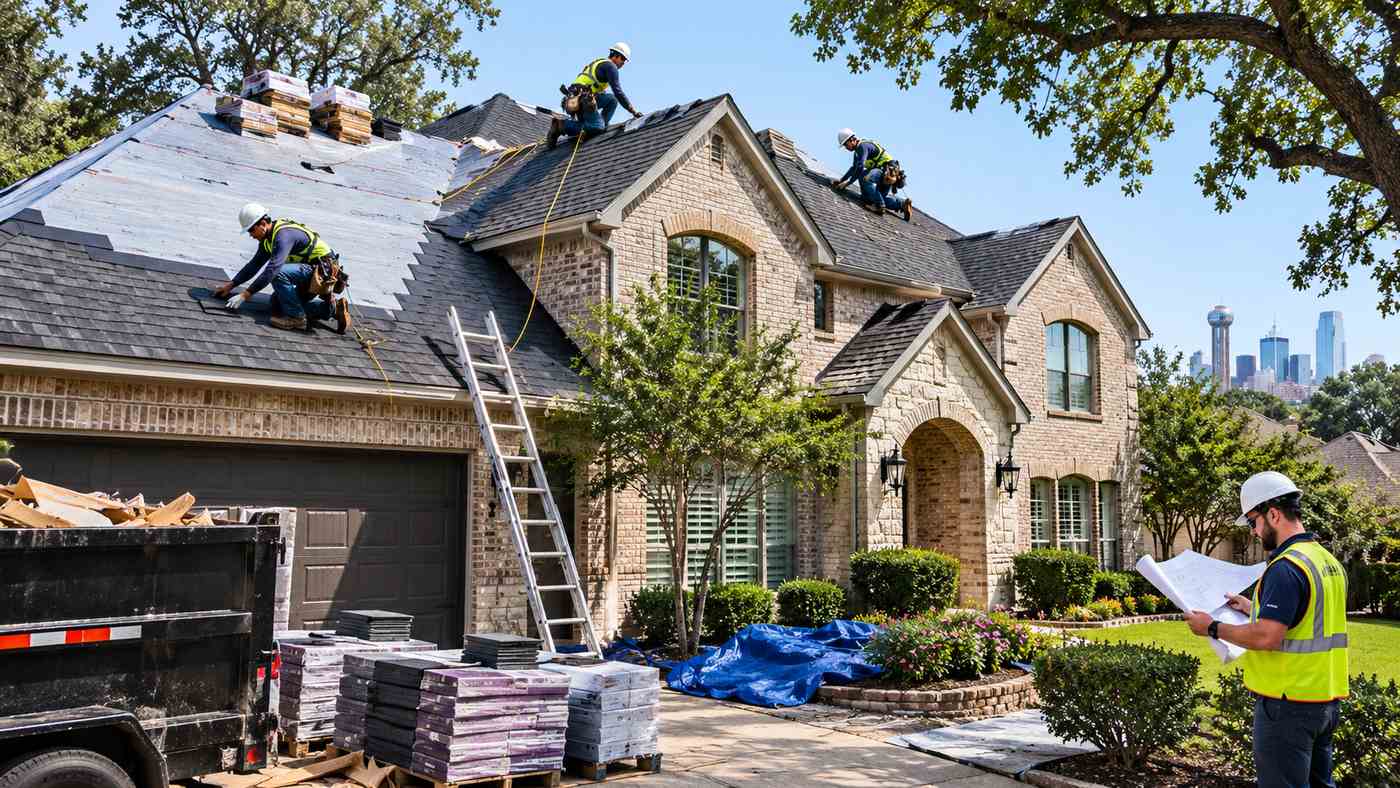
Choosing between residential roofing companies Dallas homeowners can hire requires more than comparing prices or reading a few online reviews. North Texas homes face challenging conditions, including hailstorms, strong winds, intense summer heat, and periods of heavy rainfall. These conditions make roofing materials, installation quality, ventilation, and timely maintenance particularly important. Whether your roof needs minor repairs, storm damage restoration, or a complete replacement, selecting a qualified contractor can help protect your home and avoid unnecessary expenses. This guide examines eight essential factors for comparing Dallas roofing contractors, understanding local requirements, and making an informed decision.
Why Choosing the Right Residential Roofing Company Matters
A residential roof protects the building structure, insulation, interior finishes, and belongings from weather exposure. Its performance depends on the roofing system as a whole rather than the visible shingles alone.
Underlayment, flashing, ventilation, roof decking, and installation details all influence how well the roof performs.
In Dallas, roof repairs and replacements also require careful consideration of storm damage, local building requirements, and insurance coverage.
A professional roofing contractor should explain the condition of the existing roof, recommend suitable work, and document the proposed project clearly.
Understanding Residential Roofing Services
Residential roofing companies commonly provide inspections, leak repairs, storm damage assessments, roof replacement, and new roof installation.
Some also offer gutter services, skylight repairs, attic ventilation improvements, and related exterior maintenance.
The available services vary between companies.
A contractor specializing in asphalt shingle replacement may have different experience from one regularly installing metal roofing, tile, or specialty roofing systems.
When Should You Contact a Roofing Contractor?
Consider arranging an inspection when you notice missing shingles, water stains on ceilings, damaged flashing, visible storm damage, or recurring leaks.
An aging roof may also benefit from periodic professional assessment.
However, age alone does not automatically establish that a complete replacement is necessary.
Repair or Replace?
The decision depends on the extent of damage, remaining roof condition, material availability, installation quality, and expected service life.
A localized flashing problem may be repairable, while widespread deterioration could justify replacement.
A dependable contractor should explain why a proposed solution is appropriate rather than recommending the most expensive option without supporting evidence.
1. Verify the Contractor’s Qualifications and Local Experience
The first step when comparing roofing professionals is confirming that a company has the experience and organizational capability to complete your project.
Understand Texas Roofing Contractor Licensing
Texas does not currently require a general statewide occupational license specifically for roofing contractors.
This means homeowners should not assume that a company has been evaluated or approved by the state simply because it advertises roofing services.
However, local registration and permitting requirements may still apply.
The Roofing Contractors Association of Texas operates a voluntary contractor licensing program that provides an additional credential for consumers to consider.
Check Professional Credentials
Ask whether the contractor participates in recognized industry organizations or manufacturer training programs.
Confirm any certifications directly with the issuing organization.
A credential may provide useful evidence of training or participation, but it does not guarantee workmanship or eliminate the need for further checks.
Confirm Business Identity and Insurance
Request the company’s full legal business name, physical business address, and current contact information.
Ask for evidence of general liability insurance and appropriate workers’ compensation arrangements.
Where practical, verify insurance information with the issuing company.
Coverage should be suitable for the work and remain in effect during the project.
Look for Relevant Dallas Experience
A company familiar with North Texas roofing conditions may better understand common storm damage patterns and regionally appropriate roofing systems.
Ask about recent residential projects involving similar roof shapes, materials, and property types.
A contractor who regularly repairs small asphalt shingle roofs may not have the same expertise required for a complex historic roof or specialty metal system.
Relevant experience should match your specific project.
2. Compare Established Residential Roofing Companies in Dallas
Several local businesses advertise residential roofing services throughout Dallas and nearby communities.
The following examples illustrate available options and should not be treated as a ranking of workmanship or customer satisfaction.
Bert Roofing
Bert Roofing is based in East Dallas and advertises residential roof repairs, replacements, storm damage services, and skylight work.
Homeowners considering this company can ask about its experience with architectural shingles, specialty roofing materials, flashing repairs, and ventilation details.
For projects involving skylights, it is particularly important to confirm the proposed flashing system and compatibility with the selected roof covering.
Arrington Roofing
Arrington Roofing operates in Dallas and provides residential roof repair, replacement, new construction roofing, and storm related services.
Its advertised scope includes work involving roof leaks, ventilation, and general roofing maintenance.
When requesting an estimate, homeowners should ask how the company evaluates underlying decking and determines whether repairs are sufficient.
We Roof Dallas
We Roof Dallas advertises residential, commercial, and multifamily roofing services.
Its residential offerings include roof repair and replacement.
Homeowners can request information about the materials, installation system, project supervision, and cleanup procedures included in a proposal.
New View Roofing
New View Roofing provides residential roofing services, including roof inspections, leak repairs, replacement, and storm related work.
Its broader exterior services may be relevant when roofing damage also affects other building components.
Ask which work is included directly in the roofing agreement and which services require separate quotations.
Bold Roofing
Bold Roofing is another Dallas contractor offering residential roofing repairs and replacements.
Its services include storm related roofing work and other exterior construction activities.
Homeowners should confirm the scope, assigned project supervisor, and written workmanship warranty before agreeing to a project.
How to Evaluate These Options Fairly
The best contractor for one property is not necessarily the most appropriate choice for another.
Compare recent project references, roof system experience, insurance documentation, estimates, warranties, and communication.
Availability, pricing, and services may change, so confirm current information with each company.
3. Request a Thorough Roof Inspection
A professional roof inspection provides the foundation for informed repair or replacement decisions.
Without adequate assessment, homeowners may pay for work that does not address the underlying problem.
What Should an Inspection Cover?
Depending on the roof design and accessibility, a qualified contractor may examine shingles, flashing, roof penetrations, valleys, ventilation components, gutters, and visible decking conditions.
The inspection may also consider evidence of moisture intrusion or previous repairs.
Not every condition is visible from the exterior.
Some problems require additional investigation before their causes can be established.
Understand Storm Damage Assessments
Dallas homeowners may need inspections following hailstorms, severe winds, or falling debris.
Hail can damage roof coverings, but visible marks do not always establish functional damage.
A responsible roofing professional should differentiate normal wear, cosmetic changes, installation defects, and potential storm related deterioration.
Request Photographic Documentation
Ask for photographs showing the affected locations and explanations of the recommended repairs.
Documentation should identify the material involved and the observed condition.
If damage is suspected beneath the visible roof covering, ask what further investigation is appropriate.
Avoid Unnecessary Roof Replacement
A trustworthy inspection should consider whether targeted repairs can restore satisfactory performance.
Complete replacement may be appropriate where damage is widespread, materials have deteriorated extensively, or a compatible repair is not feasible.
However, a contractor should provide a clear justification.
When a recommendation involves substantial expense, another qualified opinion may help you compare the proposed solutions.
4. Understand Roofing Materials Suitable for Dallas Homes
Choosing the correct roof covering involves balancing appearance, installation requirements, expected maintenance, cost, and local weather exposure.
Architectural Asphalt Shingles
Architectural asphalt shingles are commonly used on residential properties because they offer a range of colors, styles, and product specifications.
Their performance depends on the manufacturer, installation method, roof design, and environmental conditions.
Ask whether the proposed shingles are appropriate for the roof slope and applicable wind requirements.
A complete system should also include suitable underlayment, flashing, starter materials, ridge components, and ventilation where required.
Impact Resistant Roofing Materials
Certain roofing products are tested and classified for impact resistance.
Class 4 represents the highest classification within commonly referenced impact resistance ratings.
These products may be worth considering in areas affected by hail.
However, an impact resistant classification does not make a roof indestructible or guarantee protection against every storm.
Ask About Insurance Eligibility
Some insurance companies offer premium credits for qualifying impact resistant roofing materials.
Eligibility, documentation, accepted testing standards, and discount amounts vary by insurer.
Contact your insurance company before purchasing a product based on an expected discount.
Metal Roofing Systems
Metal roofing can provide a distinctive appearance and may offer appropriate durability when carefully selected and installed.
Different products include standing seam panels and other engineered metal roof coverings.
Performance depends on metal type, protective coatings, fastening methods, roof geometry, and installation quality.
Homeowners should compare initial costs, maintenance requirements, noise considerations, and warranty terms.
Tile and Specialty Roofs
Concrete, clay, slate, and other specialty materials may suit particular architectural styles.
However, weight, roof structure, fastening systems, and manufacturer requirements can affect suitability.
A heavier roofing product may require structural evaluation.
Do not assume that a material can replace existing shingles without considering the supporting structure.
Why Ventilation Matters
Roof ventilation can influence attic moisture conditions and temperature management.
A suitable ventilation system depends on the roof assembly, insulation design, air sealing, and applicable construction requirements.
Ask the contractor to explain how proposed ventilation changes relate to the existing roof system.
5. Compare Detailed Roofing Estimates and Project Costs
A written estimate is one of the most important documents in the roofing purchasing process.
Comparing only the final price can be misleading when proposals include different materials or amounts of work.
What Should a Roofing Estimate Include?
A comprehensive residential roofing proposal should identify the planned roof area, material specifications, labor, and relevant installation activities.
Important details may include:
- Existing roof removal and disposal
- Roof decking inspection and repair allowances
- Underlayment and protective components
- Shingles or other primary roof covering
- Flashing, vents, and roof accessories
- Permit responsibilities and associated costs
- Site protection, cleanup, and debris removal
- Payment schedule and warranty information
Understand Roof Area Measurements
Roofing projects are often measured in squares, with one roofing square representing 100 square feet of roof surface.
The actual surface area of a pitched roof differs from its horizontal footprint.
Roof complexity, slope, dormers, and material requirements influence how quantities are calculated.
Contractors should use appropriate measurements and explain the basis for the proposed quantities.
Why Quotes Can Differ
Two companies may recommend different roofing systems, decking allowances, ventilation changes, or installation procedures.
One estimate may include extensive flashing replacement while another assumes certain components can remain.
These differences affect price and should be clarified before selecting a contractor.
Avoid Unsupported Pricing Assumptions
Roof replacement expenses vary with roof size, pitch, accessibility, material choice, structural conditions, and labor requirements.
There is no universal Dallas roofing price that accurately describes every property.
Request several project specific quotations instead of relying on broad advertised averages.
A substantially lower estimate deserves careful review to identify possible omissions.
6. Understand Dallas Roofing Permits and Local Requirements
Municipal permitting is an important consideration when planning roof replacement.
Requirements vary according to the project location and the work being performed.
Dallas Residential Roofing Permit Rules
The City of Dallas states that a residential roofing permit is required when the total value of roofing work, including materials and labor, exceeds $500.
This means most complete residential roof replacements require a permit.
Minor repairs may qualify for an exemption, depending on their scope and applicable rules.
Homeowners should verify current requirements for their property before work begins.
Structural Repairs May Require Different Permits
A roofing permit for covering or decking work does not necessarily authorize major structural changes.
Repairs involving rafters, joists, or other structural members may require an additional building alteration permit.
Confirm Responsibility Before Signing
Ask which party will submit the permit application, pay the applicable fees, and coordinate required inspections.
In Dallas, contractors pulling permits must satisfy applicable local registration requirements.
Homeowners should request the permit details and retain relevant inspection records.
Consider Historic or Conservation District Restrictions
Properties within designated historic or conservation areas may face additional requirements affecting exterior alterations.
The contractor should establish whether special approvals apply before recommending materials or beginning work.
A roof replacement that changes visible architectural features may require further review.
7. Handle Storm Damage Insurance Claims Properly
Roofing insurance claims can create confusion because coverage depends on the policy and the circumstances of the loss.
Understanding basic insurance rules helps homeowners make informed decisions.
Document Damage Before Repairs
After a storm, photograph safely accessible damage and record any interior leaks.
Do not climb onto an unstable or damaged roof.
Use qualified professionals when an elevated inspection is necessary.
If immediate protective work is required, retain photographs and receipts.
Contact your insurer to understand claim reporting requirements.
Understand Replacement Cost and Actual Cash Value
Replacement cost coverage generally evaluates covered repairs using current replacement expenses, subject to the policy.
Actual cash value coverage accounts for depreciation.
The resulting payment can differ considerably between policies.
Your deductible, exclusions, and coverage limits also affect the amount you may receive.
Review Wind and Hail Deductibles
Some Texas homeowners policies have separate wind and hail deductibles.
These may differ from deductibles applying to other claims.
Review the actual policy instead of assuming the same amount applies to every loss.
Texas Deductible Rules
Texas law prohibits contractors from waiving, rebating, or absorbing an applicable property insurance deductible in covered circumstances.
Homeowners are responsible for paying the deductible required under their policy.
A contractor offering to eliminate that obligation may be presenting an unlawful arrangement.
Separate Roofing Work From Insurance Adjusting
Roofing contractors can inspect damage and provide repair estimates.
However, Texas restricts contractors from acting as public insurance adjusters on claims involving property where they also provide or may provide contracting services.
Ask your insurance company about coverage decisions and use appropriately authorized professionals when separate claims representation is needed.
8. Review Contracts, Warranties, and Long Term Support
The final stage in selecting a roofing contractor is examining how the work will be performed and what protections apply after completion.
Understand Manufacturer Warranties
Roofing manufacturers may provide warranties covering specified product defects under defined conditions.
The actual coverage depends on the products, installation requirements, registration procedures, and contractual terms.
Read the manufacturer’s documents rather than assuming every roofing product includes identical protection.
Understand Workmanship Warranties
A contractor’s workmanship warranty addresses specific installation related obligations described in its terms.
Coverage periods, exclusions, transferability, and claim procedures vary.
Ask About Warranty Responsibilities
Confirm who will respond if a leak develops after installation.
Ask whether labor, replacement materials, or other expenses are covered.
The warranty should identify the responsible business and provide a clear process for reporting problems.
Review the Project Schedule
Ask about the anticipated start date, project duration, site supervision, material delivery, and weather related interruptions.
Roofing projects can be delayed by rain, unexpected decking conditions, or supply availability.
The agreement should explain how material changes and additional work will be approved.
Confirm Cleanup and Final Inspection
Roofing work can generate nails, packaging, old materials, and other debris.
Ask how the contractor will protect landscaping, driveways, exterior equipment, and surrounding property.
A final inspection should address visible workmanship, flashing, ventilation components, and agreed project details.
Before making final payment, check that required documentation and outstanding work have been addressed.
Common Mistakes Dallas Homeowners Should Avoid
A frequent mistake is hiring a roofing contractor immediately after a storm without reviewing its business information.
High pressure sales tactics, demands for full payment upfront, and unclear contracts are warning signs.
Another mistake is accepting a quote that does not identify the material specifications or work included.
Homeowners may also overlook permit responsibilities, roofing ventilation, and warranty exclusions.
Selecting a contractor solely because it promises insurance approval can create additional risks.
The insurer determines coverage under the applicable policy, and homeowners should not rely on unsupported guarantees.
Finally, do not assume the most expensive roof automatically provides the best protection.
The appropriate system should suit the building, installation requirements, financial priorities, and local conditions.
Frequently Asked Questions
How do I find reliable residential roofing companies Dallas homeowners can hire?
Compare local references, recent project experience, insurance documentation, detailed written estimates, and workmanship warranties. Verify business and professional credentials before signing.
Do residential roofing contractors need a license in Dallas?
Texas does not require a statewide roofing contractor license. However, Dallas has local contractor registration and permitting requirements that may apply to roofing projects.
How much does residential roof replacement cost in Dallas?
Costs vary according to roof area, slope, materials, labor, access, and required repairs. Request detailed quotations from qualified local contractors for an accurate comparison.
Are impact resistant shingles a good option for Dallas homes?
They may be worth considering because North Texas experiences hailstorms. However, their performance and possible insurance discounts depend on the product and insurer.
Does homeowners insurance cover hail damaged roofs in Texas?
Many policies provide coverage for qualifying hail damage, subject to deductibles, exclusions, and coverage limits. Review your policy and discuss the claim with your insurer.
What should a residential roofing warranty include?
A warranty should identify covered defects or workmanship, exclusions, coverage duration, claim procedures, and the party responsible for repairs.
Conclusion
Choosing among residential roofing companies Dallas homeowners can consider requires careful research, transparent estimates, and an understanding of local roofing requirements. The right contractor should explain material options, document roof conditions, maintain appropriate insurance, and provide clear contractual terms. Storm damage claims, permits, and warranties deserve particular attention before work begins. By comparing qualified providers and reviewing every important detail, homeowners can make more confident roofing decisions and protect their properties for years to come.
