
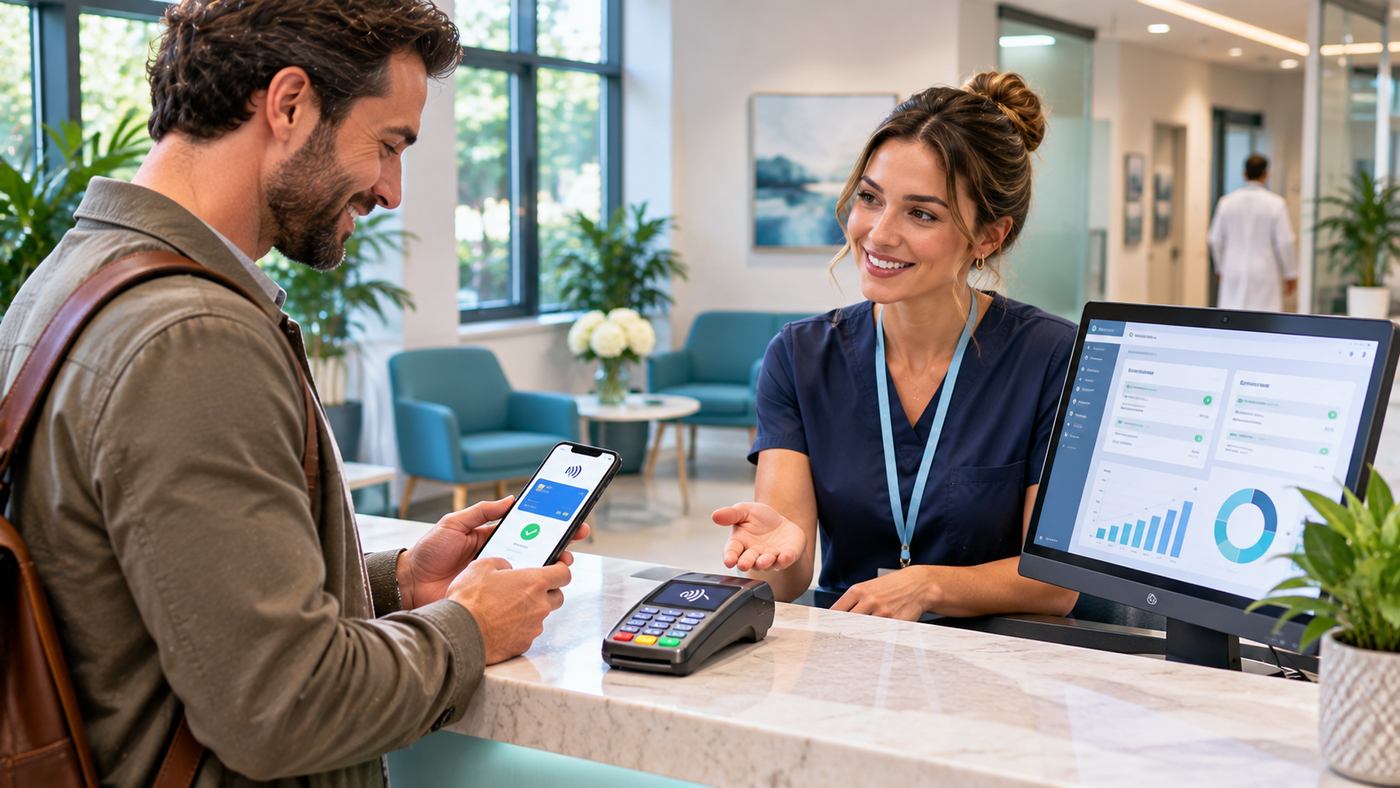
Healthcare providers face growing pressure to deliver convenient patient experiences while maintaining efficient administrative operations. From appointment scheduling and medical records to billing and insurance claims, every part of a clinic’s workflow affects its ability to provide reliable services.
One area receiving increasing attention is how patients pay for healthcare. Traditional payment processes often involve reception desk transactions, paper invoices, manual reconciliation, and follow-up communication about outstanding balances. These methods can consume valuable staff time and create unnecessary inconvenience for patients.
Modern payment systems help healthcare organisations simplify these processes by introducing digital billing, secure online payments, automated receipts, and integrations with practice management software.
For private clinics, medical practices, and other healthcare providers, adopting appropriate financial technology can improve administrative visibility while offering patients more flexible ways to settle their bills.
However, selecting a suitable solution requires careful consideration of data security, processing costs, patient accessibility, and compatibility with existing software.
This guide explores how healthcare payment technology works, seven practical benefits, important features, and the steps clinics can take to improve their billing operations.
What Are Healthcare Payment Systems?
Healthcare payment systems are technologies and processes used to collect, process, record, and manage payments for medical services.
They can support transactions made in person, online, or through integrated patient portals.
A modern solution may connect payment processing with appointment scheduling, invoicing, medical billing, and financial reporting.
This reduces the need to manage every transaction through separate administrative tools.
How Digital Payments Work in a Clinic
A typical digital transaction begins when a patient receives an invoice or payment request.
The patient selects an available payment method, such as a card or supported digital wallet.
A payment service provider securely processes the transaction and returns a confirmation.
The clinic’s system may then update the invoice status and record the transaction for financial reporting.
When appropriately integrated, this process reduces manual data entry and helps staff identify which balances remain unpaid.
Traditional Versus Digital Billing
Traditional billing often depends on paper invoices, telephone calls, and manual payment records.
These methods can still be appropriate in certain circumstances, particularly for patients who prefer offline transactions.
Digital billing introduces additional options.
Patients may be able to review charges remotely, pay through secure links, or settle outstanding balances through a patient portal.
The objective is not necessarily to eliminate traditional payment methods but to provide a more efficient and accessible combination of options.
Why Medical Practices Need Efficient Payment Processing
Financial administration is an essential part of operating a healthcare organisation.
Clinics must manage treatment charges, insurance payments, outstanding balances, refunds, and accounting records while protecting sensitive patient information.
When these processes are fragmented, staff may spend significant time locating invoices or reconciling transactions.
Reducing Administrative Complexity
An integrated billing platform can help reception and finance teams manage transactions from a central interface.
Instead of manually updating several records, authorised staff may be able to see payment statuses alongside relevant appointment and invoice information.
This can make routine administrative tasks easier to coordinate.
Improving Billing Transparency
Patients benefit from understanding what they are being charged for.
Clear invoices should distinguish services, amounts paid, outstanding balances, and any relevant payment conditions.
Digital portals can provide convenient access to this information without requiring patients to contact reception for every question.
Supporting Financial Planning
Accurate payment records help healthcare organisations understand their finances.
Clinic managers can review revenue trends, outstanding invoices, payment processing charges, and cash flow.
Reliable information supports better operational decisions.
Seven Smart Benefits of Modern Healthcare Payment Technology
The value of digital payment technology extends beyond accepting card transactions.
1. Convenient Online Patient Payments
One of the most practical benefits is allowing patients to pay remotely.
A patient may receive a secure payment request after an appointment or access an invoice through an online portal.
This reduces the need to return to the clinic simply to settle a balance.
Online payment options may be especially convenient for people managing busy schedules or attending remote consultations.
However, clinics should retain accessible alternatives for patients who cannot or prefer not to pay digitally.
2. Reduced Manual Billing Work
Manual administrative processes require staff to enter transaction details, update invoices, and confirm payments.
When payment systems integrate with practice management software, certain tasks can be automated.
For example, a successful transaction may automatically update the corresponding invoice.
This can reduce duplicate data entry and make payment records easier to maintain.
Automation still requires appropriate oversight, particularly when transactions fail or unusual billing situations arise.
3. Faster Payment Reconciliation
Reconciliation involves confirming that recorded payments match transactions processed by the provider and amounts deposited into the clinic’s account.
Without integration, staff may need to compare multiple reports manually.
A connected platform can make the process more structured by associating transactions with patient invoices and accounting records.
However, processing fees, refunds, chargebacks, and payout timing may still require attention.
4. Better Patient Convenience
Patients increasingly expect healthcare organisations to offer digital services comparable to those available in other industries.
Secure online payment options can reduce unnecessary steps during the patient journey.
Digital receipts and accessible billing histories also make it easier for patients to maintain their own records.
The most effective approach gives patients clear choices without making payment procedures confusing.
5. Support for Appointment Deposits
Some clinics request deposits when patients book appointments.
This may be appropriate for certain services or scheduling arrangements.
An integrated system can allow eligible patients to complete deposit payments during the booking process.
Clear communication is essential.
Patients should understand the amount being charged and the applicable cancellation, refund, and rescheduling policies.
Deposits may help clinics manage appointment commitments, but they do not guarantee that cancellations or missed appointments will disappear.
6. Improved Financial Reporting
Modern payment systems can provide transaction information that supports routine financial analysis.
Clinic managers may review outstanding balances, completed payments, refunds, and revenue by service category.
Accurate reporting makes it easier to identify operational patterns.
For example, recurring delays in particular billing processes may suggest a need to review invoice timing or communication procedures.
7. Stronger Payment Data Protection
Digital transactions require appropriate security safeguards.
Healthcare providers must consider both financial information and any patient data connected to billing activities.
Secure payment processing, access controls, encryption, and appropriate vendor arrangements can help reduce certain risks.
However, using a reputable payment processor does not automatically satisfy every legal or security obligation.
The clinic must still understand its responsibilities under applicable rules.
Exploring Integrated Patient Payment Solutions
Many healthcare practices benefit from connecting payment processing with scheduling and administrative software.
Clinics researching payment systems can explore Medesk’s guide to online patient payments and integrations.
Medesk provides practice management software for private healthcare organisations, with features covering booking, patient records, billing, and financial administration.
Its published payment solution information describes integrations intended to reduce manual billing work and provide patients with convenient digital payment options.
Stripe Payment Integration
Medesk offers integration with Stripe for supported payment processing workflows.
According to its documentation, clinics can connect their Stripe accounts to accept eligible online payments.
The integration supports payment methods such as cards and compatible digital wallets, subject to regional availability and account configuration.
Transactions can be associated with invoices and displayed through the Medesk interface.
Clinics should independently review Stripe’s current processing charges and contractual conditions.
Patient Portal Payments
A patient portal can provide a central location for managing appointments and relevant billing information.
Medesk describes portal functionality that allows patients to review appointments and access payment options.
Depending on the clinic’s configuration, patients may be able to pay an outstanding invoice, make a partial payment, or prepay for an upcoming service.
This can reduce the administrative effort involved in collecting routine payments.
Accounting Integration
Medesk also describes integration with Xero accounting software.
Such integrations can help synchronise invoices and payment records.
However, clinics should verify how taxes, adjustments, refunds, and other accounting details are handled before relying on automated reporting.
The goal is to reduce repetitive work while maintaining reliable financial controls.
Insurance and Claims Workflows
Medical billing may involve insurance companies as well as direct patient payments.
Medesk discusses insurance claims workflows and integrations relevant to certain healthcare markets.
Availability depends on location, payer arrangements, and the software configuration.
Clinics should confirm that any proposed solution supports the specific insurers and billing processes they use.
Important Features to Look for in a Payment Platform
Selecting suitable software involves more than comparing transaction fees.
Secure Patient Portal
A useful portal should allow patients to access relevant billing information through an appropriate authentication process.
Interfaces should be understandable and work across commonly used devices.
Patients must be able to recognise legitimate payment requests and avoid suspicious messages.
Multiple Payment Options
Different patients prefer different methods.
A clinic may want to offer card transactions, eligible digital wallets, bank transfers, or in-person payments.
Availability varies according to the country and payment provider.
The most appropriate combination depends on patient needs and operational requirements.
Automated Invoicing
Automated invoicing can reduce repetitive administrative work.
The system should generate accurate charges and clearly show the services associated with each payment.
Clinics should verify how invoice corrections and cancellations are managed.
Payment Reminders
Some platforms allow clinics to send reminders about outstanding balances.
Messages should be clear, professional, and consistent with privacy and communication requirements.
Payment reminders should avoid unnecessarily revealing sensitive medical information.
Reporting and Reconciliation
Finance teams should be able to review transaction details and compare them with payment processor records.
Reports should distinguish successful payments, pending transactions, refunds, and disputed charges.
Integration With Existing Software
Payment technology works best when it fits the clinic’s established workflows.
Before purchasing a system, verify compatibility with scheduling, accounting, patient management, and reporting tools.
Custom integration requirements may increase implementation costs.
Understanding Payment Security and Compliance
Healthcare payment processing involves sensitive information and requires careful attention to security.
PCI DSS Requirements
The Payment Card Industry Data Security Standard, commonly called PCI DSS, establishes security requirements for organisations that store, process, or transmit payment card information.
Healthcare providers accepting card payments need to understand the requirements applicable to their processing arrangements.
Using a third-party processor can reduce the amount of card data handled directly by the clinic.
However, outsourcing payment processing does not necessarily remove every PCI-related responsibility.
Protecting Patient Health Information
Healthcare privacy laws vary by jurisdiction.
In the United States, the Health Insurance Portability and Accountability Act, or HIPAA, may apply when billing information includes protected health information and the organisation is a covered entity or business associate.
In the United Kingdom, organisations must consider applicable UK GDPR and data protection requirements.
Clinics should evaluate their own obligations and the role of each technology vendor.
Encryption and Access Controls
Encryption helps protect information during appropriate transmission and storage processes.
Role-based access controls can limit which employees can view or modify financial records.
Multifactor authentication, secure account management, and appropriate audit logs can provide additional safeguards.
Vendor Risk Assessment
Before connecting a new payment service, healthcare organisations should examine the provider’s security documentation and contractual responsibilities.
Questions may include where data is processed, which subprocessors are involved, how incidents are reported, and whether appropriate agreements are available.
Security should be evaluated as an ongoing responsibility rather than a one-time purchasing feature.
How to Implement Digital Payments in a Medical Practice
A structured implementation plan can reduce disruption and improve adoption.
Step One: Review Current Billing Challenges
Begin by identifying the main problems.
These may involve delayed invoice collection, manual reconciliation, confusing patient statements, or limited payment options.
Understanding these issues helps define what the new system needs to accomplish.
Step Two: Identify Essential Requirements
List the payment methods, software integrations, reporting features, and security controls required.
Separate essential functions from optional features.
This helps prevent unnecessary spending on technology that does not address actual business needs.
Step Three: Compare Suitable Providers
Evaluate platforms according to functionality, pricing, implementation support, and compliance considerations.
Ask for realistic demonstrations using common clinic scenarios.
Step Four: Configure Payment Workflows
Set up relevant payment methods, invoicing rules, deposit policies, and staff permissions.
Document how the clinic will manage refunds, failed transactions, and disputed payments.
Step Five: Test Before Launch
Use appropriate test transactions to confirm that the workflow operates correctly.
Check the patient experience on mobile and desktop devices.
Verify that payments appear accurately in the required records.
Step Six: Train Administrative Staff
Employees should understand how to locate invoices, process eligible transactions, and assist patients experiencing payment difficulties.
Training should also cover security awareness and procedures for handling sensitive information.
Step Seven: Monitor Results
After launch, review whether the system reduces administrative work and improves billing visibility.
Collect staff and patient feedback.
Address recurring problems through process changes or additional training.
Comparing Online and In-Person Healthcare Payments
Different payment methods serve different patient preferences.
Online Payments
Online transactions are useful when patients want to settle bills remotely.
They may also support appointment deposits and follow-up billing.
However, patients need access to suitable devices and secure communication channels.
In-Person Card Payments
Card terminals remain convenient for patients visiting a clinic.
Staff can provide assistance and answer billing questions before completing the transaction.
Integrated terminals may also help synchronise payment records.
Bank Transfers
Bank transfers may suit certain healthcare organisations, business arrangements, or larger payments.
However, reconciliation can become more complicated if payment references are missing or unclear.
Hybrid Payment Models
A hybrid approach offers more than one method.
For example, a clinic may accept online payments while retaining card-terminal and other appropriate options.
This can make services more accessible to patients with different circumstances.
Common Mistakes When Choosing Healthcare Payment Software
One mistake is focusing exclusively on processing fees.
A platform with low transaction charges may still require substantial manual administration.
Another mistake is overlooking integration requirements.
If staff must repeatedly enter the same data into several systems, the expected efficiency benefits may be reduced.
Clinics should also avoid assuming that every payment service automatically meets healthcare privacy requirements.
Finally, introducing digital-only payment processes without considering accessibility can create difficulties for some patients.
The best system should balance security, convenience, cost, and operational practicality.
Measuring the Success of a New Payment Solution
Healthcare organisations should define performance measures before implementation.
Outstanding Invoice Balances
Monitor whether unpaid balances change over time.
Consider payment timing, patient mix, billing policies, and other factors that may influence results.
Administrative Time
Track the time employees spend processing invoices, reconciling transactions, and following up on payments.
A reduction in repetitive work may indicate improved efficiency.
Payment Completion Rates
Review how frequently eligible payment attempts are successfully completed.
Repeated failures may indicate technical issues, confusing checkout experiences, or problems with particular payment methods.
Patient Feedback
Patients can provide useful information about the clarity and convenience of payment options.
Feedback may identify accessibility barriers or confusing billing statements.
Total Operating Cost
Evaluate processing fees, software subscriptions, implementation expenses, and ongoing support costs.
Financial decisions should consider total ownership costs rather than individual transaction prices.
The Future of Healthcare Payment Technology
Healthcare organisations are increasingly connecting administrative processes through integrated digital systems.
Payment processing is becoming part of broader practice management workflows that include appointment scheduling, patient communication, and financial reporting.
Automation may continue reducing repetitive billing tasks.
Digital wallets and convenient online portals may also expand the payment choices available to patients.
However, new technology must be introduced responsibly.
Data protection, accessibility, accurate billing, and clear communication will remain important regardless of how advanced payment platforms become.
The most effective systems will be those that improve everyday operations without introducing unnecessary complexity.
Frequently Asked Questions
What are healthcare payment systems?
Healthcare payment systems are technologies and processes that allow clinics and other providers to collect, record, and manage payments for medical services. They may support in-person payments, online portals, invoicing, and financial reporting.
Can patients pay medical bills online?
Yes. Many healthcare organisations offer secure patient portals or payment links that allow eligible patients to settle invoices remotely. Available methods depend on the provider’s configuration.
Are online healthcare payments secure?
Online payments can be processed securely when appropriate safeguards and reputable providers are used. Clinics must still evaluate applicable PCI DSS, privacy, and data protection responsibilities.
Can payment software integrate with medical practice management systems?
Yes. Certain platforms integrate payment processing with scheduling, patient records, accounting, and billing. Compatibility and supported features vary by provider.
Conclusion
Modern payment systems are becoming an important part of efficient healthcare administration.
By connecting online transactions, patient portals, invoicing, and financial reporting, medical practices can reduce repetitive tasks and provide more convenient payment experiences.
However, successful implementation requires careful planning.
Clinics should evaluate security requirements, software compatibility, processing costs, patient accessibility, and staff training before selecting a solution.
Integrated platforms such as Medesk demonstrate how payment processing can become part of a broader practice management workflow.
Ultimately, the goal is not simply to collect payments faster. It is to establish a clear, secure, and dependable billing process that supports both healthcare providers and the patients they serve.
